双碳目标

Search documents
智研咨询重磅发布《2025年中国节水装备行业发展现状分析及需求前景研判报告》
Chan Ye Xin Xi Wang· 2025-11-20 05:49
Core Insights - The water-saving equipment industry in China is experiencing significant growth, driven by government policies and regulations aimed at improving water efficiency and reducing consumption [1] - The market size for water-saving equipment in China is projected to reach 551.577 billion yuan in 2024, reflecting a year-on-year growth of 0.7% [1] - The industry has developed a comprehensive supply chain, with over 2,000 large-scale manufacturing enterprises, positioning China among the global leaders in this sector [1] Industry Overview - Water-saving equipment encompasses mechanical and storage devices that meet quality, safety, and environmental standards, primarily used in industrial, agricultural, and urban settings [1] - The industry is characterized by a high degree of segmentation and diverse competition across various market segments [1] - Key areas of technological advancement include membrane separation, smart water meters, and efficient cooling systems, where China has established notable advantages [1] Future Outlook - The water-saving equipment market is expected to enter a new phase of high-quality development, influenced by the "dual carbon" goals and the trend towards smart transformation [1] - The ongoing development of advanced water-saving technologies and practices is anticipated to create substantial growth opportunities within the industry [1]


北京已完成除社会保障和个体车辆外巡游出租车100%新能源化
Xin Jing Bao· 2025-11-20 04:27
Group 1 - The core viewpoint of the article highlights Beijing's achievement in fully transitioning its taxi fleet to 100% electric vehicles, excluding social security and individual vehicles, by October 2025 [1] - The initiative to convert traditional taxis to electric began in 2019, with the transportation department coordinating resources to support this transition [1] - A total of 54,000 fuel taxis have been scrapped, and 61,000 electric vehicles have been added to the fleet, with the construction of battery swap stations matching the growth of electric vehicles [1] Group 2 - The electric taxis achieve zero pollutant emissions and have a 47.3% reduction in carbon emissions per kilometer compared to fuel vehicles [1] - The annual reduction in pollutants is estimated at approximately 8,395 tons, with a reduction of about 360,000 tons of carbon emissions, contributing to improved air quality in the capital [1] - The taxi industry in Beijing has also been actively involved in public welfare activities, such as "Warm Homecoming" and "Love Exam Delivery," providing essential services to passengers [2] Group 3 - To improve driver working conditions, the transportation committee and related organizations have established 27 driver service stations equipped with various amenities [2] - Six of these stations have been recognized as nationally replicable driver service stations, indicating a commitment to enhancing driver support [2] - The industry association is planning to build comprehensive service stations to provide additional support for drivers, including learning and rest areas [2]
煤化工与再生塑料:能源安全与循环经济的博弈与共存
Xin Lang Cai Jing· 2025-11-20 02:16
Core Insights - The coal chemical industry in China is experiencing unprecedented expansion due to the country's resource endowment and energy security strategy, with domestic polypropylene production capacity nearing 50 million tons by October 2025, and an additional 7.43 million tons expected in 2026, of which 58% will be coal-based [1][3] - The cost structure of coal chemical processes, particularly in coal-to-olefins, shows a significant cost advantage over oil-based processes, with coal-based olefins costing approximately 3,900 RMB per ton compared to 5,500 RMB per ton for oil-based, translating to a price advantage of 800-1,500 RMB per ton for coal-based polyethylene and polypropylene [1][2] Coal Chemical Technology and Cost Advantages - Coal chemical processes convert coal into gas, liquid, and solid fuels and chemicals, with gasification technology being a core component due to its ability to produce syngas and reduce emissions [1] - Recent technological innovations, such as the DMTO-III process by Baofeng Energy, have further reduced production costs, with methanol consumption decreasing from 3 tons to 2.66 tons per ton of product, and additional savings from using green electricity [2] Impact on Plastic Raw Material Market - The expansion of coal chemical capacity is leading to an imbalance in the plastic raw material market, with polypropylene demand growth at only 6% by 2025, while capacity is expected to grow by over 10%, potentially creating a supply-demand gap exceeding 7 million tons [3] - The price of recycled plastics is under pressure due to this supply-demand mismatch, with recycled HDPE prices expected to range between 6,200-8,500 RMB per ton, while coal-based polypropylene prices are positioned within this range, leading to direct competition [3] Strategies for the Recycled Plastic Industry - The recycled plastic industry can navigate the challenges posed by coal chemicals by focusing on technological upgrades, market segmentation, and compliance operations to build differentiated competitive advantages [4] - Companies like Wuhu Baolute Plastics are investing in advanced sorting and cleaning technologies to enhance product purity and performance, thereby reducing reliance on low-price competition [6] - Targeting high-value application scenarios, such as food packaging and automotive parts, allows recycled plastic companies to avoid direct competition with coal-based products and establish market barriers [8] Long-term Value of Circular Economy and Policy Support - The development of coal chemicals aligns with national energy security strategies, while the growth of recycled plastics is driven by circular economy principles and carbon reduction goals, indicating that both can coexist and meet different market needs [13][17] - Policies supporting the recycled plastic industry, such as tax incentives and mandates for recycled content, are expected to boost market demand significantly, with projections indicating a total demand for HDPE recycled pellets exceeding 3 million tons by 2025 [13] - The transition from traditional low-end applications to high-end uses for recycled HDPE is anticipated, driven by policy and market demand, with significant performance improvements expected from advanced recycling technologies [14]

青藏高原生态修复工程年增碳汇3000万吨
Xin Hua She· 2025-11-20 02:06
青藏高原生态系统在我国实现双碳目标中发挥着重要作用。第二次青藏科考查明,青藏高原生态系统碳 汇约为每年1.2亿吨至1.4亿吨二氧化碳,占全国每年生态系统碳汇的10%至16%,而重大生态保护修复 工程每年可新增约3000万吨二氧化碳碳汇。 新华社拉萨11月19日电,"青藏高原目前每年的碳盈余超过6500万吨,而重大生态保护修复工程每年可 新增约3000万吨碳汇。"记者19日从第二次青藏科考成果综合集成应用发布会上获悉。 为科学评估青藏高原碳收支,第二次青藏科考队自主研发了中国首个大气碳反演系统"贡嘎模型",并 获"全球碳计划"认证。研究发现,青藏高原碳汇功能的波动主要取决于水热条件的变化:在气候暖湿化 的背景下,青藏高原高寒草地的碳汇功能持续增强;青藏高原高寒生态系统净碳汇最强值出现在海拔约 4000米,在相同的增温幅度下,植株较高的植物群落能从大气中固定更多的碳;微生物在调控青藏高原 土壤碳分解及稳定中发挥关键作用。 中国科学院院士、第二次青藏科考队队长姚檀栋表示,未来可通过加强生态保护和生态文明高地战略的 实施,提升草地、森林生态系统质量,将进一步显著提升青藏高原碳汇功能。 ...
阿里云:做能源产业下一代智能核心的构建者 中国电力报 2025年11月19日 16:02
Zhong Guo Dian Li Bao· 2025-11-20 01:36
Core Insights - The energy industry is undergoing a transformation towards low-carbon, clean, and efficient practices, with smart technology seen as a key solution [1][12] - Alibaba Cloud is emerging as a crucial builder of the "smart core" necessary for activating potential scenarios and reconstructing industry value [1][3] Industry Collaboration - Alibaba Cloud has established partnerships with all major state-owned energy enterprises, with 70% already integrating AI technology [3] - The collaboration with State Grid has led to the development of a large-scale cloud computing platform, "State Grid Cloud," which supports the growing demand for intelligent applications in the energy sector [4] Digital Infrastructure - The construction of a unified computing and data infrastructure is recognized as essential for large state-owned enterprises, helping to avoid resource wastage and improve overall efficiency [4] - The Southern Power Grid has successfully implemented a cloud-based dispatch platform, significantly improving load forecasting accuracy to 97.63% [4] AI Integration - AI is becoming a critical variable in reshaping the future of the energy sector, with Alibaba Cloud providing advanced AI models and development platforms [6][9] - The collaboration between State Grid and Alibaba Cloud has resulted in the creation of a multi-modal industry model, enhancing operational efficiency and decision-making processes [6][7] Talent Development - The successful application of AI in the energy sector requires a workforce that understands both AI technology and industry mechanisms, emphasizing the need for skilled talent [10][11] - Initiatives like the "Spark" talent training program aim to enhance AI capabilities among employees in the energy sector [10] Future Outlook - The integration of AI and cloud technology is expected to drive significant advancements in the energy industry, facilitating a transition from digitalization to intelligent operations [12][13] - Alibaba Cloud is positioning itself as a key partner in the global energy transformation, supporting Chinese energy companies in their international expansion efforts [12][13]


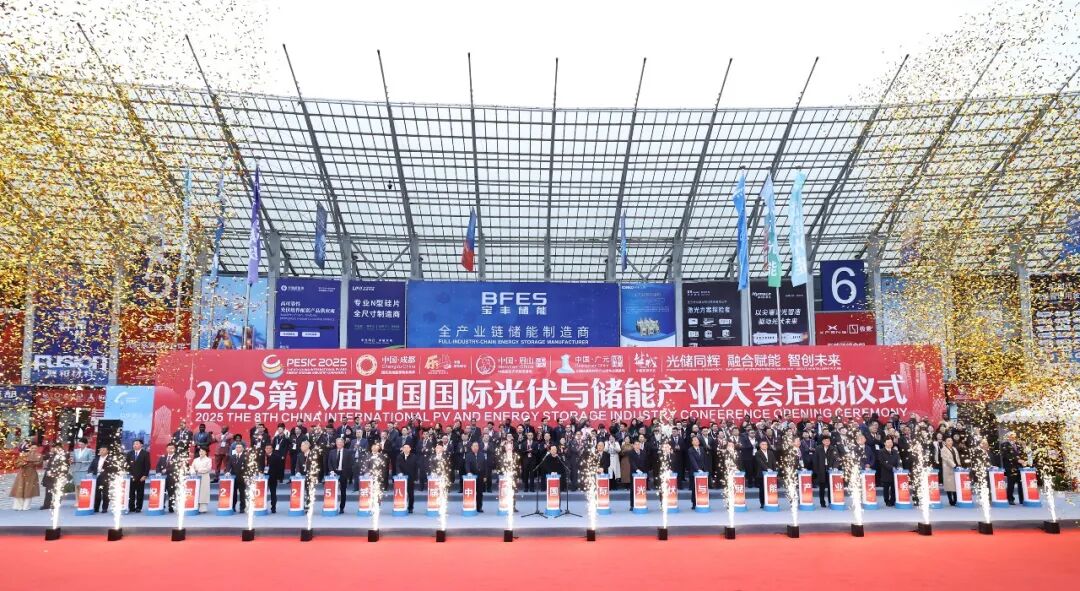
全球光储领袖聚蓉城 共破内卷筑就零碳新生态丨2025第八届中国国际光伏与储能产业大会
Jin Rong Jie· 2025-11-20 01:36
Core Insights - The 2025 8th China International Photovoltaic and Energy Storage Industry Conference was held on November 18 in Chengdu, emphasizing the importance of the photovoltaic and energy storage industry for global sustainable development [1][10]. Group 1: Conference Overview - The conference gathered key leaders, experts, and representatives from the global photovoltaic and energy storage sectors to discuss advancements and collaborations [1][3]. - The event was inaugurated by prominent figures including Chen Changzhi, Vice Chairman of the Standing Committee of the National People's Congress, and Wang Fengchao, Mayor of Chengdu, highlighting the significance of the conference in promoting green energy [1][10]. Group 2: Industry Challenges and Opportunities - Chen Changzhi emphasized the need for high-quality development in the photovoltaic and energy storage sectors, calling for collaboration among government, industry, and enterprises to enhance competitiveness and innovation [8][12]. - Su Bo, former Vice Minister of Industry and Information Technology, pointed out challenges such as over-competition and structural oversupply in the industry, urging companies to focus on innovation and collaboration to strengthen their market position [12][25]. Group 3: Future Development Goals - The conference highlighted China's ambitious goal to achieve a total installed capacity of 3.6 billion kilowatts for wind and solar power by 2035, necessitating an average annual increase of nearly 200 million kilowatts over the next decade [16]. - The importance of technological innovation and collaboration within the industry was reiterated, with a focus on building a modern industrial system and enhancing the resilience of supply chains [12][16]. Group 4: Brand Recognition and Industry Standards - The "2025 China Energy Storage Brand Top 100 List" was released, showcasing leading companies such as CATL, BYD, and LONGi, which are recognized for their contributions to the industry [30][32]. - The conference served as a platform for discussing the establishment of a healthy ecosystem within the industry, addressing issues like "involution" and promoting sustainable development practices [49][51]. Group 5: Global Collaboration and Knowledge Sharing - The event featured speeches from international leaders, including former New Zealand Prime Minister Jenny Shipley, who highlighted China's proactive approach to achieving climate goals ahead of schedule [33]. - Discussions on global energy transition and the role of Chinese companies in the international market were emphasized, with calls for deeper cooperation and knowledge exchange [24][41].

一天“跑了”近70亿元!是“恐高”下车还是上车良机?丨每日研选
Shang Hai Zheng Quan Bao· 2025-11-20 01:12
Core Viewpoint - The energy storage sector is experiencing significant market divergence, with a recent net outflow of nearly 7 billion yuan, indicating short-term profit-taking by some investors. However, the underlying logic supporting energy storage remains strong and is expected to continue in the long term [1][2][3]. Market Dynamics - The current divergence in the energy storage market is primarily due to the balance between short-term trading congestion and the long-term high growth potential. Recent data shows a net outflow of 6.725 billion yuan from the energy storage sector and 5.049 billion yuan from the lithium battery sector on November 19 [2]. - The energy storage sector's congestion is nearing historical highs, suggesting that any market fluctuations could lead to increased volatility [1][2]. Long-term Growth Drivers - Global energy storage demand is projected to remain high, with significant growth rates expected in various regions by 2026: Europe (40%), the US (45%), and the Middle East (100%). The overall global growth rate for large-scale energy storage is anticipated to reach 54% [3]. - In China, the transition towards renewable energy has surpassed traditional coal power generation, leading to increased pressure on energy consumption. This shift indicates a transformation in the power system, where energy storage is becoming a crucial component [3]. Technological Advancements - The development of grid-friendly energy storage technologies is essential for enhancing grid stability and increasing the penetration of renewable energy sources. Configuring a certain proportion of grid-friendly storage systems can improve renewable energy penetration rates by 15% to 20% [4]. - The investment value of Power Conversion Systems (PCS) is highlighted, as they play a critical role in connecting energy storage batteries to the grid and ensuring stable energy management [4]. Investment Opportunities - Companies leading in the PCS market are expected to maintain a dominant position due to their brand and distribution advantages. Notable companies include Sungrow Power Supply, Kehua Data, and Sungrow Electric [4]. - Firms that are well-positioned in the domestic large-scale storage market and can capitalize on independent storage growth opportunities are also highlighted, such as Haibosichuang [4]. - Companies with strong global competitiveness in large-scale storage, particularly those expanding into emerging markets like Europe and the Middle East, are recommended for investment consideration [4].


科技赋能生态建造 匠心守护青山绿水——记中交一航局第一工程有限公司八十载绿色发展之路
Zhong Guo Huan Jing Bao· 2025-11-20 00:39
Core Viewpoint - The company, China Communications First Harbor Engineering Company (CCFHEC), has evolved over 80 years from a national team focused on port and road construction to a modern comprehensive construction enterprise, emphasizing green development and ecological protection in its projects [1][2][3]. Group 1: Company Evolution and Achievements - CCFHEC has built over 600 berths, with more than 61% being over 10,000 tons, establishing itself as a "cradle of port construction" [3]. - The company has received numerous awards for its engineering excellence, including 7 National Quality Engineering Gold Awards and 19 National Quality Engineering Awards [13]. - CCFHEC has developed innovative construction techniques, such as the vacuum preloading method, which enhances efficiency and reduces environmental impact [4]. Group 2: Commitment to Green Construction - The company has integrated ecological considerations into its construction processes, achieving significant improvements in water quality and biodiversity in projects like the Baiyangdian governance [5][6]. - CCFHEC has implemented a series of green engineering initiatives, including the use of low-carbon materials and energy-efficient technologies, resulting in a 40% reduction in operational costs and emissions in projects like the Xiong'an Future Science City [8][15]. - The company has established a comprehensive green management system, focusing on resource recycling and waste reduction [10][19]. Group 3: Technological Innovation - CCFHEC has embraced technology as a core driver of its green development strategy, with over 540 national patents and a focus on smart construction techniques [13][14]. - The company has developed a digital twin platform that enhances project management and environmental monitoring, ensuring real-time data analysis and risk management [16]. - Innovative construction methods, such as the use of prefabricated components and eco-friendly materials, have been successfully implemented to minimize environmental impact [17][18]. Group 4: Future Outlook - CCFHEC aims to continue its commitment to green and low-carbon transformation, actively participating in national strategies like the Belt and Road Initiative and contributing to ecological civilization [19][20]. - The company plans to enhance its green technology innovation and application, focusing on sustainable practices in water environment governance and marine ecological restoration [19]. - CCFHEC is dedicated to building a modern infrastructure system that aligns with the principles of ecological protection and sustainable development [20].

从伤疤到财富,江西这样把“废矿”变“金山”
Zhong Guo Huan Jing Bao· 2025-11-19 23:18
Core Viewpoint - The restoration of abandoned mines, despite the depletion of natural resources, holds significant economic value through potential agricultural use, development of parks, and tourism, emphasizing the need for integrating ecological restoration with economic development [1] Group 1: Economic Value of Abandoned Mine Restoration - Restored abandoned mines can be utilized for agriculture, forestry, and tourism, highlighting their economic potential [1] - Jiangxi province has actively promoted the integration of abandoned mine restoration with economic development, achieving notable experiences that can serve as references [1] Group 2: Financial Support and Policy Incentives - National policies have been established to provide financial incentives for local governments to engage in abandoned mine restoration, including funding for demonstration projects [2] - Jiangxi has successfully applied for 3 billion yuan in central financial support for ecological restoration projects, being the only province to secure funding for four consecutive years, totaling 15 billion yuan across five projects [2] - A three-tiered financial system has been established in Jiangxi to leverage central funding, attract social capital, and collaborate with financial institutions for mine restoration financing [2] Group 3: Expanding Value Realization Paths - The restoration of abandoned mines can support industrial development by converting abandoned land into operational land for industrial projects [3] - Jiangxi has generated significant economic benefits through land trading by converting restored mine areas into supplementary farmland and construction land indicators [3] Group 4: Multi-Benefit Realization - The introduction of social capital for building distributed photovoltaic power stations on restored mines can achieve multiple benefits, including carbon reduction and economic gains [4] Group 5: Integration with Rural Revitalization - Abandoned mines can be transformed into agricultural land through targeted restoration strategies, enhancing soil quality and supporting local agricultural development [5] - Jiangxi has combined ecological restoration with rural environment improvement, focusing on enhancing infrastructure in surrounding villages [5] Group 6: Cultural Tourism Development - Jiangxi promotes protective development of historical mining sites to enhance modern service industry growth through tourism [6] - The establishment of national mining parks and cultural tourism sites has been initiated, integrating local cultural heritage with mining restoration projects [6] Group 7: Empowering Rural Revitalization through Tourism - The development of rural tourism around restored mines can facilitate ecological, economic, and social transformations, contributing to rural revitalization [7] - Jiangxi's initiatives in creating cultural and tourism experiences around restored mines have yielded positive economic and social outcomes [7]
“陕电入皖”工程安徽段全线贯通
Ren Min Ri Bao· 2025-11-19 22:20
Core Points - The "Shanxi Electric Power into Anhui" project has successfully completed the Anhui section ahead of schedule by three months, marking it as the first of the three provinces involved to achieve this milestone [1] - This project is a key initiative under China's 14th Five-Year Plan for power development, spanning 1,055 kilometers from Shaanxi to Anhui [1] - The Anhui section of the project is 323 kilometers long, involving the construction of 672 new transmission towers, with plans for the entire project to be operational by June 2026 [1] - Once operational, the project is expected to deliver over 36 billion kilowatt-hours of electricity annually to Anhui, with more than half coming from renewable sources, thereby enhancing the province's power supply security and supporting energy transition goals [1] Summary by Categories Project Overview - The "Shanxi Electric Power into Anhui" project is a significant infrastructure initiative under the national power development strategy [1] - The project connects Shaanxi, Henan, and Anhui provinces, with a total length of 1,055 kilometers [1] Construction Details - The Anhui section measures 323 kilometers and includes the installation of 672 new transmission towers [1] - The project is set to achieve electrification by March 2026, with full operational capacity expected by June 2026 [1] Impact and Benefits - The project will enable the transmission of over 36 billion kilowatt-hours of electricity to Anhui each year, significantly contributing to the province's energy supply [1] - More than 50% of the transmitted electricity will be sourced from renewable energy, aiding in the transition to a more sustainable energy structure and supporting carbon neutrality goals [1]