
能源数智化

Search documents
国家能源局综合司关于印发《2026年能源行业标准计划立项指南》的通知
中国有色金属工业协会硅业分会· 2026-03-30 13:14AI Processing
国家能源局综合司关于印发《2026年能源行业标准计划立项指南》的通知 附件: 2026年能源行业标准计划立项指南 2026年能源行业标准计划立项指南 为深入贯彻党的二十大和二十届历次全会精神,根据《中 华人民共和国能源法》和《国家标准化发展纲要》要求,落 实全国能源工作会议部署,围绕能源行业管理和产业发展需 要,明确 2026年能源行业标准立项重点方向和工作要求, 持续完善能源行业标准体系,以标准支撑能源强国建设,特 制定本指南。 一、立项重点 紧密围绕构建新型能源体系工作任务,保障能源安全和 绿色低碳转型,促进能源新技术、新产业、新业态发展,突 出重点领域和关键技术要求,提出能源行业标准计划。对于 具有一定应用前景但尚在发展的技术或变化较快的新产业、 新业态、新模式,探索通过标准化指导性技术文件予以支持。 鼓励民营企业、外资企业等各类主体参与标准制修订工作。 支持对标国际先进,立足行业发展实际,推动国际标准和能 源领域标准互促转化,推进标准体系兼容。 (一) 行业标准制修订计划 1. 立足能源安全和促进能源绿色低碳转型。服务和保障 能源安全稳定供应,支撑能源领域落实碳达峰、碳中和目标 的行业标准计划;支撑新 ...


朗新科技(300682) - 300682朗新科技投资者关系管理信息20260330
2026-03-30 09:58
Group 1: Company Overview and Financial Performance - Langxin Technology Group focuses on energy services and operations, leveraging AI technology to enhance efficiency and sustainability in energy management [2][3] - The company achieved a revenue of CNY 4.517 billion, representing a year-on-year growth of 0.84% [3] - Net profit attributable to shareholders reached CNY 105 million, a significant increase of 141.94% compared to the previous year [3] - The company recognized asset impairment losses of approximately CNY 130 million [3] - Operating cash flow amounted to CNY 478 million [3] Group 2: Business Development and Strategic Focus - In 2025, the company plans to deepen its focus on digitalization services for power grids and expand its operations beyond the grid [4][5] - The company aims to enhance AI integration within its power business, achieving significant market expansion and operational scalability [4] - Key areas of development include billing, measurement, load forecasting, and interaction between vehicles and the grid [4] Group 3: Energy Internet and AI Applications - The company is advancing its AI technology in energy aggregation and operations, transitioning from a service platform to a value creation model [6] - The life payment platform has partnered with over 6,700 utility providers, serving more than 540 million users, with a transaction volume growth of nearly 8% [7] - The new electric charging platform has surpassed 27 million users, achieving a 50% year-on-year growth, and connected over 240,000 charging devices [7] - The total electricity transaction volume exceeded 6 billion kWh, tripling from the previous year [7] Group 4: Future Growth and Market Expansion - In 2026, the company aims to achieve over 10 billion kWh in charging volume, leveraging the growth of the electric vehicle market [8] - The company plans to expand its electricity trading services across 28 provinces, enhancing its service offerings for various market participants [8] - Internationally, the company will focus on expanding its digitalization services in Africa and South Asia, while also exploring new markets in South America, Southeast Asia, Europe, and the Middle East [9][10] - The company intends to develop a diverse business model, moving from technology product output to comprehensive system supply and operation management [9][10]
国能信控邀您共聚第十四届储能国际峰会暨展览会ESIE 2026
中关村储能产业技术联盟· 2026-03-28 10:50
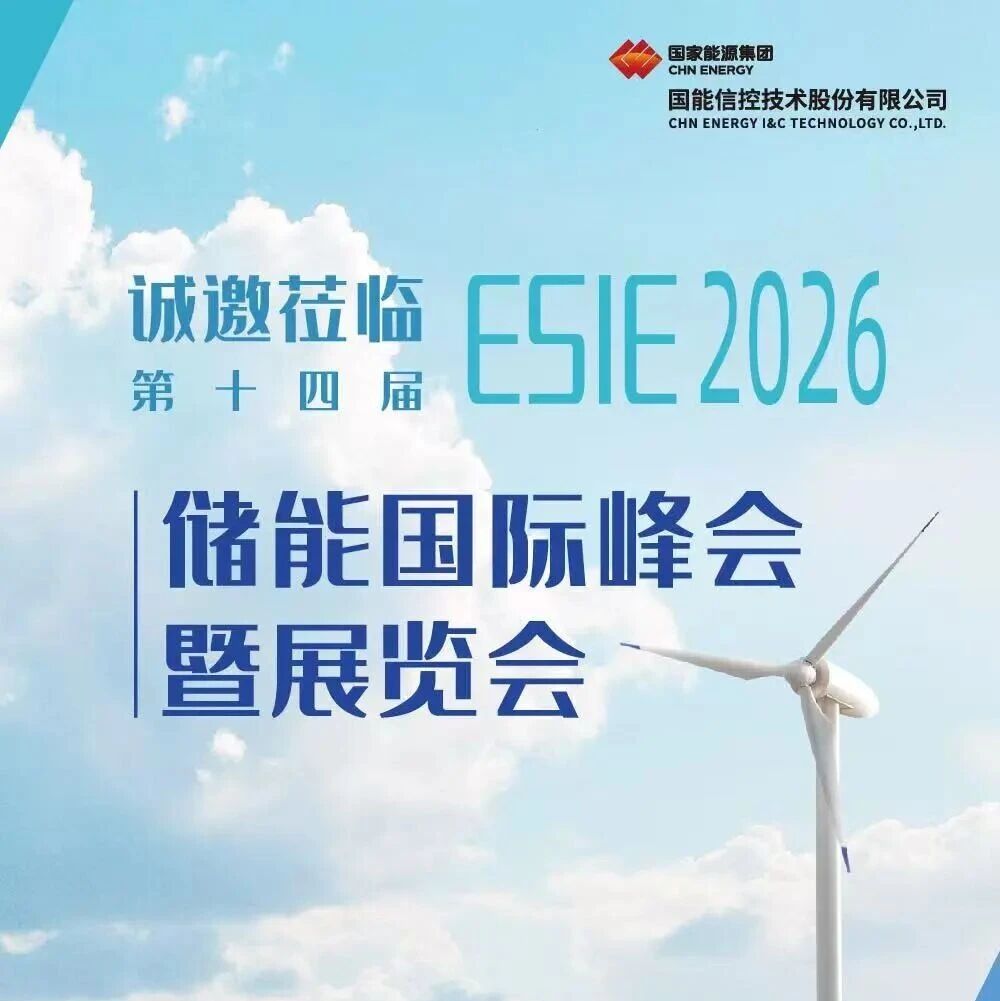
Core Viewpoint - The article highlights the participation of Guoneng Xinkong Technology Co., Ltd. at the 14th Energy Storage International Summit and Exhibition (ESIE 2026), emphasizing its status as a leading enterprise in the energy sector and its commitment to innovation in energy control and digitalization solutions [2][8]. Company Overview - Guoneng Xinkong was established in April 2003 and is a subsidiary of the State Energy Group, ranked among the world's top 500 companies. It has been recognized as a key "little giant" enterprise and has received numerous accolades for its contributions to energy technology and innovation [2]. - The company has developed over 600 intellectual property rights and has won 21 provincial and ministerial awards, solidifying its position as a leader in the wind power pitch control industry in China [2]. Product and Innovation - The company focuses on two main business segments: energy control and energy digitalization. It has created several core products, including smart control systems for thermal power, regional control systems for renewable energy, and industrial internet platforms [2]. - Guoneng Xinkong aims to provide intelligent solutions for new power systems, with a vision of becoming a first-class innovative enterprise driving the energy technology revolution [2]. Event Participation - Guoneng Xinkong will exhibit at ESIE 2026 from April 1 to April 3, 2026, at the Beijing Capital International Exhibition Center, showcasing its latest innovations in energy storage technology and intelligent storage solutions [8][12]. - The theme of the exhibition is "Not Just Storage, Better Control," reflecting the company's commitment to advancing energy management technologies [8].
背靠十余家国资股东,天地和兴的并购成长故事能否让市场买单?
Zhi Tong Cai Jing· 2026-02-08 04:39
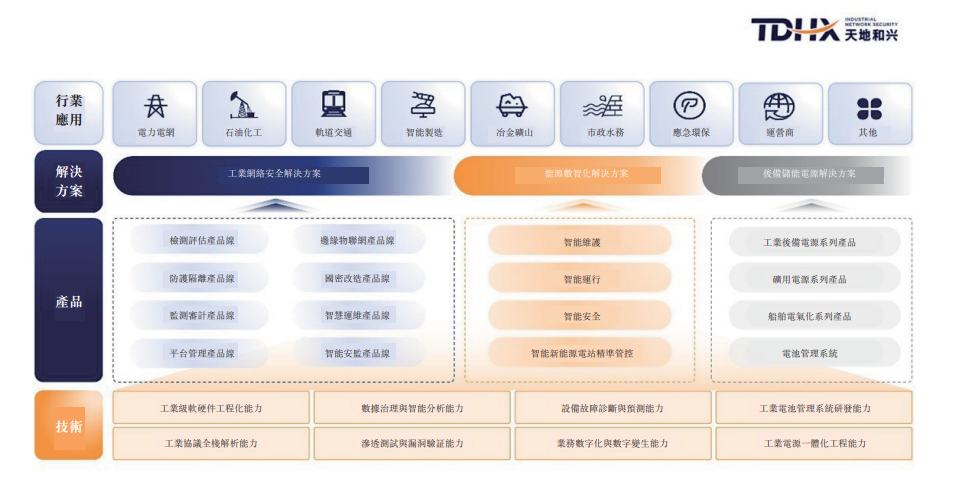
Core Viewpoint - The rapid development of China's industrial safety sector since 2016 is driven by regulatory and technological advancements, with the company Tian Di He Xing emerging as a market leader and preparing for an IPO [1][2]. Industry Trends - The implementation of the Cybersecurity Law and the introduction of compliance standards have accelerated product deployment in industrial control security [1]. - The integration of industrial internet and smart manufacturing has expanded the attack surface, prompting a shift towards systematic defense strategies [1]. Company Overview - Tian Di He Xing, founded in 2007, initially focused on technology promotion in the power industry and later transitioned to a professional security product provider [3]. - The company gained significant traction in the industrial cybersecurity market, particularly in the energy sector, where it holds an 8.4% market share [1]. Financial Performance - Revenue growth from 2023 to 2024 is projected to rise from 474 million RMB to 727 million RMB, but adjusted net profit is expected to decline from 70.2 million RMB to 55.4 million RMB, indicating a "growth without profit" scenario [2]. - By the first three quarters of 2025, revenue is expected to reach 439 million RMB, with a year-on-year growth of 22.19% and a return to profitability with an adjusted net profit of 4.15 million RMB [2]. Market Position - According to a report, Tian Di He Xing is projected to hold a 6.7% market share in China's industrial cybersecurity market by 2024, ranking first [1]. - The company has established a strong customer base, with over 69% of revenue coming from state-owned enterprises in recent years [4]. Strategic Developments - The company has entered a new phase of growth through strategic acquisitions, including Beijing Bi Ke Ce and Hai Bo Electric, to expand into energy digitalization and backup power solutions [6]. - The diverse shareholder structure, including several state-owned entities, provides financial support and industry resources [6][7]. Challenges - The company faces challenges with rising accounts receivable, which have increased significantly, leading to cash flow issues [10][11]. - The concentration of revenue from a few major clients poses risks to pricing power and revenue stability [12][13]. Future Outlook - The successful integration of acquired assets and the ability to leverage existing customer relationships will be critical for future growth [13].
新股前瞻|背靠十余家国资股东,天地和兴的并购成长故事能否让市场买单?
智通财经网· 2026-02-08 04:30
Core Viewpoint - The rapid development of China's industrial safety sector since 2016 is driven by regulatory and technological advancements, with the company Tian Di He Xing emerging as a market leader and preparing for an IPO [1] Group 1: Industry Trends - The implementation of the Cybersecurity Law and the second version of the classification and grading system for cybersecurity has made industrial control security compliance mandatory, accelerating product deployment [1] - The integration of industrial internet and smart manufacturing has expanded the attack surface, prompting a shift from point-based protection to a systematic defense approach [1] Group 2: Company Overview - Tian Di He Xing submitted its IPO application to the Hong Kong Stock Exchange on January 30, with a projected market share of approximately 6.7% in China's industrial cybersecurity market by 2024, and about 8.4% in the energy sector [1] - The company has experienced significant revenue growth from 474 million RMB in 2023 to 727 million RMB in 2024, but its adjusted net profit decreased from 70.2 million RMB to 55.4 million RMB during the same period, indicating a "growth without profit" situation [2] Group 3: Business Development - Established in 2007, the company initially focused on technology promotion and application services in the power industry, later transitioning to a professional security product provider as industrial cybersecurity risks became more apparent [2][3] - A pivotal moment occurred in 2014 when the company undertook a national pilot project for industrial control security, launching its first generation of security products and marking its entry into the industrial cybersecurity sector [3] Group 4: Market Position and Client Base - The company has provided solutions for over 6,000 projects across key industries, with more than 50% of its clients being state-owned enterprises, indicating a strong reliance on government contracts [4] - Revenue from state-owned or state-controlled enterprises has increased significantly, reaching 80.8% by the third quarter of 2025 [4] Group 5: Mergers and Acquisitions - Starting in 2024, the company entered a new phase of growth through strategic acquisitions, including Beijing Bico Measurement and Haibo Electric, expanding its service offerings to energy digitalization and backup power solutions [6] - The company has completed six rounds of financing before its IPO, establishing a robust shareholder structure with significant state-owned enterprise involvement [6] Group 6: Financial Performance and Challenges - Despite revenue growth, the company faced a decline in gross margin from 60.9% in 2023 to 50.4% in 2024, primarily due to high costs associated with new large enterprise projects and lower margins from new business lines [9] - The company has experienced continuous cash outflows from operating activities, with trade receivables rising significantly, indicating potential liquidity challenges [10][11] - The increasing concentration of revenue from a few major clients poses risks to the company's bargaining power and may lead to performance volatility [12] Group 7: Future Outlook - The company's ability to successfully integrate acquired assets and realize their growth potential will be a key determinant of its valuation post-IPO [13]
天地和兴递表港交所 中信建投国际、东方证券国际为联席保荐人
Sou Hu Cai Jing· 2026-02-01 23:56
Core Viewpoint - Tiandi Hexing has submitted its application to the Hong Kong Stock Exchange, with CITIC Securities International and Orient Securities International acting as joint sponsors [1] Company Overview - Tiandi Hexing is a well-known provider of industrial cybersecurity and energy digitalization solutions in China, focusing on asset security for critical infrastructure such as power and petrochemical sectors [1] Market Position - According to Frost & Sullivan, Tiandi Hexing is projected to hold the largest market share in China's industrial cybersecurity market in 2024, with a market share of 6.7%, and an even higher market share of 8.4% in the energy sector [1] Market Growth - The Chinese industrial cybersecurity market is expected to reach 29.4 billion yuan by 2029, with a compound annual growth rate (CAGR) of 25.0%. The market for digitalization solutions in the energy sector is anticipated to reach 118.2 billion yuan [1]

新股消息 | 天地和兴递表港交所
智通财经网· 2026-02-01 07:17
Group 1 - The core viewpoint of the article is that Beijing Tiandi Hexing Technology Co., Ltd. has submitted its listing application to the Hong Kong Stock Exchange, with CITIC Securities International and Orient Securities International as joint sponsors [1] - Tiandi Hexing is recognized as a leading provider of industrial cybersecurity and energy digitalization solutions in China, utilizing AI-driven technology to enhance security capabilities for enterprise users in various industrial scenarios [1] - According to Frost & Sullivan, Tiandi Hexing is projected to hold the largest market share in China's industrial cybersecurity market in 2024, with an overall market share of approximately 6.7%, and a market share of about 8.4% in the energy sector of this market [1]
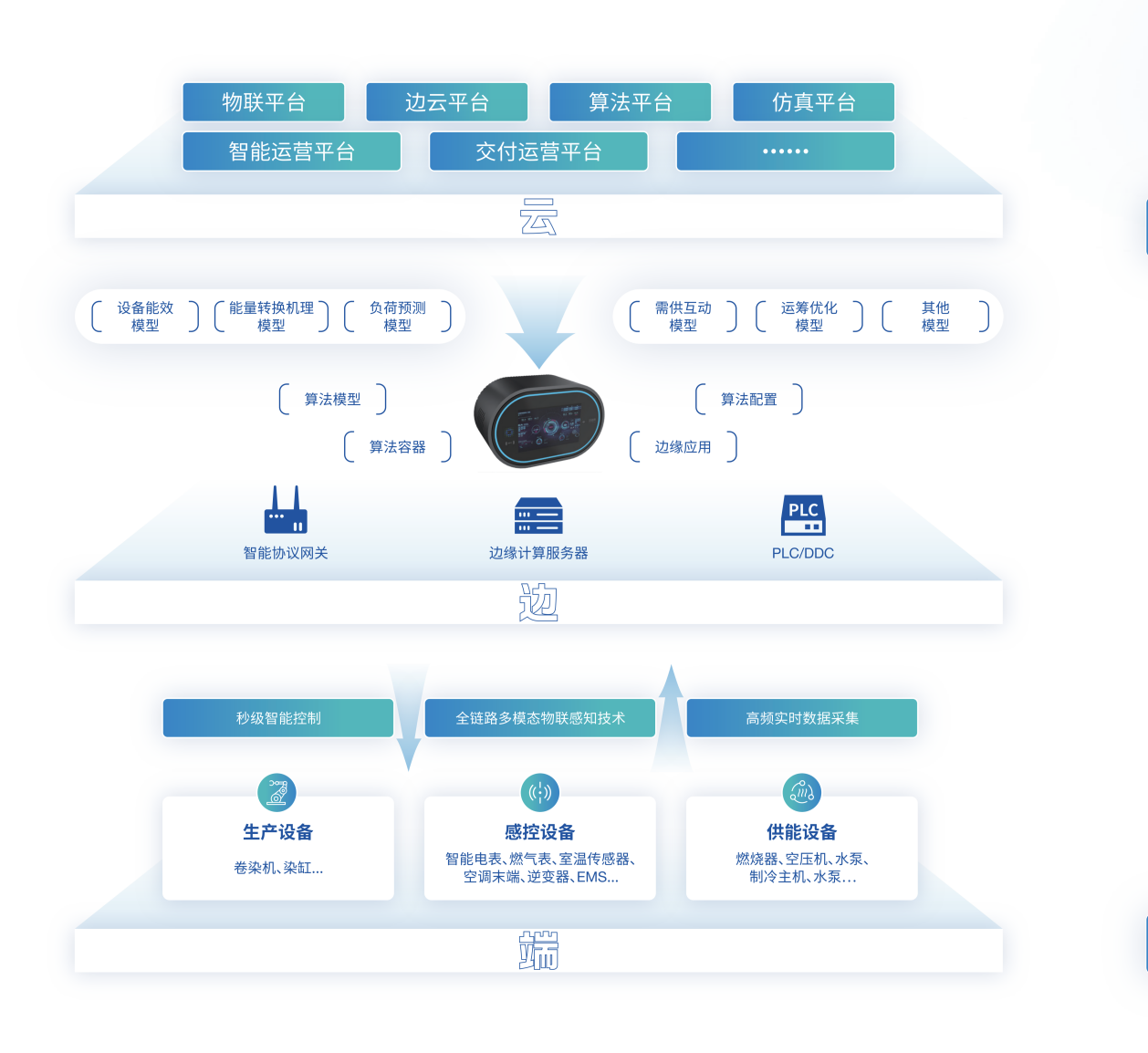
新奥泛能网:能碳一体化数智方案赋能全场景用能,引领能源行业智能低碳转型
Jing Ji Guan Cha Wang· 2026-01-30 04:31
Group 1 - The energy industry is at a critical turning point, transitioning from traditional models to digital and low-carbon systems, driven by dual carbon goals and the construction of a new energy system [1] - Xin'ao Panenergy Network, a technology-focused subsidiary of Xin'ao Group, leverages 36 years of experience in the energy sector and over a decade of practice in pan-energy to drive the digital transformation of the energy industry [1] - The company has established a solid ecological foundation, covering gas projects in 260 cities across 21 provinces, benefiting over 31 million households and 270,000 commercial clients [1] Group 2 - The traditional energy system's "vertical well" application model leads to insufficient multi-energy collaboration and low efficiency, resulting in high energy costs and challenges in carbon management [2] - Xin'ao Panenergy Network has innovatively developed an "Energy Carbon Big Model + Professional Agents + Energy Carbon Intelligent Control" system, providing an integrated digital solution for energy management [2] - The solution enhances energy efficiency in various sectors, achieving a 30% increase in comprehensive benefits for dyeing enterprises and a 10% reduction in operational costs for a five-star hotel in Hangzhou [2] Group 3 - Xin'ao Panenergy Network's innovative practices offer replicable energy-saving and carbon-reduction pathways, shifting energy management from reliance on human experience to system intelligence [4] - The company aims to deepen the integration of "Energy + AI," expanding into more industries and building a world model in energy and carbon management [4] - Through open ecological cooperation and technological upgrades, Xin'ao Panenergy Network supports users in achieving safe, economical, efficient, and green low-carbon development goals [4]
吉大通信:预计2025年全年净亏损5960万元—8920万元
2 1 Shi Ji Jing Ji Bao Dao· 2026-01-28 09:03
Core Viewpoint - The company, Jida Communication, is forecasting a significant net loss for the year 2025, attributed to structural adjustments in the industry and concentrated strategic investments [1] Group 1: Financial Performance - The expected net profit attributable to shareholders for 2025 is projected to be between -89.2 million and -59.6 million [1] - The expected net profit after deducting non-recurring gains and losses is projected to be between -92.2 million and -62.6 million [1] Group 2: Industry Challenges - The company's main business is impacted by structural adjustments in the industry, increased labor costs, intensified market competition, and external shocks [1] - The telecommunications and information industry is undergoing a deep structural adjustment, shifting focus from traditional infrastructure to emerging areas like computing power and AI models, which is compressing overall profit margins [1] Group 3: Strategic Investments - The company is actively pursuing a strategic upgrade of its business structure, focusing on energy digitalization services and "AI + livelihood" sectors, which are currently in the early stages of investment [1] - Significant resources are being allocated to business preparation, infrastructure, and operational support, resulting in short-term costs without substantial revenue generation [1] - These forward-looking investments are expected to lay a solid foundation for long-term competitive advantages and sustainable growth, aligning with the company's long-term strategic development path [1]

朗新科技(300682):年报业绩扭亏为盈,AI+电力交易积极推进
GOLDEN SUN SECURITIES· 2026-01-23 09:25
Investment Rating - The report maintains a "Buy" rating for the company, indicating a positive outlook based on its performance and growth potential [5]. Core Insights - The company has turned a profit in its annual report, with a projected net profit of 100-150 million yuan for 2025, representing a year-on-year increase of 139.96% to 159.93% [1]. - The energy digitalization and energy internet sectors are driving the company's growth, with significant improvements in profitability expected in 2025 [2]. - The company has achieved substantial growth in its AI-powered electricity trading, with trading volume expected to triple year-on-year in 2025 [2]. - The new energy platform, "New Electric Path," has shown continuous improvement, with losses narrowing and the number of connected charging devices exceeding 2 million [3]. Financial Performance - The company forecasts revenues of 5.169 billion yuan for 2025, with a year-on-year growth rate of 15.4% [4]. - The projected net profit for 2025 is 106 million yuan, a significant recovery from a loss of 250 million yuan in 2024, marking a year-on-year growth of 142.3% [4]. - The earnings per share (EPS) is expected to be 0.10 yuan in 2025, with a forecasted increase to 0.44 yuan in 2026 and 0.77 yuan in 2027 [4]. Business Development - The company is actively promoting AI pilot projects and expanding its overseas electricity grid digitalization efforts, leading to rapid revenue growth [2]. - The company has made significant progress in its electricity grid business, participating in various AI application pilot projects [2]. - The "New Electric Path" platform has achieved a registered user base of over 23 million and partnerships with over 4,300 charging station operators [3].