双碳目标

Search documents
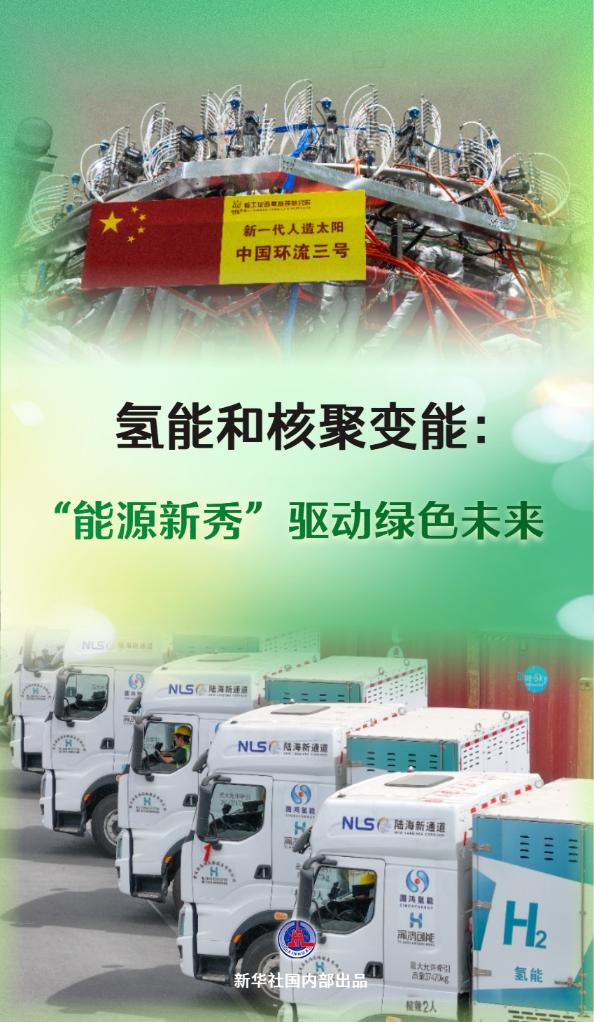
规划建议新看点丨氢能和核聚变能:“能源新秀”驱动绿色未来
Xin Hua She· 2025-11-17 05:30
Group 1 - The "14th Five-Year Plan" highlights hydrogen energy and nuclear fusion as emerging industries that will drive economic growth and contribute to carbon neutrality goals [1] - Hydrogen energy is produced through chemical reactions between hydrogen and oxygen, utilizing various primary energy sources, and is recognized as a clean secondary energy source [5] - By the end of 2024, China's hydrogen production capacity is expected to exceed 50 million tons per year, with a year-on-year growth of approximately 1.6% [5] Group 2 - Nuclear fusion is seen as the ultimate energy solution, mimicking the sun's energy production through the fusion of hydrogen isotopes under extreme conditions [5] - The energy produced from one liter of seawater's deuterium fusion is equivalent to that from 300 liters of gasoline, showcasing its potential [5] - Recent advancements in nuclear fusion research in China, such as the "China Circulation No. 3" achieving temperatures over 100 million degrees Celsius, indicate significant progress towards practical applications [6] Group 3 - The Director of the National Atomic Energy Agency stated that fusion technology is transitioning from research to engineering and commercial applications, with the potential to provide nearly limitless clean energy [7] - Hydrogen energy is expected to empower various industries, while nuclear fusion could illuminate homes, moving from science fiction to reality [7]

1426亿棵!我们为什么要在中国“数”树?
Ren Min Ri Bao· 2025-11-17 05:25
Core Insights - The first "Tree Density Map" of China reveals that as of 2020, there are approximately 142.6 billion trees in the country, equating to about 100 trees per person for the 1.4 billion population [1] - The initiative to quantify trees stems from the urgent need for precise data to support green development and carbon neutrality goals, moving beyond macro-level statistics to a detailed understanding of forest resources [1][2] - Advanced technologies, particularly LiDAR, have been pivotal in accurately measuring tree height, shape, and location, enabling efficient data collection across vast areas [2][3] Group 1 - The project involved extensive fieldwork, covering over 76,000 sample plots and collecting more than 400 terabytes of data, equivalent to over 80 million electronic photos [3] - The development of algorithms for drone flight and data analysis has allowed for the creation of a comprehensive tree density map, overcoming challenges posed by varied terrain and complex forest canopies [3] - The commitment to rigorous scientific research remains unchanged despite technological advancements, emphasizing the importance of foundational fieldwork [3][4] Group 2 - The discovery of Asia's tallest tree in Tibet highlights the significance of trees as living history and their role in understanding natural ecosystems [4] - The ongoing efforts aim to enhance the digital "account book" of China's natural ecology, contributing to the preservation of the country's green foundation [4]
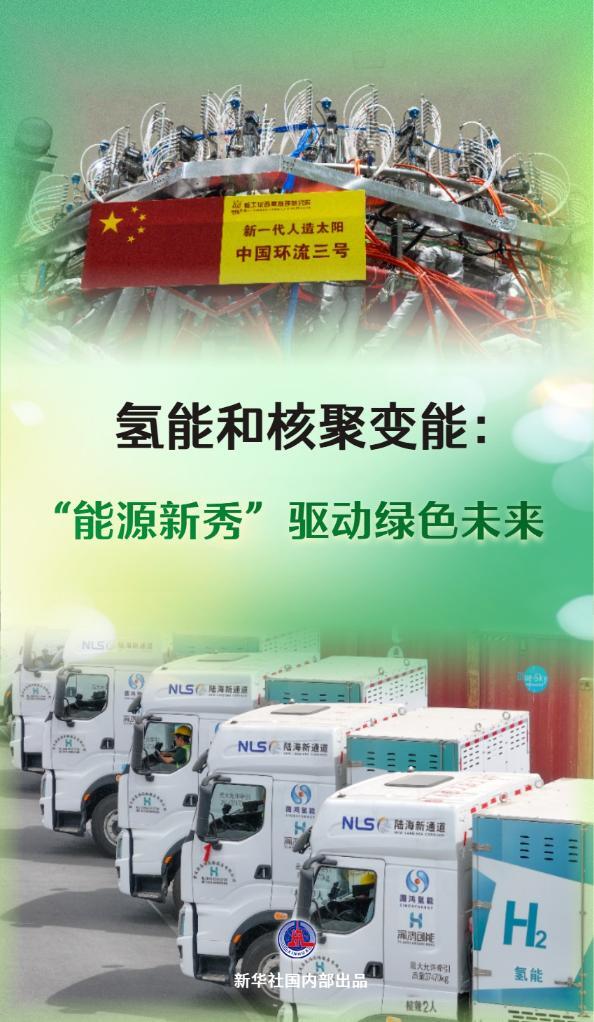
新华鲜报·规划建议新看点丨氢能和核聚变能:“能源新秀”驱动绿色未来
Xin Hua Wang· 2025-11-17 05:21
Group 1 - The "14th Five-Year Plan" highlights hydrogen energy and nuclear fusion as emerging industries that will drive economic growth and contribute to carbon neutrality goals [1] - Hydrogen energy is produced through chemical reactions between hydrogen and oxygen, utilizing various primary energy sources, and is recognized as a clean secondary energy source [5] - By the end of 2024, China's hydrogen production capacity is expected to exceed 50 million tons per year, with a year-on-year growth of approximately 1.6% [5] Group 2 - Nuclear fusion, likened to the sun's energy production, involves the fusion of hydrogen isotopes under extreme conditions, promising a clean and virtually limitless energy source [5] - Recent advancements in nuclear fusion research in China include breakthroughs in temperature and sustained high-quality burning, bringing the "artificial sun" closer to reality [6] - The Director of the National Atomic Energy Agency stated that fusion technology is transitioning from research to practical engineering and commercial applications [7]
新华鲜报·规划建议新看点|氢能和核聚变能:“能源新秀”驱动绿色未来
Xin Hua She· 2025-11-17 05:20
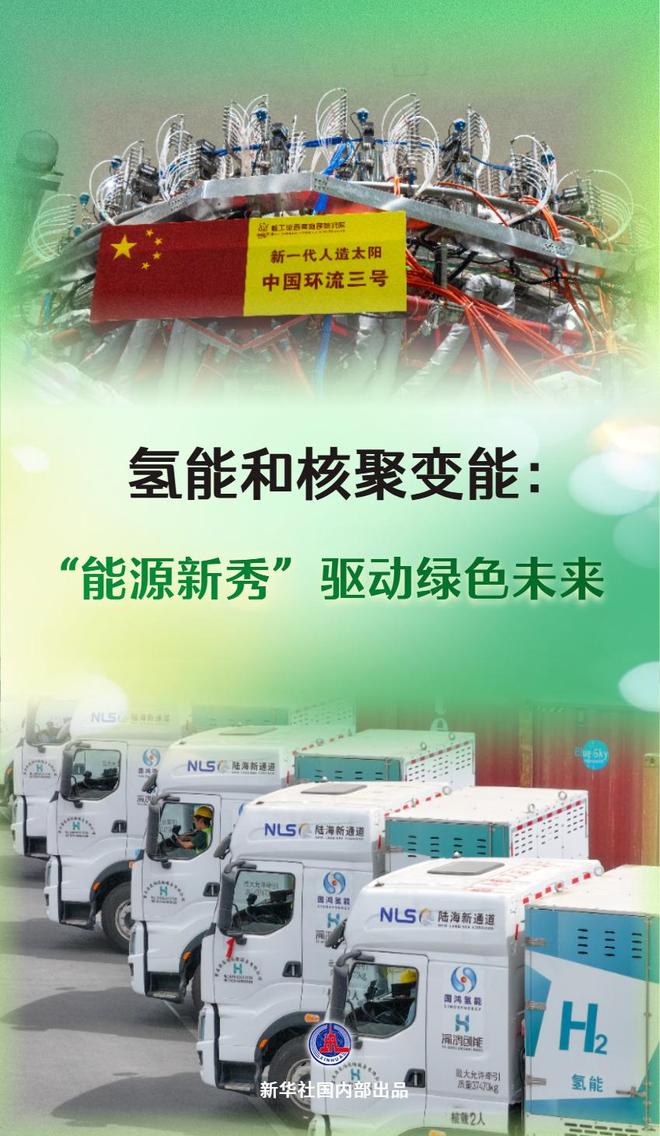
Group 1 - The "14th Five-Year Plan" highlights hydrogen energy and nuclear fusion as key future industries, expected to drive economic growth and support carbon neutrality goals [1] - Hydrogen energy is produced through chemical reactions between hydrogen and oxygen, utilizing various primary energy sources, and is recognized as a secondary clean energy [6] - The hydrogen industry is showing significant growth, with national hydrogen production capacity expected to exceed 50 million tons per year by the end of 2024, marking a year-on-year increase of approximately 1.6% [6] Group 2 - Nuclear fusion is viewed as the "idealistic" solution for achieving ultimate energy dreams, mimicking the sun's energy production through the fusion of hydrogen isotopes under extreme conditions [7] - The energy produced from nuclear fusion is substantial, with 1 liter of seawater containing deuterium capable of generating energy equivalent to 300 liters of gasoline [7] - Recent advancements in nuclear fusion research in China, including breakthroughs in temperature and sustained high-quality burning, are bringing the concept of a "man-made sun" closer to reality [7][8]
大幅缩减建站周期/成本,石家庄安瑞科中高压大规模绿氢储输装备发货
势银能链· 2025-11-17 04:04
Core Viewpoint - The article highlights the significant advancements made by Shijiazhuang Anruike Gas Machinery Co., Ltd. in the field of large-scale green hydrogen storage and transportation systems, marking a key breakthrough in China's technology landscape for green hydrogen [2][4]. Group 1: Technological Advancements - The newly shipped "high-pressure large-scale green hydrogen storage and transportation system" represents a collaborative achievement between Shijiazhuang Anruike and Baosteel, showcasing advanced domestic technology in this field [4]. - Traditional low-pressure hydrogen storage technologies face challenges such as large land requirements, complex on-site construction, quality control difficulties, and high storage costs. Shijiazhuang Anruike has successfully addressed these issues through innovative manufacturing processes and new hydrogen storage and transportation workflows [5]. - The new system features leading structural characteristics and excellent safety performance, achieving significant advantages in both unit hydrogen storage and transportation costs, as well as overall system operating costs [5]. Group 2: Market Impact and Applications - The modular design and large-scale factory production of the green hydrogen storage system ensure high-quality consistency and enable rapid on-site installation, significantly shortening project construction timelines [7]. - The successful shipment of this system demonstrates that Shijiazhuang Anruike's products have gained high market recognition and are ready for large-scale commercial applications. The system's solutions can support "energy storage-style hydrogen storage" and provide stable and reliable hydrogen supply for new large-scale applications in green hydrogen ammonia and green metallurgy [8]. - Shijiazhuang Anruike is positioned as an industry leader, having transitioned from a traditional equipment manufacturer to a provider of core green hydrogen storage and transportation solutions, thereby enhancing its market influence and driving the industry chain [10].

新政引导民间资本能源领域持股比例提升
中国能源报· 2025-11-17 03:49
Core Viewpoint - The recent measures introduced by the State Council aim to create a better environment for private capital to participate in key investment areas, particularly in energy, infrastructure, and technological innovation [1][3][5]. Group 1: Policy Measures - The document outlines 13 specific measures focusing on "expanding access, removing obstacles, and strengthening guarantees" to address issues like "difficult access" and "financing challenges" [3][5]. - Key projects requiring national approval, such as nuclear power and hydropower, will now have a feasibility study for private capital participation, encouraging shareholding ratios to exceed 10% [3][5]. - By 2025, the shareholding ratio for private capital in nuclear power projects is expected to increase from 10% to between 10% and 20% [3][5]. Group 2: Investment Environment - The energy sector has seen a shift towards a supportive system for private investment, with private enterprises becoming key players in traditional and emerging sectors [6][8]. - Private companies now account for nearly 60% of the electricity sales market, and the number of oil and gas transporters has surged from 5 in 2019 to 1005 [6][8]. - Policies promoting green electricity direct supply have enabled private renewable energy companies to supply electricity directly to users, enhancing local consumption [6][8]. Group 3: Investment Models and Innovations - The participation model of private capital in the energy sector is evolving from a focus on production to a comprehensive solution involving "technology + products + services" [10]. - Companies are encouraged to strengthen their technological capabilities and innovate their business models to transition from traditional suppliers to integrated service providers [10]. - Long-term planning is emphasized as essential for companies to navigate market cycles, with significant investments in R&D and technology innovation being crucial for future competitiveness [10][13]. Group 4: Financing Solutions - Infrastructure REITs have emerged as a vital tool to address financing challenges for private investment projects, with 105 REITs projects recommended and 83 listed, raising a total of 207 billion yuan [12]. - REITs provide a "exit channel" for private capital, facilitating a cycle of investment, operation, exit, and reinvestment [12]. - The energy sector will enhance mechanisms for private capital participation in major projects, refining shareholding requirements and promoting fair competition [12].
推动全球气候治理 中国发挥积极作用
中国能源报· 2025-11-17 02:47
Core Points - The COP30 conference in Brazil marks a significant moment for global climate governance, coinciding with the 80th anniversary of the UN and the 10th anniversary of the Paris Agreement, emphasizing the need for consensus and commitment in climate action [1] - China is actively participating in global climate governance, having submitted its new round of Nationally Determined Contributions (NDCs) with ambitious targets for greenhouse gas emissions reduction and renewable energy expansion [7][8] Group 1: Climate Governance and Action - The global community must accelerate efforts in emission reduction and resilience building, with a focus on inclusive and just transitions [3] - Liu Zhenmin emphasizes four key directions for climate governance: unwavering commitment to green and low-carbon transformation, pragmatic actions, just transition paths, and technological innovation [3][4] - The COP30 negotiations will focus on transitioning from fossil fuels, tripling renewable energy capacity, and providing $1.3 trillion annually to developing countries for climate funding [4][5] Group 2: China's Contributions and Goals - China has set a target to reduce greenhouse gas emissions by 7%-10% from peak levels by 2035, with non-fossil energy consumption reaching over 30% of total energy consumption [7][8] - The new NDCs include ambitious goals such as increasing wind and solar power capacity to six times the 2020 levels and achieving a forest stock of over 24 billion cubic meters [7][8] - China's commitment to climate action is seen as a significant contribution to global climate governance, showcasing its leadership in renewable energy and green technology [12]

为中国1426亿棵树建“绿色账本”
Ren Min Ri Bao· 2025-11-17 01:35
Core Insights - The first "Tree Density Map" of China reveals that as of 2020, there are approximately 142.6 billion trees in the country, equating to about 100 trees per person for the 1.4 billion population [1] - The initiative to quantify trees stems from the urgent need for precise data to support green development and carbon neutrality goals, moving beyond macro-level statistics to a detailed understanding of forest resources [1][2] - Advanced technologies, particularly LiDAR, have been pivotal in accurately measuring tree height, shape, and location, enabling efficient data collection across vast areas [2][3] Group 1 - The project involved extensive fieldwork, covering over 76,000 sample plots and collecting more than 400 terabytes of data, equivalent to over 80 million electronic photos [3] - The research team developed innovative algorithms to address challenges in measuring tree heights on uneven terrain and to analyze large datasets effectively [3] - The commitment to rigorous scientific research remains unchanged despite technological advancements, emphasizing the importance of perseverance and dedication in the field [3][4] Group 2 - The discovery of Asia's tallest tree, a 102.3-meter giant cypress in Tibet, highlights the significance of trees as living history and their role in nature [4] - The ongoing efforts aim to enhance the digital "account book" of China's natural ecology, contributing to the preservation of the country's green foundation [4]
趋势研判!2025年中国钍矿行业发展现状、进出口情况、需求市场、重点企业及未来发展趋势分析:技术突破驱动产业升级,钍基熔盐堆引领核电新格局[图]
Chan Ye Xin Xi Wang· 2025-11-17 01:08
Core Insights - Thorium ore is emerging as a strategic energy resource due to its high energy density, safety, low waste, and cost-effective extraction when associated with rare earth elements [1][4][6] - China leads in both resources and technology, with proven industrial reserves of 287,000 tons, ranking second globally, and significant breakthroughs in thorium fuel technology [1][4][6] - The thorium mining industry in China is characterized by a "net import" trade pattern, with Nigeria being a key source of imports, and prices for thorium ore have shown a significant upward trend [1][6][8] Thorium Mining Industry Overview - Thorium ore consists of minerals containing thorium, which has significant economic value due to its properties and association with rare earth elements [2][3] - The core advantages of thorium include extremely high energy density, superior safety performance, and low extraction costs [3][4] Current Development Status of China's Thorium Mining Industry - China's thorium mining industry is transitioning from a niche resource to a strategic energy core, supported by abundant resources and technological advancements [4][6] - The Baiyun Obo mining area holds over 75% of China's thorium reserves, with significant potential for further exploration [4][6] Thorium Resource Distribution in China - China's thorium resources are managed under strict regulations, leading to a notable "net import" pattern despite domestic abundance [6][8] - The import volume of thorium ore has been increasing, with a notable 24.67% year-on-year growth in the first nine months of 2025 [6][8] Thorium Mining Industry Supply Chain - The thorium mining industry has established a complete supply chain from geological exploration to nuclear fuel manufacturing, with applications expanding beyond nuclear power [9][11] - The industry is characterized by collaboration across the supply chain, with upstream resources being integrated with rare earth mining processes [9][11] Competitive Landscape of China's Thorium Mining Industry - The industry exhibits a competitive structure with monopolies in resource extraction, concentrated technology, and collaborative applications [14][15] - Key players include Baogang Group, which controls over 75% of thorium resources, and leading companies in materials and equipment manufacturing [14][15] Future Development Trends of China's Thorium Mining Industry - The future of the thorium mining industry will focus on the continuous breakthrough and commercialization of thorium-based molten salt reactor technology [16][17] - There will be an emphasis on deep collaboration across the supply chain, driving technological upgrades and expanding applications in clean energy and industrial processes [16][17] - The diversification of applications will enhance the strategic value of thorium, contributing to energy security and reducing reliance on imported uranium [17]


新型储能飙涨超3000%!中国储能在海外市场集中爆发
中关村储能产业技术联盟· 2025-11-17 00:34
Core Insights - The core viewpoint of the article highlights the rapid growth of China's energy storage industry, with installed capacity expected to exceed 100 million kilowatts by September 2025, marking a more than 30-fold increase compared to the end of the 13th Five-Year Plan, and accounting for over 40% of the global total, making China the world leader in this sector [3]. Group 1: Domestic Market Growth - The demand for energy storage continues to surge, with some companies reporting orders extending into next year [5]. - A Zhejiang-based power supply company can produce 20 megawatt-hours per day, equivalent to four energy storage containers, which can supply nearly 50 households daily [7]. - The overall production capacity of a Beijing-based energy storage system manufacturer has increased by nearly 80% compared to the same period last year [11]. - Since the implementation of mandatory energy storage policies in 2022, the domestic energy storage industry has accelerated, with shipment volumes increasing by over 80% year-on-year [13]. - Large-scale energy storage systems, particularly those used on the power generation and grid sides, have seen a year-on-year growth rate exceeding 200% [15]. Group 2: Policy and Market Dynamics - The rapid increase in energy storage demand is closely linked to the "dual carbon" goals, which have driven the penetration of renewable energy [17]. - The issuance of document 136 in February has accelerated market demand by removing mandatory energy storage requirements, leading to a faster release of market potential [19]. Group 3: International Expansion - In the first half of 2025, Chinese energy storage companies added 163 gigawatt-hours of overseas orders, a year-on-year increase of 246% [22]. - The demand for energy storage in India has surged tenfold this year, indicating a rapid growth phase in that market [24]. - Emerging markets in Eastern Europe have also seen at least a threefold increase in energy storage demand this year [26]. - The global energy transition is a key driver for the current wave of Chinese energy storage companies expanding internationally, with geopolitical factors contributing to increased demand [30]. - Demand in European and North American markets has grown by 3 to 5 times this year [31]. Group 4: Product and Service Evolution - The small-scale energy storage market is also experiencing rapid growth, with a focus on mobile and household storage products, primarily exported to Europe, America, and Africa [35]. - The revenue from energy storage for a Jiangsu-based battery company has nearly doubled this year, with products ranging from 2.5 kWh to 10 kWh for household use [37]. - Chinese energy storage companies are evolving their international strategy from a cost-based model to one that emphasizes full lifecycle service and maintenance [41].