
科技自立自强

Search documents
如何尝鲜首批浮动费率基金?“冠军”基金经理:买对行业是前提
券商中国· 2025-06-15 23:30
Core Viewpoint - The first batch of innovative floating rate funds represents an important step in the high-quality development of the public fund industry, with notable fund managers leading the charge [1][4]. Group 1: Fund Performance and Management - Wang Xiaochuan, the fund manager of Yinhua Growth Smart Mixed Fund, achieved a 50% return in 2024, making it the champion among actively managed stock open-end funds [2][4]. - The fund's investment strategy emphasizes "buying the right industry" as a key premise for achieving excess returns, focusing on sectors with strong economic performance [4][5]. - The Yinhua Digital Economy A fund, managed by Wang, has shown a strong correlation with benchmarks and high elasticity in performance [2][4]. Group 2: Investment Strategy - Wang's investment approach involves selecting 8-10 sub-industries with upward economic trends from a broader market of 30 major industries and 200 sub-industries [5][6]. - The selection process includes filtering out anomalies and focusing on companies with consistent profit growth over several quarters, while also considering valuation metrics [6]. - Wang adjusts stock positions dynamically based on profit expectations and market conditions, indicating a flexible investment strategy [4][5]. Group 3: Market Outlook - The upcoming year is anticipated to be a flourishing period for "hardware + Agent" technologies, with AI expected to become a strong investment theme [7][8]. - Current A-share valuations are relatively low, with major indices showing low price-to-book (PB) ratios, while the price-to-earnings (PE) ratios are slightly above average [7][8]. - The Chinese government's policies are expected to support technological innovation and self-reliance, particularly in AI and semiconductor sectors, providing a long-term boost to the tech industry [8].

银华基金王晓川——科技行情仍有演绎空间 人工智能有望成为主线
Zheng Quan Shi Bao· 2025-06-15 17:51
Core Viewpoint - The issuance of the first batch of innovative floating rate funds is a significant step towards the high-quality development of the public fund industry, with notable fund managers leading the charge [1] Group 1: Fund Performance and Management - Wang Xiaochuan, the proposed fund manager for the Silver华成长智选混合基金, achieved a 50% return in 2024 with the Silver华数字经济A fund, making it the champion among actively managed stock open-end funds [1][2] - Wang Xiaochuan emphasizes that selecting the right industry is crucial for achieving excess returns, often prioritizing sectors with strong economic performance [3][4] Group 2: Investment Strategy - The Silver华成长智选混合基金 is a mixed fund with a stock allocation of 60%-95%, covering a broad range of sectors including technology, pharmaceuticals, consumer goods, and military [3] - Wang Xiaochuan's investment strategy involves selecting 8-10 sub-industries with upward trends based on cash flow and revenue improvements, while avoiding anomalies and focusing on companies with consistent profit growth [4] Group 3: Market Outlook - The current market sentiment is more stable compared to previous periods, with expectations of policy adjustments potentially creating new trading opportunities, particularly in the technology sector [6] - A-shares are currently at low price-to-book (PB) ratios across major indices, while price-to-earnings (PE) ratios are slightly above average, indicating a potential for profit recovery and valuation improvement as growth policies are implemented [6] Group 4: Future Trends - Artificial intelligence (AI) is expected to become a key investment theme in China over the next two years, driven by external uncertainties that accelerate technological self-reliance [6][7] - The combination of hardware and AI agents is anticipated to flourish by 2025, with AI smartphones leading the development of the agent ecosystem [5][7]
跨界供热、制氢、海水淡化……如何不断拓宽核能综合利用的边界?
Zhong Guo Neng Yuan Wang· 2025-06-15 00:58
Group 1 - The article highlights the increasing diversification and personalization of consumer demand, which is driving manufacturers and distributors to innovate in product development and services [1] - Nuclear energy is presented as a prime example of this trend, with its applications expanding beyond electricity generation to include heating, hydrogen production, and seawater desalination [1][2] - The successful implementation of the "Warm Nuclear No. 1" project in Shandong, which has achieved significant milestones in nuclear heating, demonstrates the potential for nuclear energy to meet modern energy needs [2][3] Group 2 - Policy support is crucial for the advancement of nuclear energy applications, as seen in various national plans that encourage the integration of nuclear energy in heating and industrial processes [3] - The third-generation pressurized water reactor technology is being deployed in coastal areas of China, enhancing the capabilities of nuclear power plants to provide heating and industrial steam [4] - The future of nuclear energy in China is closely tied to innovation and adaptability, with a focus on developing new technologies and integrating nuclear energy with renewable sources [5]
总规模50亿元 四川省成果转化引导基金启动
Mei Ri Jing Ji Xin Wen· 2025-06-12 14:07
Group 1 - The second "Belt and Road" Technology Exchange Conference was held in Sichuan Tianfu New Area from June 10 to 12, focusing on artificial intelligence, healthcare, low-altitude economy, and high-end energy equipment [1] - A total of 40 "dual-direction leaderboard" project lists were released, and a 5 billion yuan Sichuan Province Achievement Transformation Guidance Fund was launched [1][2] - The event aims to enhance the quality and strength of six key industries in Sichuan and promote cross-border cooperation in technology projects [1][2] Group 2 - The Sichuan Province Achievement Transformation Guidance Fund emphasizes early investment in hard technology, focusing on critical core technologies in artificial intelligence, semiconductors, and new energy materials [2] - The fund plans to invest over 500 million yuan by 2025, aiming to foster original innovation and accelerate the industrialization of laboratory technologies [2] - Two projects were signed on-site, including a collaboration between Shenzhen Artificial Intelligence and Robotics Research Institute and Chengdu Guoxing Aerospace Technology Co., Ltd. [2] Group 3 - During the conference, multiple cross-regional technology achievement cooperation agreements were signed, including a collaboration with Singapore's Auri Investment Group to establish a dual-direction technology achievement transformation platform [3]
南财观察|深圳新一轮综改“置顶”,不止于吸引顶尖科学家
2 1 Shi Ji Jing Ji Bao Dao· 2025-06-12 13:45
Group 1 - Shenzhen has attracted top global talent, with 920 scholars selected as top 2% scientists, leading the nation in R&D personnel [1][6] - The recent policy document emphasizes the integration of education, technology, and talent reform as a priority for Shenzhen's development [1][2] - Shenzhen's R&D expenditure intensity reached 6.46% in 2023, with corporate R&D investment consistently above 90%, peaking at 93.3% [6][7] Group 2 - The new policy aims to create a collaborative network among government, industry, academia, and research, enhancing the role of enterprises in innovation [2][9] - Shenzhen's educational institutions are rapidly evolving, with 17 universities established and a focus on aligning higher education with economic needs [6][11] - The establishment of the Shenzhen Medical Academy, led by renowned scientist Yan Ning, reflects the city's commitment to innovative research and talent cultivation [9][10] Group 3 - The policy encourages a market-oriented approach to research management, allowing for greater autonomy in project selection and funding allocation [9][10] - Young researchers and teams are highlighted as key drivers of innovation, with a significant proportion of research personnel being under 40 years old [8][11] - Shenzhen's experience in integrating education and industry serves as a model for national talent development strategies [11][12]
国产仪器进平台,主任们怎么说?
仪器信息网· 2025-06-12 06:53
Core Viewpoint - The article discusses the current status and challenges of domestic scientific research instruments in the life sciences sector, emphasizing the need to enhance the acceptance and sustainable development of these instruments to support China's technological self-reliance and strength [1][2]. Group 1: Current Situation of Domestic Instruments - A significant reliance on imported instruments exists in laboratories, with domestic instruments primarily limited to refrigerators [2]. - The number of domestic high-end instruments entering public technology platforms remains limited, highlighting a long-term dependency on imports in the scientific research instrument sector [2]. Group 2: Impact of Geopolitical Factors - The geopolitical landscape, particularly the ongoing U.S.-China tensions, is accelerating the process of domestic substitution for scientific instruments. Export controls and tariffs have increased import costs, prompting a push for self-sufficiency in critical fields such as biotechnology and semiconductors [3]. Group 3: Upcoming Initiatives - A series of programs titled "Domestic Substitution in Progress" is being launched, with the first episode scheduled for June 13, 2025. This initiative aims to gather insights from platform leaders regarding the procurement, application, and maintenance of domestic scientific instruments [3][4]. Group 4: Key Discussion Topics - The first episode will cover several key topics, including: - The current status of domestic instrument procurement and usage in public technology platforms [5]. - Challenges faced in the final stages of domestic instrument implementation [5]. - Practical experiences and solutions from platform leaders regarding domestic instruments [5]. - Recommendations from platform leaders for overcoming challenges related to domestic instruments [5]. - Strategies for creating a sustainable ecosystem for domestic instruments [5].

全景式布局“硬核资产”,泰康上证科创板综合指数增强重磅来袭!
Xin Lang Cai Jing· 2025-06-10 03:58
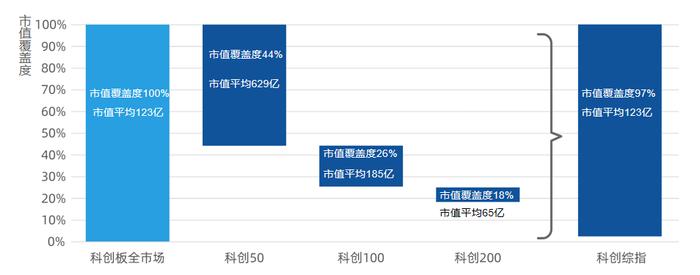
Group 1 - DeepSeek's emergence accelerates AI application proliferation and boosts chip companies' technological iteration, injecting growth momentum into the Sci-Tech Innovation Board [1] - As of May 30, 2025, the Sci-Tech Innovation Board has 587 listed companies with a total market capitalization of 6.64 trillion yuan, establishing itself as a core area for cutting-edge technology in China [1] - The launch of the TaiKang Sci-Tech Innovation Index Enhanced Fund on June 9 aims to help investors seize opportunities in the "Sci-Tech + Broad-based" index [1] Group 2 - The Sci-Tech Innovation Index covers 570 constituent stocks, representing over 97% of the total market capitalization of the Sci-Tech Innovation Board, providing a comprehensive view of China's technology innovation industry [2] - The index encompasses all 16 primary industries and 44 secondary industries, achieving a coverage rate of 96%, surpassing existing indices like Sci-Tech 50, 100, and 200 [5] Group 3 - The average and median market capitalization of the Sci-Tech Innovation Index constituents are 12.3 billion yuan and 5.3 billion yuan, respectively, aligning closely with the overall market [9] - The median R&D expense as a percentage of revenue for the index constituents is 12.5%, significantly higher than other broad-based indices, indicating strong innovation vitality [9] Group 4 - The expected profit growth for the Sci-Tech Innovation Index is projected to reach 84.95% in 2024, with an annualized growth rate of 39.26% from 2024 to 2025, outpacing the Shanghai and Shenzhen indices [12] - Since its base date of December 31, 2019, the Sci-Tech price index has achieved a cumulative return of 13.7%, outperforming the Sci-Tech 50, 100, and the CSI 300 indices [15] Group 5 - Current market conditions favor the allocation to the Sci-Tech Innovation Index, supported by strong policy backing and an expected global liquidity increase due to potential interest rate cuts by the Federal Reserve [18] - The core industries within the Sci-Tech Innovation Board are experiencing positive trends, with sectors like semiconductors and AI applications showing signs of recovery and growth [18] Group 6 - The rapid inclusion mechanism for new stocks on the Sci-Tech Innovation Board enhances the potential for excess returns, providing more alpha opportunities for actively managed index funds [19] - The Sci-Tech Innovation Index's diversified characteristics reduce investment risks associated with single market cap fluctuations, making it suitable for various market environments [15] Group 7 - The TaiKang Sci-Tech Innovation Index Enhanced Fund aims to leverage a dual strategy of index Beta and quantitative Alpha enhancement to achieve stable growth in returns [21] - The fund is managed by an experienced fund manager, Yuan Shuai, who has demonstrated strong performance in managing various funds across A-share and Hong Kong markets [22] Group 8 - The Sci-Tech Innovation Board is positioned as a key area for technological breakthroughs and an important direction for asset allocation, with the TaiKang Sci-Tech Innovation Index Enhanced Fund being launched to facilitate investment in future technologies [23]
长城基金雷俊:产业与政策共振 港股科技板块或迎长期配置机遇
Xin Lang Ji Jin· 2025-06-10 01:18
Core Viewpoint - The value of Chinese technology assets is becoming increasingly robust under the dual drivers of the global technology wave and AI industry transformation, presenting new investment opportunities in the Hong Kong technology sector [1] Group 1: Market Performance - The Hang Seng Technology Index has shown a year-to-date increase of 16.15% as of June 3, outperforming major global indices [1] - The index is characterized by high elasticity and low valuation, making it a strong tool for investing in the Hong Kong technology sector [1] Group 2: Industry Trends - The AI wave is accelerating technological breakthroughs across the AI industry chain, enhancing performance expectations for Hong Kong technology companies [1] - Major domestic internet companies are increasing their R&D investments, which are becoming core drivers of performance growth [1] Group 3: Policy Support - The "self-reliance in technology" policy is being reinforced amid intensified Sino-U.S. tech competition, with increasing support for domestic technology companies [2] - New policies are gradually transforming into fundamental improvement drivers for Hong Kong technology companies [2] Group 4: Index Characteristics - The Hang Seng Technology Index consists of 30 major Hong Kong-listed technology companies, reflecting the innovation trends in the sector [3] - The index includes a mix of "soft technology" and "hard technology" sectors, with 26 of its constituent companies not listed on the A-share market, creating a significant differentiation [3] Group 5: Valuation Insights - As of June 3, the Hang Seng Technology Index is valued at 20.43 times earnings, which is at a historical low of 9.49% over the past five years, significantly lower than the ChiNext Index (30.39 times) and the Nasdaq Index (40.17 times) [4] - The current phase is seen as a transition from "valuation repair to performance-driven" growth, with historical trends indicating that technology-driven market rallies tend to have prolonged sustainability [4]
深化全面从严治党 为建设科技强国提供坚强保障
Zhong Yang Ji Wei Guo Jia Jian Wei Wang Zhan· 2025-06-10 00:22
推进中国式现代化,科学技术要打头阵,科技创新是必由之路。站在民族复兴战略全局和世界百年变局 的战略高度,面对大国科技博弈加剧的严峻挑战,党中央作出到2035年建成科技强国的目标,距离这一 目标还有10年时间,任务越是紧迫繁重,越需要充分发挥全面从严治党的政治引领和政治保障作用。习 近平总书记在二十届中央纪委四次全会上的重要讲话,深刻分析当前反腐败斗争形势,旗帜鲜明澄清错 误认识、廓清思想迷雾,对深入推进全面从严治党作出战略部署,为推进新征程纪检监察工作高质量发 展提供了强大思想武器。中央纪委国家监委驻科技部纪检监察组深学细悟习近平总书记在二十届中央纪 委四次全会上的重要讲话精神,坚持深学习、实调研、抓落实,以落实中央巡视整改和深入贯彻中央八 项规定精神学习教育为契机,贯通政治监督和日常监督,强力正风肃纪反腐,推动综合监督单位深化全 面从严治党,为加快推进高水平科技自立自强、建设科技强国提供坚强政治保障。 深化科研管理领域风腐同查同治。坚持以深入贯彻中央八项规定精神学习教育为契机,推动深入开展违 规吃喝等突出问题专项整治,持续强化风腐同查同治,对违规吃喝等享乐奢靡问题全面查、深挖背后腐 败问题,凡查腐败案件必挖 ...
加快构建科技金融新体制 支撑高水平科技自立自强
Jin Rong Shi Bao· 2025-06-09 03:23
Core Viewpoint - The document emphasizes the critical role of technology finance in supporting high-level technological self-reliance and innovation in China, highlighting the issuance of a policy document by seven government departments aimed at addressing structural contradictions between technological innovation and financial services [1]. Group 1: Current Challenges in Technology Finance - The technology finance system in China faces several bottlenecks, including mismatches between the supply of technology finance and the actual needs of technology enterprises, particularly for high-risk, high-investment, and light-asset "hard technology" companies [2][3]. - There is a low proportion of direct financing, especially equity financing, in the financial structure, which does not align well with the high-risk, high-reward nature of technological innovation [3][4]. - Insufficient policy coordination and an imperfect ecological environment hinder the overall effectiveness of technology finance, with a lack of interdisciplinary talent further complicating the situation [4]. Group 2: Strategic Deployment and Core Ideas - The policy document aims to construct a technology finance system that aligns with technological innovation, proposing a series of targeted strategic deployments to provide comprehensive financial services throughout the lifecycle of technology innovation [5][6]. - The establishment of a "National Venture Capital Guidance Fund" is proposed to support the growth of technology enterprises and promote the transformation of significant technological achievements, potentially mobilizing nearly one trillion yuan in local and social capital [5][6]. - The document encourages the expansion of venture capital sources and the participation of various financial institutions in supporting technology innovation through direct financing methods [6][7]. Group 3: Key Policy Measures - The policy emphasizes the need for monetary credit support for technology innovation, advocating for the use of structural monetary policy tools to enhance credit support for key technological projects and small technology enterprises [7][8]. - It calls for strengthening the capital market's role in supporting technology innovation, including enhancing mechanisms for new stock issuance and supporting the listing of technology enterprises with key technological breakthroughs [8][9]. - The document highlights the importance of technology insurance as a stabilizing factor, proposing the development of insurance products that cover the entire lifecycle of technology enterprises [9]. Group 4: Implementation and Coordination - Successful implementation of the policy requires effective coordination among various government departments and the establishment of a dynamic identification mechanism for "technology enterprises" [10][11]. - The document stresses the importance of market-oriented and efficient operation of government guidance funds and policy tools to ensure effective use of financial resources [11][12]. - Building a comprehensive technology finance ecosystem is essential for sustainable policy development, with a focus on cultivating interdisciplinary talent to address the talent gap in the sector [12].