
产业升级

Search documents
开勒股份(301070.SZ):拟收购科盛机电不低于50%股权快速切入高端镀膜装备核心赛道
Ge Long Hui A P P· 2025-10-22 14:52
Core Viewpoint - The company plans to acquire at least 50% of Dongguan Kesheng Electromechanical Equipment Co., Ltd. in cash, which will make Kesheng a subsidiary of the company, enhancing its position in the high-end coating equipment sector [1] Group 1: Acquisition Details - The acquisition will allow the company to quickly gain Kesheng's technological, customer resource, and market channel advantages, effectively overcoming industry entry barriers [1] - Kesheng's main business includes the research and production of core components for magnetron sputtering coating equipment, with products widely used in semiconductor, new energy, 3C consumer electronics, nuclear power, and defense industries [1] Group 2: Strategic Benefits - The acquisition will facilitate the integration and synergy of technological resources between the two companies, accelerating the company's transition from traditional industrial manufacturing to high-end intelligent manufacturing [1] - Post-acquisition, the company will establish a diversified business structure comprising traditional industrial fans, high-end coating core components, and AI applications, reducing reliance on a single business and mitigating cyclical risks [1] Group 3: Market Outlook - The industry in which Kesheng operates has a promising future and significant development space, which will help the company cultivate new profit growth points and create long-term value for shareholders [1]
上海市前三季度外贸“阶梯式”上行 9月份规模突破4000亿元大关
Xin Hua Cai Jing· 2025-10-22 13:46
Core Insights - Shanghai's total import and export value reached 3.34 trillion yuan in the first three quarters of the year, marking a 5.4% increase year-on-year, with the growth rate accelerating by 0.9 percentage points compared to the first eight months of the year [1] Trade Performance - Exports totaled 1.48 trillion yuan, reflecting an 11.3% year-on-year increase, while imports amounted to 1.86 trillion yuan, showing a 1.1% growth [1] - The quarterly import and export values were 1.01 trillion yuan, 1.14 trillion yuan, and 1.19 trillion yuan respectively, with year-on-year changes of -2.5%, +7.2%, and +11.3% [1] - In September alone, the import and export value reached 405.9 billion yuan, surpassing the 400 billion yuan mark, with a year-on-year growth of 12.5% [1] Private Sector Contribution - Private enterprises accounted for 1.32 trillion yuan in import and export value, a 27.1% increase year-on-year, contributing 8.9 percentage points to the overall foreign trade growth [1] - The share of private enterprises in the total import and export value rose to 39.5%, an increase of 6.7 percentage points from the previous year, marking a historical high [1] Market Diversification - Imports and exports to emerging markets such as ASEAN, the Middle East, and Africa reached 474.82 billion yuan, 121.13 billion yuan, and 112.85 billion yuan respectively, with year-on-year growth rates of 12.5%, 22.9%, and 32.5% [2] - Trade with India and Mexico also saw significant increases, with import and export values of 74.14 billion yuan and 60.69 billion yuan, reflecting year-on-year growth of 33% and 17.4% respectively [2] - Trade with the EU slightly declined by 0.4%, totaling 600.31 billion yuan [2] Export Products - Key export products included integrated circuits, general machinery, and electrical control devices, with export values of 150.54 billion yuan, 29 billion yuan, and 27.72 billion yuan, showing year-on-year growth of 10%, 25%, and 20.5% respectively [2] - The export of green shipping equipment, particularly liquid cargo ships, surged by 82.7% to 20.63 billion yuan [2] - Emerging products like electric passenger vehicles, lithium batteries, and solar cells reached an export value of 112.17 billion yuan, a 6.3% increase, with lithium battery exports alone growing by 20.7% to 32.15 billion yuan [2] Import Trends - High-tech product imports totaled 601.58 billion yuan, a 6.4% increase, outpacing overall import growth by 5.3 percentage points [3] - Significant growth was observed in the import of semiconductor manufacturing equipment, computers and components, and aircraft, with increases of 22.6%, 16.1%, and 1.2 times respectively [3] - Consumer goods imports amounted to 358.54 billion yuan, despite a 6.5% decline overall, with essential items like dairy, fruits, and meat showing growth rates of 19.7%, 15.3%, and 2.8% respectively [3] Bulk Commodity Imports - Bulk commodity imports reached 214.81 billion yuan, reflecting a 2.5% year-on-year increase, with metal ore imports growing by 10.4% [4]
深圳出台三年行动方案 力争到2027年底培育20家千亿市值企业
Zhong Guo Jing Ying Bao· 2025-10-22 13:39
Core Insights - The Shenzhen government has launched an action plan to promote high-quality mergers and acquisitions (M&A) from 2025 to 2027, aiming for a significant increase in the quality and quantity of listed companies and M&A activities in the region [1][2] Group 1: Action Plan Goals - By the end of 2027, the total market capitalization of listed companies in Shenzhen is expected to exceed 20 trillion yuan, with the goal of nurturing 20 companies with a market value of over 100 billion yuan [1] - The plan aims to complete over 200 M&A projects with a total transaction value exceeding 100 billion yuan, establishing a number of industry demonstration cases [1] - A matrix of M&A funds will be developed to foster excellent fund managers, leading to the formation of a trillion-yuan "20+8" industrial fund cluster [1] Group 2: M&A Strategy - The action plan emphasizes a "new" approach to M&A, supporting leading companies in strategic emerging industries to conduct upstream and downstream acquisitions [2] - It encourages the acquisition of unprofitable high-quality assets to strengthen supply chains and enhance key technological capabilities [2] - The plan supports both private and state-owned enterprises in their transformation through M&A, particularly focusing on "specialized, refined, distinctive, and innovative" companies [2] Group 3: Market Context - As of August 31, there are 424 A-share listed companies in Shenzhen, with a total market capitalization of 11.16 trillion yuan [2]
台基股份前三季度净利润增长205.58%
Ju Chao Zi Xun· 2025-10-22 12:41
Core Insights - The company, Taiji Co., Ltd. (300046.SZ), reported a net profit of 56.6853 million yuan for the first three quarters of 2025, representing a year-on-year increase of 205.58% [1][3] - The overall business operation is stable, and the financial condition continues to improve [1] Financial Performance - Total operating revenue for the first three quarters reached 271 million yuan, with a year-on-year growth of 5.85% [3] - Basic earnings per share stood at 0.24 yuan [3] - Total assets at the end of the period amounted to 1.261 billion yuan, with accounts receivable of 137 million yuan [3] - Net cash flow from operating activities was 6.653 million yuan [3] Financial Highlights - The average year-on-year growth rate of net profit is 85.96%, indicating strong growth capability [3] - The company has a debt-to-equity ratio of 0, suggesting low debt repayment pressure [3] - Current ratio is 10.36, reflecting excellent short-term debt repayment ability [3] - Operating profit increased by 223.54% year-on-year, showing significant profit growth [3] Risk Indicators - The average cash collection ratio for the main business is 61.57%, indicating relatively weak cash flow, which is the only risk item identified [3] - Overall, the company demonstrates strong growth potential, a stable asset structure, and low financial risk [3] Industry Position - Taiji Co., Ltd. ranks prominently in the semiconductor and component industry, with an overall financial score of 3.36 [3] - With the advancement of industrial upgrades and the domestic chip self-sufficiency process, the company is expected to further enhance its profitability and market competitiveness [3]


前三季度上海外贸逐季向好 9月份规模突破4000亿元大关
Zheng Quan Shi Bao Wang· 2025-10-22 09:26
Core Insights - Shanghai's foreign trade showed a positive trend in the first three quarters of the year, with total imports and exports reaching 3.34 trillion yuan, a year-on-year increase of 5.4% [1] - Exports amounted to 1.48 trillion yuan, growing by 11.3%, while imports were 1.86 trillion yuan, with a modest increase of 1.1% [1] Group 1: Trade Performance - The quarterly trade figures for Shanghai were 1.01 trillion yuan, 1.14 trillion yuan, and 1.19 trillion yuan, indicating a "stair-step" upward trend, particularly with September's trade surpassing 400 billion yuan, marking a 12.5% increase [1] - In September, exports grew by 9.4% and imports by 15% [1] Group 2: Export Products - Key export products included integrated circuits (150.54 billion yuan, +10%), general machinery (29 billion yuan, +25%), and electrical control devices (27.72 billion yuan, +20.5%) [1] - The export of green shipping equipment, specifically liquid cargo ships, surged by 82.7% to 20.63 billion yuan [1] - "New three items" exports totaled 112.17 billion yuan, with lithium battery exports reaching 32.15 billion yuan, an increase of 20.7% [1] Group 3: Market Structure - Private enterprises emerged as a significant driver of foreign trade growth, achieving 1.32 trillion yuan in imports and exports, a 27.1% increase, contributing 8.9 percentage points to overall trade growth [2] - The share of private enterprises in total trade rose to 39.5%, a historical high, up 6.7 percentage points from the previous year [2] Group 4: Emerging Markets - Trade with emerging markets showed significant growth, with imports and exports to ASEAN, the Middle East, and Africa increasing by 12.5%, 22.9%, and 32.5%, respectively [2] - Trade with India and Mexico also grew, with respective increases of 33% and 17.4% [2] Group 5: Import Trends - High-tech product imports accelerated, totaling 601.58 billion yuan, a 6.4% increase, outpacing overall import growth by 5.3 percentage points [2] - Notable increases in imports included semiconductor manufacturing equipment (22.6%), computers and components (16.1%), and aircraft and parts (120%) [2] - Consumer goods imports decreased by 6.5% to 358.54 billion yuan, but essential items like dairy, fruits, and meat saw increases of 19.7%, 15.3%, and 2.8%, respectively [2] - Bulk commodity imports rose by 2.5%, with metal ore imports increasing by 10.4% [2]
(走进中国乡村)辽宁盘锦稻香蟹肥迎丰收
Zhong Guo Xin Wen Wang· 2025-10-22 09:07
Core Insights - The article highlights the successful harvest season in Panjin, Liaoning, focusing on the increased rice yield and the thriving river crab farming industry, which utilizes a unique ecological farming model [1][3][5] Group 1: Rice Production - The rice harvest in Panjin is expected to yield significantly higher per acre compared to previous years, with mechanized operations fully implemented [1][3] - The total rice planting area in Panjin remains stable at over 1.6 million acres, and the local rice has been recognized as a national geographical indication product [3][4] - The "Honghaitan No. 1" rice has been awarded as one of the first "Liaoning Quality Products," indicating its high quality and market acceptance [3][4] Group 2: River Crab Farming - Panjin is recognized as the birthplace of the rice-crab farming technique, which allows crabs to feed on pests and weeds in rice fields, enhancing both rice and crab quality [3][4] - Local crab farmers report high quality and yield this year, with some achieving a production of 30 pounds of crabs per acre after an initial investment of 10 pounds of juvenile crabs [4][5] - The "Panjin Model" of integrated rice and crab farming has created a sustainable and profitable farming approach, benefiting local farmers [4][5] Group 3: Economic Impact and Tourism - The dual harvest of rice and crabs has not only improved economic benefits for farmers but also boosted confidence in promoting this farming model [5] - The Red Beach National Rice Park attracted many tourists during the National Day and Mid-Autumn Festival, showcasing the economic potential of agritourism alongside agricultural production [5] - The integration of rice planting, technology demonstration, and nostalgic experiences at the "1955 State Farm" has enhanced both product sales and tourism experiences [5]

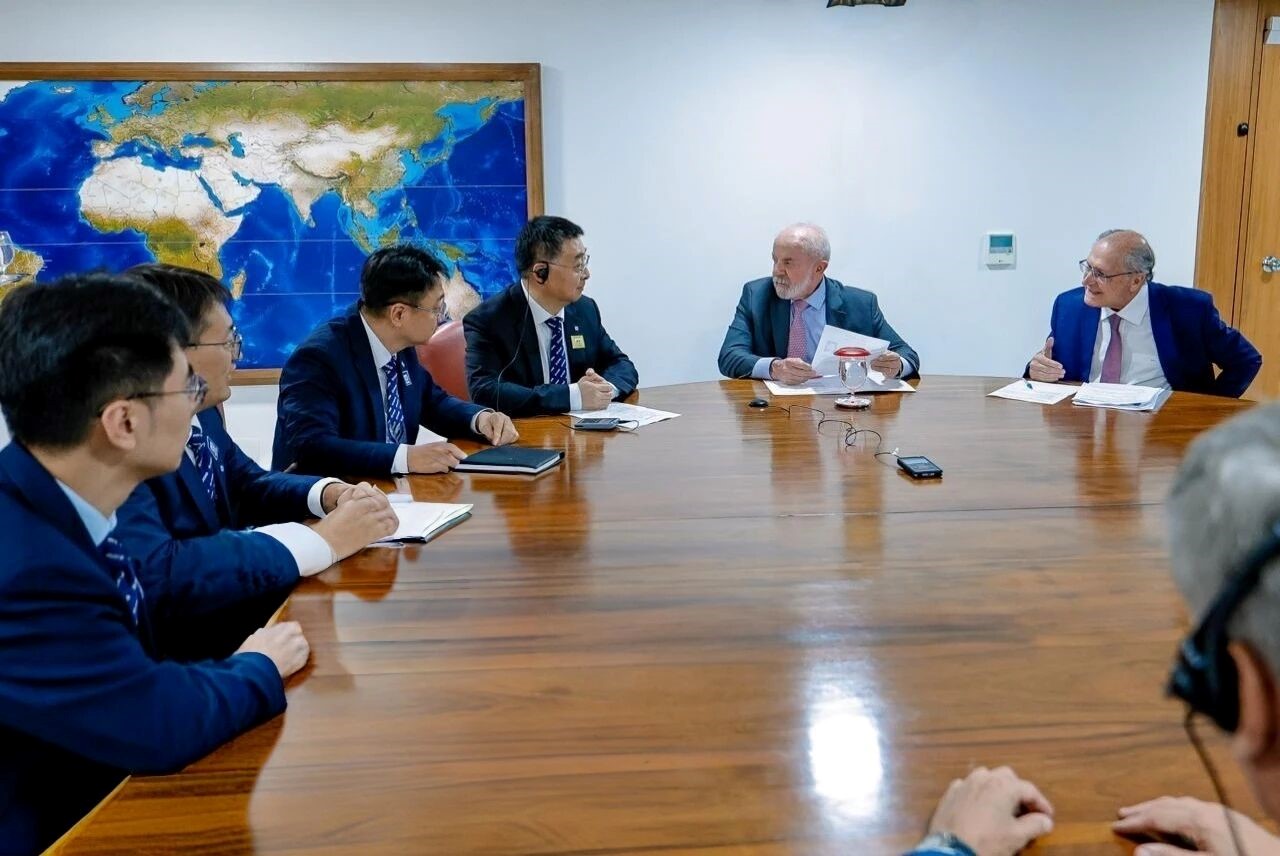
巴西总统卢拉表示愿与中企携手推动可持续发展
人民网-国际频道 原创稿· 2025-10-22 09:00
当地时间10月20日,巴西总统卢拉在总统府会见来访的徐工集团董事长杨东升一行。徐工集团供图 杨东升介绍了徐工在巴西市场从贸易出口、绿地建厂到"智改数转网联"的发展历程,表示徐工将持续坚持高端化、智能化、绿色化、全球化、服务化的 发展方向,积极推进产业数字化升级,践行绿色制造理念,履行企业社会责任,加强本土青年人才培养,深化本地化运营,以巴西为中心辐射南美主要国 家,打造长期可持续发展的新格局。 巴西副总统兼发展、工业、贸易和服务部长阿尔克明,总统府首席部长鲁伊·科斯塔出席会见。 人民网里约热内卢10月20日电 (记者陈一鸣)巴西利亚消息:当地时间10月20日,巴西总统卢拉在总统府会见到访的徐工集团董事长杨东升一行时表 示,巴西欢迎包括徐工在内的中国企业积极参与当地基础设施建设、数字经济发展和绿色转型进程,愿与中国企业携手推动可持续发展,实现互利共赢。 卢拉对徐工集团在巴西深耕十余年取得的成果表示祝贺,高度评价企业在推动产业升级、节能减排和数字化转型方面作出的努力,并肯定徐工巴西银行 的稳健运营。他表示,期待徐工在巴西设立研究院,进一步扩大投资规模,为两国经贸往来与人文交流树立成功典范。 ...

中国(株洲)硬质材料及工具产业发展大会开幕
Zhong Guo Jing Ji Wang· 2025-10-22 08:55
Core Insights - The 2025 China (Zhuzhou) Hard Materials and Tools Industry Development Conference opened in Zhuzhou, Hunan Province, focusing on "innovation, intelligent manufacturing, cooperation, and win-win" for industry upgrades and high-quality development [1][2] Industry Overview - The hard materials and tools sector is a critical indicator of manufacturing competitiveness, supporting high-end manufacturing, energy development, and aerospace [1] - China's hard materials industry has transitioned from scale expansion to quality improvement, establishing a globally leading complete industrial system, with a market size of 628 billion yuan in 2024, where cemented carbide accounts for over 60% and diamond tools show a robust growth rate of 6.1% [1] Regional Development - Zhuzhou has developed a complete industrial chain from upstream powder raw material preparation to midstream alloy production and processing, down to downstream terminal product manufacturing and resource recycling, becoming the largest cemented carbide production base in China [1] - In 2024, Zhuzhou's advanced hard materials industry achieved a total output value of 56.1 billion yuan, with leading products like CNC blades and alloy rods accounting for a significant share of national production [1] Key Applications and Collaborations - The conference announced 10 major applications in the tungsten industry, covering critical fields such as deep well drilling, PCB manufacturing, tunnel engineering, aerospace, new energy, semiconductor, and 3D printing [2] - A collaboration framework was established involving government, associations, research institutions, and leading enterprises to enhance project implementation, industry synergy, and research integration [2]
打造生物医药健康产业集群,海淀上庄举行人才论坛
Xin Jing Bao· 2025-10-22 08:26
Core Viewpoint - The third Talent Forum in Haidian Shangzhuang Town focuses on building a biopharmaceutical health industry cluster centered around the Zhongguancun Science City International Medical Valley while consolidating its "ecological conservation area" positioning [1] Group 1: Talent Development - The forum aims to create a platform for attracting and nurturing talents who possess both professional depth and an understanding of innovative management and market application [1] - This initiative is intended to provide talent and intellectual support for key projects like the Zhongguancun Science City International Medical Valley, promoting cultural heritage, industrial upgrading, and high-quality regional economic development [1] Group 2: Economic and Technological Innovation - The Haidian Shangzhuang Town Economic Development and Technological Innovation Office provided detailed insights into the area's development strategies, spatial layout, historical and cultural background, and ecological environment [1] - The development plan and construction details of the Zhongguancun Science City International Medical Valley project were thoroughly explained [1] Group 3: Industry Collaboration - Experts and scholars engaged in in-depth discussions focusing on enhancing industrial economic capabilities and cultivating innovative talents [1] - The town awarded plaques to high-quality enterprises in agriculture, culture, and tourism [1] Group 4: Strategic Importance - The town's leadership emphasized that talent has become a core driving force for regional development, aligning with the national strategies of rural revitalization and talent empowerment [1] - The initiative is seen as a strong impetus for regional development, leveraging the momentum from the Haidian District's "Intelligent Gathering in Haidian" talent theme week [1]
沃特股份:公司将紧抓下游产业升级和材料性能需求提升机遇
Zheng Quan Ri Bao Wang· 2025-10-22 07:42
Core Viewpoint - The company,沃特股份, is committed to seizing opportunities arising from downstream industry upgrades and the increasing demand for material performance, regardless of international circumstances [1] Group 1 - The company aims to provide competitive polymer material solutions to both domestic and international clients [1]
