
文旅融合

Search documents
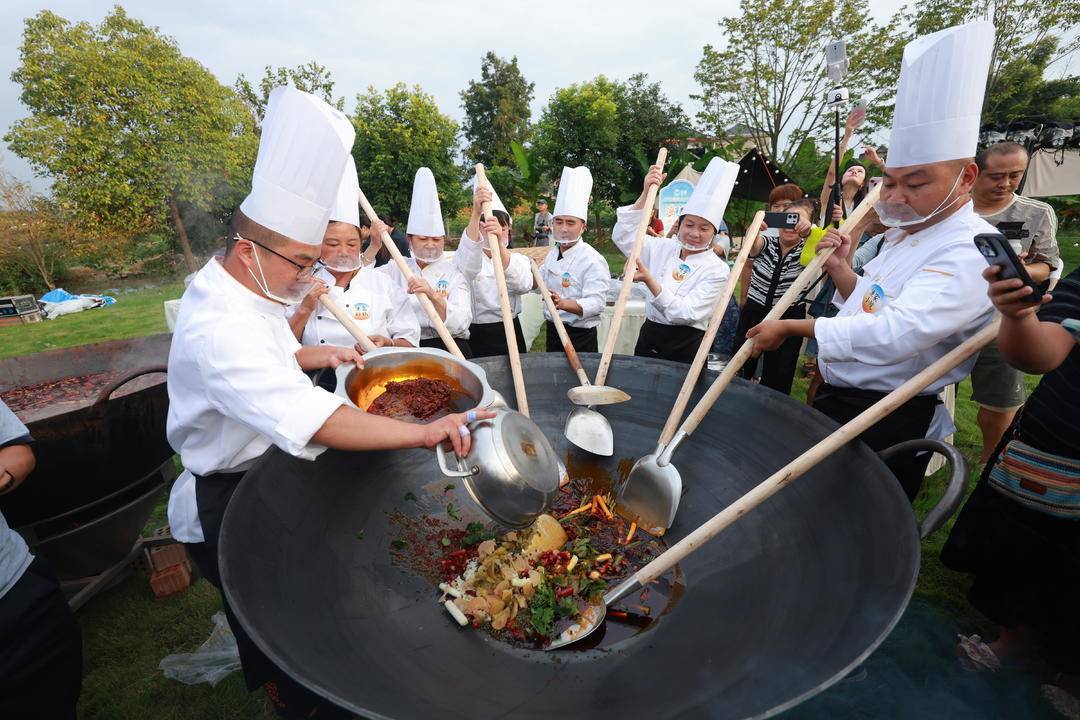
国庆去吃鱼!成都新津发放40万元消费券开启鱼鲜美食消费季
Sou Hu Cai Jing· 2025-09-26 16:44
Core Insights - The event "2025 New Jin District Landmark Huang Lading Brand Promotion and Anxi Intangible Cultural Heritage Fish Head Hot Pot Food Consumption Season" was launched on September 26, showcasing the integration of local culinary heritage and tourism [1][3] - The event aims to promote the geographical indication product "New Jin Huang Lading" and the city-level intangible cultural heritage "Anxi Fish Head Hot Pot," enhancing consumer engagement through various activities [1][5] Group 1: Event Overview - The event combines local fishery products with cultural heritage, featuring folk performances, brand promotion, and consumer benefits [1][5] - A direct supply agreement was signed between Yiyang Breeding Farm and the New Jin District Fish Hot Pot Association, ensuring the authenticity of the fish products [3] Group 2: Consumer Engagement - The New Jin District is hosting a food consumption season leading up to the National Day holiday, linking the harvest festival with culinary tourism [5] - Visitors can receive a total of 400,000 yuan in dining vouchers and enjoy exclusive discounts and experiences at participating restaurants using the "Jin Li" card [5] Group 3: Additional Activities - The event features an autumn harvest market showcasing local agricultural products, along with interactive activities such as a music concert and beer challenge [7] - Attendees expressed satisfaction with the rich culinary experiences and cultural insights gained during the event [7]

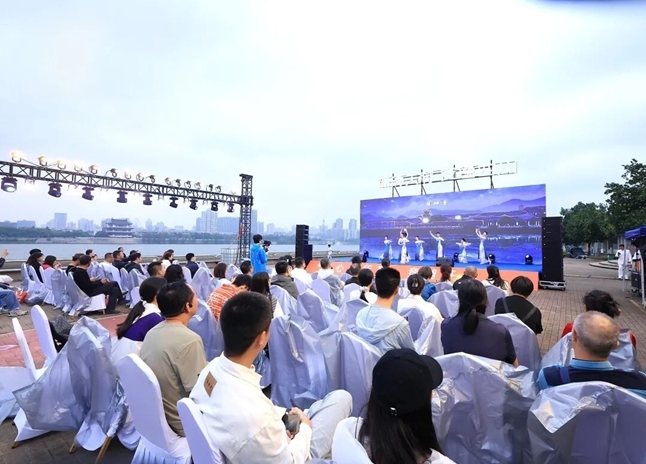
“川”越千里 “湘”约恩阳——巴中文旅推介走进长沙
Zhong Guo Jing Ji Wang· 2025-09-26 09:05
秋阳染透湘江波,橘洲风携桂香来。9月20日,"锦绣天府·安逸四川"文化和旅游、巴中城市形象暨 光雾山国际红叶节巡回推介活动,在长沙市橘子洲景区举行。通过专场推介、路演等多形式多层次的活 动,将"诗意山水·红色巴中"的独特魅力,化作秋日里最动人的邀约,递到长沙市民面前。 "光雾山是巴中最绚丽的生态封面,恩阳便是最深厚的人文扉页。"下午4时,巴中文旅推介官以诗 意比喻开篇,将第二十三届光雾山国际红叶节的烂漫与恩阳古镇的厚重娓娓道来。宣传片中,漫山红叶 似火燃烧,配上生动解说,瞬间牵住了长沙市民刘倩的心:"早闻光雾山红叶甲天下,今日得见更觉心 向往之,国庆已定下计划携家人同赴这场红色盛宴。" 推介中,恩阳古镇"四色交融"的新貌尤为夺目。"梦华录"古色古香的街巷,叠映着大宋市井烟火; 红色革命遗址借VR技术"苏醒",让人手可触历史温度;绿色生态新城里,草木与楼宇相映,展现宜居 魅力;科普大视界成为研学新地标,点亮求知目光。河南游客完颜看得沉醉:"千年古镇藏着红色记 忆,还有着现代科技,这般奇妙交融,我一定要去探寻。" 此外,恩阳10月至11月将迎来两大盛会——2025雷神杯ACL全国高校电竞精英赛与2025四川省数字 ...
2025百家旅行商广州行文旅推介活动举办
Guang Zhou Ri Bao· 2025-09-26 08:03
Core Insights - The "Passion for the National Games, Charm of the Flower City" event was held in Guangzhou from September 25 to 27, 2025, gathering over 100 representatives from around 50 cities in China and 10 countries including France, Japan, Australia, Saudi Arabia, UAE, and Singapore to promote cultural tourism [1][2] Group 1: Event Overview - The event featured three main components: three-dimensional exploration, diverse market displays, and exciting promotional activities, leveraging the upcoming National Games and the Special Olympics to expand cultural tourism cooperation [1] - A specially curated route named "Ancient and Modern Symphony: Cantonese Rhythm Flower City" was designed to showcase the integration of culture and urban vitality, connecting various scenes from modern landmarks to historical sites [1] Group 2: Cultural and Tourism Promotion - The cultural tourism market highlighted "intangible cultural heritage + regional characteristics," with demonstrations from national and provincial intangible heritage representatives, creating a "living intangible heritage museum" [2] - The promotional activities presented a panoramic view of Guangzhou's cultural tourism vitality, launching themed product lines that encompass culinary, historical, natural, joyful, and revolutionary elements to lay a foundation for future cooperation [2] Group 3: Future Opportunities - The event also focused on promoting inbound tourism with policies such as 240-hour visa-free transit and convenient payment options, aimed at enhancing the inbound tourism market [2] - The sharing session featured athletes conveying the dynamic synergy of "cultural tourism + sports," generating excitement for the upcoming National Games and Special Olympics [2]
贵州镇远: 阳河畔,千年古镇打好“文旅牌”
Xin Jing Bao· 2025-09-26 07:48
夜幕降临, 阳河畔的灯光渐次亮起。载满游客的观演船从镇江阁出发,顺流而行,《 水月明》大型山 水实景剧正式开演。沿途," 水仙子""龙舟小伙""异域商贾"陆续登场,再现镇远作为历史上商贸重镇、 文化交流枢纽和南方丝绸之路要津的繁华景象。岸边的民宿院内,有的游客在学习茶艺,有的在动手制 作非遗工艺品…… 9月17日,国新办就扩大服务消费有关政策措施举行新闻发布会,文化和旅游部产业发展司司长缪沐阳 表示,文旅消费是改善型消费的重要组成部分,目前呈现了百花齐放、千帆竞发的火热局面。文化和旅 游已经成为人民美好生活的刚需,逐渐成为主导型消费。 贵州黔东南州镇远县,四周群山环抱, 阳河如一条碧绿绸带穿城而过,自西向东蜿蜒成一道"S"形曲 线,将古城划分为南北两城,形成"九山抱一水,一水分两城"的独特太极图风貌。古城内,有青龙洞古 建筑群等97处文物保护单位,上百项非遗代表性项目。近年来,这座有着2200余年历史的古城,正通过 文旅深度融合,让传统文化遗产焕发全新生命力。 非遗体验 指尖技艺传承留住游客脚步 清晨的阳光洒在青石板路上,镇远古城步行街热闹了起来。信步走进冲子口巷,北侗刺绣文化体验中心 就位于此。侗族刺绣省级 ...
崂山风景名胜区:创新营销“组合拳”助力景区强势出圈
Qi Lu Wan Bao Wang· 2025-09-26 05:53
Core Insights - The article highlights the innovative marketing strategies adopted by the Laoshan Scenic Area to enhance its visibility and visitor numbers amidst evolving consumer demands in the tourism industry [1][5]. Group 1: Innovative Marketing Strategies - The scenic area has launched a series of themed marketing activities, breaking away from traditional sightseeing models, and leveraging cross-industry collaborations to attract visitors [2]. - During the summer, the scenic area capitalized on the popularity of the animated film "Liao Zhai: Lan Ruo Si" by organizing immersive performances and promotional activities, including a lottery for tickets, which resulted in a significant increase in visitor engagement [2]. - The scenic area implemented a "ticket root economy," offering discounts to visitors holding movie or concert tickets, which successfully boosted attendance during events like the Qingdao International Beer Festival, attracting 1.116 million visitors [2]. Group 2: Targeted Marketing Approaches - The scenic area has developed precise marketing strategies tailored to different visitor demographics, utilizing data analysis to understand visitor preferences and behaviors [3]. - By collaborating with platforms like Ctrip and Meituan, the scenic area has launched customized tours and ticket subsidies, leading to a notable increase in out-of-province visitors, particularly from Jiangsu Province [3]. - Efforts to expand international visitor markets have included partnerships with international travel agencies, focusing on attracting tourists from Japan, Southeast Asia, and Europe, with recent visits from foreign tourists from Azerbaijan marking a significant achievement [3]. Group 3: Digital Transformation - The scenic area is advancing its digital transformation by implementing new technologies to create immersive marketing experiences, enhancing visitor satisfaction and engagement [4]. - A collaboration with Ctrip has led to the launch of a multilingual smart ticketing system, which has served over 13,223 visitors and generated significant ticket sales, indicating a successful integration of technology in enhancing visitor experience [4]. - The scenic area has also introduced online platforms for reservations and smart navigation, improving visitor convenience and reducing wait times, thereby increasing overall satisfaction [5]. Group 4: Overall Impact - Through the implementation of innovative marketing activities, targeted outreach, and digital enhancements, the scenic area has successfully increased both its brand influence and visitor numbers, setting a benchmark for quality development in the tourism sector [5].
第四届长沙市旅游发展大会今日在宁乡开幕
Chang Sha Wan Bao· 2025-09-26 03:38
Core Insights - Changsha has emerged as a top tourist destination, receiving 238,200 inbound visitors in the first half of the year, with total spending reaching $140 million, marking year-on-year growth of 54.19% and 49.25% respectively [1] - The annual Changsha Tourism Development Conference has become a significant platform for enhancing the cultural tourism industry and improving the city's image, with the fourth conference scheduled for September 26 [1] - Changsha is actively promoting its cultural tourism through various initiatives, including the implementation of ten cultural tourism projects and the recognition as one of the "Top Ten Cities for Beautiful Living in China" [1] Group 1: Tourism Development Initiatives - The renovation of the Dafu Di Chuyuan Hot Spring Inn during the tourism conference showcases traditional culture and aims to provide an immersive experience [2] - Changsha's cultural and tourism sectors are being integrated to create a comprehensive industry chain, enhancing attractions like the Changsha Fantawild Oriental Heritage and the Tanheli Bronze Museum [2] - The successful hosting of the tourism development conferences has led to significant advancements in local tourism, with Wocheng and Liuyang achieving notable rankings in national tourism strength [4][5] Group 2: International Promotion and Visitor Engagement - Global influencers have visited Changsha, promoting the city as a vibrant destination, with a significant increase in inbound tourists, particularly from regions benefiting from the 240-hour visa-free transit policy [6][7][8] - Changsha is leveraging its cultural and historical assets to attract international visitors, aiming to establish itself as a key entry point for inbound tourism in China [7][8] Group 3: Cultural and Community Engagement - The city is enhancing its cultural offerings through events like the Red Storytelling Competition, which aims to instill revolutionary spirit and engage the community [9] - Efforts to improve public cultural services and facilities are ongoing, with initiatives to increase access to literature, exhibitions, and performances, thereby enhancing the overall cultural experience for residents [10] - The local government emphasizes the importance of cultural tourism integration to drive high-quality industry development, aiming to make Changsha a beloved destination [11]
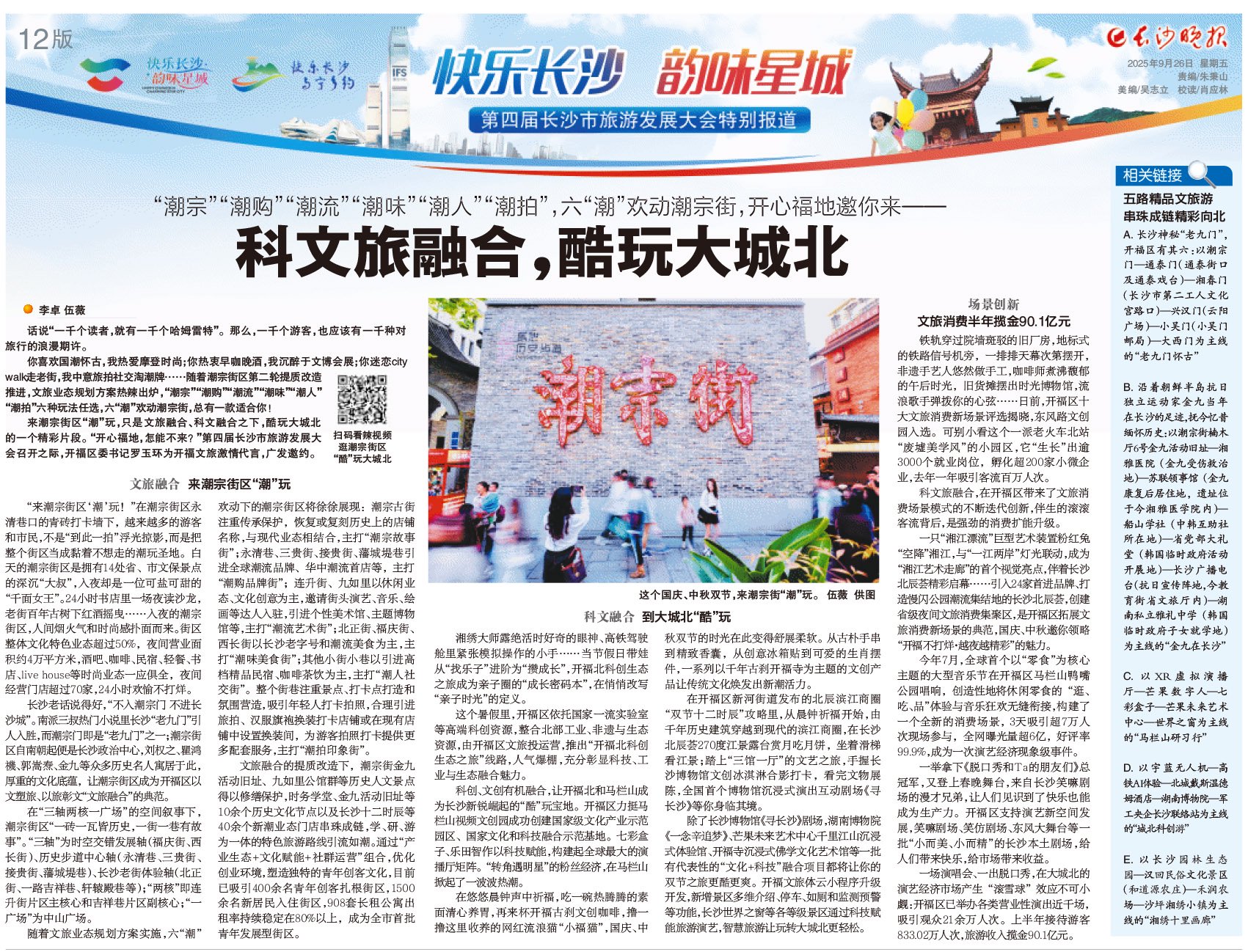
科文旅融合,酷玩大城北
Chang Sha Wan Bao· 2025-09-26 00:38
Core Viewpoint - The article highlights the vibrant transformation of the Chaozong Street area in Changsha, showcasing its integration of cultural and tourism elements, and the diverse experiences it offers to visitors, emphasizing the blend of historical significance and modern attractions [4][7][9]. Group 1: Cultural and Tourism Integration - Chaozong Street features six distinct themes for visitors, including "Chaozong Stories Street" and "Chao Purchase Brand Street," catering to various interests and enhancing the cultural tourism experience [8][9]. - The area has over 50% of its cultural characteristics, with approximately 40,000 square meters of night-time operational space, housing over 70 businesses including bars, cafes, and bookstores [7][9]. - The street's historical significance is underscored by its role as a political center since the Southern Dynasties, making it a model for cultural tourism integration in the region [7][9]. Group 2: Economic Impact and Visitor Engagement - The Chaozong Street area has attracted over 400 young entrepreneurs and 1,500 new residents, with a stable rental rate of 80% for long-term apartments, indicating a thriving community [9][12]. - The area generated a tourism revenue of 9.01 billion yuan in the first half of the year, with 8.33 million visitors, reflecting strong consumer engagement and economic growth [12][13]. - Innovative cultural tourism experiences, such as the "Kongfu North Science and Technology Eco Tour," have become popular among families, showcasing the integration of technology and culture [10][11]. Group 3: New Tourism Experiences - The introduction of new cultural and technological projects, such as immersive theater experiences and creative cultural products, enhances the appeal of the area during festive seasons [11][13]. - The development of unique consumption scenarios, like the "Zero Food" themed music festival, has attracted significant attendance and media attention, demonstrating the area's potential for innovative tourism [13][14]. - The establishment of various themed routes, such as the "Old Nine Gates" and "Gold Nine in Changsha," promotes historical awareness and cultural appreciation among visitors [14].
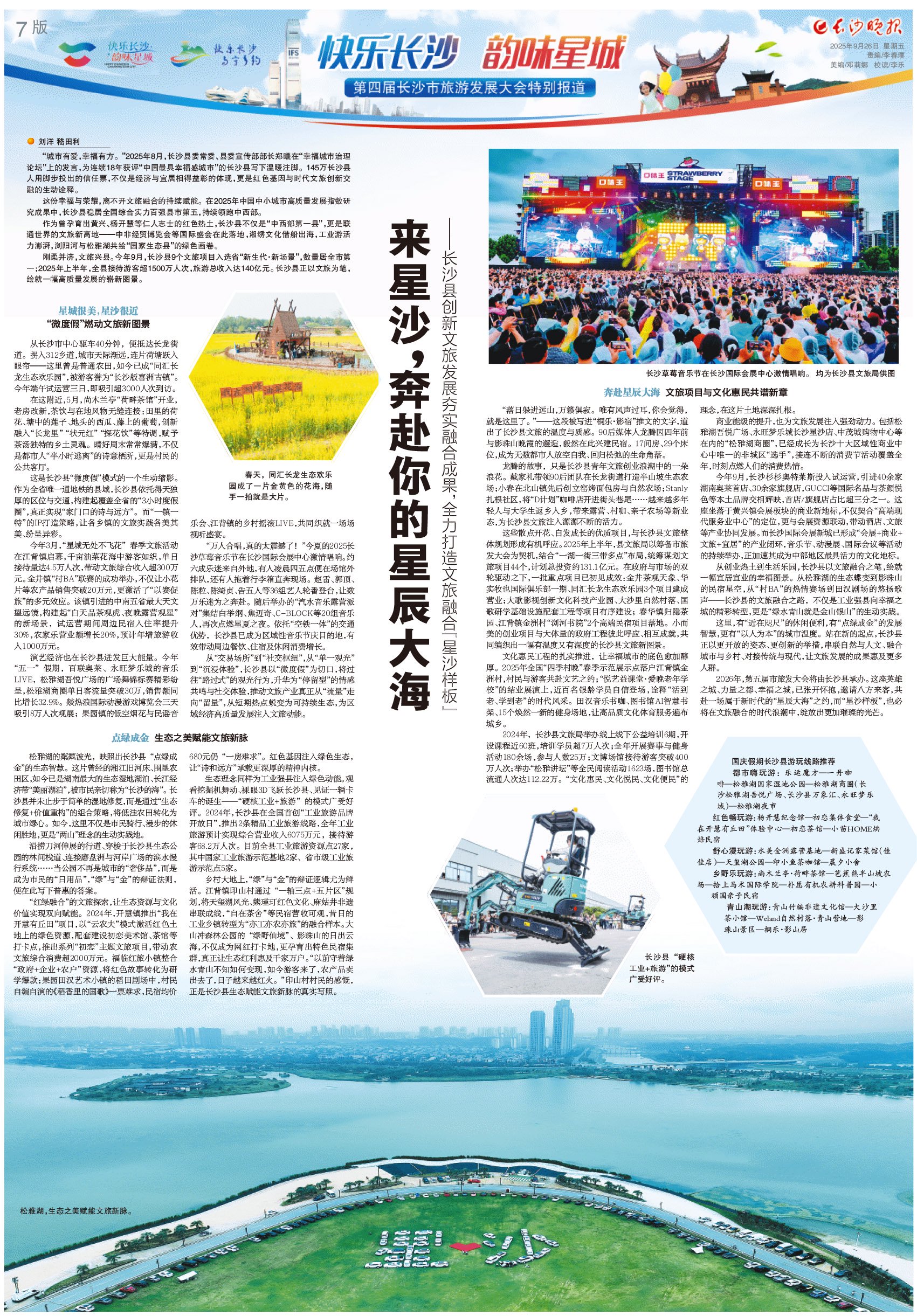
来星沙,奔赴你的星辰大海
Chang Sha Wan Bao· 2025-09-25 23:57
Core Insights - Changsha County has been recognized as one of the "happiest cities in China" for 18 consecutive years, reflecting a blend of economic prosperity and livability, driven by cultural and tourism integration [7] - The county ranks fifth in the national comprehensive strength among counties and cities, showcasing its leadership in the central and western regions of China [7] - The integration of culture and tourism has significantly contributed to the county's high-quality development, with over 15 million tourists and a tourism revenue of 14 billion yuan in the first half of 2025 [7][8] Group 1: Cultural and Tourism Development - The "micro-vacation" model in Changsha County has transformed ordinary farmland into popular tourist destinations, such as the "Tonghui Changlong Ecological Happy Park," attracting over 3,000 visitors during its trial operation [8] - The county's cultural tourism projects have generated substantial economic benefits, with events like the "Spring Cultural Tourism Activity" drawing 45,000 visitors in a single day and generating over 3 million yuan in revenue [9] - The county has seen a surge in performing arts, with events during the May Day holiday attracting over 300,000 visitors and a sales increase of 32.9% in the surrounding commercial areas [9][11] Group 2: Ecological and Industrial Integration - Changsha County has successfully transformed its ecological resources into tourism assets, with the "Point Green into Gold" strategy enhancing the value of its wetlands and parks [12][14] - The county has introduced industrial tourism, with an expected revenue of 607.5 million yuan from industrial tourism activities in 2024, showcasing the potential of combining industry with tourism [15] - The integration of ecological and cultural resources has led to innovative projects, such as the "I Have Hills in Kaihui" initiative, which has generated over 20 million yuan in comprehensive consumption [14] Group 3: Youth and Community Engagement - A wave of young entrepreneurs is revitalizing the cultural tourism landscape in Changsha County, with new businesses like eco-farms and cafes emerging to cater to urban residents seeking leisure [17] - The county's cultural initiatives have engaged over 700,000 participants in various training and cultural activities, promoting lifelong learning and community involvement [19] - The establishment of commercial centers like the Changsha Shanshan Outlets has enhanced the county's commercial landscape, attracting international and local brands [19] Group 4: Future Prospects - Changsha County is set to host the 2026 City Tourism Development Conference, positioning itself as a key player in regional tourism and cultural exchange [20] - The county's strategic planning includes 44 tourism projects with a total investment of approximately 131.1 billion yuan, indicating a strong commitment to sustainable tourism development [18] - The integration of cultural and tourism resources aims to create a more inclusive and vibrant community, enhancing the overall quality of life for residents and visitors alike [20]
国庆中秋双节将至,网友期待——新玩法“拉满”体验感
Xin Hua Wang· 2025-09-25 23:37
Core Insights - The upcoming National Day and Mid-Autumn Festival have prompted various regions to launch diverse new consumption scenarios and activities, particularly in cultural tourism, sports economy, and creative consumption, attracting significant public interest [1][7][8]. Group 1: Cultural Tourism Innovations - Chongqing has introduced a unique "Hot Pot Special Train" to enhance holiday consumption, featuring cultural elements and interactive experiences that resonate with local identity [7]. - Beijing plans to host over 2,400 distinctive cultural tourism activities, including a lantern festival and various performances, to celebrate the dual festivals [8]. - Fujian's Wuyishan city has developed a series of cultural tourism products and policies to enhance the autumn travel experience, including night economy events and immersive tea experiences [8]. Group 2: Sports and Events Integration - The 2025 Qilu Football Super League in Shandong has integrated local culture and tourism with sports, creating a platform for diverse economic benefits through events [12][13]. - The "City Super" football invitation tournament in Guiyang aims to convert sports traffic into economic growth by promoting local tourism and business [13]. - Zhejiang's Zhuji city is leveraging a basketball event to create a multi-faceted market platform, combining sports, culture, and local products to stimulate consumption [13]. Group 3: Creative Consumption Trends - The National Library's commercial store in Beijing has successfully blended traditional culture with modern consumer products, attracting significant interest from the public [16]. - The city of Pinghu has gained attention for its unique watermelon lanterns, showcasing local culture and creativity, which has become a popular attraction [16][17]. - The integration of AR technology in cultural events in Pinghu demonstrates a successful fusion of local history and modern technology, enhancing visitor engagement [17].
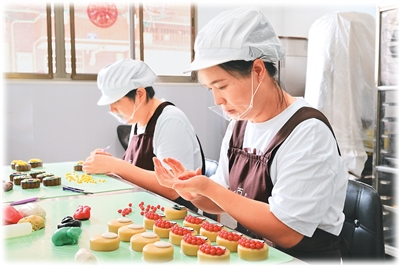
新玩法“拉满”体验感
Ren Min Ri Bao Hai Wai Ban· 2025-09-25 22:31
Core Insights - The upcoming National Day and Mid-Autumn Festival have prompted various regions in China to launch diverse new consumption scenarios and activities, particularly in cultural tourism, sports events, and creative consumption, attracting significant public interest [4][10][15] Group 1: Cultural Tourism and Events - Huangshan's Xidi Ancient Village in Anhui is hosting a creative autumn sun-drying event to enhance cultural tourism integration [2] - In Beijing, over 2,400 unique cultural tourism activities will be launched under the theme "Jingcai Qiu Yun Double Festival Celebration," including a lantern festival and performances at the Great Wall [6] - Fujian's Wuyishan is introducing a series of cultural tourism products and policies to enhance the autumn travel experience, including a food carnival and tea-related events [6] Group 2: Innovative Consumption Models - Chongqing has introduced a "Hot Pot Special Train" to celebrate the holidays, showcasing local culture and enhancing the festive atmosphere [5] - The "Ru Super" football league in Shandong integrates sports with local culture and tourism, offering unique travel routes and local product exhibitions [10][11] - Zhejiang's Zhuji is hosting a "Common Prosperity Market" that combines sports, tourism, and local products, promoting consumption growth across various sectors [12] Group 3: Creative Consumption - The National Library's first commercial store in Beijing has successfully blended traditional culture with modern consumer products, attracting significant interest [15] - The city of Pinghu in Zhejiang is gaining attention for its unique watermelon lanterns, which symbolize local culture and community spirit [16] - The integration of AR technology in cultural events in Pinghu showcases the fusion of historical culture with modern technology, enhancing visitor engagement [16]