
性别平等

Search documents
在数字化转型中实现性别平等:信息通信行业如何架起“数字桥梁”
Sou Hu Cai Jing· 2025-05-18 11:35
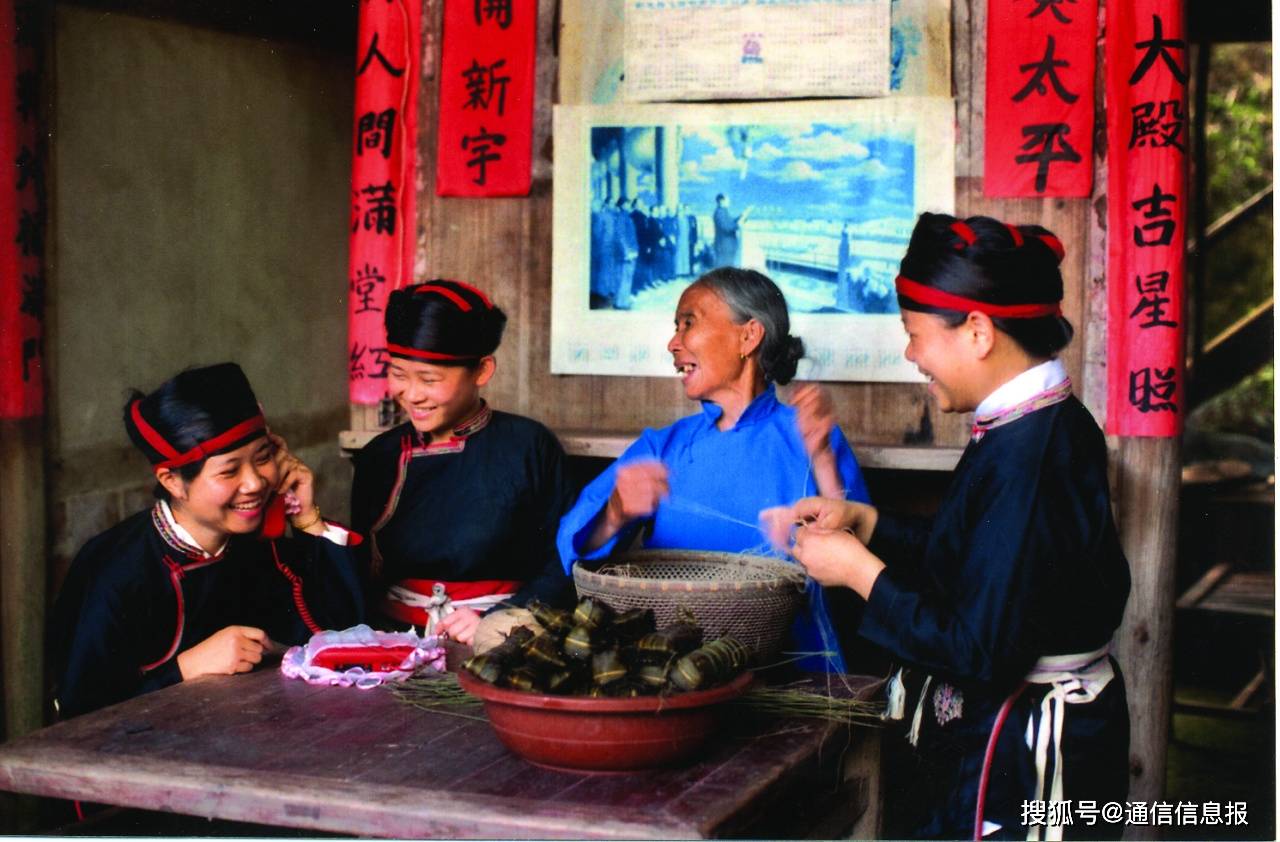
Core Viewpoint - The article emphasizes the transformative power of information and communication technology (ICT) in promoting gender equality and enhancing digital accessibility, particularly in rural areas of Fujian Province, China [2][3]. Group 1: Digital Accessibility and Infrastructure Development - Fujian Province has made significant strides in improving communication capabilities, achieving "village-to-village" telephone access by 2005 and broadband access by 2012, with high-speed broadband completed by 2018 [3]. - The province has built a robust digital infrastructure, including 481,000 mobile phone base stations and 150,000 5G base stations, with internet broadband access ports reaching 41.3 million [3]. - The increase in digital infrastructure has allowed women in remote areas to connect with their families and communities, breaking the historical barriers of communication [3][4]. Group 2: Inclusive Ecosystem and Service Fairness - The telecommunications market has seen improvements in service fairness through measures such as price reductions, number portability, and enhanced customer service [5]. - Public communication services have evolved to include safety measures, such as flood alerts and anti-fraud campaigns, benefiting households and communities [5]. Group 3: Empowerment of Women through Technology - Companies like Huawei and ZTE are focusing on the diverse needs of female users in the mobile communication market, offering tailored solutions that combine practicality and style [6]. - Fujian-based internet companies are emerging to support women's health and well-being, exemplified by platforms like Meitu and Meiyou, which provide comprehensive health management services [6]. - The digital economy is creating job opportunities for women in sectors like e-commerce and live streaming, showcasing their potential and contributions to the economy [7]. Group 4: Innovation and Development Opportunities - The growth of the digital economy has lowered barriers for women, fostering a more inclusive online environment that creates new opportunities for development [7]. - Initiatives like the establishment of a maritime service center by China Mobile in Ningde demonstrate the commitment to enhancing digital services for specific communities, such as fishermen [7][8]. - Women in the telecommunications sector are making significant contributions, with examples of female workers excelling in traditionally male-dominated roles, ensuring network reliability and service continuity [8].

数字化时代:中国女性群星闪耀时
Zhong Guo Xin Wen Wang· 2025-05-17 14:00
Group 1 - The theme for the 2025 World Telecommunication and Information Society Day is "Achieving Gender Equality in Digital Transformation," highlighting the contributions of women in the ICT sector [1] - A roundtable forum was held to discuss enhancing women's influence and participation in the digital age, featuring five outstanding female representatives from education, industry, and academia [1] - Huang Yuhong, a leading expert in telecommunications, emphasized the strong technical insight and innovation capabilities of women, as well as their significant role in international standard-setting [1] Group 2 - The China Mobile Research Institute's 5G/6G international standard-setting team, recognized as a "National March 8th Red Banner Collective," has made significant contributions to the development of core technologies and has applied for over 2,000 related patents [2] - Chen Zhiping, Vice President of ZTE Corporation, noted the company's first female chairperson and highlighted that 41% of partners in tech companies are women, indicating a growing space for women's career development [2] - A professional magazine, "Communication World," has invited 100 women in ICT to share their stories, acknowledging their role in reshaping the ICT industry landscape in China [2] Group 3 - Li Ying, Vice President of the China Women's University, discussed three key strategies to enhance women's participation in socio-economic activities: breaking traditional stereotypes, increasing visibility of female role models, and empowering women to access resources equally [3] - Qualcomm's global vice president, Hou Mingjuan, highlighted the resilience of women innovators and encouraged them to leverage their strengths [3] - Huang Jingbo, Director of the United Nations University Institute in Macau, mentioned efforts in education and training for women, emphasizing the importance of including women in training programs [3]

江苏网民男女比例约53:47,“5G+工业互联网”实现“四个全国第一”
Yang Zi Wan Bao Wang· 2025-05-15 13:52
Core Insights - The conference held on May 15, 2025, in Nanjing focused on the theme "Achieving Gender Equality in Digital Transformation" and released a report on the development of the information and communication industry in Jiangsu Province [1][2]. Group 1: Gender Representation and AI Applications - Approximately 41% of the workforce in Jiangsu's communication industry is female, highlighting the significant role women play in the sector [2]. - As of March 2024, there are over 10,000 artificial intelligence application projects in Jiangsu's basic telecommunications enterprises, with a 43.2% increase compared to the previous period [2]. Group 2: Infrastructure Development and Social Impact - By the end of 2024, Jiangsu has built and opened 294,000 5G base stations, ranking second in the country, with 26,000 5G-A base stations and 330 million IoT terminal users [2]. - The communication industry has completed 15,098 underground space 4G/5G signal coverage projects and renovated 860 old residential communities, benefiting 220,000 households [3]. Group 3: Security and Fraud Prevention Initiatives - Jiangsu has established a "Fraud Prevention Alliance" with various departments, actively cleaning up over 3.82 million high-risk phone cards and processing 41.68 million fraud-related calls [3]. Group 4: Future Directions and Innovations - The conference featured discussions on the integration of AI and communication technologies, with a focus on 6G and AI applications, providing theoretical support for Jiangsu's "Artificial Intelligence+" initiative [4]. - Future efforts will concentrate on upgrading information infrastructure, promoting AI innovation, enhancing 5G and AI integration, and ensuring data security [4].
解决高额彩礼的路径不是“限高”
Jing Ji Guan Cha Bao· 2025-05-14 14:50
Core Viewpoint - The article discusses the issue of high bride prices in rural areas of Gansu Province, China, and the government's plan to address this problem through a comprehensive governance scheme aimed at reducing the financial burden on families by setting advocacy standards for bride prices by 2025 [1][4]. Group 1: Government Initiatives - Gansu Province has introduced a governance plan that aims to implement advocacy standards for bride prices by June 2025, based on local disposable income and customs [1]. - The plan sets two main goals: to reduce the financial burden of marriage for rural families by the end of 2025 and to improve social customs related to marriage by the end of 2026 [1]. Group 2: Societal Implications - High bride prices have led to increased economic burdens on families, contributing to rising debt and poverty rates among rural households, as well as a growing number of divorce disputes related to bride price debts [1][2]. - The societal perception of women is negatively impacted by high bride prices, leading to issues such as the commodification of women and a lack of freedom in partner selection [2]. Group 3: Legal and Moral Considerations - Legal measures are being implemented to address bride price disputes, with the Supreme People's Court providing guidelines to ensure that bride prices do not equate to consent in sexual matters [3]. - The article emphasizes that while legal frameworks are important, changing deep-rooted societal values and promoting moral education are essential for long-term solutions to the issue of high bride prices [3][4]. Group 4: Challenges and Recommendations - The governance approach may face challenges in changing entrenched societal beliefs about marriage costs, as the notion that "marrying requires spending money" persists [4]. - The article suggests that improving social security and encouraging rational choices in marriage may be more effective than merely imposing limits on bride prices [4].
两名人选仍然保密,“全女候选”引发争议,英军情六处将迎来首位女局长
Huan Qiu Shi Bao· 2025-05-11 21:46
不过,此次MI6领导人的选拔机制却在舆论场掀起波澜。不少英国网民对此表达不满,他们认为,职场 中一味空喊"性别平等""多元化"口号实则弊大于利,而从以往的"全男候选"名单转变为如今的"全女候 选"名单,更是走向了另一个极端。 【环球时报特约记者 高文宇】据多家英国媒体报道,英国秘密情报局(MI6,即"军情六处")即将迎来 权力更迭,并产生历史上首位女局长。由于英国经典谍战电影《007》中主角詹姆斯·邦德所效力的情报 机构正好是以MI6为原型,网民纷纷调侃,真正的"M夫人(剧中特工007的顶头上司)"即将"上位"。 伍德沃德的候选者身份,也存在争议。反对者认为,她从未涉足情报领域工作,缺乏相关经验,难以胜 任MI6局长这一关键职位。然而,支持者却认为,经验不足可以通过后期学习来弥补。在他们看来,伍 德沃德丰富的外交经验、出色的多边活动领导力,以及其具备的重要战略视野,在当下复杂的国际安全 环境中更珍贵。英国《泰晤士报》援引前情报机构官员的意见称,伍德沃德的提名似乎也标志着MI6内 部的悄然转型——以前该类机构主要是靠特工搞情报,如今他们的运作方式更像是"隐秘版的外交部"。 英国《每日电讯报》11日报道称,MI6 ...
为什么他们会给《苏丹的游戏》打差评?
3 6 Ke· 2025-05-09 12:05
Core Insights - The article discusses the mixed reception of the game "Sudan's Game," highlighting its commercial success with 450,000 copies sold and a revenue of 34 million yuan, while also addressing the decline of negative discourse surrounding it [2] - The game has received 93% positive reviews on Steam, contrasting with earlier criticisms related to its political correctness and perceived biases [4][5] - The article features interviews with two players, "Qiqi" and "Xiaolu," who provide differing perspectives on the game's content and its implications for gender politics [18][20] Group 1: Sales and Reception - "Sudan's Game" topped the sales chart with 450,000 copies sold and generated 34 million yuan in revenue [2] - The game has a high approval rating on Steam, with 93% of 13,669 reviews being positive [4] - Initial controversies regarding the game's content have faded, with fewer players engaging in negative discussions [4][5] Group 2: Player Perspectives - Qiqi, a high school student, expresses discomfort with the game's portrayal of male homosexual elements, linking it to personal experiences of humiliation [8][10][16] - Xiaolu, a gender studies student, critiques the game for perpetuating male-centric narratives and "insertion worship," arguing that it reflects broader societal issues of gender inequality [20][22] - Both players' critiques highlight the complexities of identity politics and the impact of game narratives on personal experiences [24][29] Group 3: Cultural Commentary - The article suggests that the discussions surrounding "Sudan's Game" reflect larger cultural tensions and the challenges of navigating diverse perspectives in contemporary society [26][30] - It emphasizes the importance of understanding the emotional underpinnings of criticism, advocating for a deeper exploration of the reasons behind players' reactions [29][30] - The game serves as a mirror to societal conflicts, illustrating the ongoing struggles related to gender and identity in the gaming community [30]

打破性别刻板印象 法国启动“女孩与数学”计划
Xin Hua Wang· 2025-05-08 05:41
首先,培训与提升教育系统工作人员的性别意识。要求自2025学年起,全国所有教师将接受防范性别偏 见意识培训;启动多年度培训计划,面向小学教师及中学数学教师开展防范性别偏见和刻板印象培训; 各校教师办公室将张贴反对刻板印象的行为守则。 其次,增强女生在工程与数字行业相关课程中的参与度。具体措施包括与高等院校和研究机构合作,在 初三和初四开设数学和科学特别课;在高中阶段设立明确的招生性别目标;科学类的大学预科班教师男 女比例要实现均衡,学生中女生占比到2030年要达到至少30%等。 最后,拓宽女生视野,激发女生科学志趣,要求从初四到高三常态化组织与"女性榜样"的交流,该措施 将于2025学年在部分志愿学区试点,2026年全面推广。 新华社巴黎5月8日电(记者罗毓)法国国民教育、高等教育和科研部7日在其官网上说,将启动"女孩与 数学"计划,通过三大核心举措促进社会平等。 据介绍,在小学入学时,法国男女学生对数学兴趣相当,但差距自一年级首学期即出现,并随学龄拉 大。在高中阶段,毕业班中仅四成女生继续选修数学专业课程。而在工程与数字相关高等教育中,女生 仅占25%。这一比例20年来基本没有变化。 法国政府有关机构的报告 ...
联合国谈判文件草案显示,美国希望减少对性别平等、可持续性、支持信用评级改革的提及。
news flash· 2025-05-05 10:09
Core Viewpoint - The United States aims to reduce references to gender equality, sustainability, and support for credit rating reform in the draft negotiation document from the United Nations [1] Group 1 - The U.S. is focusing on minimizing the emphasis on gender equality in international discussions [1] - There is a push from the U.S. to limit mentions of sustainability in the UN negotiation framework [1] - The U.S. seeks to downplay support for credit rating reform in the ongoing negotiations [1]
全球视野下的女性领导力密码
创业邦· 2025-05-01 10:05
Group 1 - The event "2025 Brilliant Women Influence Conference" highlighted the rise of middle-aged women in leadership roles and the need for more women in entrepreneurship to break biases and improve their positioning in the business world [2][4] - The discussion emphasized the importance of women's leadership development, particularly during the ages of 25-35 and 35-45, where they face significant challenges and identity issues [4][5] - The presence of women in high-tech industries, particularly in Qualcomm, has increased, showcasing a shift in gender representation in leadership roles [5][6] Group 2 - The comparison of Eastern and Western women's leadership styles revealed that Eastern women often exhibit more reserved behavior in professional settings, while Western women tend to be more vocal and assertive [7][9] - Recent trends indicate a positive shift, with women increasingly encouraged to express their opinions and contributions in the workplace, regardless of gender [9][10] - The discussion also pointed out that cultural differences influence women's leadership styles and their approach to challenges in the workplace [10][11] Group 3 - Women entrepreneurs face unique pressures, balancing professional responsibilities with family obligations, which can lead to increased stress compared to their male counterparts [12][14] - The concept of "her advantage" was introduced, highlighting the unique strengths women bring to the table, particularly in the context of AI and digitalization [15][16] - The importance of self-care and stress management techniques among women leaders was emphasized, showcasing how they navigate their multifaceted roles [15][16] Group 4 - The discussion on leadership in the AI era highlighted the need for "connection" skills over traditional specialization, suggesting that women may excel in fostering collaboration and communication [17][18] - The "4Q theory" was introduced, emphasizing the importance of IQ, EQ, AQ, and CQ in leadership, with a particular focus on how women can leverage their strengths in these areas [19][22] - The need for cross-cultural competence (CQ) was stressed as essential for women leaders in a globalized business environment, particularly for those looking to expand into international markets [22][23] Group 5 - The "Brilliant Women Influence List" showcased notable female entrepreneurs and investors, highlighting their educational backgrounds, average ages, and areas of focus, such as healthcare, AI, and energy [25][26] - The statistics revealed that the majority of these women are highly educated, with a significant portion being first-time entrepreneurs, indicating a growing trend of women entering the entrepreneurial space [25][26] - The event aimed to inspire and connect women in business, encouraging them to explore new opportunities and challenges in their careers [24][25]

共建“一带一路”倡议助推“她经济”,金砖国家女性迎来崭新发展机遇
2 1 Shi Ji Jing Ji Bao Dao· 2025-04-28 13:51
Group 1 - The core theme of the forum is "BRICS Weaving, Women Adding Color," highlighting the positive impact of women's power on the economic development of BRICS countries, particularly in digital industries and healthcare services [1] - BRICS countries account for nearly half of the global population and over 30% of the world's economic output, contributing more than 50% to global economic growth [1] - The BRICS Women's Business Alliance, established in 2000, is the only platform led by female business leaders in international multilateral mechanisms, facilitating women's participation in BRICS business cooperation and international exchanges [1] Group 2 - The 2025 BRICS Women Development Report was released, including new chapters on Brazil and focusing on women's breakthroughs in technology, while acknowledging ongoing challenges [2] - China has made significant progress in gender equality, achieving the UN's 2030 sustainable development agenda poverty reduction goal 10 years ahead of schedule, with 44.16 million rural women lifted out of absolute poverty [3][4] - The Chinese government has implemented various laws and policies to strengthen gender equality, including the first Civil Code and anti-domestic violence laws, and has established a gender statistics monitoring system with over 2,400 indicators [3][4] Group 3 - The forum emphasized the need for top-level design and international cooperation to enhance women's skills and promote diverse communication [3] - China's financial policies have supported 8.49 million women in entrepreneurship through 640 billion yuan in microloans, and initiatives like the "@Her Entrepreneurship Program" have positively impacted nearly 4 million women [4] - The Chinese Women's Federation has launched numerous initiatives to support women's participation in technology and entrepreneurship, including over 1,300 innovation studios and STEM projects for young women [4] Group 4 - The upcoming global women's summit in Beijing aims to reaffirm the spirit of the 1995 Beijing Women's Conference and accelerate the implementation of the Beijing Declaration and the 2030 Agenda [5] - Brazil, as the current BRICS chair, is focusing on gender action plans in climate initiatives, recognizing the severe impacts of climate change on women [6] - The BRICS Women's Business Alliance is expected to foster collaboration among member countries, with Brazil's stable political environment and large consumer market presenting significant opportunities for innovation and job creation [8]