区块链

Search documents
中国置业投资涨近43% 委任郑华江为子公司CEO 拟开展RWA相关业务
Zhi Tong Cai Jing· 2025-09-10 07:02
Core Viewpoint - China Real Estate Investment (00736) saw a significant stock price increase of nearly 43%, closing at 0.8 HKD with a trading volume of 9.1734 million HKD, following the announcement of a new CEO for its subsidiary [1] Group 1: Company Developments - The company announced the appointment of Zheng Huajiang as the CEO of its subsidiary, effective September 9, 2025 [1] - Zheng Huajiang will focus on researching the feasibility of integrating real-world assets (RWA) and related businesses with the company's existing operations [1] - The company believes that the market for blockchain and WEB3 applications has matured, presenting a new potential sector in real-world assets [1] Group 2: Market Outlook - The company is optimistic that Zheng Huajiang's expertise will enhance its understanding and assist in future expansions within the real-world asset sector [1]
区块链借贷平台Figure(FIGR.US)美股IPO募资规模上调32%,拟募资6.62亿美元
智通财经网· 2025-09-10 07:01
Group 1 - Figure Technology Solutions has increased its IPO fundraising target to $662 million by offering 31.5 million shares at a price range of $20 to $22 per share, up from the previous plan of 26.3 million shares at $18 to $20 per share [1][2] - The new investor, Duquesne Family Office, plans to purchase $50 million worth of shares, representing 8% of the total fundraising amount [1] - The adjusted fundraising amount is 32% higher than previously expected based on the midpoint of the new price range [1] Group 2 - Figure operates a vertically integrated blockchain solution system that supports various market activities, including consumer credit and digital asset lending, trading, and investment [1] - The company has established a "co-branding strategy" to partner with mortgage lenders, loan servicers, banks, wholesale brokers, and credit unions to facilitate loan issuance and distribution using its technology platform [2] - In 2024, Figure facilitated $5 billion in home equity line of credit transactions, marking a 51% year-over-year growth and claiming the top market share in the non-bank home equity lending sector [2] Group 3 - Founded in 2018, Figure reported revenue of $375 million for the 12 months ending June 30, 2025, and plans to list on the NASDAQ under the ticker "FIGR" [2] - The IPO is being managed by a consortium of banks including Goldman Sachs, Jefferies, Bank of America, Societe Generale, Keefe Bruyette Woods, and Mizuho Securities [2] - The final IPO price is expected to be determined in the week of September 8, 2025 [2]
港股异动 | 中国置业投资(00736)涨近43% 委任郑华江为子公司CEO 拟开展RWA相关业务
智通财经网· 2025-09-10 06:59
Core Viewpoint - China Property Investment (00736) has seen a significant stock price increase of nearly 43%, currently trading at 0.8 HKD with a transaction volume of 9.1734 million HKD, following the announcement of a new CEO for its subsidiary [1] Group 1: Company Developments - The company announced the appointment of Zheng Huajiang as the CEO of its subsidiary, effective September 9, 2025 [1] - Zheng Huajiang will focus on researching the feasibility of integrating Real World Assets (RWA) and related businesses with the company's existing operations [1] - The company believes that the market for blockchain and WEB3 applications is maturing, and sees RWA as a new potential sector in the market [1] Group 2: Future Outlook - The company is optimistic that Zheng Huajiang's expertise will enhance its understanding and assist in future expansion within the RWA sector [1]
Kazakhstan Joins Global Crypto Race: How Significant Are Emerging Market Crypto Reserves?
Yahoo Finance· 2025-09-09 09:49
Group 1 - Kazakhstan has announced the establishment of a National Digital Asset Fund to accumulate Bitcoin and other digital assets, aiming to strengthen its economy and hedge against fiat instability [1][3][4] - The initiative includes the creation of CryptoCity, a regulatory sandbox for digital payments using crypto, stablecoins, and the digital tenge, enhancing Kazakhstan's role as a Bitcoin mining hub [1][4][5] - The fund will be financed through seized digital assets, revenues from state-backed Bitcoin mining, and potential allocations from the sovereign wealth fund, leveraging Kazakhstan's cheap energy resources [4][5] Group 2 - The move reflects a broader trend of emerging markets adopting crypto reserves to diversify from volatile commodity exports and attract foreign investment [2][7] - Kazakhstan's crypto reserves are seen as a buffer against fluctuating oil and uranium markets, with mining revenues projected to grow by 22% by 2027 [8] - Analysts suggest that if other nations follow Kazakhstan's lead in accumulating Bitcoin, it could drive the price above $150,000 [6]
当“云”为智慧教育插上翅膀(环球走笔)
Ren Min Ri Bao· 2025-09-07 22:16
Core Insights - The integration of digital technology in education is rapidly transforming learning experiences globally, with a focus on creating inclusive and equitable educational opportunities [1][2][3] Group 1: Digital Education Initiatives - In the Maldives, a submarine cable connects over 180 schools to a "National Education Cloud," enabling students to engage with advanced technologies like AI and the metaverse [1] - Various countries are implementing digital tools such as blockchain, AI, and solar-powered devices to enhance educational access and quality, exemplified by initiatives in Brazil, Uganda, and Singapore [2] - The World Bank's projects in Latin America and Africa aim to bridge the digital divide by supporting the establishment of regional digital education platforms, benefiting over 12,000 schools [3] Group 2: Challenges in Education Equity - Despite advancements, over 250 million school-age children remain out of school globally, with a stark disparity in annual education spending between high-income and low-income countries [2] - A significant percentage of teachers in developing countries lack digital teaching skills, with estimates ranging from 40% to 60% [2] - The pursuit of educational equity remains a challenge, as many still view it as an unattainable goal [2] Group 3: Innovative Educational Models - Countries like South Korea and Thailand are exploring smart education models to provide quality resources to rural areas, breaking down urban-rural educational barriers [3] - Finland's AI education system has improved the coverage of special education by 30% by identifying learning disabilities and offering targeted interventions [3] - China's national smart education platform offers diverse multilingual courses to learners in 120 countries, facilitating synchronized teaching between rural and urban schools [3]
京北方20250905
2025-09-07 16:19
Summary of Jingbeifang's Conference Call Company Overview - **Company**: Jingbeifang - **Period**: First half of 2025 - **Revenue**: 2.361 billion CNY, a year-on-year increase of 5.22% [3][4] - **Net Profit**: 119 million CNY, with non-GAAP net profit at 110 million CNY, both roughly flat compared to the previous year [2][3] Key Business Segments - **IT Business**: Grew by 10.71%, contributing significantly to overall revenue [2][3] - **BPO Services**: Revenue remained stable compared to the previous year [2][3] - **Client Segments**: - Revenue from small and medium-sized banks increased by approximately 10% [4] - Revenue from non-bank financial institutions (brokerages, insurance) surged by 25.6% [4][5] AI Application Developments - **AI Revenue Growth**: Achieved approximately 70% year-on-year growth, generating around 60-70 million CNY, exceeding the initial target of 50% [2][6] - **Product Lines**: Growth driven by three main product areas: 1. Technical large model platform base 2. Applications tailored to different business scenarios 3. Data optimization and cleaning prior to model training [9] Digital Assets and Blockchain Initiatives - **Market Entry**: Rapid entry into stablecoins, virtual assets, and digital assets since May 2025, in response to international market changes [7] - **Strategic Partnerships**: Collaborating with Hong Kong Guofukuanzi for digital asset trading and infrastructure development [7][12] - **Web 3.0 Exploration**: Actively engaging in the Web 3.0 ecosystem and exploring partnerships in Southeast Asia and the Middle East [12] Future Outlook and Strategic Plans - **AI and Blockchain Integration**: Plans to explore new financial services through the integration of AI and blockchain technologies [8] - **Market Positioning**: Anticipates a gradual consolidation in the banking IT industry, favoring established players with long-term service experience [16][17] - **Revenue Guidance**: No significant adjustments to the annual revenue guidance, expecting modest single-digit growth [17] Challenges and Market Conditions - **IT Budget Constraints**: Despite tightening IT budgets in the banking sector, Jingbeifang has maintained growth through existing client advantages and breakthroughs in new client segments [15] - **Regulatory Environment**: Monitoring policy changes and adapting strategies accordingly, with a focus on compliance and market demand [10][11] Conclusion - **Overall Performance**: Jingbeifang's performance in the first half of 2025 aligns with expectations, with a positive outlook for continued growth in AI applications and digital asset services, while navigating challenges in the banking IT landscape [2][17]
中小银行首席信息官密集上岗,数字金融棋局迎来新操盘手
Bei Jing Shang Bao· 2025-09-07 12:06
Group 1 - The core viewpoint of the articles highlights the rising importance of Chief Information Officers (CIOs) in the banking sector, particularly among small and medium-sized banks, as they transition from technical managers to key players in driving digital transformation and competitiveness [1][4][9] - There is a growing trend of social recruitment for CIO positions in various small and medium-sized banks, with specific qualifications and experience requirements being emphasized, such as a deep understanding of digital transformation strategies and familiarity with emerging technologies like AI and blockchain [3][5] - The urgency for digital transformation among small and medium-sized banks is driven by their relative disadvantages compared to larger banks, making it a crucial strategic path for achieving competitive advantages [4][9] Group 2 - The role of CIOs is increasingly visible in performance meetings, where they discuss digital transformation initiatives and their impacts, indicating a shift in how banks evaluate their performance and future competitiveness [7][9] - The presence of CIOs at these meetings reflects a broader trend of banks recognizing the value of technology in driving business outcomes, transforming technology departments from cost centers to value creation centers [9] - Different strategies are suggested for large and small banks, with large banks focusing on scaling advanced technologies and small banks concentrating on specific business scenarios to establish digital competitive advantages [9]


从代码到资本:一部写给决策者的加密经济深度漫游指南
混沌学园· 2025-09-07 11:57
Core Insights - The article discusses the transformation of the cryptocurrency world into a significant player on the global financial stage, marked by three interconnected events: Circle's IPO, the signing of the GENIUS Act, and Hong Kong's push to become a Web3.0 hub [2][3][4]. Group 1: Key Events - Circle's IPO on the New York Stock Exchange, symbolizing the acceptance of stablecoins in traditional capital markets, saw its stock price surge over 168% on the first day [2]. - The signing of the GENIUS Act by President Trump established a clear regulatory framework for the stablecoin market, which has reached several hundred billion dollars [3]. - Hong Kong's implementation of the Stablecoin Regulation aims to attract top digital asset companies, marking the beginning of a global competition for financial influence [3]. Group 2: Blockchain Fundamentals - Blockchain is described as a "trust machine" that allows for the recording and confirmation of facts without relying on centralized intermediaries [8]. - The three revolutionary features of blockchain are decentralization, immutability, and transparency, enabling secure and trustworthy value exchanges among unknown individuals [11]. - Consensus mechanisms like Proof of Work (PoW) and Proof of Stake (PoS) are essential for the security and operation of blockchain networks, with PoS being more energy-efficient and environmentally friendly [12][13]. Group 3: Evolution of Digital Assets - The distinction between coins (native cryptocurrencies) and tokens (secondary assets built on existing blockchains) is crucial for understanding their respective roles in the ecosystem [21]. - Stablecoins emerged to address the volatility of cryptocurrencies, aiming to maintain a stable value by pegging to fiat currencies like the US dollar [23]. - The article outlines three main paths for stablecoin implementation: fiat-collateralized, crypto-collateralized, and algorithmic stablecoins, each with its own business model and risk profile [24][29][30]. Group 4: Centralized vs. Decentralized Exchanges - Centralized exchanges (CEX) operate similarly to traditional banks, providing user-friendly interfaces and high liquidity, but come with risks such as asset custody and regulatory compliance [41][44]. - Decentralized exchanges (DEX) allow for peer-to-peer trading without intermediaries, offering greater privacy and control over assets, but with complexities in user experience and potential security risks [45][49]. - The future trend is expected to be a fusion of CEX and DEX, leveraging the strengths of both to cater to different user needs [51]. Group 5: Real World Assets (RWA) - RWA refers to the tokenization of traditional assets on the blockchain, enabling greater liquidity and accessibility for investors [53][56]. - The tokenization of real-world assets is seen as a key driver for the next wave of growth in decentralized finance (DeFi), with the potential to unlock trillions of dollars in value [56]. - The rise of RWA presents a paradox where DeFi must accept some level of centralization and reliance on traditional legal frameworks to ensure asset value and ownership [60]. Group 6: Regulatory Landscape - The year 2025 is anticipated to be a pivotal moment for global regulatory frameworks surrounding cryptocurrencies, particularly stablecoins, with the US and Hong Kong leading the charge [63].

中国国航“试水”XRP支付,中国企业都在谨慎布局海外加密货币?
Sou Hu Cai Jing· 2025-09-07 11:34
Core Insights - Webus International Limited has announced a strategic partnership with Air China to integrate XRP payment support for its travel service brand Wetour, targeting over 60 million "Phoenix Miles" members globally [1][2] - The collaboration aims to enhance the travel experience for high-end passengers while navigating China's strict cryptocurrency regulations [2][3] - The partnership highlights a trend among Chinese companies to cautiously explore the global cryptocurrency economy through overseas platforms [6][9] Summary by Sections Partnership Details - The core of the partnership involves Wetour providing airport transfer and high-end car services to Air China's "Phoenix Miles" members and global passengers [2] - Webus CEO Zheng Nan stated the goal is to create a tourism ecosystem integrated with Ripple, promising faster settlement speeds and tokenized rewards [2][3] Regulatory Considerations - The announcement emphasizes that XRP payment support will be limited to Wetour's "overseas platform," isolating the application from domestic regulatory constraints [3][7] - The initiative is described as a future plan, subject to business development and regulatory compliance [7] Market Trends - The collaboration reflects a broader trend of Chinese companies adopting "going abroad" strategies to engage with the global cryptocurrency market while maintaining compliance at home [6][8] - Other companies, like Linklogis, are also integrating blockchain technology for international operations while adhering to domestic regulations [8] Long-term Implications - If successful, this partnership could set a benchmark for integrating loyalty programs in the airline and tourism sectors with Web3 solutions, providing tangible value to millions of users [9][11] - The collaboration illustrates a strategic navigation of complex regulatory environments, showcasing how leading Chinese enterprises are cautiously exploring Web3 technologies [11]


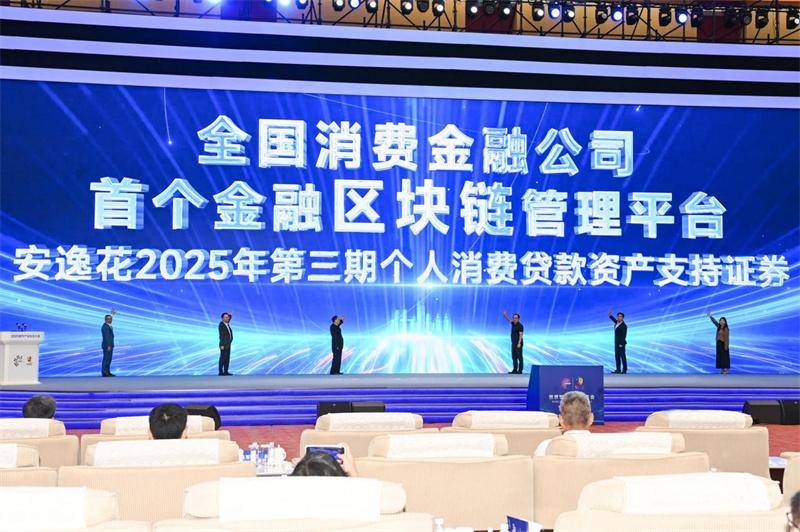
全国消费金融首个区块链管理平台重磅发布 首单区块链数字人民币信贷ABS落地重庆
Sou Hu Cai Jing· 2025-09-06 09:20
Group 1 - The core viewpoint of the article highlights the launch of China's first financial blockchain management platform by a consumer finance company, showcasing advancements in the digital economy and blockchain technology in the financial sector [1][3] - The platform is designed as a national, industry-level infrastructure that leverages blockchain's distributed, immutable, traceable, and transparent characteristics to enhance the consumer finance ecosystem [3][4] - The first issuance of asset-backed securities (ABS) utilizing this blockchain technology occurred on September 4, marking a significant milestone in the application of blockchain in consumer finance [3][4] Group 2 - The introduction of blockchain technology in the ABS and financial bond sectors addresses key industry pain points, such as information asymmetry and data integrity issues, by enabling real-time asset information tracking [4][5] - The platform's innovative file interaction model replaces traditional email methods, significantly reducing time and labor costs for participating institutions and improving project application and issuance efficiency [4][5] - The initiative aligns with national financial technology development strategies, aiming to enhance financial services for the real economy and support economic transformation [4][5]