
产业集群

Search documents
直辖市重大调整!一个史无前例的新“省会”,诞生了
商业洞察· 2025-11-19 09:55
Core Viewpoint - The article discusses the significant administrative restructuring in Chongqing, where the two existing districts, Jiangbei and Yubei, have been merged into the newly established Liangjiang New Area, marking a transition from an economic function zone to an official administrative district [5][6][9]. Group 1: Administrative Restructuring - On November 6, Chongqing announced a major administrative restructuring approved by the State Council, merging Jiangbei and Yubei districts into Liangjiang New Area, reducing the total number of districts from 38 to 37 [6]. - Liangjiang New Area, previously an economic function zone, now serves as a formal administrative district, addressing issues of management overlap and fragmentation that hinder regional development [9][10]. - The new Liangjiang New Area covers approximately 1,360 square kilometers and has a population of about 3.52 million, with a projected GDP exceeding 600 billion yuan, positioning it as the largest economic and population center in the central and western regions of China [10]. Group 2: Economic Significance - The restructuring is seen as a strategic move to enhance Chongqing's role as a "strong provincial capital," similar to Chengdu, which has seen significant economic growth and population influx due to its provincial capital status [12][13]. - Liangjiang New Area contributes around 20% of Chongqing's GDP while occupying less than 2% of the city's area, highlighting its importance as the economic heart of the city [14][15]. - The area is home to key infrastructure such as Jiangbei International Airport and Guoyuan Port, making it a central hub for Chongqing's development as an inland open gateway [15]. Group 3: Industrial Development - Chongqing's manufacturing sector is robust, producing nearly 50% of the world's laptops and ranking second in automotive production in China, with significant contributions from companies like Changan and Seres [16][17]. - The city is implementing a "33618" modern manufacturing cluster system, focusing on three trillion-level leading industries, three five-hundred billion-level supporting industries, six thousand billion-level characteristic industries, and eighteen emerging industries [18]. - Liangjiang New Area is pivotal in this strategy, housing two of the three leading trillion-level industries: intelligent connected new energy vehicles and next-generation electronic information manufacturing [20]. Group 4: Automotive and Electronics Industry - As the heart of Chongqing's automotive industry, Liangjiang New Area is expected to produce 1.25 million vehicles in 2024, with nearly 580,000 of those being new energy vehicles, accounting for about 58% of the city's total output [21][22]. - The area is also a hub for the new generation of electronic information manufacturing, with a complete industrial chain from display panels to smart terminals, driven by companies like BOE and Unisoc [26][28]. - The integration of the automotive and electronics sectors is anticipated to create a synergistic effect, particularly in the development of intelligent connected vehicles, which is projected to become a trillion-yuan market by 2025 [29][30].




聚焦六大领域,定安诚邀企业布局
Hai Nan Ri Bao· 2025-11-17 01:12
Core Insights - The article highlights the strategic development plan of Ding'an, focusing on attracting investments in six key industries, leveraging its geographical and policy advantages [4]. Group 1: Key Industries - The six targeted industries for investment include high-end food processing, green building materials, pharmaceuticals and medical devices, commercial supply chains, inspection and testing, and cultural and tourism consumption [4][5]. Group 2: High-end Food Processing - The high-end food processing sector has established a leading industry cluster centered around Mixue Ice City, with fresh coconut milk production accounting for over 50% of the national market [4]. - Future plans include promoting integrated development of food processing, science, and trade, expanding research and production of new tea beverages, and developing functional foods and pet foods [4]. Group 3: Green Building Materials - The green building materials sector has formed a leading industry cluster with companies like China Resources and Liansu Group [5]. - Key development areas will focus on prefabricated buildings, sand and gravel aggregates, environmentally friendly asphalt, and new green building materials [5]. Group 4: Pharmaceuticals and Medical Devices - The pharmaceutical and medical device sector is led by Baimaike, focusing on medical device manufacturing, traditional Chinese medicine processing, and pharmaceutical supply chains [4]. - The goal is to create an integrated industry cluster encompassing research, manufacturing, and distribution [4]. Group 5: Commercial Supply Chains - The commercial supply chain sector is spearheaded by companies like Xuewang and Meiyijia, targeting both domestic and international markets [5]. - Development will focus on international trade distribution for products like coffee, coconut, and dairy, as well as establishing supply chain sorting centers for local food and pharmaceuticals [5]. Group 6: Inspection and Testing - Ding'an is accelerating the establishment of an inspection and testing certification industry, concentrating on tropical specialty agriculture, food processing, and import-export trade [5]. - The aim is to create a concentrated area for inspection and testing certification, enhancing industry clustering effects [5]. Group 7: Cultural and Tourism Consumption - The cultural and tourism consumption sector will focus on integrating culture, sports, and tourism, with an emphasis on sports tourism, cultural tourism, health tourism, industrial tourism, and rural tourism [5].
海上风来,大潮奔涌千帆竞
Da Zhong Ri Bao· 2025-11-14 13:53
Core Viewpoint - Qingdao has made significant progress in economic development and innovation during the "14th Five-Year Plan" period, positioning itself as a key player in various industries and technological advancements [1][13]. Economic Growth - In 2024, Qingdao's GDP is projected to reach 1,671.95 billion yuan, with a growth rate of 5.7% [1]. - The total investment in provincial and municipal key projects is expected to be 285.54 billion yuan, with all 29 "two重" projects commencing construction [1]. - The total import and export volume is anticipated to reach 907.67 billion yuan, with exports surpassing 500 billion yuan for the first time [1]. Technological Innovation - Qingdao is focusing on key technological breakthroughs, supporting over 100 critical technology projects annually during the "14th Five-Year Plan" [4]. - The city has established the first large-scale polymer solid-state battery production line in China, achieving an energy density of 320 Wh/kg [3][4]. - Qingdao's innovation capabilities have led to the successful delivery of the world's first 10,000-ton large aquaculture vessel and the launch of the world's first 8K full-color laser television [4]. Industrial Development - Qingdao is developing a "10+1" innovative industrial system, prioritizing two leading industries, five emerging industries, and enhancing three advantageous industries [7]. - The city has become a hub for smart connected new energy vehicles, with over 400 automotive parts companies in the immediate area [8]. - Qingdao's rail transit equipment industry is recognized as a national advanced manufacturing cluster, producing 55% of China's high-speed trains and 20% of urban rail transit [8]. Marine Economy - Qingdao's marine economy is projected to grow by approximately 7.5% in 2024, with port cargo and container throughput expected to reach 710 million tons and 30.87 million TEUs, respectively [11]. - The city is enhancing its position as a leading modern marine city, with the launch of new international shipping routes and a focus on marine scientific research [10][11]. Innovation Ecosystem - The number of registered "cloud-based R&D centers" in Qingdao has exceeded 8,300, with a coverage rate of R&D institutions in large-scale industrial enterprises reaching over 93% [6]. - Qingdao has climbed to 20th place in the Global Innovation Index, marking the fastest rise among domestic cities over the past five years [6]. Social Development - Qingdao has maintained a stable investment in public welfare, with 70% of fiscal expenditure allocated to social welfare initiatives [12]. - In 2024, the city plans to create 371,000 new urban jobs and support 45,000 entrepreneurial initiatives [12].
江西武宁:汇聚统战力量 精准赋能特色产业发展
Zhong Guo Xin Wen Wang· 2025-11-13 12:18
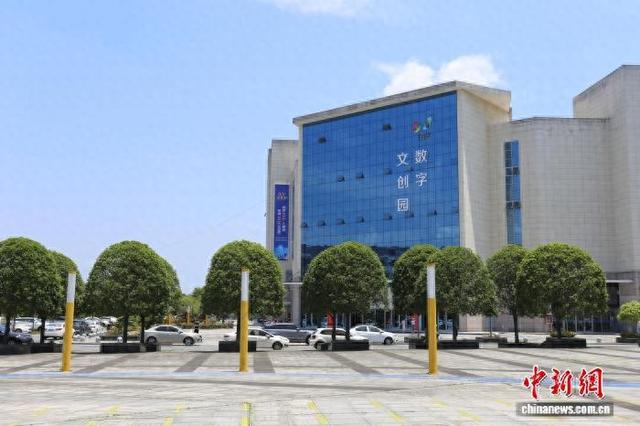
Core Insights - The article highlights the development of the digital economy and design industry in Wuning County, Jiangxi Province, emphasizing the integration of digital technology with home decoration culture to stimulate industry growth [1][3]. Group 1: Industry Development - Wuning County is known as "the hometown of art decoration" with nearly 100,000 people engaged in the interior decoration industry and over 3,000 decoration companies established [1][3]. - In 2022, Wuning County invested approximately 600 million yuan to create a provincial-level cultural industry park, the Wuning Digital Economy Industrial Park, aimed at promoting the development of the decoration industry [3]. - The local government has established a professional digital economy development team to provide one-on-one support for enterprises and attract young people to return and start design companies [3]. Group 2: Local Talent and Business Growth - Local design studios, such as Xia Tian Design Studio, have been able to leverage digital technology to undertake design projects from across the country and even overseas [3]. - The article mentions that the design studio currently employs over 20 local designers, showcasing the potential for local talent to thrive in the digital economy [3]. - Wuning County's government is actively working to integrate resources within the decoration industry and encourage talented individuals to return home, thereby enhancing the local brand and innovation in the decoration sector [4].
四川加速打造世界级动力电池产业集群 从规模扩张迈向高质高端
Si Chuan Ri Bao· 2025-11-13 07:33
Core Insights - The article highlights the rapid development and innovation in the power battery industry in Yibin, Sichuan, particularly in the context of the upcoming 2025 World Power Battery Conference [3][4] - Yibin is emerging as a significant hub for solid-state battery technology, with local research enterprises achieving notable breakthroughs [6][7] Industry Development - A series of power battery projects are being launched in Yibin, characterized by substantial investments and a focus on enhancing critical segments of the supply chain [3][4] - Sichuan has integrated new energy vehicles and power batteries into its "15+N" key development industrial chain, promoting collaborative growth among various cities [4] Production Capacity - The production capacity in Yibin is expanding rapidly, with seven factories already operational, contributing to a total capacity of 180 GWh, and projections to reach 300 GWh by next year [6] - Yibin's power battery production increased by 46% year-on-year, with a production value growth of 14%, accounting for 20% of the national output [6] Technological Advancements - The first solid-state battery project has commenced production in Yibin, alongside the launch of new silicon-carbon anode materials at competitive prices [7] - The establishment of a zero-carbon battery factory in Yibin signifies a commitment to sustainable production practices [6] Ecosystem and Collaboration - Yibin is fostering a robust industrial ecosystem, attracting over 120 supporting projects and becoming one of the most comprehensive regions for the power battery supply chain in China [6][8] - The "Jiangyuan Action" initiative aims to attract global scientific teams to enhance research and development in solid-state battery materials [8] Innovation and AI Integration - The integration of AI technologies is expected to accelerate industrial upgrades, leveraging the rich data provided by Yibin's extensive industrial cluster [9] - The establishment of innovation centers, such as the one led by a team from Peking University, is enhancing the speed of research and development for upstream materials [9]
宜宾三江新区:以“优”汇聚行业翘楚 以“链”引资近248亿元
Huan Qiu Wang· 2025-11-13 03:08
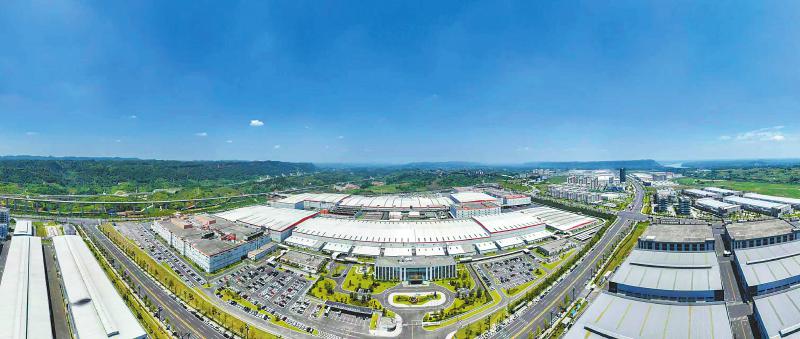
来源:环球网 11月12日下午,以"链聚产业生态 绿动澎湃三江"为主题的2025宜宾三江新区产业投资推介会在四川宜 宾成功举办。本次推介会成果丰硕,共签约项目84个,总投资额达247.38亿元,涵盖新能源、新材料等 多个前沿领域,为区域经济高质量发展注入强劲新动能。 推介会汇聚了行业翘楚与资本力量,吸引了包括浙江软控智能科技股份有限公司、时代长安动力电池有 限公司、宁德时代新能源科技股份有限公司在内的100家知名企业及18家基金机构参与。会上,三江新 区(临港经开区)管委会发布了极具吸引力的基金矩阵机会清单,围绕存量与增量基金群进行统筹布 局,拟构建总规模超265.5亿元的投资发展基金矩阵,为产业发展提供强有力的金融支撑。同时,该新 区三江集团还推出了国有企业场景机会清单,共释放47个优质合作项目,总投资额超120亿元,并配套 提供96万平方米成熟产业承接空间,为各类市场主体搭建了广阔的发展平台与合作机遇。 作为宜宾市发展的"动力之芯与核心引擎",宜宾三江新区近年来积极抢抓成渝地区双城经济圈建设、科 技革命与产业变革等重大机遇,发展能级持续提升。在全国城市新区潜力50强评比中,新区已跃升至第 15位;其核心区 ...

新型工业化调研行|聚焦轨道交通装备、中小航空发动机 株洲加快建设世界级产业集群
Zhong Guo Jing Ying Bao· 2025-11-12 23:45
Core Insights - Zhuzhou City is recognized as a global hub for rail transit equipment, with a production capability that allows for the assembly of a locomotive in the time it takes to drink a cup of coffee, supported by over 400 upstream and downstream enterprises [1] - The city has established three national advanced manufacturing clusters in rail transit equipment, small and medium-sized aviation engines, and ultra-high voltage transmission and transformation equipment, leading the province and ranking first among non-provincial capital cities in central and western China [1] - The local government is focused on enhancing existing industries and developing strategic emerging industry clusters, particularly in "bottleneck" areas, to achieve domestic substitution in high-performance materials and break international monopolies [1] Industry Development - Hunan Saideret Satellite Technology Co., Ltd. has chosen to establish its headquarters in the Zhuzhou Beidou Industrial Park, leveraging the advantages of the local industrial cluster [2] - The integration of the Beidou navigation system with satellite development is emphasized, as it allows for the attraction of upstream and downstream enterprises to form a comprehensive industrial chain [2] - The rail transit equipment industry in Zhuzhou has rapidly developed, with a focus on coordinated development among complete machine manufacturing, core components, and key parts, resulting in a cluster of 425 backbone and supporting enterprises [2]

太卷了!已经无人敢跟河北人拼价格了,义乌也甘拜下风
Sou Hu Cai Jing· 2025-11-07 18:54
Core Viewpoint - Hebei province has emerged as a significant player in the e-commerce sector, achieving remarkable growth in online retail and logistics, while maintaining a competitive edge through low costs and efficient supply chains [1][10]. Group 1: E-commerce Growth - In 2024, Hebei's online retail sales are approaching 500 billion, with express delivery volume increasing by over 40%, ranking fourth nationwide [1][10]. - The province has developed 333 county-level characteristic industrial clusters, each with unique production capabilities [1][3]. Group 2: Cost Advantages - The cost advantages in Hebei stem from low factory rents, which are one-third of those in Jiangsu and Zhejiang, and reduced electricity costs charged at agricultural rates [7][11]. - Labor costs are also significantly lower, with skilled workers earning around 4,000 yuan per month, and many businesses employ local women seeking flexible work hours [11] . Group 3: Logistics Efficiency - Hebei's logistics network is robust, with over 1,200 county-level logistics points and a delivery rate of 92%, enabling same-day delivery even in remote areas [9]. - The integration of logistics services has reduced costs by 25% following the establishment of the Shijiazhuang International Mail Exchange Bureau [9]. Group 4: Cross-border E-commerce - In 2024, Hebei's cross-border e-commerce import and export volume surged by 200%, with significant growth in trade from the Xiong'an New Area and the Caofeidian Comprehensive Bonded Zone [10]. - The establishment of overseas warehouses has improved delivery times, allowing products to reach destinations like Russia in just three days [10]. Group 5: Government Support and Quality Control - The government has launched initiatives to support cross-border e-commerce, including the "Cross-border E-commerce Empowering Industrial Belt" plan, which aims to cultivate 100 e-commerce demonstration counties and 1,000 characteristic e-commerce villages by 2026 [12][13]. - Quality control measures are being strengthened, with the establishment of a product standard system and regular inspections to ensure product quality [13][14]. Group 6: Future Directions - Hebei's e-commerce is transitioning from a focus on low prices to an emphasis on quality and brand development, with initiatives aimed at enhancing product design and customer service [14]. - The industry is poised for a transformation from being known as the "price butcher" to "Hebei quality manufacturing," indicating a shift towards value-based competition [14].
商源乘势起高丘
Xin Hua Wang· 2025-11-07 00:08
Group 1 - The 10th Huashang Cultural Festival was held in Shangqiu, showcasing the city's historical significance as a commercial hub and providing a platform for cultural exchange among global Chinese merchants [2][21] - The Wangzhuang archaeological site, which dates back approximately 5000 years, was recognized as one of the top ten archaeological discoveries in 2023, highlighting the region's rich cultural heritage and its role in the development of Chinese commerce [3][21] - Shangqiu is increasingly recognized for its strategic position and the growth of local industrial clusters, particularly in manufacturing, which has been bolstered by the return of entrepreneurs and the transfer of industries from eastern regions [6][7] Group 2 - The local economy is diversifying, with significant developments in various sectors such as footwear manufacturing in Suixian, where over 600 shoe-related enterprises have established operations, achieving an annual production capacity of 350 million pairs [10] - Yucheng has become a leading producer of steel tape measures, with an annual output of nearly 1.5 billion units, capturing 85% of the domestic market and 65% of the global market [11] - The diamond industry in Zhecheng has transformed, with the region being a major producer of diamond powder and synthetic diamonds, contributing significantly to high-end manufacturing sectors [13][14] Group 3 - The refrigeration industry in Minquan is thriving, with the production of refrigerators and cold storage vehicles accounting for a significant portion of the national market, and innovations in smart manufacturing are being implemented [15][17] - The establishment of the "Minquan-Qingdao Port" sea-rail intermodal service has enhanced export capabilities for local businesses, allowing them to compete more effectively in the global market [18][19] - The overall economic development in Shangqiu is supported by a comprehensive transportation system and favorable business environment, attracting investment and fostering collaboration with various provinces [21][23]
石油装备东营“制造” 远销80余个产油国
Sou Hu Cai Jing· 2025-11-05 03:05
Core Insights - The oil equipment industry in Dongying is transitioning from "manufacturing" to "intelligent manufacturing" and "services," with a focus on high-end oil equipment [1][2] - Dongying has established a robust industrial chain in drilling, oil extraction, oil and gas enhancement, and marine equipment, with over 500 related enterprises and an annual output value exceeding 35 billion [1][2] - The region's oil equipment products cover eight categories, 37 series, and over 1,500 varieties, recognized as a provincial leading industrial cluster [2] Industry Development - Dongying's oil equipment industry has shifted from following to leading in several fields, showcasing confidence in its capabilities at international exhibitions [2][3] - The region's leading enterprise, Kory Oil & Gas, has over 200 overseas operational teams, with a business network spanning more than 80 major oil-producing countries [2][3] - The establishment of the "Belt and Road" exhibition area at trade shows highlights the international appeal of Dongying's marine oil and gas equipment, underwater intelligent systems, and drone applications [2] Technological Advancements - Weifang Ocean Equipment Manufacturing Co., the only domestic company capable of developing and manufacturing underwater oil trees, has three globally leading R&D bases and over 100 core intellectual property rights [3] - The K344 fracturing packer developed by Zhaoxin Industrial Co. is noted for its unique design, capable of withstanding high pressures and repeated use, with over 100 research achievements and 80 national patents [3] Economic Impact - The oil equipment industry's export value reached 2.25 billion in the first half of the year, a year-on-year increase of 124% [3] - Major contracts in the Middle East and Africa for oil field enhancement services exceeded 6 billion [3] Strategic Initiatives - The Dongying District is focused on optimizing traditional oil equipment industries and forming an industry association to enhance resource integration and strengthen the supply chain [4]