
城市高质量发展

Search documents
城市高质量发展“顶层设计”出炉 关于房地产有这些要点
Di Yi Cai Jing· 2025-08-28 17:43
我国城市高质量发展的"顶层设计"出炉。 8月28日,《中共中央国务院关于推动城市高质量发展的意见》对外公布。细看这份文件,涉及城市群 一体化、都市圈建设、增强超大特大城市综合竞争力等多个话题,勾勒出了我国城市发展的未来蓝图。 值得注意的是,《意见》多条内容与房地产行业紧密相关,包括激活城市存量资源潜力、推进"好房 子"建设、城中村和危旧房改造、房屋安全体检等。专家表示,意见对新一轮城市发展和地产新模式构 建,具有积极的导向作用。 这与7月15日召开的中央城市工作会议导向一致。经过多年高速发展,我国城镇化正从快速增长期,转 向稳定发展期;从大规模增量扩张阶段,转向存量提质增效为主的阶段,这是把握城市发展工作的核心 背景。 关于城市发展的未来目标,《意见》提出,到2030年,现代化人民城市建设取得重要进展,适应城市高 质量发展的政策制度不断完善,新旧动能加快转换,人居品质明显提升,绿色转型深入推进,安全基础 有力夯实,文化魅力充分彰显,治理水平大幅提高;到2035年,现代化人民城市基本建成。 廓清城市发展整体目标之余,这份文件数次提及房地产相关内容。 《意见》表示,要全面摸清城市房屋、设施、土地等资产资源底数。改 ...
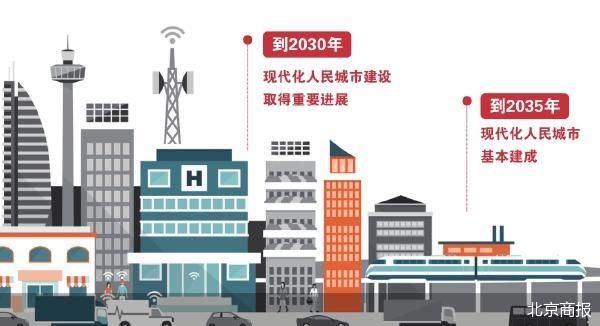
我国2035年现代化人民城市基本建成
Bei Jing Shang Bao· 2025-08-28 17:17
Core Viewpoint - The "Opinions on Promoting High-Quality Urban Development" emphasizes the transition of urbanization in China from rapid growth to stable development, focusing on improving existing urban quality rather than large-scale expansion, with significant progress expected by 2030 and the establishment of modernized cities by 2035 [1][3]. Group 1: Urban Development Strategy - The document outlines major tasks including optimizing the modern urban system, fostering new urban development drivers, creating high-quality urban living spaces, promoting green and low-carbon urban transformation, and enhancing urban safety resilience [3]. - It supports the development of world-class city clusters in regions like Beijing-Tianjin-Hebei, Yangtze River Delta, and Guangdong-Hong Kong-Macau Greater Bay Area, while controlling the scale of mega cities and enhancing their core functions [3][4]. Group 2: Economic and Financial Framework - The "Opinions" propose establishing a sustainable urban construction and operation financing system, emphasizing the role of local governments in coordinating financial resources and attracting social capital [4][5]. - It encourages the development of advanced manufacturing clusters, smart construction, and the production and service industries, while also promoting new economic sectors such as the silver economy and low-altitude economy [4]. Group 3: Urban Living Quality - The document advocates for the systematic promotion of quality housing and complete community construction, enhancing the design, construction, and maintenance of housing to create safe, comfortable, and green living environments [6]. - It emphasizes the importance of cultural heritage preservation and the integration of historical elements into urban development, aiming to create a unique urban aesthetic that reflects Chinese culture [6].

中共中央、国务院:适时调整扩大经济规模大、人口增长快的县级市和特大镇经济社会管理权限
Xin Hua She· 2025-08-28 16:18
Core Viewpoint - The Central Committee of the Communist Party of China and the State Council have issued opinions on promoting high-quality urban development, emphasizing the enhancement of the capacity of small and medium-sized cities and county towns [1] Group 1: Urban Development Strategies - The document advocates for the dynamic optimization of infrastructure layout and public service supply in small and medium-sized cities based on changes in resident population trends [1] - It calls for a classified approach to urbanization construction, with a focus on counties as important carriers, and encourages the vigorous development of county economies [1] - There is a recommendation to develop small towns according to local conditions and to adjust the economic and social management authority of rapidly growing county-level cities and large towns [1] Group 2: Population and Resource Management - The opinions support the transformation and development of cities experiencing continuous population outflow and resource-based cities [1] - It emphasizes the need for border towns to enhance their capabilities in stabilizing borders, population aggregation, and ensuring safety [1] Group 3: Infrastructure and Public Services - The document highlights the importance of coordinated planning for urban and rural infrastructure and public service systems to promote urban-rural integration [1] - It also stresses the ongoing promotion of the urbanization of the agricultural transfer population [1]
新华社权威快报|事关城市高质量发展 中央重磅文件对外公布
Xin Hua She· 2025-08-28 16:18
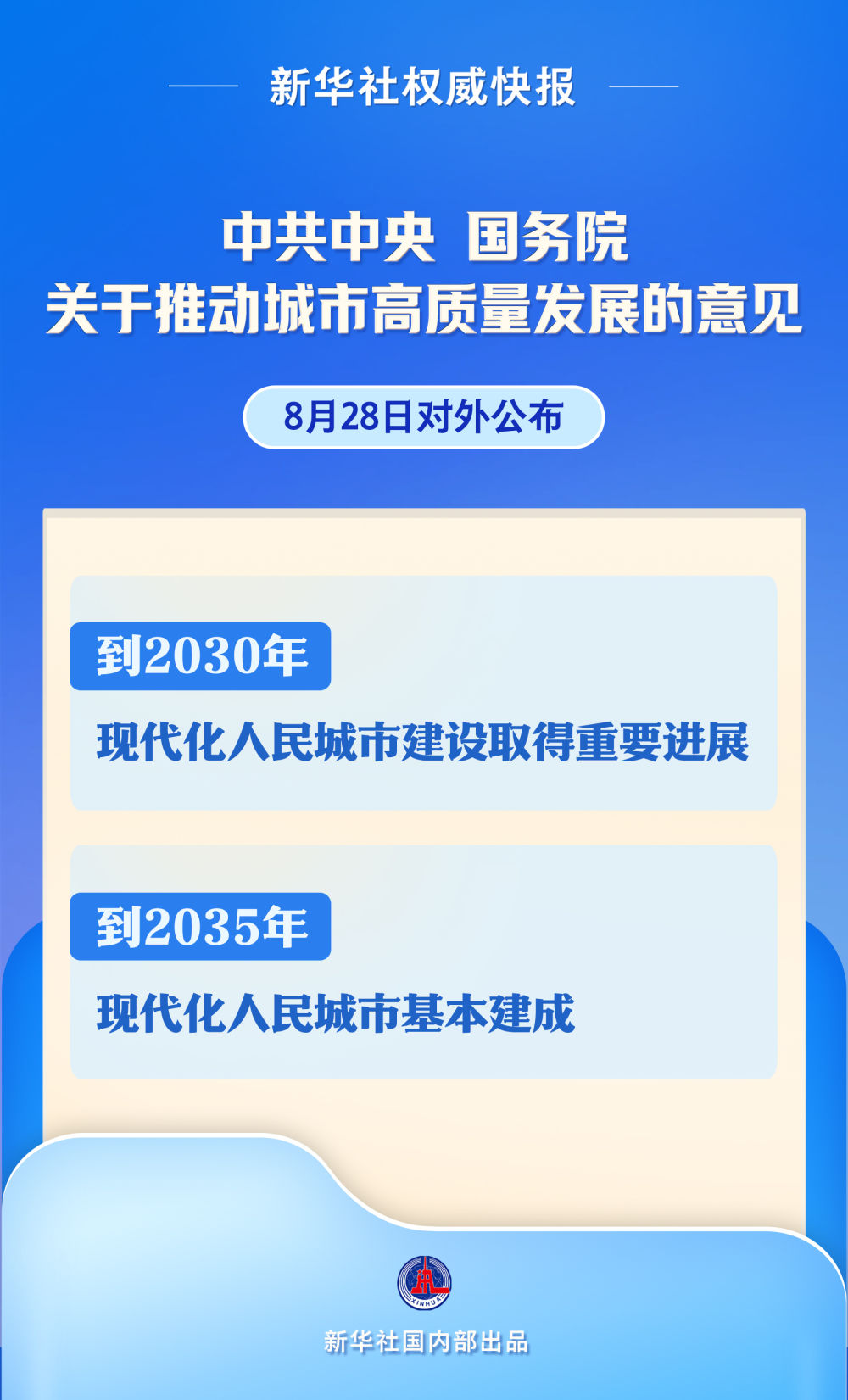
新华社权威快报 中共中央 国务院 关于推动城市高质量发展的意见 8月28日,《中共中央国务院关于推动城市高质量发展的意见》对外公布。 这份意见强调,城市是现代化建设的重要载体、人民幸福生活的重要空间。我国城镇化正从快速增长期转向稳定发展期,城市发展正从大规模 增量扩张阶段转向存量提质增效为主的阶段。 这份意见提出,到2030年,现代化人民城市建设取得重要进展,适应城市高质量发展的政策制度不断完善,新旧动能加快转换,人居品质明显 提升,绿色转型深入推进,安全基础有力夯实,文化魅力充分彰显,治理水平大幅提高;到2035年,现代化人民城市基本建成。 (文章来源:新华社) 现代化人民城市建设取得重要进展 到2035年 现代化人民城市基本建成 8月28日对外公布 到2030年 ...
中共中央、国务院:完善交通枢纽换乘换装设施布局 加强停车位、充电桩等便民设施建设
Xin Hua She· 2025-08-28 16:18
Group 1 - The core viewpoint of the article emphasizes the need for high-quality urban development through improved infrastructure and optimized urban space utilization [1] - The article highlights the importance of enhancing urban infrastructure layout, structure, and functionality, as well as strengthening system integration [1] - It discusses the efficient use of underground space and the construction of comprehensive underground utility corridors tailored to local conditions [1] Group 2 - The article mentions the acceleration of urban underground pipeline network construction and renovation [1] - It emphasizes the need for robust coverage of fifth-generation mobile communication networks (5G) and gigabit optical networks, along with optimized computing power facility layouts [1] - The article outlines the necessity of modernizing the comprehensive transportation system to improve intercity and intra-city commuting efficiency [1] Group 3 - It calls for the enhancement of water resource allocation and supply management systems in urban areas [1] - The article stresses the importance of improving transportation hub transfer facilities and the construction of convenient amenities such as parking spaces and charging stations [1]
重大部署!中国城市高质量发展“路线图”公布
Xin Hua She· 2025-08-28 16:12
新华社北京8月28日电 题:重大部署!中国城市高质量发展"路线图"公布 新华社记者王优玲 城市是现代化建设的重要载体、人民幸福生活的重要空间。 8月28日,《中共中央国务院关于推动城市高质量发展的意见》对外公布。这份重磅文件明确了加快城 市发展方式转型和推动城市高质量发展的总体要求、主要目标和重点任务。 在培育壮大城市发展新动能上,意见提出因城施策增强城市发展动力,激活城市存量资源潜力,建立可 持续的城市建设运营投融资体系,提升城市对外开放合作水平; 在营造高品质城市生活空间上,意见提出系统推进"好房子"和完整社区建设,完善城市基础设施,提升 公共服务优质均衡水平; ………… 意见深刻把握我国城市工作"时与势"所发生的深刻变化,明确了我国城市高质量发展的主要目标: 到2030年,现代化人民城市建设取得重要进展,适应城市高质量发展的政策制度不断完善,新旧动能加 快转换,人居品质明显提升,绿色转型深入推进,安全基础有力夯实,文化魅力充分彰显,治理水平大 幅提高;到2035年,现代化人民城市基本建成。 "7月份举行的中央城市工作会议为新时代新征程上建设现代化人民城市作出战略指引,这份意见正是落 实会议精神的具体行动 ...
刚刚!中央发布重磅文件,有关城市高质量发展
Xin Hua She· 2025-08-28 16:12
Core Viewpoint - The document outlines the Chinese government's strategic plan for promoting high-quality urban development, emphasizing a shift from rapid urbanization to stable development, focusing on improving existing urban infrastructure and quality of life by 2030 and 2035 [1][3]. Overall Requirements - The plan is guided by Xi Jinping's thoughts and aims to enhance urban governance, promote innovation, and ensure safety while fostering a people-centered approach to urban development [4]. Optimizing Urban Systems - The strategy includes promoting urban integration and enhancing the competitiveness of mega cities while improving the capacity of small and medium-sized cities and towns [5][6]. Cultivating New Urban Development Momentum - The focus is on fostering innovation ecosystems, enhancing technological capabilities, and activating existing urban resources to drive economic growth [7][8]. Creating High-Quality Urban Living Spaces - The plan emphasizes the construction of quality housing and complete communities, improving urban infrastructure, and enhancing public services to meet diverse needs [10][11]. Promoting Green and Low-Carbon Transformation - The initiative aims to implement energy-saving measures, promote sustainable lifestyles, and enhance urban ecological environment management [12][13]. Enhancing Urban Safety Resilience - The document stresses the importance of safety management in urban infrastructure and public health, aiming to improve disaster prevention and response capabilities [14][15]. Promoting Cultural Prosperity - The strategy includes protecting and utilizing urban historical and cultural resources while enriching the cultural life of cities [16][17]. Improving Urban Governance Capabilities - The plan calls for a comprehensive urban governance system that encourages public participation and utilizes digital technologies for efficient management [18][19]. Strengthening Organizational Implementation - The document emphasizes the need for coordinated efforts across various levels of government to ensure effective implementation of urban development strategies [20][21].
到2035年 现代化人民城市基本建成
Qi Huo Ri Bao· 2025-08-28 16:12
Core Viewpoint - The "Opinions on Promoting High-Quality Urban Development" emphasizes the transition of urbanization in China from rapid growth to stable development, focusing on enhancing existing urban quality rather than large-scale expansion [1][2]. Group 1: Goals and Objectives - By 2030, significant progress in modern urban construction is expected, with improved policies for high-quality urban development, accelerated conversion of old and new growth drivers, enhanced living quality, deepened green transformation, solidified safety foundations, and improved governance levels [2][3]. - By 2035, the basic establishment of modern urban areas is anticipated [2]. Group 2: Specific Requirements - The document outlines 23 specific requirements across seven areas, including optimizing urban systems, fostering new growth drivers, creating high-quality living spaces, promoting green low-carbon transitions, enhancing urban safety resilience, cultural prosperity, and improving governance capabilities [2][3]. Group 3: Urban Development Strategies - The strategy emphasizes tailored approaches to urban development based on local resources and conditions, fostering innovation ecosystems, and enhancing collaboration between technological and industrial innovation [3]. - It advocates for the establishment of a sustainable urban construction and operation financing system, involving local government responsibilities and diverse funding sources [3]. Group 4: Energy Efficiency and Carbon Reduction - The document calls for energy-saving and carbon reduction initiatives in production, including industrial efficiency improvements, promotion of green technologies, and management of high-energy-consuming projects [4]. - It also highlights the importance of developing green buildings and advancing low-carbon construction practices [4].
城市高质量发展顶层设计出炉
Zheng Quan Ri Bao· 2025-08-28 16:08
Core Viewpoint - The "Opinions on Promoting High-Quality Urban Development" released by the Central Committee of the Communist Party of China and the State Council outlines a roadmap for urban modernization, aiming for significant progress by 2030 and basic completion by 2035, focusing on various aspects such as urban functions, quality of life, green transformation, and governance [1][4]. Group 1: Urban Development Goals - The document specifies key tasks for urban work, including optimizing modern urban systems, building vibrant innovation cities, creating comfortable living environments, promoting green and low-carbon cities, ensuring urban safety, fostering cultural prosperity, and enhancing governance capabilities [1][4]. Group 2: New Urban Development Dynamics - The "Opinions" emphasize tailored strategies to enhance urban development momentum, focusing on local resource endowments and conditions, fostering innovation ecosystems, and promoting collaboration between technological and industrial innovation [2][3]. Group 3: Quality Living Spaces - The document highlights the need for systematic promotion of "good housing" and complete community construction, aiming to meet diverse housing demands through improved design, construction, maintenance, and service levels [3]. - It also calls for steady progress in the renovation of urban villages and dilapidated housing, supporting self-renovation and reconstruction of old housing [3]. Group 4: Implementation and Governance - The Ministry of Housing and Urban-Rural Development commits to implementing the spirit of the central urban work conference and the "Opinions," focusing on innovation, livability, beauty, resilience, civilization, and intelligence in urban modernization [4]. - The goal is to optimize urban structure, convert development momentum, enhance quality, promote green transformation, and ensure urban safety [4].
城市高质量发展“顶层设计”出炉,关于房地产有这些要点
Di Yi Cai Jing· 2025-08-28 15:04
我国城市高质量发展的"顶层设计"出炉。 我国城市高质量发展的"顶层设计"出炉。 8月28日,《中共中央国务院关于推动城市高质量发展的意见》对外公布。细看这份文件,涉及城市群 一体化、都市圈建设、增强超大特大城市综合竞争力等多个话题,勾勒出了我国城市发展的未来蓝图。 今日公布的《意见》强调,城市是现代化建设的重要载体、人民幸福生活的重要空间。我国城市发展正 从大规模增量扩张阶段,转向存量提质增效为主的阶段。 这与7月15日召开的中央城市工作会议导向一致。经过多年高速发展,我国城镇化正从快速增长期,转 向稳定发展期;从大规模增量扩张阶段,转向存量提质增效为主的阶段,这是把握城市发展工作的核心 背景。 关于城市发展的未来目标,《意见》提出,到2030年,现代化人民城市建设取得重要进展,适应城市高 质量发展的政策制度不断完善,新旧动能加快转换,人居品质明显提升,绿色转型深入推进,安全基础 有力夯实,文化魅力充分彰显,治理水平大幅提高;到2035年,现代化人民城市基本建成。 廓清城市发展整体目标之余,这份文件数次提及房地产相关内容。 《意见》表示,要全面摸清城市房屋、设施、土地等资产资源底数。改造利用老旧厂房、低效楼宇 ...