科创金融

Search documents
空缺一年多终落定!张成喆将升任行长,西安银行如何突围
Bei Jing Shang Bao· 2025-07-30 15:40
Core Viewpoint - Xi'an Bank has appointed Zhang Chengzhe as the new president and vice chairman of the board, marking a significant leadership change after a year-long vacancy in the president position. The bank faces challenges in profitability and declining capital adequacy ratios, prompting a focus on bond issuance and the establishment of a specialized branch for hard technology finance to drive growth [1][3][5]. Management Changes - Zhang Chengzhe, an internal candidate with extensive experience in various key positions within Xi'an Bank, has been appointed as president. His background includes roles in branch management and core business departments, providing him with a deep understanding of the bank's operations and regional market characteristics [3][4]. - The appointment follows a series of high-level departures at Xi'an Bank, necessitating a timely reinforcement of the executive team and governance structure [5][6]. Financial Performance - Xi'an Bank's total assets reached 480.37 billion yuan by the end of 2024, reflecting an 11.14% increase year-on-year. As of the first quarter of 2025, total assets further increased to 519.72 billion yuan. However, the bank's profitability has not kept pace with this growth [8][9]. - The bank's net profit attributable to shareholders showed a decline in 2022, dropping to 2.42 billion yuan, a 13.55% decrease year-on-year. Although profits rebounded slightly in 2023 and 2024, growth rates remained below those of the bank's first year post-IPO [9][10]. Capital Adequacy - Xi'an Bank's capital adequacy ratios have been declining, with the core Tier 1 capital adequacy ratio falling to 9.36% by the first quarter of 2025, down from 10.07% at the end of 2024. This trend raises concerns about the bank's financial stability [10]. - To address capital needs, the bank has issued 5 billion yuan in perpetual bonds and 2 billion yuan in subordinated bonds [10]. Strategic Focus - The bank plans to establish a specialized branch focusing on hard technology finance, aiming to enhance its service offerings in this sector. This initiative is part of a broader strategy to deepen cooperation with research institutions and technology companies [11][12]. - The new management is expected to leverage Zhang Chengzhe's local expertise to better align banking services with the needs of hard technology enterprises, which often face unique challenges [12][13].

西安银行股份有限公司 第六届董事会第二十九次会议决议公告
Zhong Guo Zheng Quan Bao - Zhong Zheng Wang· 2025-07-29 23:37
第六届董事会第二十九次会议决议公告 证券代码:600928 证券简称:西安银行 公告编号:2025-038 西安银行股份有限公司 本议案需提交股东大会审议。 本公司董事会及全体董事保证本公告内容不存在任何虚假记载、误导性陈述或者重大遗漏,并对其内容 的真实性、准确性和完整性承担法律责任 西安银行股份有限公司(以下简称"公司")于2025年7月21日以电子邮件及书面方式发出关于召开第六 届董事会第二十九次会议的通知。会议于2025年7月29日在公司总部4楼第1会议室以现场方式召开,梁 邦海董事长主持会议,本次会议应出席董事8名,实际出席董事8名。公司股东大唐西市文化产业投资集 团有限公司股权质押比例超过50%,根据监管规定对其提名的胡军董事在董事会上的表决权进行了限 制。公司监事及高级管理人员列席了会议。本次会议的召开符合《中华人民共和国公司法》等法律法规 和《西安银行股份有限公司章程》的有关规定。会议所形成的决议合法、有效。 会议对如下议案进行了审议并表决: 一、审议通过了《关于提名刘金平先生为第六届董事会董事的议案》 表决结果:同意7票,反对0票,弃权0票。 本议案在提交董事会审议前已获得董事会提名与薪酬委 ...
上海:加大金融支持稳就业、稳企业、稳市场、稳预期力度 提升金融服务质效
Zheng Quan Shi Bao Wang· 2025-07-29 11:13
人民财讯7月29日电,据上海发布,2025年度市委金融委第二次全体(扩大)会议今天(7月29日)召开。市 委副书记、市长、市委金融委主任龚正指出,要持续用力深化上海国际金融中心建设。着力推动一批金 融改革事项、开放举措平稳落地,继续加强与中央金融办、中央金融管理部门的沟通协作,落实好中央 交给上海的重要事项,更好地为国家试制度、测压力、探新路。着力强化对科技创新全生命周期的金融 支持,聚焦科技型企业全链条、全生命周期金融服务需求,充分发挥科创金融改革试验区、科技保险创 新引领区等重要平台的作用,更好推动金融支持科创成果产业化。着力做好国际金融中心建设"十五 五"研究谋划,科学研判形势,对标国际一流,坚持开门问策,更好服务金融强国建设。要持续用力提 升上海金融业对经济增长的贡献度,加大金融支持稳就业、稳企业、稳市场、稳预期力度,提升金融服 务质效,为巩固和增强全市经济回升向好态势多作贡献。同时,牢牢守住不发生系统性金融风险的底 线。 ...
区域银行中期答卷:谁是增长“优等生”,谁在寻找新解法?|巴伦精选
Tai Mei Ti A P P· 2025-07-29 04:14
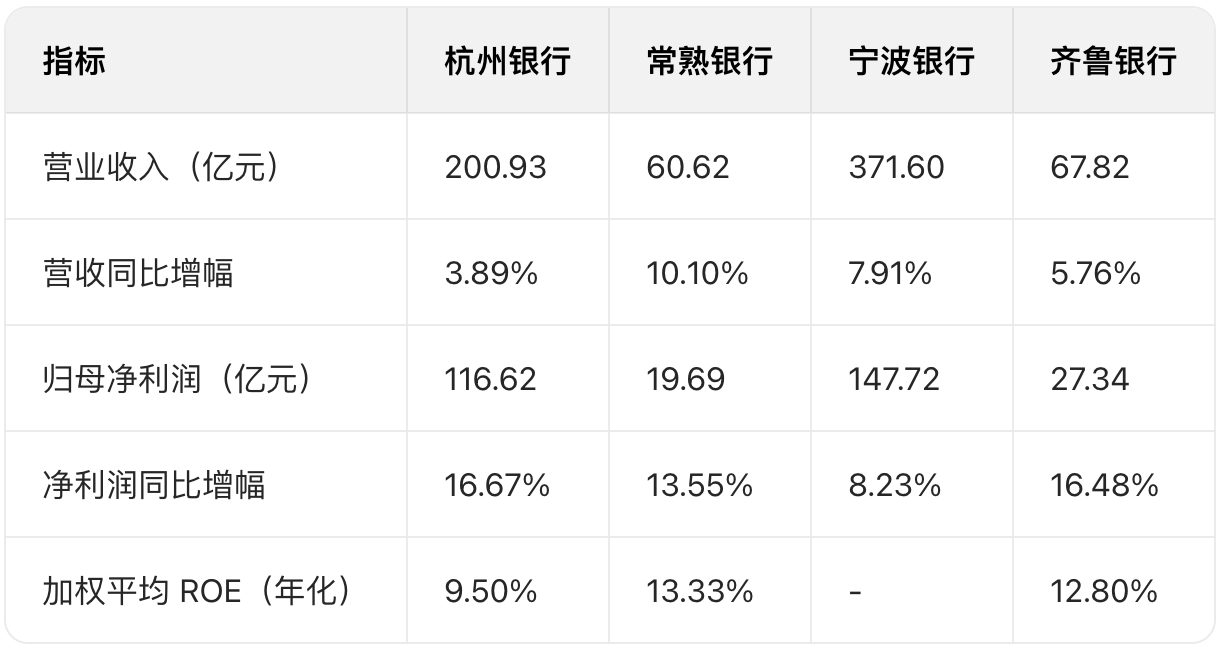
Core Insights - The article highlights the strong performance of four banks in the first half of 2025, showcasing their resilience despite differences in growth momentum, business structure, and risk control [1][10]. Financial Performance Overview - All four banks reported growth in both revenue and net profit, with notable differences in revenue and profit growth rates, asset scale expansion, and asset quality [1][2]. - Ningbo Bank led with a revenue of 371.60 billion and a net profit of 147.72 billion, while Hangzhou Bank followed closely [2]. - The net profit growth rate generally exceeded revenue growth, indicating significant contributions from cost control and provisioning adjustments [1][2]. Asset Scale and Structure - All banks experienced steady asset scale expansion, with Ningbo Bank's total assets surpassing 3.47 trillion, reflecting an 11.04% year-on-year growth [3]. - Hangzhou Bank's total assets reached approximately 2.24 trillion, while Changshu Bank and Qilu Bank surpassed 400 billion and 750 billion, respectively [3]. - Ningbo Bank led in both loan and deposit growth rates, indicating strong market positioning [3]. Asset Quality and Risk Management - The non-performing loan (NPL) ratios for Hangzhou, Changshu, and Ningbo Banks remained stable at 0.76%, while Qilu Bank's NPL ratio improved to 1.09% [4]. - All banks maintained a high provision coverage ratio, with Hangzhou Bank at 520.89%, providing ample room for profit release [4]. Strategic Differentiation - Hangzhou Bank's profit growth was driven by a dual strategy of scale and non-interest income, with a net profit growth of 16.67% supported by loan expansion and bond investment returns [5][9]. - Changshu Bank focused on a "deposit-first" strategy, achieving a revenue growth of 10.10% and a net profit growth of 13.55%, with a strong emphasis on rural finance [7]. - Ningbo Bank's strategy centered on rapid scale expansion, achieving a loan growth of 13.36% and deposit growth of 13.07%, although its net profit growth was relatively lower at 8.23% [8]. - Qilu Bank reported a net profit growth of 16.48%, benefiting from improved asset quality, but faced challenges with narrowing net interest margins [9]. Industry Trends and Future Outlook - The overall banking sector is witnessing stable revenue growth, rapid profit increases, and improving asset quality, indicating a positive trend in the industry [10][11]. - Future trends suggest a narrowing decline in net interest margins, continued asset quality improvement, and the importance of differentiated strategies for survival among small and medium-sized banks [11][12].



区域银行样本观察:十五年磨一剑的成长答卷——专访苏州银行党委副书记、行长王强
Di Yi Cai Jing· 2025-07-28 01:16
Core Insights - Suzhou Bank has successfully transformed from a local agricultural bank to a significant regional financial institution over its 15 years of operation, with total assets exceeding 720 billion yuan and maintaining high asset quality [1][3][4] - The bank's dual-engine strategy focuses on "Technology Innovation + Cross-border" and "People's Livelihood + Wealth," aligning with national policy directions to drive financial service innovation and support regional economic prosperity [1][5][20] Group 1: Strategic Development - Suzhou Bank's growth is characterized by a strategic focus on local economic characteristics, emphasizing retail banking and community services, such as the issuance of social security cards [3][4] - The bank has established a comprehensive risk management system to ensure sustainable development, maintaining a non-performing loan ratio below 1% and achieving a record low of 0.83% by the end of 2024 [4][20] Group 2: Business Expansion and Quality Improvement - The bank has expanded its physical network significantly, achieving full coverage in Suzhou and establishing branches across Jiangsu province, with total assets growing nearly 15 times since its inception [4][20] - Suzhou Bank has successfully listed on the Shenzhen Stock Exchange, becoming the 33rd listed bank in China, with total assets reaching 727.15 billion yuan as of March 2023, reflecting a 112% increase since its listing [4][20] Group 3: Innovation in Financial Services - The bank has developed a unique financial service model that integrates technology and cross-border finance, launching various innovative products to support technology enterprises and enhance cross-border trade [5][9][10] - Suzhou Bank has implemented a "345" action plan to optimize the business environment, enhancing financial service efficiency and supporting small and medium-sized enterprises in their digital transformation [7][20] Group 4: Support for Local Economy and SMEs - The bank has actively supported local small and micro enterprises, with inclusive loans exceeding 70.5 billion yuan, utilizing digital risk control to balance support for the real economy and asset quality management [17][18] - Suzhou Bank has introduced various financial products tailored to meet the needs of local businesses, including credit products and supply chain financing, to stimulate market vitality [19][20] Group 5: Commitment to Social Responsibility - The bank has launched initiatives to enhance consumer finance and services for new citizens, providing tailored financial solutions and promoting community engagement [12][13][20] - Suzhou Bank has focused on developing a comprehensive financial service ecosystem for technology innovation, supporting over 13,000 technology enterprises with a credit scale exceeding 130 billion yuan [14][15][16]
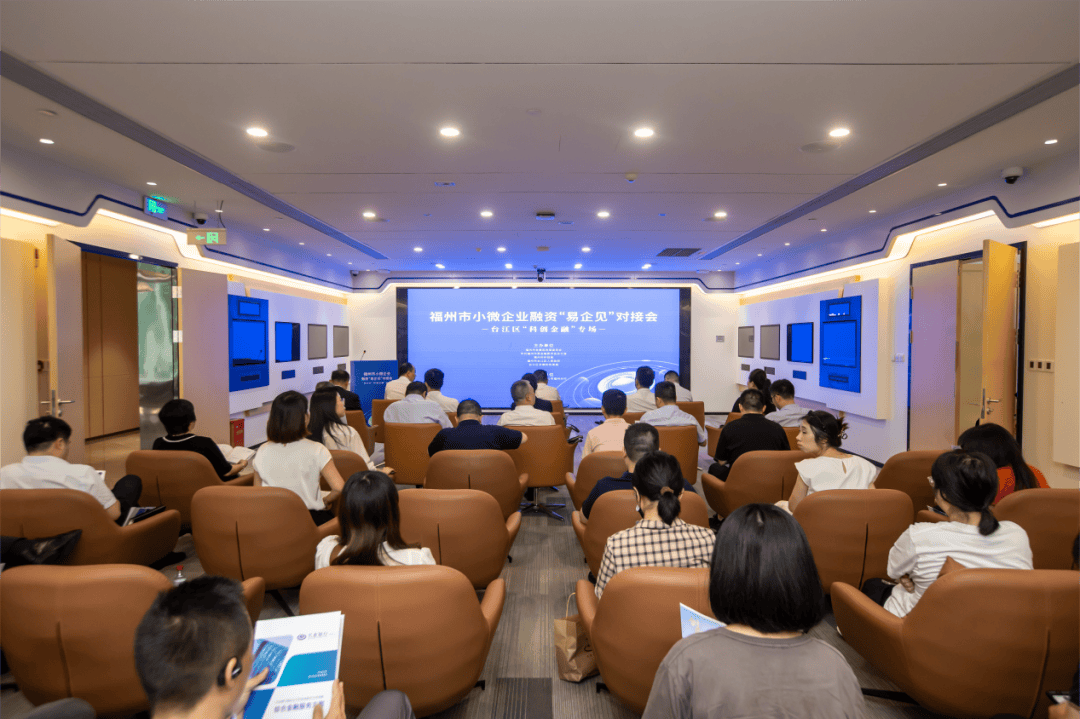
福州市小微企业融资“易企见”对接会在福州科创金融服务中心成功举办
Sou Hu Cai Jing· 2025-07-23 06:25
Core Insights - The event "Easy Access to Financing for Small and Micro Enterprises" was successfully held in Fuzhou, focusing on "Innovation and Finance" for small and micro enterprises [1][3] - As of July 16, the balance of inclusive loans for small and micro enterprises at Industrial Bank Fuzhou Branch reached nearly 19 billion, with a total credit amount exceeding 4.5 billion for nearly 1,500 clients [3] - The bank emphasized its commitment to supporting small and micro enterprises through innovative financial products and policies, aiming to enhance the financial ecosystem for technology-driven small enterprises [3] Group 1 - The event was co-hosted by various government departments and aimed at facilitating financing for small and micro enterprises in Fuzhou [1] - The Fuzhou Branch of Industrial Bank has implemented a financing coordination mechanism to support small and micro enterprises, showcasing its dedication to national policies [3] - The event included participation from multiple banks, which shared effective experiences and financing cases to foster collaboration [3][4] Group 2 - During the event, representatives from government and banks conducted a joint investigation of the Fuzhou Innovation Financial Service Center, highlighting the new ecosystem of collaboration [6] - The bank plans to continue enhancing its support for small and micro enterprises, focusing on high-quality development in Fuzhou [3]
郑州银行:创新为笔、担当为墨,精准赋能实体经济
Sou Hu Cai Jing· 2025-07-21 03:02
Core Insights - Zhengzhou Bank has won the "2025 Retail Banking Award" and the "2025 Scene Financial Innovation Award" at the 10th Asia-Pacific Banking Development Innovation Conference, highlighting its innovative practices in retail credit and intelligent risk control [1] - In Q1 2025, Zhengzhou Bank reported total assets exceeding 700 billion yuan and total deposits reaching 430.112 billion yuan, with personal deposits accounting for 56.6%, marking a historical high [1] Group 1: Support for Enterprises - Zhengzhou Bank has implemented targeted relief measures for struggling enterprises during a time when many banks were tightening credit, providing support to 4 city-level state-owned enterprises and 18 county-level state-owned enterprises [2] - The bank has also assisted 51 private enterprises, ensuring the stability of livelihood projects and industrial chains [2] - Through the "Thousand Enterprises, Ten Thousand Households" outreach initiative, Zhengzhou Bank visited over 20,000 small and micro enterprises, disbursing a total of 13.6 billion yuan [2] Group 2: Industrial Empowerment - Zhengzhou Bank has played a crucial role in the rapid advancement of key provincial projects, such as the construction of the Central Plains Science and Technology City Intelligent Technology Industrial Park, by providing efficient funding support [3] - The bank has signed strategic agreements with various local governments to support the development of green metallurgy, the air economy zone, and the aluminum deep processing industry, committing to provide no less than 30 billion yuan in credit support over the next three years [3] - Key projects in tourism and materials research are also being accelerated with financial backing from Zhengzhou Bank [3] Group 3: Innovation in Science and Technology Finance - Zhengzhou Bank has established a comprehensive service system covering the entire lifecycle of science and technology enterprises, offering various financial products tailored to different growth stages [4] - The bank has increased its support for innovative enterprises, with a notable 44.5% growth in science and technology financial loans, reaching a balance of 48.269 billion yuan by the end of 2024 [4] - The implementation of a "big data + AI intelligent risk control system" has enabled rapid approval and precise pricing, significantly enhancing the user experience for enterprises [4] Group 4: Inclusive Finance - Zhengzhou Bank is committed to promoting inclusive finance through initiatives that enhance financial literacy and community engagement, exemplified by its "anti-fraud education + hands-on experience" activities [6] - The bank has developed a "Four Major Steward" service system to optimize service channels and product functions, focusing on enhancing financial services for urban and rural areas [6] - With total assets surpassing 700 billion yuan, Zhengzhou Bank aims to integrate into the national unified market and contribute to regional development [6]
农行浙江省分行为科创企业注入强劲发展动能
Zheng Quan Ri Bao· 2025-07-20 09:53
Core Viewpoint - Agricultural Bank of China (ABC) Zhejiang Branch is actively supporting the development of technology-driven enterprises in Zhejiang through innovative financial products and services, providing over 210 billion yuan in loans to tech companies by June 2025 [1] Group 1: Financial Support for Tech Enterprises - Rokid, a leading AI and AR technology company, faced significant financing challenges due to its rapid growth and lack of traditional collateral, requiring substantial funds for R&D [1] - ABC Zhejiang Branch developed a new credit assessment model based on the company's technological and industrial capabilities, successfully providing a 20 million yuan loan to Rokid [1][2] - The financial support from ABC has enabled Rokid to accelerate the development of its next-generation AR smart glasses [2] Group 2: Financial Innovation for Traditional Industries - Wan Shi Li Group, a renowned silk company, is undergoing a transformation to integrate AI design and intelligent manufacturing but requires significant funding [3] - ABC has a long-standing relationship with Wan Shi Li and has provided over 88 million yuan in specialized credit support for its AI design platform and smart dyeing line upgrades [3] - The financial backing has allowed Wan Shi Li to enhance design efficiency by 80% and reduce energy consumption by 20% through digital transformation [3] Group 3: Systematic Financial Service Framework - ABC Zhejiang Branch is building a systematic financial service framework for tech innovation, focusing on optimizing its technology finance service system [4] - The bank has broken traditional credit evaluation models to create a precise profile of enterprises' innovation and growth capabilities, offering a range of credit products tailored to different stages of tech companies [4] - ABC is also leveraging its comprehensive advantages to create a technology finance service ecosystem, promoting early-stage investments and a full-cycle financial service model [4]

长城证券人事变动:周钟山代行总裁职责,21岁参加工作,在南昌营业部工作超17年
Xin Lang Zheng Quan· 2025-07-18 13:25
Core Viewpoint - The resignation of Li Xiang as the president and financial officer of Great Wall Securities has led to the appointment of Zhou Zhongshan as the acting president and financial officer, raising significant industry attention regarding leadership changes and strategic direction [1] Group 1: Leadership Transition - Zhou Zhongshan, born in January 1974, has a rich career history, starting from grassroots positions to becoming a core executive, showcasing a model of career progression within the company [1] - Zhou has held various roles since joining Great Wall Securities in 1998, including vice president and board secretary, culminating in his current acting role as president [1] Group 2: Strategic Initiatives - As the strategic execution director, Zhou has demonstrated exceptional capabilities in leading the company's "14th Five-Year Plan," focusing on "science and technology finance, green finance, and industrial finance," aligning with national financial directives [2] - Zhou has initiated the establishment of the "Group and Strategic Client Department," successfully integrating resources and enhancing the company's collaborative effects within the industry [2] Group 3: Business Innovation and Risk Management - Zhou has actively driven the transformation of investment banking and wealth management, positioning investment banking as a "specialized driver" and expanding into green bonds and the North Exchange market [2] - During the downturn of small-cap stocks in 2024, Zhou implemented dynamic risk control measures, ensuring the stability of proprietary business operations [3] Group 4: Organizational Optimization - Zhou has led organizational changes, including the elimination of redundant departments and the establishment of a new "Brand and Public Relations Department," enhancing governance efficiency [3] - He has also promoted a younger executive team, injecting innovation into the company's leadership structure [3] Group 5: Financial Performance and Industry Insight - The company is projected to see a net profit increase of 85%-95% in the first half of 2025, with wealth management and proprietary investment being key growth drivers [4] - Zhou's insights into industry trends emphasize the need for securities firms to focus on "financial services for the real economy," aligning with regulatory guidance [4] Group 6: Future Outlook - As Zhou takes on the role of acting president, he is expected to balance strategic continuity with innovation, leveraging his extensive experience to enhance organizational efficiency and strategic execution [5] - Zhou's career trajectory reflects a blend of strategic design, business innovation, and resource integration, positioning him to address challenges in the brokerage industry [5]

最新公告!长城证券迎“青壮派”代总裁
券商中国· 2025-07-18 13:07
Core Viewpoint - The article discusses the leadership transition at Changcheng Securities, highlighting the appointment of Zhou Zhongshan as the acting president following the resignation of Li Xiang, and emphasizes the company's strong performance and strategic direction in the financial sector [1][3][8]. Leadership Transition - Li Xiang, the president and financial officer of Changcheng Securities, resigned for personal reasons after 30 years with the company, which he joined at its inception in 1995 [1][2][4]. - Zhou Zhongshan, the acting president, is noted for his extensive experience within the company and is seen as a representative of the younger generation of executives [2][6]. Company Performance - Changcheng Securities reported a projected net profit growth of 85% to 95% year-on-year for the first half of 2025, estimating a profit between 1.335 billion and 1.407 billion yuan, potentially setting a new record [8]. - The company has also achieved its best performance in nearly three years in 2024, indicating a positive trend in its financial results [9]. Shareholder Support - In April, the controlling shareholder, Huaneng Capital, announced plans to increase its stake in Changcheng Securities by 50 million to 100 million yuan, reflecting confidence in the company's long-term value [10]. Innovation and Strategic Initiatives - Changcheng Securities successfully issued the first technology innovation bonds by a securities company on the Shenzhen Stock Exchange, with a scale of up to 500 million yuan and a two-year term at a 1.79% interest rate [11][12]. - The funds raised from these bonds are intended for investment in high-tech and strategic emerging industries, aligning with the company's commitment to support technological innovation and economic development [12].