
K型经济

Search documents
数据“黑洞”中的一线曙光!CPI数据即将公布,但不是“好消息”?
Jin Shi Shu Ju· 2025-10-23 10:50
Core Insights - The U.S. government shutdown has led to a significant delay in the release of economic reports, creating uncertainty in the economic outlook [1] - The upcoming Consumer Price Index (CPI) report for September is expected to show a rise in inflation, with projections indicating an increase from 2.9% to 3.1% [2][3] - The cumulative effects of high inflation over the past five years have significantly impacted consumers, particularly in food prices, which have risen by 24% from 2020 to 2024 [2][3] Inflation Trends - Economists anticipate a 0.4% increase in prices for common goods and services in September, marking the fastest annual inflation rate in over a year [2] - The rise in prices is attributed to various factors, including increases in gasoline, food, and tariffs on goods, as well as slower-than-expected declines in housing-related inflation [2][3] Consumer Impact - The rising costs of food and utilities are major pain points for many Americans, particularly affecting middle and low-income households [4] - The K-shaped economic recovery is evident, with high-income individuals benefiting from rising stock markets and wages, while low-income households face a starkly different reality [4]
诺奖得主:政策不确定性让美国经济“比看上去更糟”
Xin Hua She· 2025-10-22 13:08
Core Insights - The article highlights that the U.S. economy is facing multiple serious issues, with the current recovery benefiting only a small segment of the population, leading to a stagnation that exacerbates the struggles of ordinary citizens [1][2] - Economic indicators may appear positive, but a deeper analysis reveals significant problems, including severe industrial divergence and a K-shaped recovery where the wealthy are getting richer while the less affluent face increasing pressures [1][2] Economic Conditions - The U.S. economy is experiencing severe industrial divergence, with the artificial intelligence sector performing well while other industries stagnate [1] - Although the unemployment rate is not excessively high, many individuals find it difficult to secure new employment once they lose their jobs [1][2] Consumer Behavior - Middle and low-income consumers are struggling, as evidenced by rising loan defaults and credit card delinquencies, with a shift towards purchasing cheaper food [1] - The top 10% of income earners account for nearly half of total consumer spending, indicating a concentration of economic power [1] Investment Climate - The article suggests that U.S. government economic policies have created significant uncertainty, leading most businesses, except for those in the AI sector or serving the wealthy, to refrain from new investments [2] - The number of long-term unemployed individuals has significantly increased, particularly among minority groups, who face higher unemployment rates in the current environment [2] Wealth Disparity - Despite the rise in the stock market driven by technology stocks, the top 10% of U.S. households own 87% of the stock, leaving low-income individuals unable to benefit from capital markets [2]
美国家庭股票持仓创历史新高!股市一跌经济就“凉凉”?
Jin Shi Shu Ju· 2025-09-29 08:41
Core Viewpoint - The proportion of stocks held by American households has reached a historic high of 45%, raising concerns about potential financial risks in the event of a market downturn [2][5]. Group 1: Stock Market Trends - The S&P 500 index has seen a cumulative increase of 33% since its low on April 8, with a year-to-date rise of 13% and 28 record highs [5]. - The surge in stock prices is largely driven by the AI boom, with major tech companies like Nvidia significantly contributing to the index's performance [5][6]. - The "Big Seven" tech giants account for approximately 41% of the S&P 500 index's gains this year, with their market capitalization representing 34% of the index [6]. Group 2: Economic Implications - The high level of stock ownership among Americans is linked to a growing concentration of wealth, with the top 10% of earners contributing over 49% of consumer spending in Q2, the highest since 1989 [8]. - The current economic landscape reflects a "K-shaped economy," where the wealthy benefit from rising stock markets while lower-income individuals face increasing financial pressures [7][8]. - If the stock market experiences a downturn, it could lead to a significant reduction in consumer spending, particularly affecting high-wealth individuals who may feel psychological impacts from market volatility [8]. Group 3: Investment Risks - Historical data suggests that when stock ownership is at a high, the risk of market downturns increases, and future returns may be below average [6][7]. - Analysts warn that the current high concentration of stock ownership could lead to greater economic impacts from market fluctuations compared to the past decade [4][5].
美国居民股票持有比例创新高!专家敲响警钟:经济将更易受股市冲击
智通财经网· 2025-09-29 06:57
Core Insights - The amount of money Americans are investing in the stock market has reached an all-time high, with stocks accounting for 45% of household financial assets, driven by a historic stock market rise and increased participation in stock investments [1][2] - The concentration of wealth in the stock market raises concerns about the potential impact of market downturns on personal finances, especially amid a weakening labor market and persistent inflation [1][2] - The "Big Seven" tech companies have contributed approximately 41% of the S&P 500's gains this year, leading to increased exposure for investors to the fortunes of a few major firms [2] Market Dynamics - The S&P 500 index has risen 33% since its low on April 8, with a year-to-date increase of 13%, largely driven by the AI boom and significant gains in tech stocks like Nvidia [1] - Historical data indicates that when stock ownership levels reach record highs, the risks of declines and below-average returns also increase, suggesting that future returns may not replicate the past decade's performance [2][3] Economic Disparities - Concerns about a "K-shaped economy" are growing, where the wealthiest Americans are becoming richer while the poorest continue to struggle, primarily due to reliance on the labor market for income [2][3] - The top 10% of earners contributed over 49% of consumer spending in Q2, the highest proportion recorded since 1989, highlighting the economic divide [3] Psychological Impact - The strong performance of the stock market has inflated the net worth of the wealthy, which in turn supports economic growth through increased consumption [3][4] - A significant stock market exposure can amplify economic impacts, where market downturns could negatively affect consumer spending and the psychological outlook of affluent individuals [4]





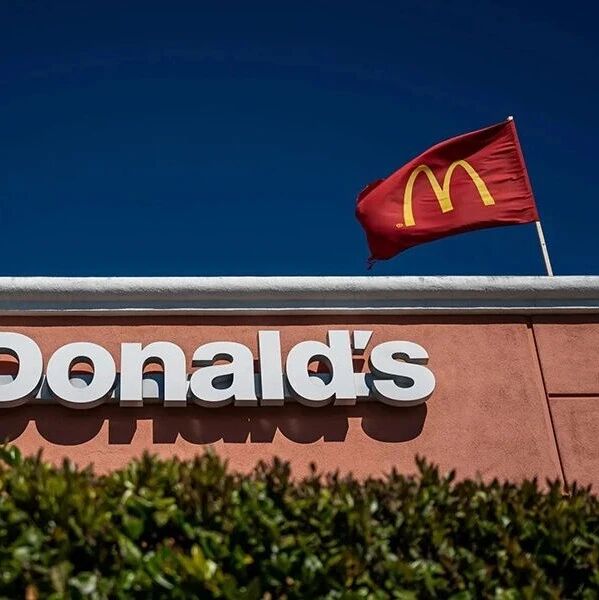
麦当劳如何应对美国“双层经济”困境?
财富FORTUNE· 2025-09-12 13:17
Core Insights - McDonald's is leveraging its sales of burgers and fries to reflect broader economic trends in the U.S. The CEO, Chris Kempczinski, is responding to what he calls a "dual economy" by lowering value meal prices to cater to different consumer spending behaviors [1][2] Group 1: Economic Trends - The economic landscape is characterized by a "dual structure," where high-income consumers continue to spend freely, while middle and low-income consumers are tightening their budgets [2][5] - McDonald's has seen a double-digit decline in customer traffic among middle and low-income groups, who are either skipping breakfast or eating at home [2][4] Group 2: Pricing Strategies - In response to rising menu prices, McDonald's is promoting a revamped $5 meal deal and increasing promotional activities to attract low-income consumers [4][6] - The company is focusing on a "value" theme in its advertising to appeal to cost-conscious families [4][6] Group 3: Labor and Wage Issues - McDonald's is open to discussions about raising the federal minimum wage, which has not been adjusted since 2009, and is currently at $7.25 per hour [3] - Proposed legislation aims to gradually increase the federal minimum wage to $17 by 2030, indicating a shift towards higher wage standards after years of stagnation [3] Group 4: Competitive Landscape - McDonald's ability to lower prices without severely impacting profitability is a competitive advantage that smaller rivals may not possess [4][6] - The broader retail environment reflects similar trends, with major retailers like Walmart and Target reporting that many customers can only afford basic necessities [5][6] Group 5: Future Outlook - The sustainability of McDonald's balanced strategy will largely depend on how long the dual economy persists in the U.S. [6]


美国关税成本全面转嫁至消费端!零售巨头集体预警新一轮涨价潮
智通财经网· 2025-09-01 00:22
Group 1 - The U.S. consumers are facing a new wave of price increases as companies from food giants to hardware chains warn that tariff costs are being passed on to retail prices [1][2] - Major retailers like Walmart, Target, and Best Buy have indicated that tariff-related price hikes are gradually reflected in the costs of grocery items, home goods, and electronics [1] - J.M. Smucker warned of a 22% drop in coffee profits due to tariffs, leading to further price increases [1] - Hormel Foods noted a sharp rise in commodity input costs after its quarterly performance fell short of expectations, resulting in a 12% drop in its stock price [1] - A recent ruling by a federal appeals court deemed most of Trump's global import tariffs unconstitutional, adding uncertainty to future costs for retailers and consumers [1] Group 2 - The former CEO of Gap expressed that the current situation is beyond control, indicating that businesses cannot determine the relationship between product costs, retail pricing, and profit margins [2] - Retail executives warned that more price increases are imminent as new inventory is procured at higher costs [2] - Walmart's CEO mentioned that the company is trying to maintain low prices as long as possible, but costs are expected to continue rising into the third and fourth quarters [2] - The economic pressure is forcing retailers to weigh how much cost can be absorbed and how much will inevitably be passed on to consumers [2] - A consumer confidence survey showed a nearly 6% decline in August compared to July, with inflation expectations rising from 4.5% to 4.8% [2] Group 3 - Consumer behavior in the U.S. is changing, with households across income levels becoming more selective about where and how they spend [3] - Whirlpool's CEO noted that consumers are starting to purchase lower-end products, while Procter & Gamble observed a slight downgrade in brand preferences [3] - The concept of "alternative consumption" is emerging, where consumers opt for cost-effective substitutes rather than purely downgrading [3] - Retailers like TJX, Ross, and Marshall's are benefiting as consumers seek lower-priced brand items [3]


