
中国经济

Search documents
美国企业进博会参展面积连续7年保持第一
Zhong Guo Jing Ji Wang· 2025-10-28 02:47
本届进博会企业展面积超36.7万平方米,有290家世界500强和行业龙头企业参展,展览面积和企业总数 均创历史新高。43个交易团、700多个交易分团将到会洽谈采购。 中国经济网北京10月28日讯记者从今天举行的国新办发布会上获悉,将于11月5日至10日举办的第八届 中国国际进口博览会(简称"进博会")各项筹备工作已基本就绪。本届进博会企业展将有138个国家和地 区的4108家企业参展,美国企业参展面积连续7年保持第一,体现了国际社会对中国经济的坚定信心。 ...
盘和林:从国富到民富,“中国人经济”的深层逻辑丨未来五年
Sou Hu Cai Jing· 2025-10-27 13:58
Core Viewpoint - The concept of "Chinese Human Economy" signifies a shift in China's economic and social development direction, moving from efficiency to fairness, from scale economy focused on commodity prosperity to a human-centered economy that emphasizes people's livelihoods and wealth distribution [1][9][10] Group 1: Transition in Economic Goals - The transition from pursuing efficiency to focusing on equitable distribution of wealth is highlighted, with "common prosperity" becoming a new goal for economic development [4][5] - The optimization of income distribution systems, including initial, redistributive, and tertiary distribution, is essential for achieving this new economic model [4][5] Group 2: Economic Development Model Shift - The shift from "scale economy" to "human-centered economy" indicates a change in policy focus, with future fiscal policies prioritizing social welfare and investments in areas like health, education, and pensions [6][8] - This change aims to alleviate the living burdens of ordinary people and enhance their overall well-being [6][8] Group 3: Global Perspective - The "human-centered" approach is seen as a necessary path for building a community with a shared future for mankind, enhancing China's global influence beyond mere economic metrics [9][10] - By focusing on human welfare and common prosperity, China can increase its global impact, which will translate into financial and trade advantages [9][10] Group 4: Future Implications - The "Chinese Human Economy" will lead to changes in various aspects of society, including the evaluation metrics for local governments, which will expand beyond GDP to include legal, ecological, and innovative dimensions [10] - Fiscal policies will increasingly emphasize quality and efficiency, particularly in social welfare, while income distribution systems will shift towards "common prosperity" [10]


时报观察丨发展“中国人经济” 拓宽全球价值链新边界
Zheng Quan Shi Bao· 2025-10-27 00:27
Core Insights - The article emphasizes the importance of both "Chinese economy" and "Chinese people economy" in the context of China's economic development, indicating a paradigm shift towards a more open and high-quality growth model [2][3] - The focus on GNI (Gross National Income) alongside GDP (Gross Domestic Product) reflects a comprehensive approach to measuring national strength and wealth, highlighting the significance of overseas investments and income [2][3] Group 1: Economic Indicators - GDP is highlighted as a core indicator of domestic production, showcasing the local foundation of the "Chinese economy" and the importance of attracting foreign investment to strengthen economic growth [2] - GNI represents the total income generated by residents of a country, including overseas investment profits and cross-border labor income, which are crucial for expanding national wealth [2] Group 2: Global Investment Strategy - By 2024, China's foreign investment stock is projected to exceed $3 trillion, maintaining a position among the top three globally for eight consecutive years, with enterprises established in 190 countries and regions [2] - The "Chinese people economy" is seen as a means to diversify global investments, effectively mitigating risks associated with reliance on a single market [3] Group 3: High-Quality Development - The transition from being the "world's factory" to a "global value creator" is essential for domestic companies to ascend the value chain, thereby injecting sustainable momentum into high-quality development [3] - The dual investment policy aims to enhance both the "investment in China" brand and the orderly cross-border layout of supply chains, fostering a win-win cooperation model [3]
时报观察丨发展“中国人经济” 拓宽全球价值链新边界
证券时报· 2025-10-27 00:07
Core Viewpoint - The article emphasizes the importance of both "Chinese economy" and "Chinese people's economy" in the context of high-level openness and high-quality development, indicating a paradigm shift in China's open economy development model [1][2]. Summary by Sections Economic Indicators - GDP and GNI are highlighted as two sides of the same coin reflecting a country's comprehensive strength. GDP showcases the domestic production foundation, while GNI includes overseas investment profits and cross-border labor income, contributing to national wealth [1]. - By the end of 2024, China's foreign investment stock is projected to exceed $3 trillion, maintaining a position among the top three globally for eight consecutive years [1]. Global Investment Strategy - The focus on "Chinese people's economy" allows for a diversified global layout, effectively hedging against risks from a single market. In the first three quarters, China maintained stable trade relations with over 240 countries and regions [2]. - The transition from being the "world's factory" to a "global value creator" is essential for domestic companies to ascend the value chain, injecting sustainable momentum into high-quality development [2]. Policy Implications - The dual investment policy serves as a practical path connecting the two economic dimensions. The "14th Five-Year Plan" aims to enhance the "Invest in China" brand while guiding the rational and orderly cross-border layout of production and supply chains [2]. - This approach not only shapes new advantages for the Chinese economy but also offers a Chinese solution for global economic governance that balances efficiency and fairness [2].
时报观察 发展“中国人经济” 拓宽全球价值链新边界
Zheng Quan Shi Bao Wang· 2025-10-26 23:28
Core Insights - The emphasis on both "Chinese economy" and "Chinese people's economy" reflects a paradigm shift in China's open economy development, moving beyond a singular focus on GDP growth [1][2] - The dual focus on GDP and GNI highlights the importance of both domestic production and the income generated by Chinese citizens globally, indicating a comprehensive approach to economic strength [1][2] Group 1: Economic Indicators - GDP is highlighted as a core indicator of domestic production, showcasing the local foundation of the "Chinese economy" and the importance of attracting foreign investment [1] - GNI, which includes income from overseas investments and cross-border labor, is positioned as a critical driver for national wealth, with projections indicating that China's foreign investment stock will exceed $3 trillion by the end of 2024 [1] Group 2: Investment Strategy - The strategy of dual-direction investment is presented as a practical pathway to connect the two economic dimensions, aiming to enhance the "Invest in China" brand while facilitating orderly cross-border supply chain layouts [2] - The ongoing trade relations with over 240 countries and regions serve as evidence of the effectiveness of the "Chinese people's economy" in reinforcing local economies abroad [2] Group 3: Development Goals - Transitioning from being the "world's factory" to a "global value creator" is essential for domestic companies to ascend the value chain, thereby injecting sustainable momentum into high-quality development [2] - The approach aims to create new advantages for the Chinese economy and provide a fair and efficient solution for global economic governance [2]
发展“中国人经济” 拓宽全球价值链新边界
Zheng Quan Shi Bao· 2025-10-26 17:41
Core Insights - The Chinese government emphasizes the importance of both "Chinese economy" and "Chinese people's economy" as part of its high-level opening-up and high-quality development strategy, indicating a paradigm shift in China's open economy development [1][2] - The focus on GDP and GNI reflects a comprehensive approach to measuring national strength, with GDP highlighting domestic production and GNI encompassing global income from overseas investments and labor [1][2] Summary by Sections Economic Strategy - The strategy aims to expand bilateral investment cooperation, enhancing both domestic and international economic dimensions [1][2] - The shift towards GNI as a guiding metric allows for better risk management through diversified global investments, reducing reliance on domestic economic cycles [2] Investment Landscape - By the end of 2024, China's outbound investment stock is projected to exceed $3 trillion, maintaining a position among the top three globally for eight consecutive years [1] - Chinese enterprises are established in 190 countries and regions, with overseas asset returns becoming a significant driver of GNI growth [1] Global Economic Integration - The interaction between "Chinese people's economy" and local economies abroad strengthens mutual benefits and promotes high-quality development [2] - The transition from being the "world's factory" to a "global value creator" is essential for domestic companies to ascend the value chain [2] Policy Implementation - The dual investment policy serves as a practical pathway to connect the two economic dimensions, promoting a win-win cooperation model [2] - The initiative aims to enhance China's economic advantages while contributing to global economic governance with efficient and equitable solutions [2]
我们既重视“中国经济”也重视“中国人经济”
Sou Hu Cai Jing· 2025-10-26 07:26
Group 1 - The core message of the news is the introduction and interpretation of the spirit of the Fourth Plenary Session of the 20th Central Committee of the Communist Party of China [1] Group 2 - The Ministry of Commerce emphasizes the need to actively expand autonomous opening during the "14th Five-Year Plan" period, balancing China's needs with global expectations [3] - The focus will be on aligning with international high-standard economic and trade rules, particularly in the service sector, to expand market access and open fields [3] - Efforts will be made to enhance bilateral and regional trade and investment agreements, as well as to expand the network of high-standard free trade zones [3] - The Ministry aims to create an open highland and conduct various pilot projects for openness [3] - There will be an emphasis on expanding bilateral investment cooperation and enhancing the "Invest in China" brand to attract foreign investment [3] - The goal is to create a transparent, stable, and predictable institutional environment while effectively managing foreign investment [3] - The Ministry will focus on both GDP and GNI, highlighting the importance of the "Chinese economy" and the "Chinese people's economy" [3]
中共中央发布会丨“十五五”时期,既重视“中国经济”也重视“中国人经济”
Sou Hu Cai Jing· 2025-10-26 07:26
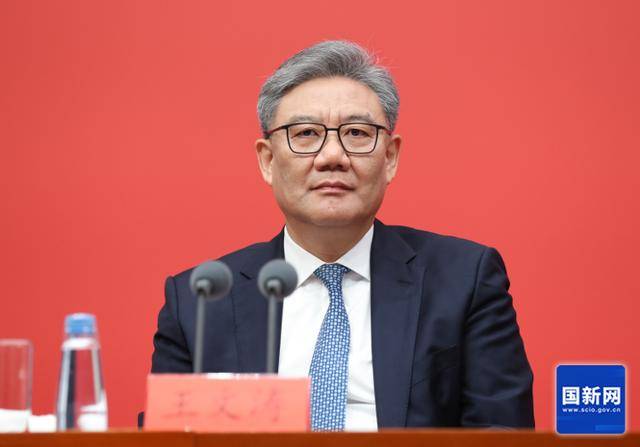
Core Points - The article discusses the important deployment of China's "15th Five-Year Plan" regarding opening up the economy, as introduced by Wang Wentao, the Minister of Commerce [2][3] Group 1: Expansion of Opening Up - The plan emphasizes actively expanding autonomous opening, aligning with international high-standard economic and trade rules, focusing on service sectors, and increasing market access [2] - It aims to enhance trade relationships through regional and bilateral trade investment agreements and expand the network of high-standard free trade zones [2] Group 2: Trade Innovation Development - The plan outlines three pillars for becoming a strong trading nation: goods trade, service trade, and digital trade [2] - In goods trade, it focuses on expanding intermediate goods trade, green trade, and promoting market diversification [2] - For service trade, it aims to improve the negative list management system for cross-border service trade [2] - In digital trade, it plans to gradually expand openness in the digital sector while promoting balanced import and export development [2] Group 3: Investment Cooperation - The strategy includes enhancing the "Invest in China" brand and creating new advantages to attract foreign investment [3] - It emphasizes the importance of a transparent, stable, and predictable institutional environment for foreign investment [3] - The plan also highlights the need for effective management of outbound investments and a comprehensive overseas service system [3] Group 4: High-Quality Belt and Road Initiative - The article states that the Belt and Road Initiative is a collaborative effort rather than a solo endeavor, requiring strategic alignment with partner countries [3] - It aims to advance significant landmark projects alongside smaller, community-focused initiatives [3] - The plan seeks to deepen cooperation in trade, investment, industry, and culture, while expanding collaboration in green, digital, and artificial intelligence sectors [3]
从“中国经济”到“中国人经济”,有何不同寻常?|新京报专栏
Xin Jing Bao· 2025-10-24 08:01
Core Viewpoint - The article emphasizes the strategic shift in China's economic development philosophy, highlighting the importance of both GDP and GNI, which reflects a transition from a production-oriented approach to a more comprehensive perspective on national wealth and economic well-being [2][3]. Summary by Sections Economic Development Strategy - The 20th Central Committee's Fourth Plenary Session approved the proposal for the 15th Five-Year Plan, focusing on expanding bilateral investment cooperation and emphasizing both GDP and GNI as key indicators of economic health [2]. - The shift from focusing solely on domestic production (GDP) to including national wealth (GNI) signifies a paradigm change in understanding economic performance [2][3]. GNI vs. GDP - GNI, which includes net income from abroad, provides a broader view of national wealth compared to GDP, which is limited to domestic production [3]. - GNI emphasizes the importance of individuals and their global resource allocation capabilities, while GDP focuses on local production [3]. International Investment and Competitiveness - Chinese enterprises have established over 50,000 companies abroad, with foreign investment stock exceeding $3 trillion, maintaining a global ranking in the top three for eight consecutive years [3]. - The growth of overseas assets contributes directly to GNI, aligning with the goal of meeting the people's growing needs and supporting high-level openness [4]. Policy Implications - The dual focus on GDP and GNI is seen as a necessary response to the challenges of globalization, enhancing China's control over global resources and supply chains [6]. - The proposal includes measures to attract foreign investment and support outbound investment, particularly in advanced manufacturing and digital economy sectors [7][8]. Institutional Reforms - The establishment of a more comprehensive institutional framework for high-level openness is anticipated, including aligning with international trade agreements and improving the business environment for foreign investors [7][8]. - The focus on GNI growth may lead to a shift in local government priorities from merely attracting investment to fostering talent and global engagement [8]. Global Economic Governance - The emphasis on both GDP and GNI offers a new model for economic governance, providing a reference for developing countries to balance efficiency and equity [9]. - This approach aims to enhance resilience against market fluctuations and promote inclusive globalization, as seen in projects like the China-Laos railway [9]. Conclusion - The transition from a GDP-centric model to one that values GNI reflects a profound change in development philosophy, positioning China as a global value creator rather than just a manufacturing hub [9].
重视“中国人经济”,满足人民美好生活需要
Nan Fang Du Shi Bao· 2025-10-24 07:29
Core Viewpoint - The emphasis on both GDP and GNI reflects a balanced approach to economic evaluation, focusing on overall economic growth as well as individual income growth, which is crucial for assessing the quality of economic development and social equity [1][2][3] Group 1: Economic Growth and Evaluation - The distinction between GDP and GNI highlights different focuses: GDP is used to measure overall economic output, while GNI is more relevant for analyzing income levels and living standards [2][3] - The approach of considering both GDP and GNI signifies the importance of not only macroeconomic growth but also the improvement of individual living standards, which is essential for a comprehensive evaluation of economic development [2][3] Group 2: Policy Implications and Strategies - The "14th Five-Year Plan" emphasizes the need to balance economic growth with improvements in people's livelihoods, aligning with the principle of "development for the people" [3][4] - The strategy includes expanding domestic demand, enhancing consumption, and investing in both material and human resources, which are interconnected to stimulate economic growth and improve living standards [3][4] - Increasing residents' income is identified as a key factor in activating consumption and driving economic growth, ensuring that the benefits of development are shared among the population [4]
