
城市治理

Search documents
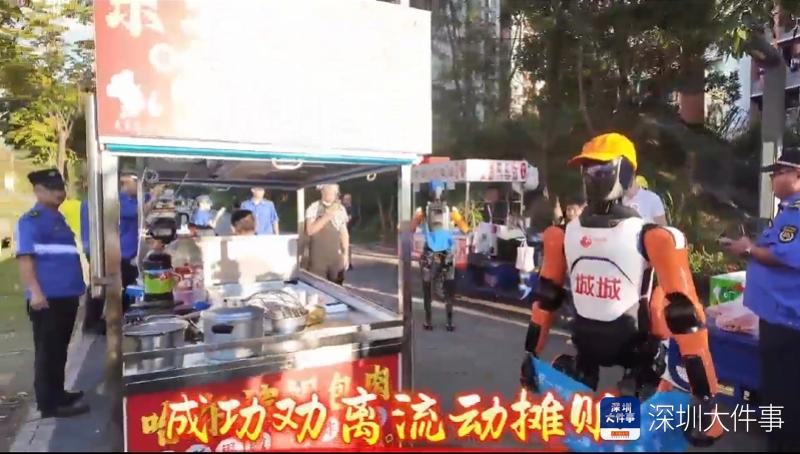
深圳机器人上街劝导乱摆卖 “上岗”第一天成功劝离摊贩
Nan Fang Du Shi Bao· 2025-08-24 01:05
Core Viewpoint - The introduction of robots "Chengcheng" and "Guanguan" for street vendor management in Shenzhen represents an innovative approach to urban governance, combining technology with community engagement to address the challenges of street vendor regulation [3][6][8]. Group 1: Robot Implementation - On August 20, the robots made their debut, successfully persuading street vendors to leave the area on their first day of operation [6]. - The robots are equipped with engaging audio messages and visual expressions to create a non-threatening atmosphere during enforcement [3][6]. - The initiative aims to enhance urban management by integrating local technology solutions into the enforcement process [6][8]. Group 2: Urban Governance Challenges - The balance between supporting street vendors' livelihoods and maintaining urban order is a significant governance challenge [8]. - Shenzhen is exploring innovative solutions, such as designated vendor areas and smart management systems, to address the complexities of street vendor regulation [8]. - The collaboration with local enterprises to develop robotic enforcement tools reflects a broader trend of incorporating technology into community governance [8].


沉默空间里有商业密码
Jing Ji Ri Bao· 2025-08-23 22:18
Core Insights - The concept of "silent spaces" is being activated in urban environments, transforming previously underutilized areas into valuable commercial opportunities through micro-updates and lightweight operations [1][2]. Group 1: Activation of Silent Spaces - "Silent spaces" are being introduced in various urban settings, such as elevators, where users can engage with advertisements and receive benefits, turning these areas into consumer touchpoints [1]. - Examples of activating silent spaces include vending machines at stair corners, advertising light boxes near sinks, and pop-up stores in underutilized areas, showcasing a trend of repurposing overlooked urban spaces [1]. Group 2: Economic Viability - The low cost of activating silent spaces, often characterized by low rent or symbolic management fees, makes them economically attractive compared to high-rent commercial areas [2]. - The lightweight asset model, involving screens, vending machines, and self-pickup lockers, allows for manageable operational costs and potential cumulative profits due to decreasing marginal costs [2]. - Each silent space serves as an independent testing ground for businesses, enabling quick responses to consumer preferences and market feedback, thus facilitating efficient decision-making [2]. Group 3: Challenges and Considerations - The commercialization of silent spaces has raised concerns regarding safety, hygiene, and user experience, highlighting the need for careful planning and execution [3]. - Some businesses face challenges with rising rents after initial success, which can hinder ongoing operations and profitability [3]. - The activation of silent spaces reflects broader economic considerations and serves as a test of urban governance, emphasizing the importance of integrating these areas into the commercial ecosystem [3].
“末梢”变“前哨”,治理更高效(纵横)
Ren Min Ri Bao· 2025-08-21 22:13
Core Viewpoint - The establishment of urban observers is a practical implementation of the concept that "the people build the city, and the city serves the people," allowing citizens to actively participate in urban governance and address overlooked issues [1][2][3] Group 1: Urban Observer Initiatives - Various regions, including Shaanxi, Jiangxi, and Guangdong, have mobilized individuals from diverse fields, such as couriers and ride-hailing drivers, to serve as urban observers [1] - Urban observers act as representatives of citizens, engaging in urban "health checks" and providing suggestions to ensure governance aligns with public needs [1] Group 2: Problem Identification and Resolution - Urban observers are not only capable of identifying issues but also play a role in problem-solving, as seen in Suzhou, where property representatives collaborated with administrative departments to address frequent issues like illegal street vending and parking violations [1] - The establishment of a "15-minute rapid response circle" enhances the efficiency of addressing urban problems [1] Group 3: System Improvement for Urban Observers - To maximize the effectiveness of urban observers, it is essential to improve the relevant systems and mechanisms, including providing necessary training and tools for reporting issues [2] - A rapid response and processing mechanism should be established to ensure timely feedback and efficient handling of reported problems, creating a closed-loop system for governance [2] - Incentive mechanisms, such as a points system, can enhance participation and a sense of achievement among urban observers [2]
盘活“沉睡资产”的基层实践:“理想之地”探索城市现代化治理新路径
Zhong Guo Jing Ying Bao· 2025-08-21 14:06
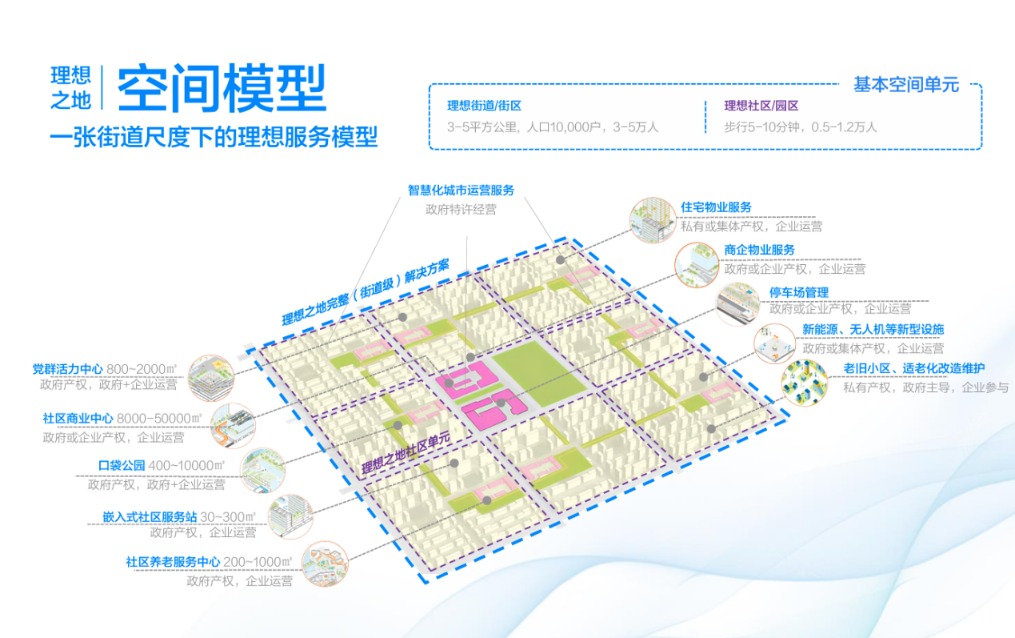
Core Viewpoint - The "Ideal Place" urban service solution is being implemented in Wuhan's Jianghan District, focusing on creating a collaborative ecosystem among government, residents, and industry partners to revitalize underutilized assets [1][2][4] Group 1: Urban Development and Governance - China's urban development focus has shifted from expansion to governance and operation, with the "Ideal Place" model serving as a case study for modern urban governance [2] - The "Ideal Place" space model aligns with the Ministry of Housing and Urban-Rural Development's guidelines for building complete residential communities, emphasizing resilience, vitality, and intelligence [3][4] Group 2: Community Services and Infrastructure - The "Ideal Place" model targets communities of 10,000 to 50,000 residents, offering customizable service modules across health, living, social, work, service, and transportation [3][6] - The model includes various community spaces such as activity centers, service stations, and parks, designed to be flexible and modular to meet diverse needs [3][4] Group 3: Market Integration and Resource Management - The model emphasizes market-driven resource integration, allowing the government to delegate operations to enterprises, thus avoiding direct funding burdens [4][8] - The collaboration between government and enterprises aims to create a platform for shared value creation, enhancing the management of community assets [4][8] Group 4: Digital Transformation and Efficiency - The implementation of a digital operation center in Jianghan District has led to a 10% reduction in urban management costs and significant decreases in complaints and issues [9] - The "Ideal Place" initiative incorporates smart management systems, enhancing the efficiency of community services and governance [9]
畅通充电桩进小区之路,有多难?
Jing Ji Ri Bao· 2025-08-18 11:09
Core Viewpoint - The case of a homeowner suing a property management company for refusing to install a charging pile highlights the ongoing conflict between urban governance capabilities and public satisfaction in the context of the electric vehicle era [1] Group 1: Industry Context - Over the past five years, China's new energy vehicle production and sales have experienced a compound annual growth rate of over 50%, while the installation rate of charging piles in residential areas has remained around 30% [1] - The number of civil disputes arising from the difficulty in reporting charging piles has been increasing annually, alongside a rise in administrative reviews and public complaints related to this issue [1] Group 2: Proposed Solutions - To address the challenges, it is suggested to unify "safety" and "convenience" through higher-level institutional design, establishing clear standards to define the boundaries of property management's refusal rights and homeowners' application rights [2] - Cost-sharing mechanisms are recommended, including government funding as a "down payment" for public infrastructure, utility companies contributing through a "capacity package" model, and benefiting homeowners adjusting through "charging service fees" [2] - The introduction of market-based risk management mechanisms, such as comprehensive liability insurance for charging piles, can alleviate property management's safety concerns by quantifying and transferring risks [2] - The approach to installing charging piles should evolve from a focus on authority to collaborative problem-solving, shifting from reactive measures to proactive prevention, and from segmented management to full-cycle collaboration [2]
畅通充电桩进小区
Jing Ji Ri Bao· 2025-08-17 21:55
Core Insights - The case of a homeowner suing a property management company over the installation of a charging pile highlights the ongoing conflict between urban governance capabilities and residents' needs in the era of electric vehicles [1] - Despite a compound annual growth rate of over 50% in China's new energy vehicle production and sales over the past five years, the installation rate of charging piles in residential areas has remained around 30%, leading to an increase in civil disputes related to charging pile installation [1] Group 1 - The need to reconcile "safety" and "convenience" in the context of charging pile installations is emphasized, suggesting that a higher-level institutional design is necessary to find common ground [2] - Establishing clear standards can define the boundaries of property management's "right to refuse" and the car owner's "right to apply," which is seen as a significant step in governance [2] - Cost-sharing mechanisms are proposed, including government funding, contributions from power companies, and dynamic adjustments through charging service fees from benefiting car owners [2] Group 2 - The introduction of market-based risk management mechanisms, such as comprehensive liability insurance for charging piles, is suggested to alleviate property management's safety concerns while promoting service growth [2] - The shift in governance philosophy is highlighted, moving from a "who decides" approach to a collaborative "how to get things done" mindset, emphasizing proactive measures over reactive ones [2]
信长星在南京调研城市工作时强调
Nan Jing Ri Bao· 2025-08-15 01:57
Group 1: Urban Development and Renewal - The emphasis is on promoting high-quality and connotative urban development, focusing on creating modern, innovative, livable, beautiful, resilient, civilized, and smart cities [1] - Urban renewal is seen as a way to activate existing resources and expand new development spaces, with a focus on enhancing functionality and quality [1] - The importance of preserving historical features, regional characteristics, and cultural sentiments during urban renewal is highlighted, ensuring that cities retain their memories and evoke nostalgia [1] Group 2: Digital Governance and Smart City Initiatives - The city is advancing from digital governance to intelligent and smart governance, utilizing technologies such as artificial intelligence, big data, and the Internet of Things [2] - There is a focus on breaking down "information silos" and enhancing data sharing to improve urban governance efficiency [2] - The need for comprehensive management of underground infrastructure, including monitoring and emergency response measures for risks like urban flooding and gas leaks, is emphasized [2] Group 3: Environmental Management and Sustainability - The Qinhuai Circular Economy Industrial Center is responsible for resource sorting and waste transfer, aiming to promote waste reduction and resource recycling [3] - The importance of protecting unique historical and cultural resources while providing a beautiful living environment is stressed [3] - The goal is to foster a green production and lifestyle, contributing to sustainable urban development [3]
信长星在南京调研城市工作时强调坚持以内涵式发展为主线 加快建设现代化人民城市
Xin Hua Ri Bao· 2025-08-14 23:23
Group 1: Urban Development and Renewal - The emphasis is on promoting high-quality and connotative urban development, focusing on creating modern, innovative, livable, beautiful, resilient, civilized, and smart cities [1] - Urban renewal is seen as a way to revitalize existing resources and expand new development spaces, with a focus on enhancing functionality and quality [1] - The importance of preserving historical features, regional characteristics, and cultural sentiments during urban renewal is highlighted, ensuring that cities retain their memories and nostalgia [1] Group 2: Digital Governance and Smart City Initiatives - The city is advancing from digital governance to intelligent and smart governance, utilizing technologies such as artificial intelligence, big data, and the Internet of Things [2] - There is a focus on breaking down information silos and enhancing data sharing to improve urban governance efficiency [2] - The need for comprehensive management of underground pipelines and infrastructure is emphasized, ensuring safety and improving urban resilience [2] Group 3: Environmental Management and Sustainability - The Qinhuai Circular Economy Industrial Center is responsible for resource sorting and waste transfer, aiming to promote waste reduction and resource recycling [3] - The importance of protecting unique historical and cultural resources while providing a beautiful living environment is stressed [3] - Efforts are being made to create a green lifestyle and production methods, contributing to sustainable urban development [3]
广西对城市国土空间进行“全面体检”
Guang Xi Ri Bao· 2025-08-14 01:37
Core Insights - The core objective is to complete a comprehensive monitoring of urban land space in Guangxi by the end of this year, leveraging big data to enhance urban governance [1][2] Group 1: Urban Land Space Monitoring - The monitoring initiative is a response to the requirements set forth by the 20th National Congress of the Communist Party of China, aiming to improve urban planning, construction, and governance [1] - The project began with three cities: Nanning, Liuzhou, and Guilin, and has expanded to cover all 14 prefecture-level cities in Guangxi, aligning with the national initiative involving 297 cities [1][2] Group 2: Comprehensive Assessment Approach - The monitoring is not merely a superficial assessment but a thorough "health check" of urban spaces, utilizing satellite imagery, specialized data, and field surveys [2] - The focus includes 19 core areas of public concern such as housing, healthcare, social welfare, education, transportation, and public facilities, with detailed tracking of 56 types of urban elements [2] Group 3: Data Utilization and Urban Development Goals - The aim is to provide a realistic reflection of urban development health and planning effectiveness, identifying shortcomings in urban space quality [2] - The results will serve as a "decision-making think tank" for urban governance, facilitating a shift from "scale expansion" to "quality enhancement" in urban development [2]
“甜蜜的烦恼”辩证看(人民论坛)
Ren Min Ri Bao· 2025-08-13 21:50
"滋儿哇——滋儿哇——"近来,上海市民经常听到蝉鸣,有人视其为城市背景音,有人则怨其带来噪声 困扰。"人在树下走,屎从天上来",河南郑州经五路与纬一路交叉口附近,夜鹭在树上筑巢,颇受群众 欢迎,可不时被鸟屎"袭击",也多了一些苦恼。江苏无锡的一个小区,绿化带草丛里钻出一只刺猬,怎 么对待这只可能附着寄生虫的"小家伙"?有人建议,"让它自己找路回家""不要打扰它"。 夏蝉、夜鹭、刺猬……当城市拥有更多自然生灵,虽有人欣喜、有人皱眉,却也说明生态向好,这 是"甜蜜的烦恼"。同时要看到,城市留给自然生态更大天地,容得下蝉鸣,也需兼顾多重感受,这为优 化治理留下有所作为的空间。 不妨看看上海静安区曹家渡街道的做法。辖区内有个小区,绿化率高,树木繁盛,这曾是"卖点"。然 而,高树增绿了,也遮挡了低层住户的采光与通风。如何平衡"绿"与"光"?专业勘察,制订方案,征求 意见,精准修剪……街道主动出击,整个过程有科学论证、专业支持、共治协商。不限于解决一个小区 的痛点,当地还发布上海首个街道级修树指引,树木遮挡治理有了参照。 从解决"一件事"到办好"一类事",以务实行动积极求解,才能在"烦恼"之中辟出治理新路径。 当美好生活 ...