
数字赋能

Search documents
我省已开展12类国家基本公卫服务项目未病要防,让居民健康家底越来越厚
Xin Hua Ri Bao· 2025-09-24 23:31
Core Viewpoint - The implementation of the National Basic Public Health Service Project in Jiangsu has significantly improved public health services over the past 15 years, transitioning from a disease-centered approach to a health-centered model, enhancing the overall health of residents [1][2]. Funding and Financial Support - By 2025, the per capita basic public health funding in Jiangsu has reached 108 yuan, exceeding the national standard, with a mechanism established for seasonal pre-allocation and year-end assessment to ensure precise fund allocation [3]. Service Quality Improvement - Jiangsu has expanded its basic public health services to include 12 categories, such as health records, health education, and chronic disease management, with over 90% of residents having electronic health records by 2024 [4][6]. - The management of chronic diseases has evolved to include multiple conditions, with services like hypertension and diabetes management being integrated into a comprehensive screening and prevention center [4][5]. Community Health Initiatives - Local health workers, such as village doctors, are actively involved in managing residents' health, conducting free health check-ups, and establishing personalized health records for chronic disease management [2][4]. - Innovative services like digital vaccination management and personalized exercise prescriptions are being introduced to enhance community health engagement [6][8]. Future Directions - Jiangsu plans to focus on deepening the integration of medical and preventive services, enhancing digital capabilities, and providing targeted services for specific populations, particularly the elderly and children, to meet the evolving health needs of residents [8].
莫让“数字赋能”变成“数字负担”(思想纵横)
Ren Min Ri Bao· 2025-09-24 23:22
Core Points - The central theme emphasizes the need to address "digital formalism" in grassroots governance to alleviate burdens on local officials and enhance their ability to implement policies effectively [1][2][3] Group 1: Digital Formalism and Its Impact - Digital formalism manifests in various forms, particularly through excessive digital applications that distract officials from their core responsibilities [1][3] - The proliferation of digital platforms has led to inefficiencies, with officials often overwhelmed by redundant tasks such as check-ins and data submissions [1][3] - The misalignment of performance metrics, focusing on superficial data like app usage rather than actual problem-solving, has contributed to the issue of digital formalism [3][4] Group 2: Policy Responses and Recommendations - The introduction of regulations aimed at reducing formalism reflects a commitment to improving grassroots governance and addressing the burdens imposed by digital tools [2][4] - Recommendations include fostering a correct performance outlook among officials, prioritizing citizen satisfaction and problem resolution over superficial metrics [4] - A systematic approach is suggested to streamline digital platforms, eliminate data silos, and promote resource sharing, allowing officials to focus on substantive governance [4]
哈尔滨工程大学:“线下+线上”构建双创育人新范式
Ke Ji Ri Bao· 2025-09-23 23:45
Core Insights - Harbin Engineering University hosted the "Innovation, Creativity, Entrepreneurship, and Creation" cloud exhibition, showcasing over 190 final projects online, allowing users to explore the content without being physically present [1] - The exhibition employs a "hybrid" model to support project incubation and result transformation, establishing a new paradigm for innovation and entrepreneurship education [1] Group 1: Digital Platform Development - The Yuan Chuang Academy is a high-level digital platform for innovation and entrepreneurship education, leveraging Harbin Engineering University's strengths in cutting-edge technologies like artificial intelligence and virtual reality [2] - The virtual environment of the Yuan Chuang Academy features four teaching buildings presented in 3D, enabling users to interact with innovative projects [2] - The Innovation and Entrepreneurship Practice Center enhances static exhibitions into dynamic interactions, allowing students to access award-winning projects from competitions over the past three years [2] Group 2: Resource Sharing Ecosystem - Established in 2022, the Yuan Chuang Academy aims to address traditional challenges in innovation and entrepreneurship education by creating a resource-sharing ecosystem that integrates online and offline resources [3] - The platform has attracted over 60 universities for observation and has recorded over 10,000 online visits, becoming a national-level practice base for innovation and entrepreneurship education [3] - The academy facilitates collaboration and resource sharing, enhancing students' digital learning capabilities and providing access to cutting-edge technologies and projects [3] Group 3: Future Expansion Plans - The innovation and entrepreneurship modules of the Yuan Chuang Academy will gradually be opened to universities nationwide, with plans to enhance practical training, course integration, and enterprise collaboration [4] - The university aims to improve resource connectivity and accelerate the digital empowerment of innovation and entrepreneurship education [4]
2026福州跨境展:链通全球,跨境领航
Sou Hu Cai Jing· 2025-09-22 05:34
Core Insights - The sixth China Cross-Border E-Commerce Fair will take place from March 18 to 20, 2026, in Fuzhou, focusing on "Digital Empowerment and Cross-Border Win-Win" as its theme, aiming to explore new opportunities in cross-border e-commerce and lead the digital transformation of global trade [1] Group 1: Scale and Platform Development - The exhibition area will exceed 120,000 square meters, a 20% increase from the previous edition, with 10 themed exhibition zones covering the entire industry chain of cross-border e-commerce [3] - Over 2,500 exhibitors are expected, including major platforms like Amazon, eBay, and SHEIN, along with more than 1,000 source factories and service providers [3] - The fair will adhere to UFI international certification standards, enhancing its internationalization and professionalism, providing an efficient platform for exhibitors [3] Group 2: Digital Innovation - Digital technology will be a core focus, showcasing AI applications in cross-border e-commerce, including smart product selection, precise marketing, intelligent customer service, and logistics optimization [6] - The "Brand Going Global" initiative will highlight domestic brands showcasing their products and sharing internationalization experiences, promoting the upgrade from "manufacturing" to "creation" and "branding" [6] Group 3: Geographical Advantages - Fuzhou's advantageous geographical location and comprehensive transportation network make it a key hub connecting the "Belt and Road" initiative with Southeast Asia and Japan/Korea markets [7] - The modern facilities of the Strait International Exhibition Center are conveniently located just 20 minutes from Fuzhou Changle International Airport, facilitating easy access for global exhibitors and buyers [7] Group 4: Future Opportunities - The cross-border e-commerce industry is expected to see two major trends in 2026: the rise of green supply chains and the unlocking of potential in emerging markets [9] - Environmental concepts will be deeply integrated into cross-border logistics and packaging design, becoming a necessary direction for corporate transformation [9] - Emerging markets in Southeast Asia and Latin America will provide significant growth opportunities for Chinese enterprises [9]


调研速递|珠江啤酒接受多家投资者调研 上半年营收31.98亿元等要点披露
Xin Lang Zheng Quan· 2025-09-19 11:43
Core Viewpoint - Zhujiang Beer participated in an online investor reception event, discussing various aspects of its business performance and future plans, highlighting growth in high-end products and digital marketing initiatives [1][2]. Group 1: Product Structure and New Products - In the first half of 2025, Zhujiang Beer optimized its product structure, with high-end beer product sales increasing by 14.16% year-on-year. New products launched include the auspicious Zhujiang Beer 500mL canned and Xuebao Craft White Beer 980mL canned, with Zhujiang P9 awarded the 2024 Qingzhao Award for new alcoholic products [2]. Group 2: Channel Expansion - Significant revenue growth was noted in supermarket and e-commerce channels, with e-commerce channel growth exceeding 47%. The company emphasized its focus on new channel expansion and precision marketing in new retail to enhance product value [2]. Group 3: Cultural and Tourism Projects - Investors inquired about the operational status of Zhujiang Pati as a "night economy" landmark and future plans for the "beer + cultural tourism" initiative [2]. Group 4: Digital Empowerment - In the first half of 2025, the company deepened the application of its O2O Phase II marketing digital empowerment project, improving terminal store management systems. Investors were interested in the project's impact on store management and sales [2]. Group 5: State-Owned Enterprise Reform - Zhujiang Beer advanced its state-owned enterprise reform actions, achieving operating revenue of 3.198 billion yuan, a year-on-year increase of 7.09%, and a net profit attributable to shareholders of 612 million yuan, up 22.51% year-on-year [2]. Group 6: Receivables Management - The company's other receivables slightly decreased at the end of the period compared to the beginning. Investors asked about the recovery of receivables and measures to strengthen management, with the company committing to ongoing receivables management [2]. Group 7: Capacity Projects - In the first half of 2025, the Meizhou Zhuji Beer new bottled draft line project was successfully put into production. The company is steadily advancing the Zhongshan Zhuji capacity expansion project and the Zhanjiang Zhuji new canned line project. Investors were interested in the production timelines, capacity improvements, and market feedback for these projects [2].

探索“政校企+”人才科创产业矩阵建设
Xin Hua Ri Bao· 2025-09-18 08:07
Core Viewpoint - The establishment of an efficient collaborative regional innovation system is crucial for promoting high-quality economic development in the context of increasing global technological competition. The "Government-University-Enterprise+" talent and technology innovation industry matrix aims to enhance the overall effectiveness of the regional innovation system by integrating various societal forces, including financial institutions and technology intermediaries [1]. Group 1: Innovation Governance - A new paradigm of innovation governance is proposed, featuring a "three-tier, multi-node" network governance system. This includes an innovation development strategy committee at the strategic level, a matrix operation center for resource coordination, and high-level innovation consortia at the operational level [2]. - The implementation of "one chain, one policy" precise governance focuses on strategic emerging industries such as biomedicine, artificial intelligence, and advanced materials, tailoring support policies accordingly [2]. - A three-tier responsibility system is established to ensure efficient matrix construction, comprising a "general matrix leader, industry matrix leader, and execution matrix leader" [2]. Group 2: Resource Allocation Mechanism - The "Talent Rotation Door" project aims to break down institutional barriers and establish a talent mobility mechanism that retains identity, connects benefits, and shares outcomes [3]. - A green channel for enterprise experts to enter universities is proposed, along with an "industry professor" program to involve outstanding enterprise experts in talent training and research [3]. - A high-standard innovation infrastructure is to be built, promoting the open sharing of major research facilities and large-scale equipment, along with a comprehensive management system for usage [3]. Group 3: Digital Empowerment and Market Operation - The construction of a digital foundation for innovation in Suzhou will integrate the city's technology innovation data resources into a unified standard database covering various data types [4]. - A gradient funding support system will be established, including seed funds for early-stage projects and a combination of investment and subsidies for growth-stage projects [4]. - A cross-regional collaborative platform will be set up to connect the Yangtze River Delta technology innovation community, promoting shared major research facilities and establishing offshore innovation centers [4].
中国工艺美术行业迎来华丽蝶变
Xiao Fei Ri Bao Wang· 2025-09-18 03:22
Core Viewpoint - The Chinese arts and crafts industry is undergoing a modernization transformation through the integration of traditional craftsmanship with innovative technologies and cultural elements, showcasing a successful blend of heritage and contemporary design [1][2][11]. Innovation-Driven - The China Light Industry Federation has implemented significant measures from 2020 to 2025 to promote the inheritance, innovation, and development of the arts and crafts industry, establishing 49 "Chinese Arts and Crafts Master Intangible Cultural Heritage Inheritance Bases" and 56 "Arts and Crafts Master Inheritance Innovation Bases" [2][3]. - The introduction of digital technologies has redefined the creative paradigm in arts and crafts, with platforms like the "Jingchu Pattern AI Design Platform" improving design efficiency by over 70% [3][4]. Breakthroughs in New Materials and Techniques - Innovations such as the integration of shape memory metals into Suzhou embroidery have transformed traditional two-dimensional pieces into interactive three-dimensional artworks [4]. - The development of titanium alloy-based jade porcelain paintings has positioned them as new favorites in the international high-end decoration market due to their unique properties [4]. Standardization and Legal Protection - The establishment of national standards, such as the "Zhuang Brocade" standard set to be implemented in May 2025, aims to unify quality and safety standards in the industry [5][6]. - The comprehensive approach to intellectual property protection has fostered innovation, with regions like Fujian and Jiangxi leading in patent applications and protections [7]. Industry Upgrade - The market size of China's traditional handicraft cultural heritage industry has surpassed 580 billion yuan, reflecting a nearly 150% increase since 2020, with a compound annual growth rate of 30% [8]. - The establishment of 67 national-level arts and crafts industrial clusters has become a crucial pillar for local economic development, with significant contributions from regions like Quanzhou and Putian [8]. Internationalization and Talent Development - The period from 2020 to 2025 is critical for the internationalization of the Chinese arts and crafts industry, with cultural product exports reaching approximately 148.4 billion USD in 2023 [9]. - A multi-faceted talent cultivation system, including 49 "Chinese Arts and Crafts Master Intangible Cultural Heritage Inheritance Bases," is being developed to support the industry's growth [9].
善琏“福笔”携非遗共富“上上签”亮相展会
Xiao Fei Ri Bao Wang· 2025-09-18 02:39
Core Viewpoint - The 55th National Writing Tools Expo will be held from October 9 to 12 in Xi'an, showcasing the development of traditional Chinese writing tools, particularly the "Fu Pen," which integrates traditional craftsmanship with modern creativity [1][9]. Group 1: Event Overview - The expo aligns with national cultural development strategies and provides a platform for exhibitors to leverage growth opportunities [1]. - The "Fu Pen" from the Shanjian Lake Pen Town is highlighted as a key attraction, representing a blend of traditional culture and modern design [1][2]. Group 2: Product Development - The "Fu Pen" is a collaborative effort between Yao Yulin and her husband Yang Wen, focusing on both the technical aspects of pen-making and the cultural significance of the product [2]. - The product aims to redefine the perception of traditional lake pens, making them portable cultural symbols rather than mere decorative items [2]. Group 3: Production and Employment - The "Fu Pen" workshop plans to increase monthly production capacity to 5,000 units, creating more job opportunities for local villagers [2][6]. - The workshop employs 12 low-income villagers, increasing their average monthly income by over 3,000 yuan [6]. Group 4: Sustainability and Innovation - Yao Yulin incorporates eco-friendly practices in the production process, using local natural materials and optimizing traditional methods to achieve zero waste [3]. - Innovative product lines, such as the "Canal Boat Pen" and "Blue and White Porcelain Pen," have achieved annual sales of 50,000 sets, contributing to 40% of the workshop's total revenue [3]. Group 5: Digital Transformation - The workshop has embraced digital tools, creating a live-streaming platform to train a new generation of hosts and expand sales channels beyond traditional retail [5]. - Sales have doubled compared to the previous era dominated by physical stores, with products reaching a national audience through online platforms [5]. Group 6: Community Impact - The workshop's operations have led to a 65% increase in annual revenue, significantly benefiting local communities and addressing the challenges faced by rural women [6]. - Yao Yulin has trained over 400 rural women in pen-making skills, resulting in the establishment of female-led e-commerce teams that have processed over 600,000 orders [6]. Group 7: Future Prospects - The initial batch of 2,000 "Fu Pens" sold out quickly, with total sales exceeding 20,000 units, and plans to further increase production capacity to 20,000 units per month [8]. - The couple's efforts in promoting the "Fu Pen" and engaging with local artisans are expected to enhance the visibility of traditional craftsmanship at the upcoming expo [9].
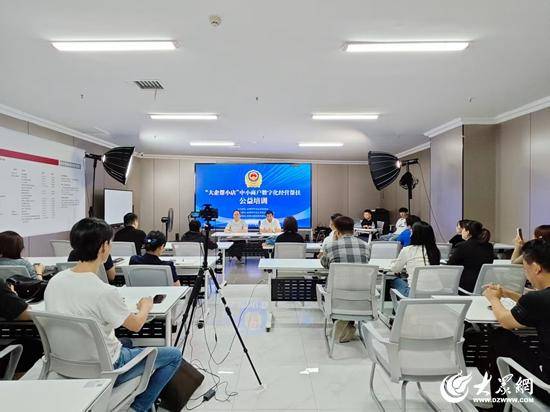
“大企”传经送宝,“小店”触网腾飞!“大企帮小店”中小商户数字化经营帮扶公益培训举办
Sou Hu Cai Jing· 2025-09-17 17:45
Core Viewpoint - The "Big Enterprises Helping Small Stores" initiative aims to enhance the digital capabilities of small businesses in Zibo, promoting their sustainable development and competitiveness in the market [1][3]. Group 1: Event Overview - The "National Individual Business Service Month" coincides with Zibo's "Service Year for Promoting Individual Businesses," featuring a training session on September 17 [1]. - The training is organized by the Zibo Market Supervision Administration and the Comprehensive Service Center for Market Entities, focusing on digital skills for small merchants [1][3]. Group 2: Training Objectives and Content - The training aims to leverage the resources and technical expertise of large enterprises to support individual businesses, fostering a collaborative development model [3]. - The session emphasizes practical skills in digital marketing, including short video content creation and local traffic acquisition, using real-life examples relevant to the local context [5]. Group 3: Participation and Future Plans - Over 400 merchants attended the training, with an additional 500 participating via online streaming, indicating strong interest in digital transformation [5]. - The Zibo Market Supervision Administration plans to continue addressing the challenges faced by individual businesses by linking more social resources and conducting diverse support activities [5].
撬动社会资本参与海洋产业布局
Zhong Guo Zi Ran Zi Yuan Bao· 2025-09-17 02:20
Group 1 - The Fujian Provincial Ocean and Fisheries Bureau emphasizes the need to optimize funding allocation and usage efficiency to strengthen the marine economy, encouraging social capital participation [1] - Since the beginning of the 14th Five-Year Plan, the completion rate of central budget investments in agricultural construction projects (fisheries) has been nearly 100%, with the execution rates of central agricultural transfer payment funds for 2024 and 2025 ranking among the top in the country [1] Group 2 - The focus is on enhancing effective supply of incremental policies around three main directions: strengthening industries, empowering technology, and improving livelihoods, with initiatives to facilitate policy implementation [2] - Seven special action plans have been launched to promote marine technology innovation, new product applications, and high-quality development in deep-sea aquaculture, supported by financial plans for modernizing fisheries [2] Group 3 - A rolling evaluation mechanism for marine fishery investment projects has been established, with a 6% year-on-year increase in central financial support for fishery development since 2025, leading to over 100 billion yuan in marine fishery project investments [3] - The introduction of a dual empowerment model combining policy and finance for marine economic development has been initiated, optimizing the "financial support + financial services" approach [3] Group 4 - The establishment of an integrated platform called "Marine Fujian" aims to streamline project application processes and enhance transparency in policy implementation, ensuring that benefits reach enterprises directly [4] - A dynamic adjustment mechanism for policies has been created to facilitate project approvals and funding, promoting a transparent and efficient application process [4]