生态文明

Search documents
2025年生态文明贵阳国际论坛取得多项成果
Xin Hua She· 2025-07-08 12:24
Core Insights - The 2025 Guiyang International Forum on Ecological Civilization successfully gathered representatives from 62 countries and regions, showcasing significant achievements in ecological civilization and sustainable development [1][2] Group 1: Forum Achievements - The forum released multiple reports, including the "2025 Guiyang Consensus" and the "Global Ecological Civilization Transformation Development Report 2025," highlighting global efforts in ecological civilization [1] - Key outcomes included the "Green Water and Green Mountains are Golden Mountains and Silver Mountains" innovative practice model and the "Two Mountains" transformation case from Guizhou Province [1] - Seven theoretical results were published, including the "Guizhou Province Green Finance Development Report" and the "3030 Target" marine protected area research [1] Group 2: Industry Engagement - The forum hosted several green industry investment activities, resulting in seven signed projects worth 6.2 billion yuan [2] - Twenty outstanding artificial intelligence application scenarios were released, attracting several leading industry chain enterprises [2] - A conference for new environmental products and technologies was held, showcasing a range of green innovations and cutting-edge technologies [2] Group 3: Sustainability Initiatives - The forum emphasized green, low-carbon, and sustainable development principles throughout its activities, promoting "green transportation," "green meetings," and "green accommodations" [2] - Measures were implemented to reduce plastic use and carbon emissions, achieving a low-carbon, environmentally friendly, and recyclable event [2]
7月6日晚间央视新闻联播要闻集锦
Yang Shi Xin Wen Ke Hu Duan· 2025-07-06 12:38
Group 1 - The first volume of "Xi Jinping's Ecological Civilization Selected Works" has been published and distributed nationwide [4] - The South-to-North Water Diversion Project's eastern and central lines have cumulatively transferred over 80 billion cubic meters of water, benefiting 185 million people [2][14] - The steel industry in China has shown significant growth in the first five months of the year, indicating a stable operation and a clear trend of industrial transformation and upgrading [10] Group 2 - The summer season has prompted various regions to create new consumption scenarios to promote high-quality development in the cultural and tourism industries [11] - The largest thermal power plant under construction in China, the 8th unit of the Zhejiang Beilun Power Plant, has been successfully put into operation, with an annual power generation capacity of 6 billion kWh [16] - The 31st China Lanzhou Investment and Trade Fair has opened, featuring nearly 2,000 participating enterprises and a wide range of products across various sectors [18]


7月5日周六《新闻联播》要闻22条
news flash· 2025-07-05 12:02
Group 1 - China's service trade grew by 7.7% year-on-year in the first five months of this year [3] - Tax reductions and refunds for technological innovation and manufacturing exceeded 600 billion yuan in the first five months [4] - The trading volume of China's futures market increased by 17.82% in the first half of the year [10] Group 2 - The number of inbound and outbound travelers at Shenzhen's ports reached 130 million in the first half of the year [11] - The first batch of offshore wind power units from China's farthest offshore wind power project has been connected to the grid [12] - The international logistics park of the Shanghai Cooperation Organization in Lianyungang has completed a cumulative logistics volume of 365 million tons over ten years [13]
直击生态文明贵阳国际论坛现场!新能源前沿技术成果将亮相
Nan Fang Du Shi Bao· 2025-07-05 11:02
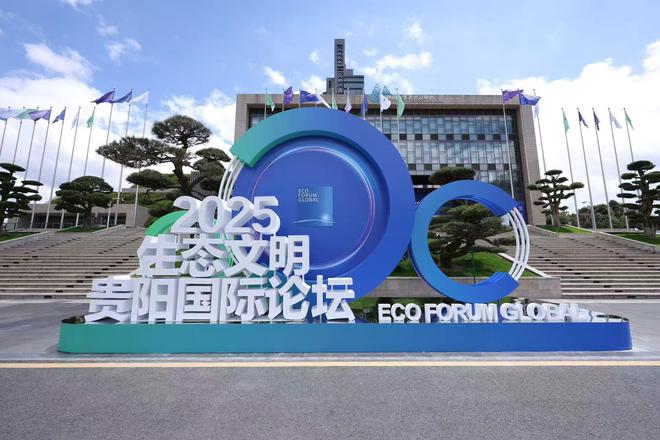
7月5日,2025年生态文明贵阳国际论坛在贵阳开幕。南都记者在现场获悉,本届论坛以"人与自然和谐 共生——共商全球发展绿色转型"为主题,共设置4个板块20个主题论坛,多国政要、专家学者、行业精 英等近千名嘉宾参会。 采写:南都记者 张倩寒 发自贵阳 所罗门群岛副议长莫里斯·托伊雷纳(Morris Toiraena)在致辞中指出,本届论坛主题恰逢时宜,精准呼 应了时代要求。"我们需要将可持续发展的理念与来自中国的好思路对接起来,这对于全球都是一个非 常宝贵的经验。" 据悉,本届论坛的主题是"人与自然和谐共生——共商全球发展绿色转型",共设置4个板块20个主题论 坛,将积极回应COP16、COP29等重要国际会议关切,注重国际化、绿色化、市场化办会和成果转化, 举办开幕式、主题论坛、场外参观、宣传展示、绿色招商、环保新产品新技术发布等活动和主宾省系列 活动。 值得一提的是,本届论坛积极邀请国际组织机构承办主题论坛,是2018年以来国际组织首次深度参与。 目前,20场主题论坛中11个有国际组织参与,其中4个由国际组织独立主办。 此外,本届论坛还将创新举办环保新产品新技术发布活动,宣传、发布新能源、固废处理等领域前沿 ...
第三届中拉绿色未来与文明互鉴国际研讨会在巴西举行
Xin Hua She· 2025-07-05 07:20
新华社里约热内卢7月4日电(记者周永穗)当地时间4日,第三届中拉绿色未来与文明互鉴国际研讨会 在巴西里约热内卢举行。 本次研讨会由中国国务院新闻办公室、巴西里约热内卢联邦大学、巴西米纳斯吉拉斯联邦大学、中国人 民大学和联合国环境规划署共同主办,来自中国、巴西、阿根廷、哥斯达黎加和秘鲁等国家的近百名专 家学者就会议主题"绿色发展与共享文明——中拉合作新机遇"共谋良策。 与会专家学者和嘉宾就"可持续发展、生态文明的政策与治理""绿色经济与能源转型""气候变化背景下 中拉农业贸易与森林保护""中拉绿色未来与文明互鉴"四个主题展开讨论,就促进中拉双方在气候变 化、生物多样性友好的农产品贸易、能源转型等方面的交流达成共识。 会议闭幕式上,中国人民大学党委书记张东刚表示,中国与拉美和加勒比国家作为全球南方重要成员, 是生态文明治理的坚定参与者、积极践行者、携手同行者、重要贡献者。 米纳斯吉拉斯联邦大学副校长阿齐兹·萨利巴表示,巴中关系愈加紧密,双方在践行多边主义和促进可 持续、公平的发展方面有很多共识。在当今全球快速变化发展的形势下,巴西和中国可以为创造更加可 持续发展的社会贡献力量。 责编:张荣耀、张霓 开幕式上,中国 ...
从太空看“十四五”|这片“绿”,正在生长
Xin Hua She· 2025-07-03 11:50
Core Points - The "14th Five-Year Plan" aims to enhance ecological security and is witnessing accelerated implementation, focusing on desertification control and strict fishing bans in the Yangtze River [1][2] Group 1: Ecological Restoration Projects - The Saihanba Mechanical Forest Farm in Hebei has seen continuous improvement in forest coverage from 2020 to 2023, transforming a desert area into a forested region [4][5] - The Saihanba project has successfully planted 24,000 acres of trees and established a comprehensive forest fire monitoring system, achieving zero fire incidents [7] - The Heijiao Railway, which runs through the Taklamakan Desert, has successfully built ecological barriers along its 825 km length, with 534 km in sandy areas [9][11] Group 2: Renewable Energy and Ecological Integration - The Kubuqi Desert's 2 million kW photovoltaic desertification control project in Inner Mongolia is a significant initiative under the "14th Five-Year Plan," with a total investment of nearly 12 billion yuan [13][15] - This project integrates solar energy production with ecological restoration, utilizing a model that combines power generation, planting, and livestock farming [13] Group 3: Urban Ecological Restoration - The Xuejiawa Ecological Park in Ma'anshan, Anhui, has transformed from an area with illegal docks and industrial waste into a vibrant ecological space since 2019 [17][19] - The ecological restoration in Ma'anshan is part of the ten-year fishing ban plan in the Yangtze River, contributing to the ecological corridor development in the Yangtze River Delta [19] Group 4: Mining Area Rehabilitation - The ecological restoration of the Dongguazhao abandoned mine in Pingxiang, Jiangxi, is a key project under the provincial ecological restoration plan, focusing on geological disaster management and land rehabilitation [21][25] - The project has successfully converted 4,095 acres of abandoned mining land into arable land, adding 313 acres of paddy fields and 775 acres of dry land [25]

“西湖智库”生态文明实践站启动
Hang Zhou Ri Bao· 2025-06-27 02:42
Core Insights - The event themed "'Two Mountains' Concept for Twenty Years: Common Prosperity and Beauty" was held in Huanghu Town, focusing on innovative ecological projects and action plans [1] - The establishment of the "West Lake Think Tank" ecological civilization practice station aims to enhance collaboration through media empowerment, social resource integration, practical results transformation, and rural model output [1] Group 1: Ecological Projects - The "Common Prosperity and Beauty" project was a highlight, introducing the upgraded ecological protection compensation mechanism and the "Shanshui Fund 2.0" version, which aims to expand protection areas and diversify funding sources [1] - Huanghu Town has initiated the first nationwide water fund trust, "Shanshui Fund," in 2015, which has now evolved to include a broader range of partners and project types [1] Group 2: Technological Integration - The "Sky and Land" integrated environmental supervision pilot project envisions smart and refined ecological environment management [1] - The "Carbon Footprint Measurement White Paper" provides a scientific benchmark for precise carbon reduction in rural areas [1] - The "Zero Carbon Village Digital Brain" platform signifies the deep integration of digital and intelligent methods into the green transformation of rural areas [1] Group 3: Future Development Blueprint - Huanghu Town has been recognized as a green development pioneer, having introduced over 40 ecological industry-related enterprises and institutions, and attracted more than 120 domestic and international young talents [2] - The future ecological blueprint for Yuhang District emphasizes digital and intelligent empowerment for refined ecological governance, solidifying the foundation for low-carbon development, and broadening the pathways for realizing ecological value [2] - The goal is to create a new model of rural development that harmonizes ecological benefits with economic benefits, contributing to the exploration of common prosperity through ecological civilization [2]
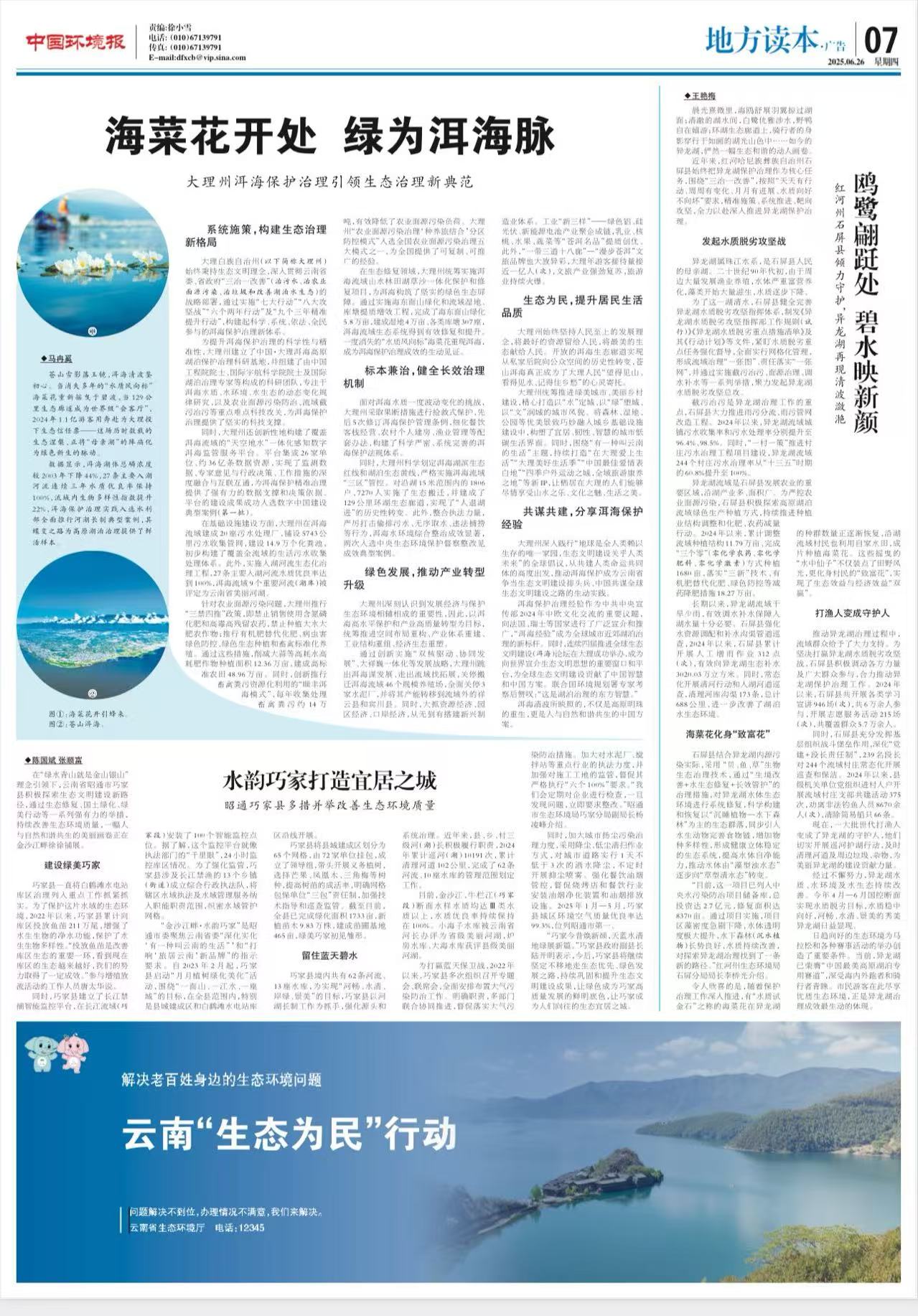
海菜花开处 绿为洱海脉—— 大理州洱海保护治理引领生态治理新典范
Zhong Guo Huan Jing Bao· 2025-06-26 01:43
Core Viewpoint - Dali Prefecture is establishing a new model for ecological governance through systematic policies and actions aimed at protecting and restoring the Erhai Lake ecosystem, while balancing economic development and environmental sustainability [1][14][20]. Group 1: Ecological Governance and Protection Measures - Dali Prefecture has implemented the "Three Treatments and One Improvement" strategy, focusing on water pollution, agricultural non-point source pollution, and waste management, alongside improving lake ecology [1][14]. - The establishment of the China Dali Erhai Plateau Lake Protection Research Base and a scientific team of experts aims to enhance the precision and scientific basis of ecological governance [1][14]. - A digital monitoring platform integrating data from 26 agencies has been developed to support precise governance of the Erhai Lake ecosystem [1][15]. Group 2: Infrastructure Development - Dali has constructed 20 sewage treatment plants, laid 5,743 kilometers of sewage collection pipelines, and built 149,000 septic tanks to create a comprehensive sewage treatment system [15]. - The ecological restoration of rivers entering the lake has achieved a 100% water quality rate for 27 major inflow rivers [15]. Group 3: Agricultural Pollution Control - Dali Prefecture has adopted a "Three Bans and Four Promotions" policy to reduce agricultural pollution, including banning certain fertilizers and pesticides, and promoting organic farming practices [15]. - The area of high-water and high-fertilizer crop cultivation has been reduced by 123,600 acres, and 489,600 acres of high-standard farmland have been established [15]. Group 4: Ecological Restoration Initiatives - The implementation of integrated protection projects for mountains, rivers, forests, fields, lakes, and grasslands has led to the greening of 58,000 acres and the establishment of 40,000 acres of wetlands [16]. - The resurgence of the "water quality indicator" seaweed flower in Erhai Lake symbolizes the success of ecological restoration efforts [16]. Group 5: Long-term Governance Mechanisms - Dali has revised the Erhai protection management regulations five times to create a comprehensive legal framework for ecological governance [17][19]. - The establishment of ecological red lines and strict management zones has led to the relocation of 7,270 people from the lakeshore, promoting a "people retreating, lake advancing" approach [19]. Group 6: Economic Development and Industrial Transformation - Dali Prefecture recognizes the interdependence of economic development and ecological protection, focusing on high-quality industrial transformation while protecting the Erhai ecosystem [20]. - The closure of 46 large-scale aquaculture farms and three cement plants has been part of the strategy to reduce environmental impact [20]. Group 7: Enhancing Quality of Life - Dali Prefecture emphasizes a people-centered development approach, transforming private ecological spaces into public areas for community enjoyment [21]. - Urban and rural development initiatives aim to create a harmonious living environment that integrates natural beauty and cultural heritage [21]. Group 8: Sharing Ecological Protection Experiences - Dali Prefecture promotes its ecological governance experiences as a model for global ecological civilization, participating in international exchanges and forums [22]. - The "Erhai Experience" has been recognized as a benchmark for urban lake management, contributing to global ecological governance discussions [22].
被唤醒的价值认知
Ren Min Ri Bao· 2025-06-25 22:21
Core Insights - The play "Tree Soul" reveals the evolution of the relationship between humans and nature, transitioning from conflict and exploitation to reconciliation and coexistence [1][2] - It emphasizes that the essence of the ecological crisis is a spiritual crisis, questioning modern civilization's values and the importance placed on living trees versus contractual agreements [2] - The narrative showcases the journey of three generations of the Lin family, highlighting their commitment to ecological preservation and the awakening of ecological consciousness [3] Summary by Sections Thematic Exploration - "Tree Soul" is based on real stories of afforestation in Ningde, Fujian, and serves as a metaphor for the relationship between humans and nature [1] - The play addresses cultural roots, home protection, and ecological ethics, providing significant contemporary relevance and depth of thought [1] Character Development - Lin Shougen's dedication to tree preservation reflects a deep ecological awareness, viewing himself as part of a life community with nature [1] - The character arcs of Lin Changqing and Lin Changmao illustrate the struggle between economic pressures and sustainable development, with Lin Changmao's transformation symbolizing a return to ecological values [2] Symbolism and Imagery - The recurring imagery of the bugle in the play serves as a call to ecological awakening and a reminder to respect all forms of life [2] - The conclusion of the play presents a vision of harmony between humanity and nature, suggesting that true understanding comes from listening to nature [3]

为什么要做文旅?为什么不能一直做文旅?
创业邦· 2025-06-22 03:01
Core Viewpoint - The article discusses the unique case of Liuba County in Shaanxi Province, which has experienced a reversal of urbanization trends through the development of its tourism and cultural industries, leading to population inflow and economic growth [4][22]. Summary by Sections Background of Liuba County - Liuba County is characterized by its ecological advantages, with a forest coverage rate of 92.03%, but it faces challenges such as a small population of 34,500 and limited financial resources primarily reliant on state transfers [5][6]. Population Trends - Since 2021, the outflow of population has significantly halted, with a net inflow of talent and workers returning to the county, totaling 2,142 individuals from various backgrounds [8]. Tourism Development Strategy - The county's leadership recognized the need to transition from traditional tourism to modern cultural tourism, leading to the introduction of the boutique homestay brand "Yinju Xiangli" in 2019, which transformed local accommodations and attracted urban visitors [10][11]. Economic Impact - During peak seasons, the county sees daily visitor numbers reaching 50,000, with average spending exceeding 800 yuan per person, significantly boosting local businesses [13][19]. Community Empowerment - The local government initiated the "Four One Hundred" project to support entrepreneurship among residents, resulting in the establishment of 200 homestays and an overall investment of 200 million yuan, generating over 1 billion yuan in annual revenue from the homestay sector [19][21]. Integration of Industries - Liuba County's approach emphasizes the integration of tourism with local agricultural and ecological products, creating a sustainable economic model that benefits the community and preserves local culture [27][30]. Future Outlook - The county's GDP reached 2.679 billion yuan in 2024, with a per capita GDP of 77,700 yuan, positioning it as a leader in the region and showcasing the success of its reverse urbanization strategy [21][22].