
跨境金融

Search documents
从“科技银”到“活力橙” 交通银行六赴服贸之约
Jin Rong Shi Bao· 2025-09-16 02:13
Core Viewpoint - The article highlights the participation of Bank of Communications at the 6th consecutive China International Fair for Trade in Services, showcasing its innovative financial services and products aimed at supporting the real economy and enhancing people's livelihoods. Group 1: Financial Services and Innovations - Bank of Communications has developed various innovative financial products such as "Jiao Yin Torch Loan," "Jiao Yin Venture Capital Loan," "Foreign Trade Quick Loan," and "Carbon Asset Pledge Financing" to demonstrate its commitment to serving the real economy and promoting regional economic development [1][2]. - The bank's "Jiao Yin Torch Loan" targets growing technology-based small and micro enterprises, utilizing a unique big data approval model to address their financing challenges [2]. - The "Jiao Yin Venture Capital Loan" employs a loan and external direct investment model to broaden financing channels for technology enterprises through partnerships with quality investment institutions [2]. Group 2: Cross-Border Financial Solutions - The bank has established a "Cross-Border Financial Zone" to provide comprehensive financial support for enterprises looking to expand internationally or attract foreign investment, featuring solutions like "Foreign Trade Quick Loan" and "E-commerce Pass" [2]. - The focus on cross-border finance aligns with the bank's role as a key player in facilitating high-level opening-up [2]. Group 3: Retail Services and Community Engagement - At the retail business exhibition, the bank showcased its capabilities in providing over 130 Beijing government services and 200 additional services from neighboring regions, enhancing public service accessibility [3]. - The bank has developed a housing rental deposit management and rent supervision system to support new citizens in securing housing [3]. - In the silver economy sector, the bank offers a range of services including pension accounts, insurance, and trust products to cater to the needs of the elderly population [3]. Group 4: Interactive Activities and Community Outreach - To enhance audience engagement, the bank organized various interactive activities, including showcasing high-quality card designs that blend traditional culture with modern technology [4]. - The bank continued its tradition of offering promotional activities, allowing participants to win various merchandise [4]. - Educational sessions such as "Fund Management Lectures" and "Anti-Fraud Courses" were held to promote financial literacy and support the fair's role as a bridge for communication [4].

上财滴水湖高级金融学院迈入“2.0 时代” 推动人才培养与区域发展深度融合
Zheng Quan Shi Bao Wang· 2025-09-15 13:15
Group 1 - The core message emphasizes the importance of integrating personal goals with national financial strategies, particularly in the context of emerging fields like green finance, AI finance, and cross-border finance [1][2] - The newly appointed dean, Professor Yao Yang, highlighted the transition of the Dushu Lake Advanced Financial Institute from its initial phase to "2.0 era," focusing on optimizing cutting-edge teaching projects and establishing a financial think tank to serve the Lingang area [2][3] - The institute aims to deepen the connection between talent cultivation and regional development, with a goal of achieving significant advancements within 3 to 5 years [2] Group 2 - The institute is positioned to address emerging topics such as China's financial opening and offshore finance, leveraging its policy and industrial advantages to contribute to the development of the Lingang New Area [3] - The emphasis on practical engagement through teacher secondment mechanisms aims to enhance the integration of classroom learning with real-world applications in the financial sector [2][3] - The leadership encourages students to develop a global perspective while maintaining a solid academic foundation, preparing them to become key players in the future of new finance [2]
跨境金融助力周口企业出海提速
Sou Hu Cai Jing· 2025-09-15 05:42
Core Insights - The use of cross-border RMB settlement is gaining traction among companies, with significant benefits in terms of efficiency and cost savings [2][3] - The People's Bank of China in Zhoukou has actively promoted cross-border RMB transactions, resulting in a historical high in transaction volumes [2][3] Group 1: Cross-Border RMB Settlement - Companies are increasingly adopting cross-border RMB for transactions, citing faster processes and lower costs as key advantages [2] - Zhoukou's cross-border RMB settlement amount exceeded 1.454 billion yuan, marking a year-on-year increase of 63.89% [2] - The local bank has implemented a targeted action plan to enhance cross-border RMB usage, focusing on potential enterprises [3] Group 2: Growth in New Enterprises - In the first eight months of the year, 17 new enterprises began using cross-border RMB, with transaction amounts surpassing 80.26 million yuan, a staggering increase of 382.4% [3] - Technology-oriented companies are leading the growth in cross-border RMB transactions, with tailored financial solutions being provided [3][4] Group 3: Future Outlook - The People's Bank of China in Zhoukou plans to continue optimizing cross-border RMB settlement services to support more companies in their international ventures [5]

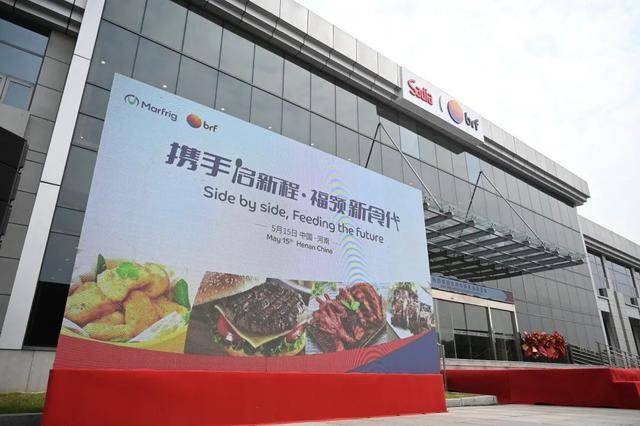
应对中企“出海”跨境金融难点,专家称港元稳定币可先行先试
Di Yi Cai Jing· 2025-09-12 11:40
Group 1 - The core viewpoint of the articles highlights the rapid growth of Chinese enterprises' outbound direct investment, with a net investment amounting to $192.2 billion in 2024, representing an 8.4% increase from the previous year [2] - By the end of 2024, approximately 34,000 domestic investors in China established around 52,000 outbound direct investment enterprises across 190 countries and regions, with total overseas assets exceeding $9 trillion [2][3] - The challenges faced by Chinese companies in cross-border finance include risks associated with currency fluctuations, regulatory compliance, and the complexities of cross-border payment processes [3][4] Group 2 - To mitigate risks, companies are advised to centralize the management of their overseas accounts, which can help streamline the settlement process and reduce potential financial risks [4] - Stablecoins are emerging as a viable option for cross-border trade settlements and fund flows, offering high efficiency, speed, and lower costs compared to traditional banking systems [5] - The current cross-border RMB payment volume in China is already eight times that of mainstream stablecoins, indicating significant potential for growth in this area [5]
愉悦资本刘二海:由中国企业引领的“新全球化”已成为明确趋势
Xin Lang Ke Ji· 2025-09-12 10:47
Group 1 - The core viewpoint is that a "new globalization" led by Chinese enterprises is becoming a clear trend, necessitating new financial infrastructure to support it [1] - The new globalization exhibits three significant characteristics: global resource allocation and operation from inception, construction on digital infrastructure, and collaboration with local stakeholders in a responsible manner [1] - Financial infrastructure is deemed crucial for the new globalization, benefiting from technological advancements and the emergence of innovative tools that reshape cross-border payment models [1] Group 2 - Three recommendations for Chinese enterprises entering global markets include leveraging China's trade network for international expansion, establishing strong local partnerships, and moving beyond payments to provide deeper services [1] - The company will continue to support startups that actively utilize advanced technologies like AI and engage in the new globalization process, recognizing their key role in building new financial infrastructure [2]
兴业银行合肥分行落地系统内首笔独家承贷境外绿地项目
Zhong Guo Jin Rong Xin Xi Wang· 2025-09-12 08:34
Group 1 - The core viewpoint of the articles highlights the successful provision of exclusive cross-border financing support by Industrial Bank's Hefei branch for a leading enterprise in Anhui Province, marking a significant step in the company's global strategy and the integration of Anhui manufacturing into international capacity cooperation [1][2] - The financing support includes an initial fund of 160 million yuan, which is the first exclusive overseas greenfield project loan within the Industrial Bank system, demonstrating the bank's commitment to the "Hui Dong Global" action plan [1] - The project faces multiple challenges such as large investment scale, long construction period, and complex cross-border coordination, necessitating a high level of professionalism and comprehensiveness in financial services [1] Group 2 - Industrial Bank's Hefei branch has developed a comprehensive cross-border financial solution tailored to the enterprise's needs, covering financing consultation, structural design, cross-border coordination, and fund disbursement [1] - The bank has established a joint special team to conduct on-site due diligence in Malaysia, assessing various risks including political, economic, and legal factors, and designing a financing structure that is both internationally compliant and practically applicable [1] - In recent years, Anhui Province has been actively promoting its enterprises to participate in global industrial division and has provided over 5 billion yuan in financing support for overseas expansion [2]

厦门国际银行:以差异化特色应对周期波动
Zhong Zheng Wang· 2025-09-11 11:15
Core Insights - Xiamen International Bank is focusing on "Overseas Chinese Finance + Cross-border Finance" to drive growth, achieving an 11.19% year-on-year increase in operating income and nearly 6% growth in net profit by mid-2025, with net interest income rising over 30% [1] - The bank's strategy includes "controlling risks, increasing revenue, and reducing costs," leading to stable profit growth despite challenges from declining LPR and intensified competition [1] Group 1: Financial Performance - As of June 2025, Xiamen International Bank's operating income grew by 11.19% year-on-year, while net profit increased by nearly 6% [1] - The bank's net interest income saw a growth rate exceeding 30%, indicating effective management in a challenging environment [1] - The bank's comprehensive account system and cost-reduction strategies have contributed to a more balanced revenue structure [1] Group 2: Industry Specialization - In the first half of 2025, the bank allocated nearly 76 billion yuan in loans across 53 specialized industry segments, with loans in specialized fields exceeding 100 billion yuan [2] - The bank's focus on integrating supply chain and industrial chain financing has led to a 55% increase in supply chain financial balances since the beginning of the year [2] - The bank's efforts in supporting the upgrade of industries through financial services are evident, with over half of new customer loans directed towards specialized sectors [2] Group 3: International Business and Risk Management - Xiamen International Bank's international business saw a nearly 15% year-on-year increase in transaction volume by mid-2025 [3] - The bank has implemented a robust risk management system, resulting in a 24.5% year-on-year decrease in new non-performing loans [3] - The bank's new customer loan non-performing rate stands at 0.28% since 2023, reinforcing its risk management capabilities [3] Group 4: Technological Empowerment - The bank has integrated artificial intelligence into various risk management areas, achieving over 80% accuracy in its "Tianyan" intelligent warning system [4] - The bank's fraud prevention system has successfully intercepted suspicious transactions amounting to over 10 million yuan in the first half of 2025 [4] - The use of technology in risk management aligns with the bank's commitment to safeguarding customer assets and promoting financial inclusivity [4]
交通银行亮相2025年服贸会金融服务专题展
Zheng Quan Ri Bao· 2025-09-10 11:36
Core Viewpoint - The 2025 China International Service Trade Fair Financial Services Exhibition showcases the innovative practices of Bank of Communications in financial services, emphasizing its role in supporting the real economy and regional development [2]. Group 1: Financial Products and Services - Bank of Communications presented various innovative financial products such as "Jiao Yin Torch Loan," "Jiao Yin Venture Capital Loan," "Foreign Trade Quick Loan," and "Carbon Asset Pledge Financing" to demonstrate the synergy between financial services and the real economy [2]. - The "Jiao Yin Torch Loan" targets growing technology-based small and micro enterprises, utilizing a unique big data approval model to address their financing challenges [3]. - The "Jiao Yin Venture Capital Loan" employs a "loan + external direct investment" model to enhance financing channels for technology enterprises through partnerships with quality investment institutions [3]. Group 2: Cross-Border Financial Solutions - The bank established a cross-border financial zone titled "Jiao Lian World, Hui Tong Global," offering comprehensive financial support for enterprises looking to expand internationally or attract foreign investment through solutions like "Foreign Trade Quick Loan" and "E-commerce Pass" [3]. Group 3: Retail and Community Services - The retail business segment highlighted the "cross-province handling" of government services in the Beijing-Tianjin-Hebei region, allowing citizens to manage over 130 government services and access personal social security information seamlessly [3]. - The bank showcased a housing rental deposit management and rent supervision system, aimed at safeguarding the housing dreams of new citizens through a four-dimensional closed-loop management approach [4]. Group 4: Senior Economy and Consumer Services - The bank's senior economy segment focuses on providing a one-stop resource connection for the elderly, integrating pension accounts, retirement financial products, insurance, and trust services [4]. - The retail credit and credit card segment promotes various consumer-friendly products and activities, such as "Hui Min Loan" and "Jiao Yin Car Loan," to stimulate market consumption [4]. Group 5: Digital Currency Engagement - To enhance public engagement and awareness of digital currency, the bank organized interactive activities featuring aesthetically designed hardware wallets and continued popular activities from previous years, such as blind box promotions related to digital RMB [4].
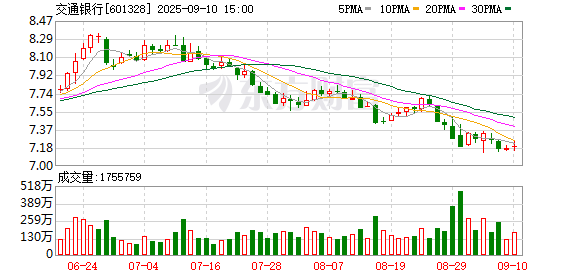
恒生中国亮相服贸会:跨境金融助力企业“出海远航”
Xin Hua Cai Jing· 2025-09-10 09:59
Group 1 - The core viewpoint of the article highlights that Hang Seng China is showcasing its cross-border financial services at the China International Fair for Trade in Services for the third consecutive year, emphasizing its commitment to integrating into the mainland financial market [1] - Hang Seng China's Executive Director and CEO, Wu Wei, stated that the company leverages its Hong Kong headquarters to enhance cross-border services, supporting both outbound and inbound business opportunities for enterprises [1] - Over the past year, Hang Seng China has expanded its cross-border financial services, providing financial support for more companies to "go global," including a comprehensive cash management solution for a leading domestic smart terminal manufacturer [1] Group 2 - In the green finance sector, Hang Seng China has been actively exploring innovations, successfully arranging a domestic dual-certified sustainable development-linked syndicated loan for a core state-owned enterprise, which reduced financing costs and broadened financing channels [2] - The sustainable finance initiative demonstrates the company's commitment to using financial tools to promote the sustainable development of enterprises [2]
中国光大银行焕新“阳光交易+”综合金融服务体系服务实体经济再创新篇
Qi Lu Wan Bao· 2025-09-10 08:36
Core Viewpoint - The Everbright Group launched the "Sunshine Trading+" comprehensive financial service system, aiming to enhance cross-border finance, supply chain finance, and treasury management to support high-quality development of the real economy [1][6]. Group 1: Sunshine Foreign Exchange - Everbright Bank provides a comprehensive suite of financial services for enterprises' cross-border financial needs, including international settlement, cross-border financing, foreign currency deposits and loans, and foreign exchange asset management [2]. - As of the end of June, the bank's corporate international settlement volume increased by 7.7% year-on-year, and the balance of overseas loans for outbound enterprises rose by 13.63% [2]. Group 2: Sunshine Chain Financing - The bank focuses on supply chain finance and the four key scenarios of "receiving, paying, managing, and financing," enhancing its product system to support the entire settlement process [3]. - As of the end of June, the balance of supply chain finance business increased by 7.5% year-to-date, and the number of served upstream and downstream customers grew by 7.8% [4]. Group 3: Sunshine Treasury Management - Everbright Bank aims to create a digital treasury ecosystem, offering a full range of cash management products to meet enterprises' financial management needs [5]. - As of the end of June, the scale of treasury transaction services provided to enterprises reached 500 billion yuan [6].
