
车路云一体化

Search documents
智行未来!2025世界智能网联汽车大会汇聚创新声音
Xin Hua She· 2025-10-18 11:22
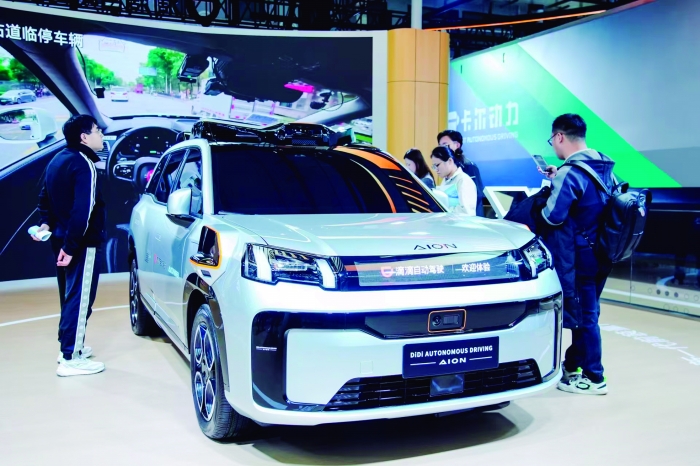
Core Insights - The 2025 World Intelligent Connected Vehicle Conference highlights the rapid development and technological maturity of the intelligent connected vehicle industry in China, emphasizing the role of artificial intelligence as a core variable for enterprise survival and growth [1][2]. Group 1: Industry Development - The intelligent connected vehicle industry in China has entered a "fast lane," with new car sales featuring driving assistance functions exceeding 60% [1]. - A complete industrial system has been established, covering smart cockpits, autonomous driving, and connected cloud control, supported by the development of key standards and international regulatory coordination [1][2]. Group 2: Innovative Applications - The conference showcased the "vehicle-road-cloud integration" application, which enhances driving safety through real-time data interaction among vehicles, roads, and cloud systems, addressing challenges like signal recognition in adverse weather [2]. - The pilot results of ten functional scenarios will support the commercialization of smart public transport, unmanned delivery, and urban logistics [2]. Group 3: Technological Advancements - Didi's autonomous driving division is focused on L4-level autonomous driving technology, with stable performance in complex scenarios such as peak hours and adverse weather conditions [3]. - The new generation of autonomous vehicles features 33 sensors, enabling comprehensive environmental perception [2]. Group 4: Policy Support - Industry experts emphasize the importance of safety as the baseline for the evolution of intelligent connected vehicles from mechanical products to smart terminals [4]. - Regulatory bodies are working to enhance quality and reliability standards, improve product recall systems, and ensure the safe upgrade of software in intelligent connected vehicles [4].
中国汽车产业汇“智”逐“网” 出海从“选择题”变成“必答题”
Shang Hai Zheng Quan Bao· 2025-10-17 18:38
Core Insights - The global automotive industry is undergoing unprecedented transformation, entering a "new automotive" era where intelligence is the core engine driving industry change [2] - The integration of AI technology is reshaping the automotive value chain, enhancing user experience and ensuring vehicle safety [3][4] - China is positioned with competitive advantages in the smart connected vehicle sector, making international expansion a necessity rather than an option [7][8] Group 1: AI and Technological Advancements - AI technology is leading a revolution in the automotive industry, significantly enhancing production efficiency and product quality through automation [3] - The integration of AI into various stages of the automotive value chain is crucial for improving user experience and safety [3] - AI models will provide vast opportunities for innovation in smart connected vehicles, transforming cars into intelligent mobile spaces [4] Group 2: Vehicle Infrastructure and Safety - The integration of vehicle, road, and cloud technologies is essential for the safe operation of autonomous driving systems, with China leading in this area [5] - The development of a "digital track" enhances the safety of autonomous vehicles by providing comprehensive data support for AI applications [5] - Safety remains a primary concern in the development of smart connected vehicles, especially for companies expanding internationally [9] Group 3: Policy and Industry Support - The Chinese government is actively promoting the development of smart connected vehicles through strategic planning and policy support [6] - The establishment of a credible data space and the promotion of integrated applications are key focuses for future development [6] Group 4: Global Expansion and Market Strategy - China's automotive industry is expected to progress through three stages of international expansion: establishing trade channels, local production, and global brand value [8] - The rapid advancement of AI in Chinese automotive companies is paving the way for global competitiveness [7]


中国智能网联汽车产业发展取得显著成效
Zhong Guo Xin Wen Wang· 2025-10-17 13:49
Core Insights - The Chinese intelligent connected vehicle industry has made significant progress, with 7.56 million new passenger cars equipped with combined driving assistance functions sold from January to July 2025, achieving a penetration rate of 62.6% [1] - The sales of new passenger cars with navigation driving assistance functions reached 2.669 million, with a penetration rate of 21.5% [1] - Over 400 specialized small and medium-sized enterprises in the intelligent connected vehicle sector have been cultivated [1] Group 1: Industry Achievements - A total of 17 national-level testing demonstration zones have been established, with 35,000 kilometers of testing roads opened and over 10,000 testing demonstration licenses issued [1] - The total mileage of road testing has exceeded 200 million kilometers, with over 3 million vehicles equipped with 5G and C-V2X technology [1] - More than 4.5 million 5G base stations have been opened across various regions [1] Group 2: Challenges Faced - The industry still faces challenges such as inadequate legal regulations, difficulties in overcoming long-tail effects of technology, unbroken key technologies, and insufficient infrastructure development [1] Group 3: Future Initiatives - The Ministry of Industry and Information Technology will enhance support for high-quality industry development, focusing on continuous technological innovation, improving policy and regulatory standards, accelerating industrial application, and deepening international cooperation [2][3] - Key areas of focus include breakthroughs in automotive chips, operating systems, artificial intelligence, and electronic architecture, as well as the development of new features that meet consumer demands [2] - Collaboration with relevant departments will be strengthened to improve regulations on access management, traffic management, cybersecurity, and data security [2]
世界智能网联汽车大会大咖讲话划重点
Zhong Guo Qi Che Bao Wang· 2025-10-17 13:36
Core Insights - The World Intelligent Connected Vehicles Conference aims to promote the innovation and application of intelligent connected vehicle technology, facilitating deep cooperation across the industry chain [2][5][9] Group 1: Industry Development - China is advancing in the intelligent connected vehicle sector, with significant progress in policy support, infrastructure development, and breakthroughs in autonomous driving technology [2][5] - Beijing is positioning itself as a hub for intelligent connected vehicle development, having implemented regulations for autonomous vehicles and promoting smart infrastructure [5][9] - The Ministry of Industry and Information Technology plans to develop a comprehensive plan for the intelligent connected new energy vehicle industry, focusing on high-quality development and technological innovation [9][11] Group 2: Competitive Advantages - China possesses three competitive advantages in the intelligent connected vehicle field: diverse application scenarios, a collaborative innovation ecosystem, and a clear national strategy with supportive policies [11][16] - The automotive industry is undergoing a profound transformation, with rapid technological iterations and changes in management models, creating both opportunities and challenges for companies [18][19] Group 3: Challenges and Solutions - The industry faces challenges such as reliance on non-self-sufficient technologies, inconsistent standards, and the need for breakthroughs in commercializing advanced autonomous driving [16][18] - Industry leaders emphasize the importance of collaboration, policy alignment, and the establishment of a national-level collaborative innovation platform to address these challenges [16][17] Group 4: Future Directions - The future of intelligent connected vehicles is seen as a transition towards "smart car robots," with a focus on AI integration across all vehicle systems [18][19] - Industry stakeholders advocate for a balanced approach to safety and development, emphasizing the need for robust standards and collaborative efforts to enhance the safety and efficiency of autonomous driving technologies [19][20]

抵制网络水军!雷军:智能网联汽车不是零和博弈,希望全行业把精力集中到技术研发上【附智能网联汽车行业市场分析】
Qian Zhan Wang· 2025-10-17 10:20
Core Insights - The development of intelligent connected vehicles is at a historical opportunity period, requiring industry unity and collaboration to build a new ecosystem [2] - AI large models are identified as a future trend for intelligent connected vehicles, offering significant innovation opportunities [2] - The market size of China's intelligent connected vehicle industry reached 958.3 billion yuan in 2023, with a compound annual growth rate of 50.92% over the past five years [2] Industry Developments - As of the first half of 2023, over 15,000 kilometers of testing roads have been opened nationwide, with total testing mileage exceeding 70 million kilometers and more than 2,800 testing licenses issued [3] - The "Automobile Industry Stabilization Growth Work Plan (2025-2026)" aims to promote the industrial application of intelligent connected technologies and encourages the integration of vehicle, road, and cloud applications [5] - Predictions indicate that by 2030, level 3 autonomous vehicles will account for 10% of global new car sales, increasing to 60% by 2040, with China expected to have the highest penetration rate [5] Data Security and Management - The National Internet Information Office emphasizes the need for legal governance and the implementation of safety management requirements for automotive data processors [9] - There is a push to establish a foundational system for automotive data property rights, benefit distribution, and protection [9] - Ongoing efforts are being made to enhance data security risk awareness and prevention capabilities among automotive enterprises [9]

工信部郭守刚:深化推进智能网联准入和上路通行试点工作
Zhong Guo Qi Che Bao Wang· 2025-10-17 10:09
Core Viewpoint - The Ministry of Industry and Information Technology emphasizes the acceleration of the industrial application of intelligent connected vehicles, focusing on integrated vehicle-road-cloud trials and infrastructure development [1] Group 1: Industry Development - The initiative aims to deepen the integration of intelligent connected vehicles with road and cloud systems, promoting the construction of networked infrastructure and cloud control platforms [1] - There is encouragement for the adoption of high-performance communication modules such as V2X and 5G in new vehicles, as well as the expansion of cross-regional collaborative applications in key areas [1] Group 2: Regulatory Framework - The ministry plans to advance the trial work for the access and road use of intelligent connected vehicles, with conditional approval for the production access of L3 level vehicles [1] - Based on pilot projects, there will be a focus on summarizing management experiences and continuously refining the access management requirements, approval processes, and management mechanisms for intelligent connected vehicles [1] Group 3: Business Model Innovation - The initiative supports companies in the automotive, information communication, and transportation sectors to explore new business models linked by data, aiming to accelerate the cultivation of diversified value chains [1]
2025中国国际新能源和智能网联汽车展览会在京举办
Huan Qiu Wang· 2025-10-17 08:42
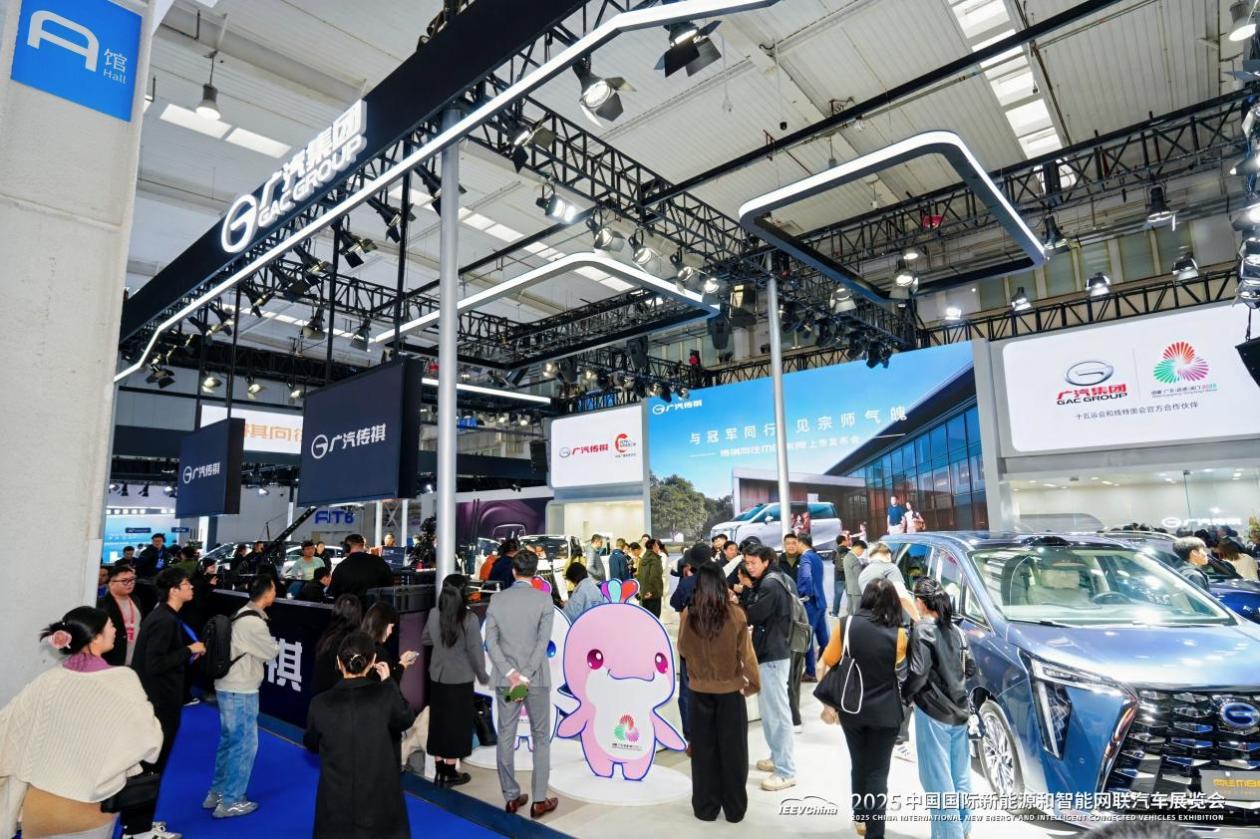
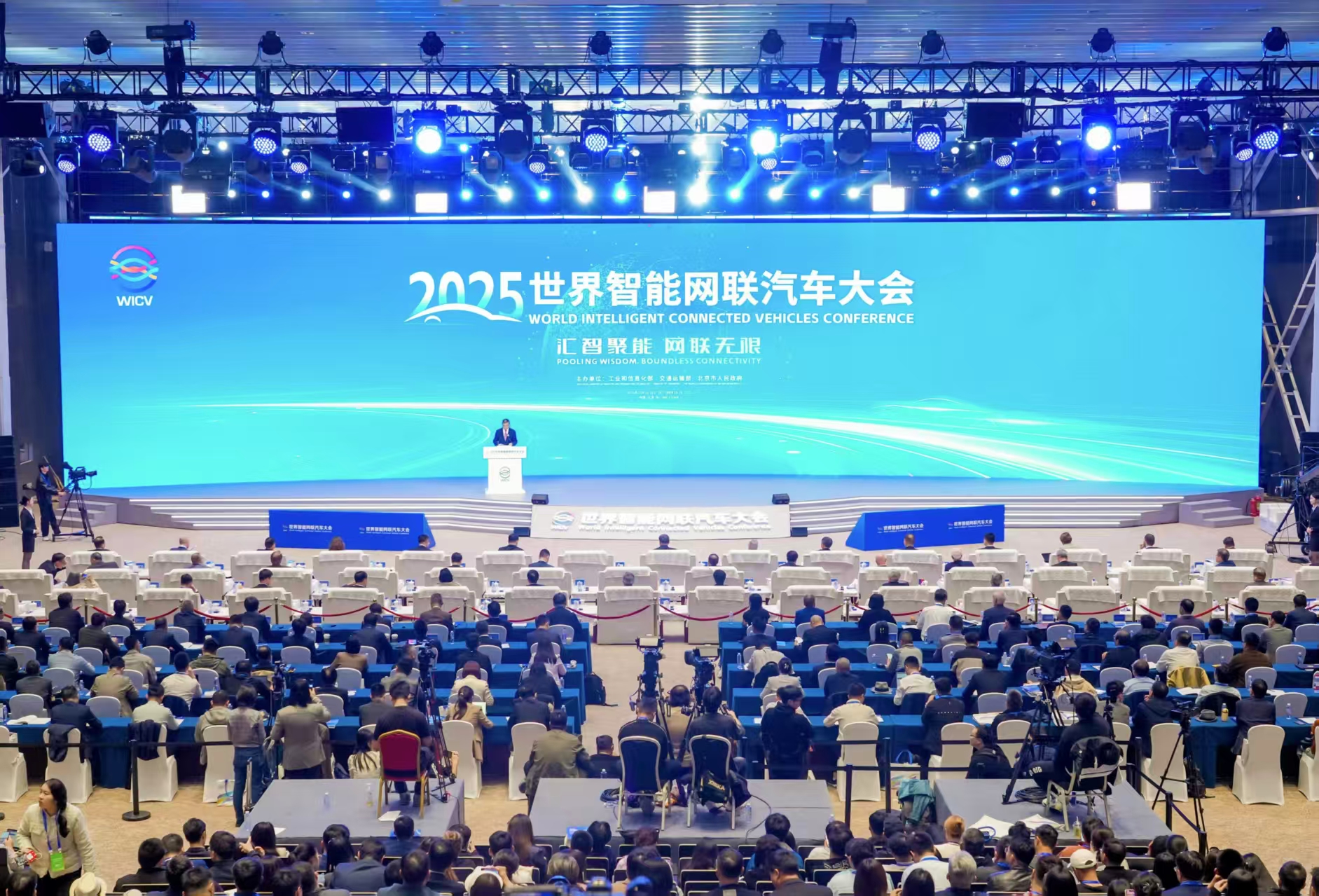
Core Insights - The 2025 World Intelligent Connected Vehicle Conference opened in Beijing, showcasing the integration of the entire intelligent connected vehicle industry chain [1] - The event features a comprehensive exhibition covering vehicles, chips, software, cloud platforms, and application scenarios, emphasizing ecosystem collaboration [1] Exhibition Overview - The exhibition spans 50,000 square meters, utilizing all indoor and some outdoor areas of the venue, attracting 288 domestic and international exhibitors [3] - Notable participation includes 49 vehicle brands, over 130 chip and software companies, and more than 110 key component and supply chain enterprises [3] - Over 200 intelligent connected vehicle models and 1,800 components and technologies are on display, with more than 20 being debut models and key products [3] Thematic Areas - The "Safe Travel" vehicle exhibition area features L3 models from companies like Changan, NIO, and BAIC, showcasing technological capabilities in the intelligent connected vehicle sector [5] - An "AI + Automotive" thematic area presents advancements in AI applications within the automotive field through physical exhibits and immersive experiences [5] - Major companies like FAW, Dongfeng, SAIC, and BAIC demonstrate their latest technologies in driving automation, intelligent cockpits, digital chassis, embodied robots, and flying cars [5] Practical Applications - The "Vehicle-Road-Cloud Integration" area showcases pilot project results over the past year, focusing on collaborative achievements across cities and companies [5] - The Beijing Economic Development Zone exhibition area presents immersive experiences and interactive displays, highlighting the integration of intelligent connected vehicles with smart cities [5] Outdoor Demonstrations - The outdoor demonstration area features scenarios of robots working alongside autonomous logistics vehicles, with companies like Baidu and Didi offering multiple routes for driverless shuttle experiences [7] - The "Connected Intelligence" and "Energy Renewal" zones focus on core aspects such as autonomous driving, intelligent cockpits, vehicle-road collaboration, and domestic chip and software innovations [7] - The exhibition serves as a platform for showcasing technological achievements, exchanging industry experiences, and exploring collaboration opportunities in the intelligent connected vehicle sector [7]
事关智能网联新能源汽车,多部门发声
第一财经· 2025-10-17 07:46
Core Viewpoint - The article emphasizes the strong policy support for the intelligent connected vehicle industry in China, highlighting the government's commitment to promoting high-quality development and technological innovation in this sector [3][5]. Group 1: Policy and Strategic Direction - The Ministry of Industry and Information Technology (MIIT) plans to develop a "14th Five-Year" plan for the intelligent connected vehicle industry, focusing on technological innovation and the integration of artificial intelligence with the automotive sector [3]. - The MIIT aims to enhance the policy framework, accelerate the establishment of standards for advanced driver assistance and autonomous driving, and optimize production access management [3][5]. - The Ministry of Transport has issued implementation opinions on "Artificial Intelligence + Transportation," emphasizing the importance of AI in smart transportation applications and the development of typical application scenarios [5]. Group 2: Industry Achievements and Developments - During the "14th Five-Year" period, significant progress has been made in the intelligent connected vehicle industry, with nearly 100 technical standards established and pilot applications launched in 20 cities [5]. - The sales proportion of new passenger cars equipped with advanced driver assistance systems has exceeded 60% [5]. Group 3: Safety Concerns and Regulatory Measures - As of September, there have been 3,230 vehicle recalls in China, affecting 120 million vehicles, with 652 recalls related to market regulation, impacting 63.79 million vehicles [6]. - In 2024, 2.56 million vehicles were recalled due to issues with driver assistance systems, accounting for 23% of total recalls [6]. - The State Administration for Market Regulation is working with the MIIT to draft regulations to strengthen supervision over recalls and address issues of false advertising and irrational competition [6]. Group 4: Pilot Projects and Technological Innovations - The conference announced the preliminary results of the "Vehicle-Road-Cloud Integration" pilot project, identifying ten functional scenarios aimed at improving traffic safety and efficiency [7]. - A national AI application pilot base focused on the automotive sector has been initiated, aiming to address common technological bottlenecks in the industry's smart transformation [7].

事关智能网联新能源汽车,多部门发声
Di Yi Cai Jing· 2025-10-17 07:19
Core Viewpoint - The Ministry of Industry and Information Technology (MIIT) is set to develop the "14th Five-Year" plan for the intelligent connected new energy vehicle industry, indicating strong policy support for the sector's transformation and upgrade [1] Group 1: Policy and Development Plans - MIIT will organize the compilation of the "14th Five-Year" plan to promote high-quality development in the intelligent connected vehicle industry, focusing on technological innovation and integration with artificial intelligence [1] - The plan will include the establishment of a comprehensive policy framework, acceleration of standards for advanced driver assistance and autonomous driving, and optimization of production access management [1][4] - The "14th Five-Year" period has already seen significant progress, with nearly 100 technical standards published and over 60% of new passenger cars sold equipped with advanced driver assistance features [3] Group 2: Technological Advancements and Applications - The Ministry of Transport has issued implementation opinions on "Artificial Intelligence + Transportation," emphasizing the importance of AI in developing intelligent transportation systems and promoting the application of autonomous driving technologies [4] - The "vehicle-road-cloud integration" pilot program has identified ten functional scenarios aimed at enhancing traffic safety and efficiency through collaborative information sharing [5] - A national AI application pilot base focused on the automotive sector has been initiated, aiming to address common technological bottlenecks in the industry's smart transformation [5] Group 3: Safety and Regulatory Measures - Recent concerns regarding the safety of intelligent connected vehicles have led to 3,230 recalls affecting 120 million vehicles, with 23% of recalls in 2024 attributed to issues with driver assistance systems [4] - The State Administration for Market Regulation is collaborating with MIIT to draft regulations aimed at strengthening oversight of recalls and addressing issues related to misleading advertising and irrational competition [4]
每日市场观察-20251017
Caida Securities· 2025-10-17 06:32
Market Overview - The major indices showed mixed performance on October 16, with the Shanghai Composite Index up 0.1%, the Shenzhen Component down 0.25%, and the ChiNext Index up 0.38%[2]. - The market is expected to maintain a volatile pattern in the short term, with rapid sector rotation and a need for investors to be cautious of high-risk positions[1]. Sector Performance - Key sectors leading the market include coal, maritime transport, commercial banks, beverages, and insurance, while information technology and materials lag behind[1]. - Medical and electronic equipment sectors are anticipated to perform well due to sustained capital inflows and earnings certainty[1]. Fund Flow - On October 16, the Shanghai Stock Exchange saw a net outflow of 3.329 billion yuan, while the Shenzhen Stock Exchange experienced a net inflow of 4.197 billion yuan[2]. - The top three sectors for capital inflow were semiconductors, other electronics, and photovoltaic equipment, while the sectors with the highest outflows were small metals, general equipment, and software development[3]. Economic Indicators - In Q3 2025, 178 million people entered and exited the country, with a 48.3% year-on-year increase in visa-free foreign entrants[4]. - The Ministry of Housing and Urban-Rural Development is promoting smart infrastructure systems to enhance urban digital governance[5]. Industry Developments - The "Linglong No. 1" modular small reactor successfully completed its cold test, expected to generate 1 billion kWh annually, reducing CO2 emissions by approximately 880,000 tons[8]. - The sales of new passenger cars equipped with combined driving assistance features exceeded 60%[9]. Smartphone Market - In Q3 2025, the Chinese smartphone market declined by 3% year-on-year, with vivo leading in shipments at 11.8 million units, capturing 18% market share[10]. ETF Market - As of October 14, the total scale of gold-themed ETFs approached 210 billion yuan, with over 80 billion yuan attracted this year[12]. - The total trading volume of ETFs reached 549.679 billion yuan on October 16, with stock ETFs accounting for 129.7 billion yuan[13].