货币政策

Search documents
落细落实经济工作八项重点任务 实现“十五五”良好开局
Zheng Quan Shi Bao· 2025-12-11 18:36
Core Points - The Central Economic Work Conference held on December 10-11 outlines the economic work for 2025 and analyzes the current economic situation, setting specific policy arrangements and goals for 2026 [1] - The conference emphasizes the need for a "good start" to the 14th Five-Year Plan, with expectations for China's economic growth rate to be around 5% in 2026, as international organizations have raised their growth forecasts for China [1] Fiscal Policy - The fiscal policy for the 14th Five-Year Plan will continue to adopt a "more proactive" approach, maintaining necessary fiscal deficits while optimizing the structure of fiscal expenditures [2][3] - The fiscal deficit rate is expected to remain at or above 4%, with a total debt scale projected to increase from 12 trillion yuan this year [2][3] - There is a clear focus on "investing in people," with an emphasis on improving human capital and enhancing social welfare expenditures [3] Monetary Policy - The macroeconomic policy will adopt a more proactive stance, with monetary policy expected to remain "appropriately loose" and maintain ample liquidity [4][5] - The use of various policy tools, including interest rate cuts and reserve requirement ratio reductions, will be implemented flexibly and efficiently to support economic stability [4][5] - Structural monetary policy tools will be enhanced to support key areas such as expanding domestic demand and technological innovation [5] Domestic Demand Expansion - Expanding domestic demand is prioritized, with specific measures including the implementation of a plan to increase urban and rural residents' income and stabilize investment [6] - The focus on consumption and investment as key drivers for expanding domestic demand indicates a shift towards demand-side strategies [6] Innovation and Technology - The establishment of three international science and technology innovation centers in Beijing, Shanghai, and the Guangdong-Hong Kong-Macau Greater Bay Area is highlighted as a core strategy for fostering innovation [7][9] - The centers aim to leverage existing resources and address global technological competition, enhancing China's position in the global market [7][9] Market Reforms - The conference emphasizes the need for reforms to optimize the market environment, stimulate enterprise vitality, and deepen financial system support [10] - A key reform initiative includes the establishment of a unified national market, with a focus on improving the regulatory framework to support this goal [10] Capital Market Development - Continuous deepening of capital market reforms is emphasized, with a focus on enhancing the market's ability to serve technological innovation and the real economy [11][12] - The reforms will aim to improve the inclusiveness and coverage of the multi-tiered market system, facilitating the entry of long-term capital [12] Trade and Investment - The conference stresses the importance of promoting regional and bilateral trade and investment agreements to enhance cooperation and trade facilitation [14][15] - The focus on maintaining a multilateral trade system and expanding high-standard free trade agreements is seen as crucial for China's trade strategy [14][15] Real Estate Market Stability - The meeting underscores the importance of stabilizing the real estate market, with a particular emphasis on "de-stocking" as a key measure [16][17] - Encouraging the acquisition of existing housing for affordable housing purposes is identified as a significant strategy to address market challenges [17]
聚焦中央经济工作会议|明年我国将实施更加积极有为的宏观政策
Xin Hua She· 2025-12-11 16:09
杨志勇表示,明年我国将继续实施更加积极的财政政策,这和今年的财政政策取向一以贯之,财政在国 家治理中的基础和重要支柱作用将得到进一步发挥。"加强财政科学管理"等安排,将更充分地释放和提 升财政政策效能,更好护航经济运行、推动经济增长目标的实现。 新华财经北京12月11日电(记者吴雨、申铖)宏观政策是护航经济稳定运行的重要手段。12月10日至11 日举行的中央经济工作会议提出,实施更加积极有为的宏观政策,并明确要继续实施更加积极的财政政 策,要继续实施适度宽松的货币政策。 做好明年经济工作,政策取向备受关注。会议指出,明年经济工作在政策取向上,要坚持稳中求进、提 质增效,发挥存量政策和增量政策集成效应,加大逆周期和跨周期调节力度,提升宏观经济治理效能。 "明年的政策取向释放出'更加积极有为'的鲜明信号。"中国财政科学研究院院长杨志勇表示,宏观政策 加大调控力度,增强政策前瞻性针对性协同性,将更好引导发展预期,推动经济实现质的有效提升和量 的合理增长,为实现"十五五"良好开局打牢基础。 "保持必要的财政赤字、债务总规模和支出总量""加强财政科学管理"……会议明确了财政政策发力方 向。 在货币政策方面,会议也作出明 ...
降息150个基点!土耳其央行连续四次出手
Sou Hu Cai Jing· 2025-12-11 16:00
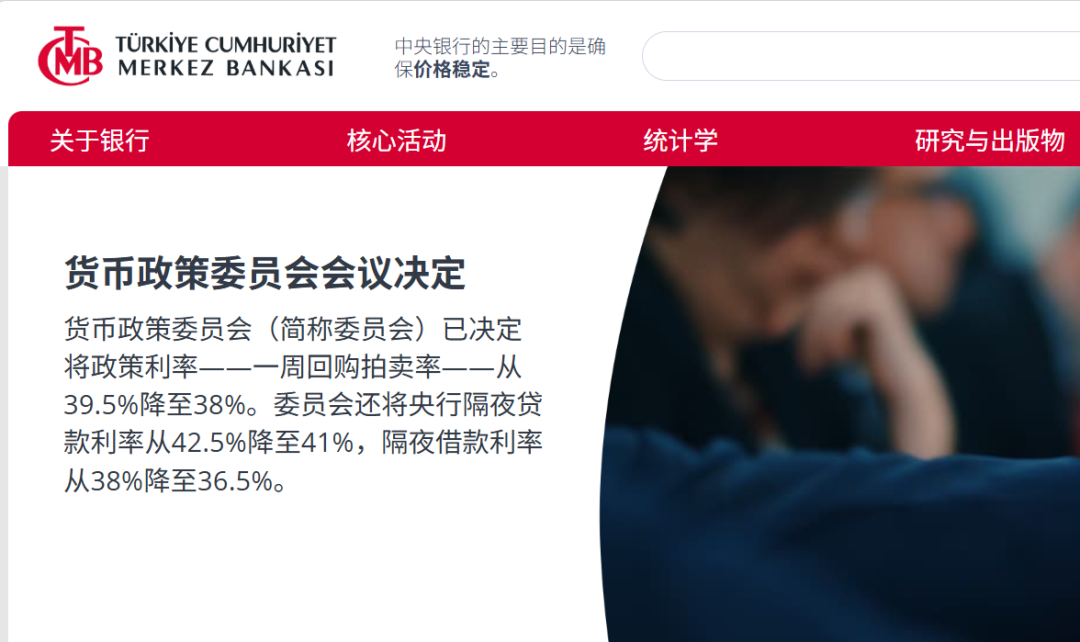
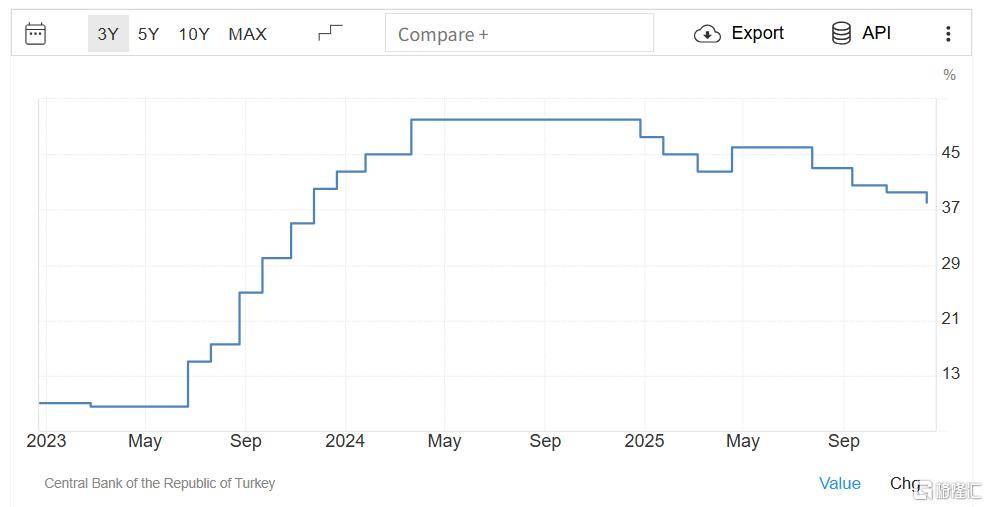
Core Viewpoint - The Central Bank of Turkey has accelerated its interest rate cuts for the fourth consecutive time following softer inflation data, lowering the policy rate by 150 basis points to 38% [2][4]. Group 1: Interest Rate Cuts - On December 11, the Central Bank of Turkey announced a reduction in the policy rate from 39.5% to 38%, exceeding expectations with a cut of 150 basis points [2]. - This marks the fourth consecutive rate cut by the Central Bank, which began in July with a reduction of 300 basis points to 43%, followed by a 250 basis point cut in September to 40.5%, and a 100 basis point cut in October to 39.5% [4]. Group 2: Inflation and Economic Indicators - The committee noted that consumer inflation in November was unexpectedly lower due to a decline in food prices, and the basic trend of inflation showed a slight decrease in October and November [5]. - The GDP growth rate for the third quarter was higher than previously predicted, and leading indicators for the fourth quarter suggest that demand conditions continue to support the process of inflation decline [5]. Group 3: Future Policy Outlook - The Central Bank emphasized a cautious approach, stating that despite signs of improvement in inflation expectations and pricing behavior, risks to inflation decline remain [6]. - The tightening policy will continue until price stability is achieved, and if there are significant deviations from the medium-term inflation targets, the Central Bank will tighten its policy stance [7][8]. - Economists had mixed expectations regarding the rate cut, with some anticipating a more cautious approach due to rising medium-term inflation expectations [7].

申万宏源:调控政策目标和指导更明确更有针对性,重视存量政策和增量政策集成效应
Di Yi Cai Jing· 2025-12-11 15:30
Group 1 - The core viewpoint of the article emphasizes the dual support role of monetary policy in promoting stable economic growth and reasonable price recovery [1] - The meeting highlighted the importance of using tools such as reserve requirement ratio cuts and interest rate reductions, indicating potential easing of monetary policy in the future [1] - The need to ensure effective policy transmission mechanisms was stressed, with a specific focus on improving the quality and quantity of small and medium-sized financial institutions [1] Group 2 - The meeting placed greater emphasis on the coordination of policies, introducing the concept of integrating the effects of existing and new policies [1] - Compared to 2024, the meeting underscored the need to enhance the consistency and effectiveness of macroeconomic policy orientation, including both existing and new policies in the assessment [1] - This new statement suggests that future incremental policies should align with current economic goals, while existing policies that do not fit the current economic transformation may undergo structural adjustments [1]

通胀低于预期,土耳其降息至38%
Sou Hu Cai Jing· 2025-12-11 15:22
Group 1 - The Central Bank of Turkey lowered the policy interest rate by 150 basis points from 39.5% to 38% on December 11 [1] - The decline in food prices led to a lower-than-expected inflation rate in November, with a slight decrease in the inflation trend observed in October and November [1] - The Central Bank noted that the GDP growth rate in the third quarter exceeded expectations, indicating sustained demand conditions to support the anti-inflation process [1] Group 2 - The annual inflation rate in Turkey fell from 32.87% in October to 31.07% in November, marking a four-year low and below market expectations [2] - The Central Bank acknowledged improvements in inflation expectations and pricing behavior, but still identified risks to the anti-inflation process [1] - The Central Bank aims to maintain a tight monetary policy stance until price stability is achieved, targeting a mid-term inflation goal of 5% [1]
“明年上半年或有一次降准一次降息”
第一财经· 2025-12-11 15:18
本文字数:2300,阅读时长大约4分钟 作者 | 第一财经 亓宁 临近年末,全球经济走势和政策取向是市场最关注的话题。近日,世界银行、国际货币基金组织、亚 洲开发银行等国际机构密集上调了2025年中国经济增速预期。 展望2026年,全球经济怎么走?中国经济的韧性支撑来自哪里?主要经济体货币政策还有多大空 间?12月11日,渣打银行大中华区及北亚首席经济学家丁爽在一场交流会上提到, 考虑到美国 GDP增长加速、通胀压力不减,明年美联储可能不会再降息。 他判断, 中国明年一季度和二季度将 分别降准和降息一次,但未来更多将依靠其他货币政策工具维持流动性充裕,央行国债买卖的作用会 越来越大。 美联储还有多大降息空间? "明年全球经济增长率预计和今年持平。"丁爽认为,全球经济明年能够维持3.4%的增长率,但结构 上会发生一定变化:一是全球贸易增长较今年会放缓;二是消费推动力下降,投资驱动增强;三是多 数经济体降息周期接近尾声,经济增长更多将来自财政政策支持。 2025.12. 11 12月8日召开的中共中央政治局会议提到,明年继续实施更加积极的财政政策和适度宽松的货币政 策,发挥存量政策和增量政策集成效应,加大逆周期和 ...

聚焦中央经济工作会议丨明年我国将实施更加积极有为的宏观政策
Xin Hua Wang· 2025-12-11 15:03
Group 1 - The central economic work conference emphasized the implementation of a more proactive macro policy to ensure stable economic operation, continuing with a more active fiscal policy and moderately loose monetary policy [1][2] - The policy direction for next year focuses on maintaining stability while seeking progress, enhancing quality and efficiency, and increasing counter-cyclical and cross-cyclical adjustments to improve macroeconomic governance effectiveness [1] - The conference highlighted the importance of maintaining necessary fiscal deficits, total debt scale, and expenditure levels, indicating a commitment to a proactive fiscal policy that will further enhance the effectiveness of fiscal measures [1] Group 2 - In terms of monetary policy, the conference outlined that promoting stable economic growth and reasonable price recovery will be key considerations, with flexible use of various policy tools such as reserve requirement ratio cuts and interest rate reductions [2] - The arrangements reflect continuity and stability in macro policies, which are beneficial for stabilizing social expectations and boosting market confidence [2] - The focus on financial support for expanding domestic demand, technological innovation, and small and medium-sized enterprises is expected to optimize funding allocation and enhance the internal driving force for high-quality development [2]
聚焦中央经济工作会议|明年我国将实施更加积极有为的宏观政策
Sou Hu Cai Jing· 2025-12-11 14:59
杨志勇表示,明年我国将继续实施更加积极的财政政策,这和今年的财政政策取向一以贯之,财政在国 家治理中的基础和重要支柱作用将得到进一步发挥。"加强财政科学管理"等安排,将更充分地释放和提 升财政政策效能,更好护航经济运行、推动经济增长目标的实现。 在货币政策方面,会议也作出明确安排:"把促进经济稳定增长、物价合理回升作为货币政策的重要考 量""灵活高效运用降准降息等多种政策工具""引导金融机构加力支持扩大内需、科技创新、中小微企业 等重点领域"…… "这些安排展现出宏观政策的连续性、稳定性,有利于稳定社会预期,提振市场信心。"在清华大学国家 金融研究院院长田轩看来,适度宽松的货币政策有助于保持社会融资条件相对宽松,也可以更大程度上 配合好更加积极的财政政策,增强宏观政策取向一致性和有效性。 做好明年经济工作,政策取向备受关注。会议指出,明年经济工作在政策取向上,要坚持稳中求进、提 质增效,发挥存量政策和增量政策集成效应,加大逆周期和跨周期调节力度,提升宏观经济治理效能。 "明年的政策取向释放出'更加积极有为'的鲜明信号。"中国财政科学研究院院长杨志勇表示,宏观政策 加大调控力度,增强政策前瞻性针对性协同性,将更 ...
李迅雷解读中央经济工作会议:大国关系成为影响经济重要变量,以苦练内功开展“经贸斗争”
Xin Lang Cai Jing· 2025-12-11 14:57
Core Viewpoint - The Central Economic Work Conference emphasizes the transition to a stock economy, highlighting the need for strategic responses to external economic pressures and the importance of balancing domestic economic work with international trade dynamics [1][2][3]. Group 1: Economic Strategy and Policy - The conference indicates a shift in focus towards internal capabilities to address external challenges, with a commitment to "stability while seeking progress" as a guiding principle for economic work [2][3]. - The emphasis on expanding domestic demand is identified as a key strategy to counter external shocks, with specific actions to boost consumer spending and increase residents' income [3][17]. - Investment policies will aim to stabilize and increase central budget investments, aligning with major project launches in the early years of the 14th Five-Year Plan [3][17]. Group 2: Trade and External Relations - The conference acknowledges the deepening impact of external environmental changes, reflecting a more confident stance in dealing with tariffs and technology restrictions [2][16]. - There is a focus on integrating trade and investment, as well as domestic and foreign trade, to enhance resilience in external demand [18]. Group 3: Fiscal and Monetary Policy - The fiscal policy will maintain necessary deficits and debt levels while optimizing project implementation, with expectations for a slight increase in the fiscal deficit rate to 4.2-4.5% [19][20]. - Monetary policy will remain flexible, with anticipated adjustments including a reduction in reserve requirements and interest rates, while also considering price stability as a new objective [20][21]. Group 4: Innovation and Structural Reform - The conference stresses the importance of innovation-driven growth, with initiatives to develop new economic drivers and enhance the quality of existing industries [22][23]. - There is a commitment to reforming the market structure to prevent "involution" and promote a unified national market, ensuring that traditional industries are not neglected in favor of new developments [23]. Group 5: Real Estate and Risk Management - The conference outlines measures to stabilize the real estate market, including targeted policies for inventory reduction and supply optimization [24]. - It also addresses the need to manage risks in key areas such as local government debt and small financial institutions, indicating a proactive approach to financial stability [12][24].
超预期,土耳其央行降息150个基点
Zhong Guo Ji Jin Bao· 2025-12-11 14:49
Group 1 - The Turkish central bank announced a reduction in the policy interest rate from 39.5% to 38%, a decrease of 150 basis points, which exceeded market expectations of a 100 basis point cut [1][2] - The recent inflation data showed a decline in consumer inflation rates, with November's monthly inflation slowing to 0.87%, the lowest since May 2023, and the annual inflation rate dropping to 31.07%, below the expected 31.6% [2][3] - The widening interest rate spread between the policy rate and inflation, now approximately 8.5 percentage points, has increased market speculation for further rate cuts [3] Group 2 - The Turkish economy is experiencing a complex situation where declining inflation coexists with economic growth, complicating policy decisions for the central bank [2] - Recent economic forecasts suggest that Turkey's GDP will grow by 4.4% in 2026, with an acceleration expected in the second half of the year, although consumer confidence remains fragile [5]