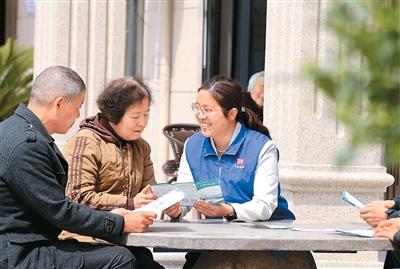
中医药传承创新

Search documents
提升基层中医药服务能力
Qi Lu Wan Bao· 2026-01-29 14:17
Group 1 - The core viewpoint of the article emphasizes the promotion of traditional Chinese medicine (TCM) innovation and integration with Western medicine as outlined in the "14th Five-Year Plan" draft [1] - A proposal was made to establish a standardized grassroots TCM service system, including the construction of TCM pavilions in village health clinics to provide common techniques such as moxibustion and cupping [1] - The suggestion includes personalized health services for key demographics, such as the elderly and chronic disease patients, by creating health records and tailored wellness plans, with a focus on integrating TCM techniques into health insurance reimbursement [1] Group 2 - The proposal also includes improving the rehabilitation service connection mechanism, creating a closed-loop system for diagnosis and rehabilitation, and establishing referral mechanisms between grassroots medical institutions and higher-level hospitals [2] - It emphasizes enhancing rehabilitation capabilities by setting up rehabilitation zones in township TCM clinics and equipping them with necessary devices for treatments like acupuncture and rehabilitation therapy [2] - The initiative aims to promote collaborative rehabilitation between TCM and Western medicine, forming joint diagnosis and treatment teams to develop integrated rehabilitation plans for various diseases, leveraging TCM's unique advantages in improving patient outcomes [2]
省政协委员李刚:提升基层中医药服务能力
Qi Lu Wan Bao· 2026-01-27 07:12
Core Viewpoint - The article emphasizes the importance of enhancing grassroots traditional Chinese medicine (TCM) services to support the "Healthy China" initiative, proposing a standardized service system and improved rehabilitation mechanisms [1][2] Group 1: Standardized Grassroots TCM Service System - A proposal to establish a standardized grassroots TCM service system, incorporating models like Gansu's "TCM Pavilion + TCM Hall" into village health clinics [1] - The initiative aims to popularize at least five common TCM techniques such as moxibustion and cupping to meet the needs of mild illness treatment and daily health maintenance [1] - Personalized health services will be promoted for key demographics, including the elderly, chronic disease patients, and infants, with the creation of health records and tailored health plans [1] Group 2: Rehabilitation Service Mechanism - A recommendation to improve the rehabilitation service connection mechanism, creating a "diagnosis-treatment-rehabilitation" closed loop [1] - The proposal includes establishing a referral mechanism for rehabilitation between grassroots medical institutions and higher-level hospitals, focusing on post-operative and chronic disease rehabilitation [1] - Emphasis on enhancing rehabilitation capabilities in township TCM clinics, including the establishment of rehabilitation zones and the provision of necessary equipment [1]
安徽:居民健康核心指标持续向好
Xin Hua Wang· 2026-01-25 01:46
Core Insights - The healthcare reform in Anhui province has significantly improved access to medical services, with a focus on a tiered diagnosis and treatment system that connects local patients with provincial experts [1][4] - The establishment of a comprehensive health service system for the elderly and children is progressing, with high rates of chronic disease management and a growing number of healthcare facilities [2][3] - The integration of traditional Chinese medicine into community health services is being emphasized, enhancing local healthcare offerings and promoting the preservation of traditional practices [3][4] Group 1: Healthcare Access and Reform - Anhui has launched a "three-level consultation and referral platform," allowing patients to connect with experts easily, resulting in 90% of county hospitals achieving tertiary service capabilities [1] - The province has built a network of 2,587 medical institutions for acute infectious disease monitoring, with a diagnostic report timeliness rate of over 99% [1] Group 2: Elderly and Child Health Services - The province has achieved a 96.8% rate of setting up geriatric departments in secondary and higher-level hospitals, with a total of over 80,000 medical and nursing beds available [2] - Community health services are actively managing chronic diseases, with over 75% of hypertension and diabetes patients receiving standardized management [2] Group 3: Integration of Traditional Medicine - All community health service centers and township hospitals in Anhui have established traditional Chinese medicine facilities, providing local access to services like acupuncture and massage [3] - The province is promoting the quality control of traditional medicine products through information traceability systems, enhancing the global reach of Anhui's traditional medicine brands [3]
维康药业获批国家级重点实验室 加快中药创新步伐
Zheng Quan Ri Bao Zhi Sheng· 2026-01-20 14:12
Core Insights - The Ministry of Agriculture and Rural Affairs has officially recognized Zhejiang Weikang Pharmaceutical Co., Ltd. as a national key laboratory, marking a significant milestone for the company and making it the first in Lishui City, Zhejiang Province to receive this designation [1][2]. Group 1: Company Achievements - Weikang Pharmaceutical has been acknowledged for its long-term commitment to technological innovation and modernization of traditional Chinese medicine [1]. - The company has established a diverse product system focusing on rapid-release dosage forms, including pills, dispersible tablets, soft capsules, and effervescent tablets, and has made significant advancements in quality standards, process optimization, and mechanism research [1]. - Weikang has formulated over 50 national standards and holds more than 40 national invention patents, receiving multiple honors such as National High-tech Enterprise and National Intellectual Property Demonstration Enterprise [1]. Group 2: Future Prospects - The newly approved national key laboratory will enhance Weikang's innovation in the modernization of traditional Chinese medicine and its integration with industry [2]. - The laboratory will focus on the development of innovative traditional Chinese medicines, improved new drugs, and classic formulas, aiming to promote the transformation of scientific achievements and cultivate high-level talent [2]. - Weikang aims to build a high-level research and development platform that integrates resource aggregation, technology leadership, and industry radiation, thereby enhancing its core competitiveness in the pharmaceutical sector [2].
郑州为中医药发展“开方” 群众家门口享优质中医药服务
He Nan Ri Bao· 2026-01-16 23:27
Core Viewpoint - The newly introduced "Regulations on the Promotion of Traditional Chinese Medicine Development in Zhengzhou" aims to enhance the accessibility and quality of TCM services, addressing issues such as uneven resource distribution and insufficient grassroots service capabilities, with implementation set for March 1, 2026 [1][2][3] Group 1: Service System - The regulations mandate the establishment of TCM clinics in community health service centers and township hospitals, and TCM corners in community health service stations and village clinics to improve grassroots medical institutions' TCM service capabilities [1] - The initiative focuses on meeting public health needs through a systematic approach that includes service system enhancement, industry development, talent inheritance, and digital empowerment [1] Group 2: Talent Development - The regulations emphasize building a TCM talent team led by top talents and including young, key, and practical talents, with plans to cultivate high-level talents through institutions like the "Central Plains Qihuang Academy" [1][2] - Zhengzhou has already attracted 14 high-end TCM talent teams, including academicians, and aims to enhance the quality and efficiency of TCM academic inheritance [1] Group 3: Digital Empowerment - A significant highlight of the regulations is the encouragement for TCM institutions to utilize modern information technologies, such as artificial intelligence, to provide integrated online and offline medical services [2] - Zhengzhou plans to establish a TCM digital service platform to expand applications in intelligent diagnostic assistance and personalized prescription optimization [2] Group 4: Industry Development - The regulations establish a collaborative mechanism for TCM industry development, creating a quality assurance system covering the entire industry chain from planting to research, production, and distribution [2] - Support is provided for medical institutions to create platforms for the transformation of TCM health products, leveraging professional advantages to develop health services related to dietary therapy, cultural creativity, and health care [2] Group 5: Long-term Vision - The legislative framework aims to transform policy deployment into legal systems, providing legal guarantees for the establishment of a national TCM inheritance and innovation development experimental zone and enhancing the quality of TCM services [3] - The regulations are designed to address current shortcomings while also focusing on long-term development, ensuring that TCM benefits a broader population and drives high-quality development in Zhengzhou [3]
东城区人均预期寿命达84.59岁,居全国前列
Xin Jing Bao· 2026-01-14 10:12
新京报讯(记者陈琳)北京市东城区第十七届人民代表大会第六次会议正在举行。1月14日,东城区卫 生健康委主任曾文军介绍,2025年东城区人均预期寿命达84.59岁,位居全国前列。 强化基层服务能力,开展家庭病床服务试点,开展居家医养联合体试点建设,推动社区卫生与养老服务 资源整合衔接。深化疾控体系改革,推进智慧疾控建设,完善智能监测预警体系,建设区级慢病防治管 理中心。 2025年,东城区医疗资源布局持续优化,医联体建设取得新突破,区第一人民医院新址开诊后门急诊人 次同比增长7%,9家区级医院实现检查检验结果线上共享互认。 基层医疗服务网络进一步夯实,社区医疗机构上转和接收下转人次数同比增长超20%。推动第六医院医 疗集团、和平里医院医疗集团建设,构建网格化医疗服务新格局。在中医药发展方面,东城区获评国家 中医药传承创新发展示范项目试点,打造前门广誉远(600771)"博物馆+国药堂+国医馆"一体化发展 模式,推动"中医药+"融合发展。 在重点人群健康服务上,家庭医生签约服务与居家养老实现深度融合,连续9年获全市基层卫生绩效考 核优秀。针对老年人群,搭建区级老年痴呆全病程服务协作网;保障母婴健康,辖区早孕门诊建 ...
全国首个!医疗机构制剂产业新政出台,广州如何引领带动?
Nan Fang Du Shi Bao· 2026-01-08 15:13
Core Viewpoint - Guangdong has launched the first national policy aimed at the development of the medical institution preparation industry, leveraging Guangzhou's advantages in medical resources, industrial foundation, and market scale [1] Group 1: Policy Implementation - The policy was officially announced at a provincial meeting in Guangzhou on January 6, marking the start of its comprehensive implementation [1] - The initiative is a collaborative effort between seven departments of Guangdong Province and Guangzhou, aimed at supporting the high-quality development of the medical institution preparation industry [1] Group 2: Industry Development Goals - The policy aims to address multiple challenges in the medical institution preparation industry, including low automation, inadequate adverse reaction monitoring, and difficulties in process inheritance [2] - It proposes 19 specific measures focusing on five key areas: accelerating R&D transformation, restructuring manufacturing systems, expanding resource pools, enhancing service capabilities, and cultivating a financial ecosystem [2] - The goal is to establish a "thousand formulas, hundred preparations, and ten new drugs" cultivation system, with over 1,000 traditional formulas and more than 100 medical institution preparations, leading to at least 10 new drug approvals [2] Group 3: Financial Incentives - The policy includes financial incentives for medical institutions, offering up to 600,000 yuan for new drug registration and clinical trial approvals [3] - It also provides subsidies of up to 5% for production centers with an annual output value exceeding 10 million yuan, with a maximum annual subsidy of 10 million yuan [3] Group 4: Manufacturing Center Development - The policy emphasizes the creation of a modern manufacturing system for the medical institution preparation industry, promoting centralized, standardized, and large-scale production [4] - It proposes the establishment of a "Lingnan Famous Formula" reserve, a "1+N" manufacturing center system, and a digital regulatory system for the entire process from R&D to production [4] - Guangzhou's pharmaceutical manufacturing industry accounts for a quarter of the province's total, with over 60% of the medical institution preparation revenue, and houses more than 6,500 biopharmaceutical companies [4] Group 5: Regulatory and Market Expansion - The policy aims to streamline the approval process for medical institution preparations, reducing registration times by 50% and enhancing the development environment [6] - It seeks to integrate medical institution preparations into the provincial basic medical insurance drug list, ensuring coverage and reducing patient burdens [6] - The initiative also promotes the use of preparations in Hong Kong, Macau, and countries along the Belt and Road, creating a multi-dimensional layout for market expansion [6]
吉林敖东:打造特色中医药产业强基之路
Zhong Guo Zheng Quan Bao· 2026-01-04 20:07
Core Viewpoint - The traditional Chinese medicine industry is currently in a significant development opportunity period, and the company aims to leverage policy and market opportunities to innovate and grow within this sector [1] Group 1: Strengthening Traditional Chinese Medicine Industry - The company originated from a state-owned deer farm and has established a standardized breeding base for Sika deer, ensuring high-quality raw materials for traditional Chinese medicine [1][2] - The company has invested over 46 million yuan in upgrading epidemic prevention facilities, maintaining a zero-positive record for brucellosis and tuberculosis since 2021 [1][2] - The company has obtained 525 registration certificates in the Chinese medicine granule sector, enhancing its influence in industry standards [2] Group 2: Research and Development Innovation - The company focuses on core material research and has increased investment in technology development, transitioning from experience-based practices to scientific decoding [2][4] - The company has developed a product cluster centered around Sika deer, including various medicinal products, creating an ecological closed loop from breeding to pharmaceutical products [2][3] - The company emphasizes the integration of research, breeding, processing, and market feedback to drive fundamental changes in production methods [4] Group 3: Financial and Capital Interaction - The company has adopted a dual-driven development model of "healthcare + financial capital," using financial resources to support long-term research and development [5][6] - The company is the largest shareholder of Guangfa Securities, which has provided significant cash flow and stability, contributing 12.43 billion yuan and 17.49 billion yuan in 2023 and 2024, respectively [6] - The company collaborates with various universities and research institutions to enhance its research capabilities and invest in promising biopharmaceutical projects [6][7]

二〇二五,医疗提质惠民生(年终盘点)
Ren Min Ri Bao Hai Wai Ban· 2025-12-29 22:47
Core Insights - The article discusses the ongoing improvements in China's healthcare system, emphasizing the integration of medical and elderly care services, the expansion of insurance coverage, and the enhancement of accessibility to healthcare services for the population [6][15][20]. Group 1: Healthcare Accessibility - Over 90% of residents can access medical services within 15 minutes, with the number of grassroots medical institutions increasing from 970,000 to 1,040,000 [8]. - The establishment of a unified national medical insurance information platform has enabled instant settlement of medical expenses, covering 1.33 billion insured individuals and 1.14 million designated hospitals and pharmacies [12]. - More than 200 types of medical examination results are now mutually recognized across the country, facilitating easier access to healthcare for patients [9]. Group 2: Insurance and Financial Support - The inclusion of assisted reproductive services in medical insurance aims to alleviate financial burdens for families, with coverage expanding to all provinces and regions by 2025 [6]. - The dynamic adjustment of the medical insurance drug list has added 114 new drugs, increasing the total to 3,253, focusing on urgently needed innovative medications [6]. - Approximately 80 million low-income individuals receive insurance subsidies annually, with a 90% reimbursement rate for hospitalization costs in rural areas [6]. Group 3: Elderly Care Integration - The "Medical and Elderly Care Integration Promotion Action Plan (2025-2027)" aims to address challenges faced by the elderly, such as access to healthcare and quality of life [15]. - The establishment of "15-minute elderly service circles" in cities ensures that elderly individuals receive timely and convenient care [15]. - Long-term care insurance trials are expanding, covering 250 million people, providing home care and rehabilitation services for the elderly [15]. Group 4: Pediatric Healthcare Improvements - Nationwide, 4,845 secondary and tertiary public hospitals now offer pediatric services, addressing the shortage of pediatric care [10]. - Efforts to optimize pediatric healthcare services include appointment systems and extended hours during peak seasons for childhood illnesses [10]. - The average waiting time for pediatric patients has decreased significantly, improving the overall experience for families [11]. Group 5: Traditional Chinese Medicine (TCM) - The number of TCM healthcare institutions has reached 104,000, with 99.6% of community health service centers providing TCM services [20]. - The cultural promotion and international collaboration in TCM have increased public awareness of TCM health culture from 20.69% to 26.85% [20]. - The establishment of expert studios and national laboratories for TCM is enhancing the preservation and innovation of traditional practices [20].

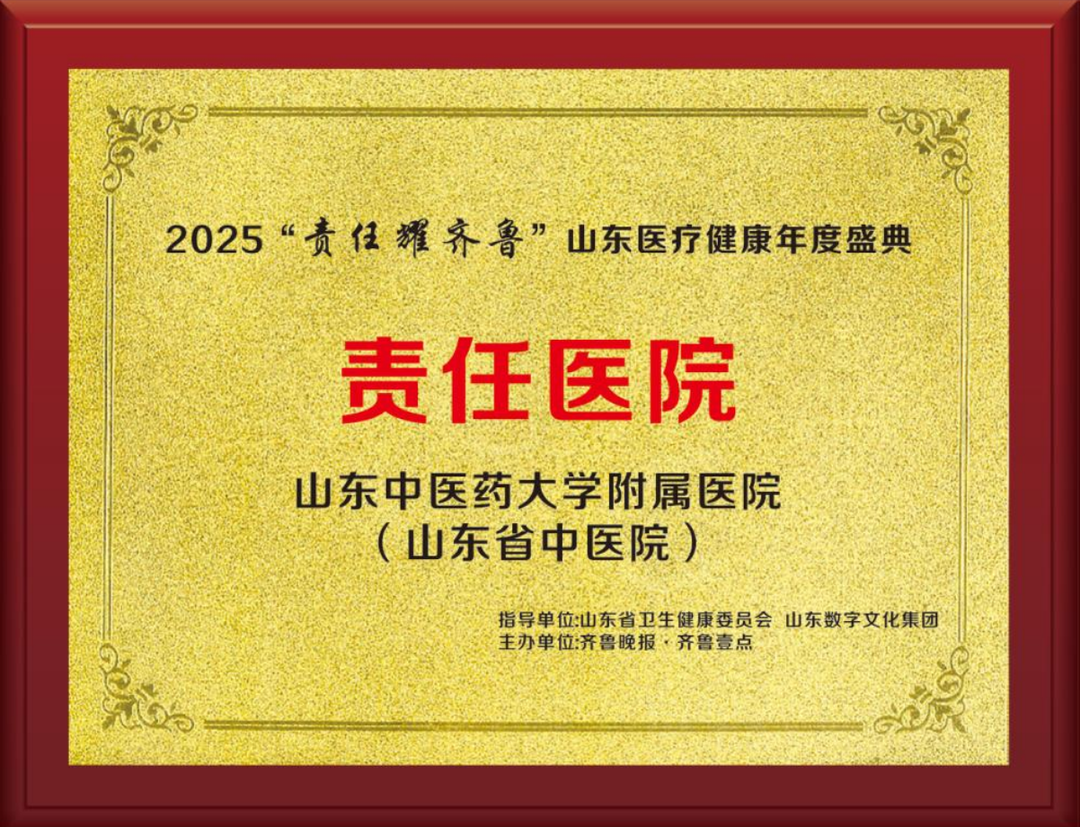
山东中医药大学附属医院获2025“责任耀齐鲁”年度责任医院
Qi Lu Wan Bao· 2025-12-29 07:27
Core Viewpoint - The event held on December 27, 2025, recognized various honors in the healthcare sector, with Shandong University of Traditional Chinese Medicine Affiliated Hospital being awarded the "Responsible Hospital" title for its commitment to public health and medical responsibility [1][3]. Group 1: Hospital Achievements - 2025 marks a significant year for the Shandong University of Traditional Chinese Medicine Affiliated Hospital as it celebrates its 70th anniversary, emphasizing its role as a leading institution in traditional Chinese medicine [3]. - The hospital has established a top-tier diagnostic team led by renowned traditional Chinese medicine experts, focusing on difficult and major diseases, and has developed several key specialty clusters [3][4]. - The hospital has implemented a comprehensive health management system that emphasizes preventive care and personalized services, enhancing patient satisfaction and access to healthcare [3][4]. Group 2: Educational and Community Engagement - The hospital is committed to the integration of teaching, medical care, and research, facilitating the transmission of traditional Chinese medicine knowledge through mentorship and collaboration with educational institutions [4]. - In 2025, the hospital launched a health promotion initiative that includes free medical consultations and health screenings in rural and community settings, addressing the needs of underserved populations [4][5]. - The hospital utilizes new media platforms to disseminate health knowledge and engage with the community, including educational activities in schools to promote traditional Chinese medicine culture among youth [5]. Group 3: Future Outlook - The event served as a reflection on the achievements of the healthcare sector in Shandong in 2025 and a strategic planning session for future developments [5]. - The hospital aims to leverage its 70th anniversary as a new starting point to continue its mission of safeguarding public health through traditional Chinese medicine [5].