
文化创意产品

Search documents
2026·贸促进行时 | 浙江省贸促会聚焦提能增效,锚定高水平开放
Huan Qiu Wang· 2026-01-30 12:32
Core Viewpoint - The China Council for the Promotion of International Trade (CCPIT) is implementing targeted measures to help enterprises effectively respond to external challenges and seize development opportunities, particularly in the context of the 14th Five-Year Plan and a complex international environment [2]. Group 1: Key Initiatives and Goals - The Zhejiang Provincial CCPIT aims to enhance its capabilities and effectiveness in promoting trade, focusing on the dual service brands "Zhejiang Going Global" and "Zhejiang Win-Win" to support enterprises in achieving international competitiveness [6][9]. - The provincial government report emphasizes the need for high-level opening up, aiming for a 6% growth in service trade and over 8% in digital trade by 2026, while maintaining stable export shares in goods trade [4][5]. Group 2: Strategic Focus Areas - The CCPIT will concentrate on three major tasks: enhancing the capabilities of open platforms, strengthening hub functions, and innovating trade models to boost trade quality and quantity [3][4]. - Specific initiatives include the construction of a world-class port in Ningbo-Zhoushan, the establishment of a resource allocation hub for bulk commodities, and the promotion of cross-border e-commerce [3][4]. Group 3: Trade Promotion Activities - The CCPIT plans to organize various international trade and investment activities, including the fourth Chain Expo and international procurement series, to facilitate connections between local enterprises and global markets [8][12]. - The organization will also enhance legal services for businesses, focusing on compliance, intellectual property protection, and dispute resolution to support enterprises in their international ventures [9][10]. Group 4: FTA and Investment Environment - The CCPIT is set to implement a three-year action plan for Free Trade Agreement (FTA) research and application, aiming to publish multiple practical guides and conduct numerous training sessions to assist enterprises in leveraging FTAs [13][14]. - Efforts will be made to optimize the foreign investment environment through extensive evaluations and feedback mechanisms, ensuring that foreign enterprises' needs are addressed effectively [14].

郑州为中医药发展“开方” 群众家门口享优质中医药服务
He Nan Ri Bao· 2026-01-16 23:27
Core Viewpoint - The newly introduced "Regulations on the Promotion of Traditional Chinese Medicine Development in Zhengzhou" aims to enhance the accessibility and quality of TCM services, addressing issues such as uneven resource distribution and insufficient grassroots service capabilities, with implementation set for March 1, 2026 [1][2][3] Group 1: Service System - The regulations mandate the establishment of TCM clinics in community health service centers and township hospitals, and TCM corners in community health service stations and village clinics to improve grassroots medical institutions' TCM service capabilities [1] - The initiative focuses on meeting public health needs through a systematic approach that includes service system enhancement, industry development, talent inheritance, and digital empowerment [1] Group 2: Talent Development - The regulations emphasize building a TCM talent team led by top talents and including young, key, and practical talents, with plans to cultivate high-level talents through institutions like the "Central Plains Qihuang Academy" [1][2] - Zhengzhou has already attracted 14 high-end TCM talent teams, including academicians, and aims to enhance the quality and efficiency of TCM academic inheritance [1] Group 3: Digital Empowerment - A significant highlight of the regulations is the encouragement for TCM institutions to utilize modern information technologies, such as artificial intelligence, to provide integrated online and offline medical services [2] - Zhengzhou plans to establish a TCM digital service platform to expand applications in intelligent diagnostic assistance and personalized prescription optimization [2] Group 4: Industry Development - The regulations establish a collaborative mechanism for TCM industry development, creating a quality assurance system covering the entire industry chain from planting to research, production, and distribution [2] - Support is provided for medical institutions to create platforms for the transformation of TCM health products, leveraging professional advantages to develop health services related to dietary therapy, cultural creativity, and health care [2] Group 5: Long-term Vision - The legislative framework aims to transform policy deployment into legal systems, providing legal guarantees for the establishment of a national TCM inheritance and innovation development experimental zone and enhancing the quality of TCM services [3] - The regulations are designed to address current shortcomings while also focusing on long-term development, ensuring that TCM benefits a broader population and drives high-quality development in Zhengzhou [3]
让社会资本当“园小二”,让京城变“大花园”
Xin Jing Bao· 2026-01-15 14:28
Core Viewpoint - Beijing has introduced measures to enhance park quality, stimulate urban development, and improve public satisfaction while maintaining the parks' public welfare attributes. The focus is on encouraging social capital to operate parks in a more sustainable and brand-oriented manner [1][7]. Group 1: Park Development and Management - The new measures allow parks to be operated by enterprises for a maximum of five years, promoting long-term brand development and operational efficiency [1][7]. - By 2026, Beijing plans to build 200 new parks, contributing to the city's goal of becoming a "big garden" and enhancing residents' quality of life [1]. - In 2025, the municipal budget for park construction will reach 4.2 billion yuan, focusing on ecological restoration and facility upgrades [2]. Group 2: Challenges in Park Operations - Many parks face issues such as lack of vitality, limited service offerings, and a failure to attract diverse age groups due to a focus on basic amenities [3]. - The historical and cultural significance of parks is not fully leveraged, leading to low visitor spending and limited revenue generation [4]. - Restrictions on commercial activities have resulted in inadequate food and beverage options, which do not meet visitor expectations [5]. Group 3: Potential for Improvement - There is significant potential for enhancing park operations by utilizing cultural and natural resources, which can attract more visitors and increase revenue [4]. - Successful examples from other regions show that involving social capital can lead to improved brand value and operational success [7]. - Market-oriented operations can reduce annual maintenance costs by 20% to 30%, as demonstrated by the Shanghai Century Park [8]. Group 4: Innovative Approaches - The introduction of a tailored approach for different park types is essential for effective social capital engagement, ensuring that each park's unique characteristics are considered [8]. - Successful case studies, such as the Longtan Zhonghu Park, illustrate the benefits of a dual-effect operation model that combines ecological advantages with active community engagement [10]. - International examples show that parks can thrive through donations and sponsorships, enhancing their operational capabilities while maintaining public welfare [9].
《郑州市中医药发展促进条例》全文公布
Xin Lang Cai Jing· 2025-12-22 23:19
Core Viewpoint - The "Regulations on the Promotion of Traditional Chinese Medicine Development in Zhengzhou" have been approved and will take effect on March 1, 2026, aiming to enhance the development and standardization of traditional Chinese medicine (TCM) in the region [1] Group 1: Support for TCM Development - The regulations support the establishment of regional TCM preparation centers to promote large-scale and standardized development of TCM preparations [1] - Medical institutions are encouraged to create platforms for the transformation of TCM health products, leveraging their professional advantages to develop products related to dietary therapy, cultural creativity, and health care [1] - The regulations advocate for the use of modern information technologies, such as artificial intelligence, to provide integrated online and offline TCM medical services, including telemedicine and mobile healthcare [1] Group 2: Education and Talent Development - Vocational colleges are encouraged to offer TCM-related courses and establish practical teaching bases to cultivate skilled professionals in TCM [1] - Social forces are encouraged to participate in TCM development through donations, funding, and investments [1] Group 3: Regulation of Non-Medical Institutions - Non-medical institutions providing TCM health services are prohibited from engaging in TCM medical activities and must not conduct misleading promotions using TCM theories and terminology [1]
扩消费、惠民生、稳增长 多部门详解如何增强消费品供需适配性
Shang Hai Zheng Quan Bao· 2025-11-28 00:44
Core Viewpoint - The implementation plan aims to enhance the adaptability of supply and demand for consumer goods, contributing to consumption expansion, improving people's livelihoods, and stabilizing economic growth [1] Group 1: Promotion of AI in Consumer Goods - The plan emphasizes accelerating the application of artificial intelligence (AI) technology in the consumer goods sector, positioning AI as a catalyst for consumption [2] - The Ministry of Industry and Information Technology (MIIT) will drive product innovation and scenario expansion to integrate AI and consumer goods, creating a digital ecosystem that connects user demand, intelligent design, flexible production, and precise services [2] - As of mid-2023, the user base for generative AI products in China reached 515 million, indicating strong market demand for AI consumer products [3] Group 2: Automotive Consumption Reform - The plan includes promoting reforms in automotive circulation, expanding the second-hand car market, and enhancing the automotive aftermarket, focusing on green and intelligent directions [4] - The Ministry of Culture and Tourism will develop cultural and tourism products that resonate with consumers, including promoting cultural creative products and non-material cultural heritage [4][5] Group 3: Quality and Safety Governance - The plan calls for establishing a comprehensive governance framework for consumer goods quality and safety, enhancing regulatory measures for online sales [6] - The State Administration for Market Regulation will implement actions to combat counterfeit and substandard products, ensuring consumer safety and confidence [7] - A new standard system for consumer goods will be developed, focusing on high-quality product supply and addressing safety concerns for specific categories like children's toys and gas appliances [7]
产品上新场景焕新活动出新 丰富特色文旅产品供给
Yang Shi Wang· 2025-11-27 04:28
Core Insights - The government is enhancing the adaptability of supply and demand in consumer goods to promote consumption through new products, refreshed scenarios, and innovative activities [2] Group 1: Supply and Demand Adaptability - There is a strong demand for domestic products, cultural creations, and intangible cultural heritage products, leading to the emergence of popular products that meet consumer needs while enhancing cultural identity and spiritual satisfaction [2] - Structural mismatches in supply and demand still exist, with some products experiencing oversupply while high-quality supply remains insufficient [2] - The transition from old to new driving forces is ongoing, with a lack of innovative applications and supply for new products that cater to residents' quality and personalized needs [2] Group 2: Support for Quality Cultural and Tourism Products - The government is supporting the launch of quality cultural tourism products, including awards for animation to encourage innovation in the industry and the development of quality intellectual properties [3] - Initiatives include expanding the pilot scope for cultural and creative product development and promoting high-quality products through exhibitions and trade activities [3] Group 3: Revitalizing Cultural and Tourism Consumption Scenarios - Guidelines for the construction of intangible cultural heritage workshops are being developed to enhance quality and efficiency, promoting a range of related products and services [4] - Seasonal activities such as "Non-Heritage Goodies, National Trend Renewal" are being organized to promote non-heritage products in various sales channels, including supermarkets and duty-free shops [4] Group 4: Innovative Cultural and Tourism Consumption Activities - Nationwide cultural and tourism consumption promotion activities are being held, focusing on seasonal products and services that enhance the consumer experience [6] - Initiatives like "Travel with Performances" and "Travel with Events" are designed to meet diverse consumer needs while promoting rural products [6] - The government is also implementing measures to attract more international tourists through tax refund policies and promoting immediate refunds for purchases [6]
汽车消费、首发经济、适老化产品研发……这场发布会回应诸多热点
Di Yi Cai Jing Zi Xun· 2025-11-27 03:25
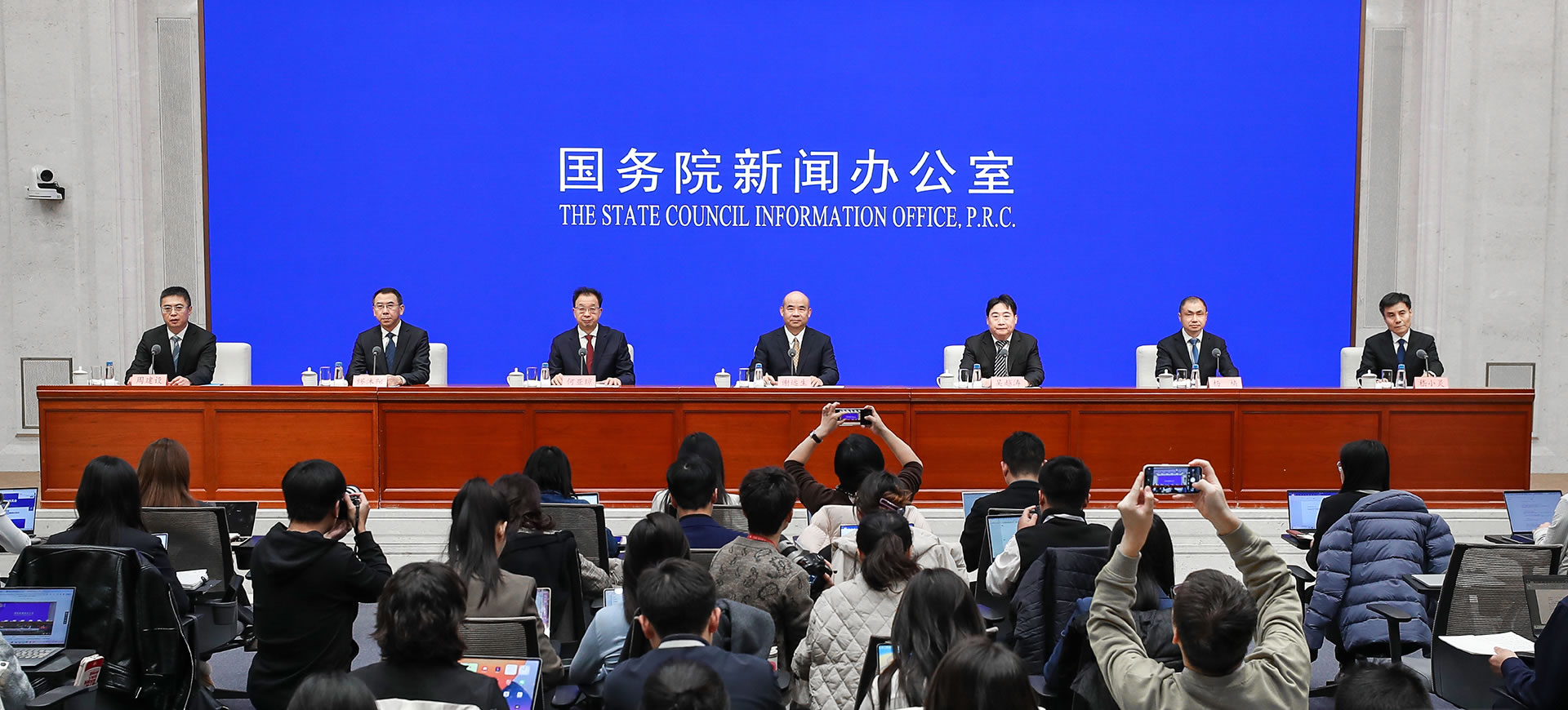
Group 1 - The core viewpoint of the news is the introduction of policies aimed at enhancing the adaptability of supply and demand in consumer goods to stimulate consumption and promote economic circulation [1][2]. Group 2 - The Ministry of Industry and Information Technology emphasizes the importance of aligning production supply with changing consumer trends to maximize consumption potential and ensure quality and suitability of products [2]. - The Ministry plans to collaborate with relevant departments to enhance the development of elderly care products, including service robots and age-friendly standards [3]. - The Ministry of Commerce will promote reforms in the automotive circulation sector, expanding the second-hand car market and related services to boost automotive consumption [4]. - The Ministry of Commerce encourages the "first launch economy," supporting businesses in releasing new products and establishing new stores to foster healthy consumption and new growth points [5]. - The National Development and Reform Commission will strengthen the planning and construction of parking facilities and charging infrastructure to improve convenience for consumers [6]. - The Ministry of Culture and Tourism will support the introduction of high-quality cultural and tourism products and promote innovative cultural experiences to enhance consumer engagement [7].
文化和旅游部:将从供需两端发力,支持优质文旅产品上新等
Zheng Quan Shi Bao Wang· 2025-11-27 02:42
Core Viewpoint - The Chinese government is actively promoting policies to enhance the adaptability of supply and demand in the consumer goods sector, particularly focusing on cultural and tourism products, which are experiencing strong consumer demand and vibrant market activity [1] Group 1: Policy Measures - The Ministry of Culture and Tourism plans to support the introduction of high-quality cultural and tourism products, encouraging innovation in the animation industry and expanding the pilot scope for cultural creative product development [1] - There will be efforts to rejuvenate cultural and tourism consumption scenarios, including the development of operational guidelines for intangible cultural heritage workshops to improve quality and efficiency [1] - The government aims to guide cultural and tourism consumption activities by organizing nationwide promotional events, especially around traditional festivals and peak travel seasons, to offer seasonal products and services [1] Group 2: Tax and Incentives - The implementation of a tax refund policy for outbound tourists will be emphasized, along with promoting immediate purchase and refund measures to attract more international visitors to travel and shop in China [1]
杨凌农高会海外展在乌兹别克斯坦开幕
Shan Xi Ri Bao· 2025-10-18 00:04
Core Insights - The 32nd China Yangling Agricultural High-tech Achievements Expo has opened its Uzbekistan exhibition area, featuring over 130 domestic and international enterprises [1][2] - The event includes indoor exhibitions, field demonstrations, and the groundbreaking ceremony for national agricultural high-tech industrial zone projects, showcasing hundreds of agricultural products and technologies [1][2] Group 1: Exhibition Details - The indoor exhibition is located at the SCO Agricultural Base China (Shaanxi) Commodity Trading Center in Tashkent, covering an area of 1,500 square meters with various display zones [1] - Categories of exhibits include agricultural inputs and machinery, biomedicine, specialty agricultural products, cultural creative products, fresh fruits, and selected export base products [1] Group 2: Field Demonstration - The field demonstration focuses on apple breeding, water-saving irrigation, agricultural inputs and machinery, and pest control, featuring a "Technology, Variety, Model" exhibition area [2] - The aim is to make Chinese agricultural technology tangible and understandable for Uzbek enterprises, enhancing the influence of the Yangling Agricultural High-tech Expo [2] Group 3: Future Plans - The organizers plan to promote more specialty agricultural products, technologies, and machinery to enhance the brand influence of the Yangling Agricultural High-tech Expo overseas [2]
大公国际:2025年以来平台公司债券首发融资特征分析
Da Gong Guo Ji· 2025-08-25 06:30
1. Report Industry Investment Rating There is no information about the report industry investment rating in the provided content. 2. Core Viewpoints of the Report - The implementation of the debt - resolution package has restricted the financing of traditional urban investment companies, and localities have established industrial companies. The report analyzes the characteristics of platform companies that achieved their first - time bond financing since 2025 to provide references for industrial companies' bond financing [1]. - Platform companies should focus on market - oriented operations, policy alignment, and combine external support with self - development for successful bond financing and long - term development [27][28][29]. 3. Summary by Relevant Catalogs 3.1 Bond First - time Financing Subject Characteristics 3.1.1 Overall Overview - From January to July 2025, 149 platform companies achieved their first - time bond financing, reaching 84% of the whole year of 2024. Only 7 out of these companies had over 30% of their revenue from public welfare business, indicating the positive progress of the industrial transformation of urban investment companies [2]. 3.1.2 Regional Distribution - In the past two years, the regional distribution of first - time bond - issuing platforms was highly concentrated in four eastern coastal provinces (Zhejiang, Shandong, Jiangsu, and Guangdong), accounting for over 50%. However, from January to July 2025, their combined proportion decreased, while the proportion of central provinces such as Anhui, Henan, and Hubei increased slightly, and some of the twelve key provinces also had new additions [5]. 3.1.3 Credit Rating - From January to July 2025, the credit levels of first - time bond - issuing platforms were still mainly AA +, but the structure changed. The proportion of AAA and AA + level platform companies decreased year - on - year, while that of AA level increased, and the central level shifted down. Also, 3 platform companies without a subject rating issued bonds, indicating a marginal relaxation of market access [7]. 3.1.4 Shareholder Hierarchy - From January to July 2025, the direct shareholding ratio of the government and related institutions in platform companies dropped to 44%, showing a transformation from "direct intervention" to "indirect control". Platform companies prefer to expand financing through their subsidiaries, which have competitive advantages in the bond market [9]. 3.1.5 First - time Bond Fund - Raising Purposes - In recent years, the purposes of platform companies' first - time bond fund - raising were characterized by "stabilizing debt + promoting development". From January to July 2025, the proportion of using funds for debt repayment and working capital replenishment decreased, while the proportion of bonds invested in major projects such as industrial park renewal and rural revitalization, science and technology innovation projects, and those supporting small and medium - sized enterprises increased [11][12]. 3.1.6 Business Direction - In 2025, only 5% of the first - time bond - issuing platforms still focused on public welfare businesses such as infrastructure construction and land consolidation, while industrial park operation, public utilities, real estate, finance, and cultural and tourism operation became the main areas of transformation [14]. 3.1.7 Financial Performance - Asset scale: The central value of the total asset scale of high - level platforms was significantly higher than that of low - level platforms, and it was positively correlated with the subject level. The central value of the total asset scale in 2025 was lower than that in 2024 [16]. - Asset - liability ratio: The differences in the asset - liability ratio among different levels of platforms were not large, and the central value in 2025 was lower than that in 2024 [16]. - Net profit: The central value of net profit of high - level platforms was significantly higher than that of low - level platforms, and it was positively correlated with the subject level. The central value of net profit in 2025 was lower than that in 2024, and the overall net profit of platform companies was still at a low level [16]. 3.2 Case Analysis 3.2.1 Case 1: Industrial Investment - Reorganization: Acquired a listed company in the material field in 2023 and received capital injection and asset transfer from the county state - owned assets office in 2024 [18]. - Business structure: Formed a complementary model of "strategic emerging industry support + people's livelihood guarantee" with copper - based alloy materials, irradiated special cables, and medical device distribution as the main businesses [21]. - Financial performance: All revenues were from market - oriented operations, but government subsidies accounted for a relatively high proportion. It achieved first - time financing due to successful market - oriented transformation, strategic alignment, and regional franchise advantages [21]. 3.2.2 Case 2: Public Utilities - Reorganization: The company's equity was transferred up one level in 2024 and received large - scale capital injection, building a business pattern centered on public utilities [22]. - Business structure: Formed a "heating + water services" dual - wheel - driven public utility system with significant regional franchise advantages [22]. - Financial performance: The proportion of quasi - public welfare income was over 80%, and government subsidies contributed significantly to profits. It achieved first - time financing due to enhanced capital strength and strong regional franchise advantages [22][23]. 3.2.3 Case 3: Cultural and Tourism Operations - Reorganization: Built a diversified business pattern by incorporating multiple subsidiaries in 2022 [25]. - Business structure: Market - oriented business revenue accounted for over 90%, forming a collaborative model of "cultural export leadership, cultural and tourism service support, and transportation network support" [25]. - Financial performance: Operating income accounted for over 90%, but government subsidies were relatively high. It achieved first - time financing due to complementary business sectors, policy support, and improved financial stability [25][26]. 3.3 Platform Company Bond First - time Issuance Insights - Market - oriented operation should be the core of transformation. Platform companies need to transform into industrial operation entities, and the bond market's evaluation logic has shifted from "government credit endorsement" to "self - sustainable operation" [27]. - Policy alignment is the key to financing. Companies should align their resource endowments with national needs and serve major national strategies [28]. - External support and self - development are both necessary. External support provides a foundation for first - time financing, but self - development is crucial for long - term competitiveness [28].