中国制造转型升级

Search documents
中国制造向“新”突围 外贸“韧”劲十足超预期——2025年终经济观察
Zheng Quan Shi Bao Wang· 2025-12-01 23:36
Core Viewpoint - China's export resilience has provided a bright spot for economic growth despite adverse external conditions, with significant contributions from the manufacturing sector and diversified market strategies [1][7]. Group 1: Export Performance - In the first ten months of the year, China's export value increased by 6.2%, with exports to at least 177 trading partners growing faster than this average [4][5]. - The contribution of net exports to GDP growth was 29%, adding 1.5 percentage points to the overall GDP growth [1]. - Exports of mechanical and electrical products reached 13.43 trillion yuan, growing by 8.7% and accounting for 60.7% of total exports [2][3]. Group 2: Product Categories - High-tech products now represent 24.8% of total exports, with a year-on-year growth rate of 7.3% in the first ten months [3]. - Notable growth was observed in biotechnology, optoelectronics, electronics, computer integrated manufacturing, materials technology, and aerospace technology, all exceeding 12% growth [3]. Group 3: Market Diversification - The proportion of exports to countries involved in the Belt and Road Initiative has surpassed 50%, indicating a significant shift in trade relationships [6][5]. - The concentration of trade partners has decreased, with the combined export value to the top three partners dropping from 48.51% in 2018 to 43.9% in the current year [6]. Group 4: Future Outlook - Goldman Sachs predicts an 8% growth in actual exports for the year, driven by ongoing structural upgrades in manufacturing and market diversification [7][8]. - The "14th Five-Year Plan" emphasizes innovation and market diversification as key strategies for enhancing trade resilience and security [7][8].
中国制造向“新”突围 外贸“韧”劲十足超预期
Zheng Quan Shi Bao· 2025-12-01 18:06
Core Insights - China's export resilience has provided a bright spot for economic growth amid adverse external conditions, contributing 1.5 percentage points to GDP growth this year [1] Group 1: Export Performance - China's export growth rate has remained above 6.2% for over 170 countries and regions, with the net export contribution to economic growth at 29% for the first three quarters [1] - In the first ten months, China's exports of mechanical and electrical products reached 13.43 trillion yuan, growing by 8.7% and accounting for 60.7% of total exports [2][3] - The share of high-tech products in total exports has reached 24.8%, with a year-on-year growth rate of 7.3% [3] Group 2: Market Diversification - China's export diversification has increased, with exports to at least 177 trading partners growing faster than the overall export growth rate [4][5] - The share of exports to Belt and Road Initiative countries has surpassed 50%, reaching 50.39% in the first ten months [6] Group 3: Future Outlook - Goldman Sachs predicts an 8% growth in actual exports for this year, with continued optimism for future export performance [7][8] - The "14th Five-Year Plan" emphasizes innovation and market diversification as key strategies for enhancing trade resilience and safety [7][8]


小产品拿大订单:CF奖十二年,中国制造如何撕去旧标签?
2 1 Shi Ji Jing Ji Bao Dao· 2025-11-03 12:36
Core Insights - The 2025 Canton Fair Design Innovation Award saw participation from 1,400 companies and 3,210 products, with a competitive award rate of 5.2%, marking the most competitive year since 2013 [1] - The Supreme Gold Award was won by Zhejiang Qiangnao Technology Co., Ltd. for its bionic dexterous hand Revo2, which has attracted significant attention and sales during the fair [1][8] - The CF Award serves as a significant platform for companies to enhance brand influence, improve customer acquisition efficiency, and strengthen industry reputation [2] Group 1: Award Significance - Participation in the CF Award allows companies to promote their products more effectively and reach international markets [2] - The award results serve as a valuable asset for companies applying for VIP exhibitor status and securing prime exhibition spaces [2] - The evolution of product design reflects a shift from single-function products to intelligent integrated equipment, showcasing trends in safety, environmental sustainability, and multifunctionality [2][3] Group 2: Market Trends - The increasing participation of global buyers highlights a demand for innovative products that address real market needs [4] - The award-winning products indicate that significant market opportunities often arise from a deep focus on niche products [5] - Companies are adopting eco-friendly materials and designs to meet the growing demand for sustainable products, aligning with global carbon reduction trends [5][6] Group 3: Technological Advancements - The award-winning products demonstrate a shift in Chinese manufacturing towards intelligent and innovative solutions, integrating AI and ergonomic design [7] - The evolution of the CF Award reflects the transformation of Chinese manufacturing from producing basic products to offering comprehensive solutions [10] - The Supreme Gold Award signifies a change in evaluation criteria, focusing on products that integrate cutting-edge technology and anticipate future market demands [10][11]
国产电动三轮车海外“出圈”(神州看点)
Ren Min Ri Bao· 2025-10-29 22:41
Core Viewpoint - The export of electric tricycles from China, particularly from Wuxi, Jiangsu, is gaining momentum, with significant growth in overseas markets, showcasing the strength and adaptability of Chinese manufacturing in meeting global demands [2][3][4]. Group 1: Export Growth - A Wuxi motorcycle manufacturing company has begun exporting electric tricycles to Ecuador, marking its first venture into this market [2]. - The company has exported nearly 70,000 electric tricycles this year, representing a 40% year-on-year increase [2]. - The electric tricycles are gaining popularity in various regions, including North America, Southeast Asia, South America, and Central Asia, becoming a new symbol of Chinese manufacturing [3]. Group 2: Industry Development - The electric tricycle industry in Fengxian, Xuzhou, Jiangsu, has evolved from a local agricultural solution to a major production hub, with over 1,000 companies involved in manufacturing and parts supply [3]. - Fengxian accounts for over 60% of the domestic electric tricycle market and more than 95% of the electric motor market, exporting to over 130 countries and regions [3]. Group 3: Competitive Advantages - Electric tricycles are favored by overseas consumers due to their cost-effectiveness; for instance, they are significantly cheaper than pickup trucks in the U.S., making them ideal for short-distance transport and farm operations [4]. - The use of electric power reduces operational costs compared to fuel vehicles, aligning with global trends towards green and sustainable transportation [4]. Group 4: Adaptability and Innovation - Chinese electric tricycle manufacturers demonstrate flexibility and innovation by adapting products to meet the specific needs of different markets, such as rust-proofing and battery insulation for varying climates [5][6]. - The focus on details, such as English labeling and compliance with local safety standards, reflects the commitment of Chinese manufacturers to quality and customer satisfaction [6]. - The success of electric tricycles abroad illustrates the transformation and upgrading of Chinese manufacturing, leveraging competitive pricing and innovation to capture market share [6].

个头小、价格低、灵活便捷 受到农场主等消费者青睐 国产电动三轮车海外“出圈”(神州看点)
Ren Min Ri Bao· 2025-10-29 22:11
Core Insights - The export of electric tricycles from Wuxi, Jiangsu to Ecuador marks a significant milestone for a motorcycle manufacturing company, with an export volume of nearly 70,000 units this year, reflecting a 40% year-on-year increase [1][2]. Group 1: Market Expansion - The electric tricycle has gained popularity overseas, becoming a new symbol of Chinese manufacturing, with exports reaching over 130 countries and regions [2][4]. - The product's affordability and versatility make it appealing to overseas consumers, particularly in the agricultural sector, where it serves as a cost-effective alternative to traditional vehicles like pickup trucks [3][4]. Group 2: Industry Development - The electric tricycle industry in Fengxian, Jiangsu has evolved into one of the largest production bases in China, with over 1,000 manufacturers and a market share exceeding 60% in the domestic market [2]. - Companies are demonstrating flexibility and innovation by adapting products to meet diverse global market demands, including modifications for different climates and safety standards [4]. Group 3: Competitive Advantages - The electric tricycle's lower purchase and operating costs compared to fuel vehicles align with the global trend towards green and sustainable transportation solutions [3][4]. - The success of the electric tricycle reflects a broader transformation in Chinese manufacturing, showcasing the industry's ability to innovate and adapt to international markets [4].
梅林企业家故事 陈俊彬与华强:扎根三十年,走向全世界
Nan Fang Du Shi Bao· 2025-10-27 13:38
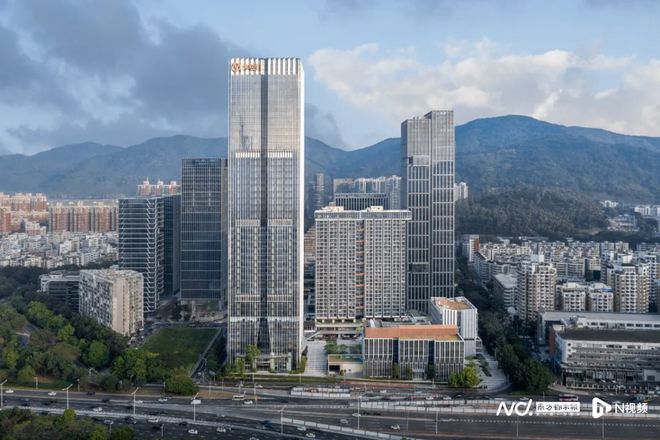
Core Insights - Shenzhen Huaqiang Group has established itself as a key player in the global electronics supply chain by focusing on continuous innovation and stable development rather than chasing short-term trends [1][3][9] - The company has evolved from a traditional electronic components manufacturer to a comprehensive service platform, playing a crucial role in connecting upstream and downstream industries [5][10] Company Development - Founded in 1994, Shenzhen Huaqiang Group emerged during China's integration into the global trade system, aiming to build a strong foundation and voice for China's electronic components industry [3][5] - The company went public in 1997, marking a significant milestone for China's electronic information industry on the global stage [3][5] - In 2002, Huaqiang launched its online platform, enhancing global information flow and transforming "Huaqiangbei" into a symbol of global electronic trade [3][5] Strategic Evolution - Starting in 2015, the company made significant strides by acquiring firms like Xianghai Electronics and Jieyang Xinke, entering the authorized distribution sector and forming the "Huaqiang Semiconductor Group" [5][10] - In 2019, Huaqiang initiated CVC industry investments, expanding into upstream semiconductor design and high-end manufacturing, transitioning from a manufacturing supporter to an industry enabler [5][10] Leadership and Vision - Chen Junbin, a key figure in the company's growth, has spent over 20 years in various roles, reflecting the company's evolving talent needs and his own development from engineer to management [6][8] - His experiences across different departments have shaped his understanding of the industry and the importance of digital transformation and investment in cutting-edge fields like AI and semiconductors [7][11] Industry Context - The global technology competition landscape is shifting, with the U.S.-China tech rivalry becoming a systemic strategic competition, making the establishment of self-sufficient supply chains crucial for China's manufacturing sector [9][10] - Shenzhen Huaqiang Group plays a pivotal role in this process, serving as a vital hub for connecting domestic and international markets and ensuring the smooth operation of the industry [9][10] Regional Collaboration - The long-standing partnership between Shenzhen Huaqiang Group and the Meilin community exemplifies the positive interaction between enterprises and local governments, contributing to regional economic growth [12][13] - The supportive environment provided by the Meilin government has facilitated Huaqiang's transformation from a local enterprise to a global player in the electronics industry [12][13]
梅林企业家故事 | 陈俊彬与华强:扎根三十年,走向全世界
Sou Hu Cai Jing· 2025-10-27 13:37
Core Insights - Shenzhen Huaqiang Group has established itself as a key player in the global electronics supply chain by focusing on continuous innovation and stable development rather than chasing short-term trends [1][3] - The company has evolved from a traditional electronic components manufacturer to a comprehensive service platform, playing a crucial role in connecting upstream and downstream industries [3][10] Company Development - Founded in 1994, Shenzhen Huaqiang Group emerged during China's integration into the global trade system, aiming to establish a strong presence in the electronic components industry [3][4] - The company went public in 1997, marking a significant milestone in its growth and signaling the potential for Chinese enterprises to build their own industrial ecosystems [3][5] - In 2002, Huaqiang launched its online platform, transforming "Huaqiangbei" into a global symbol of electronic trade [4] Strategic Evolution - Starting in 2015, Huaqiang made strategic acquisitions to enter the authorized distribution sector, leading to the establishment of the "Huaqiang Semiconductor Group" [5][6] - In 2019, the company initiated CVC industrial investments, expanding into upstream semiconductor design and high-end manufacturing, thus transitioning from a manufacturing supporter to an industry enabler [6][10] Leadership and Vision - Chen Junbin, a key figure in the company's growth, has spent over 20 years in various roles, reflecting the evolving talent needs of the enterprise [1][7] - His experiences across different functions have shaped his understanding of the true logic of Chinese manufacturing and the importance of digital transformation [8][9] - Chen emphasizes the need for Chinese enterprises to build autonomous industrial systems and ecological capabilities to navigate global competition [11][12] Regional Collaboration - The long-standing partnership between Shenzhen Huaqiang Group and the Meilin community exemplifies effective government-enterprise collaboration, contributing to regional economic growth [12][13] - The supportive environment provided by local authorities has facilitated Huaqiang's transition from a local business to a global player in the electronics industry [12][14] Industry Context - The current global technological competition, particularly between China and the U.S., necessitates the construction of self-sufficient industrial and supply chains for Chinese manufacturing [10][11] - Huaqiang's role as a central player in the electronic components distribution sector positions it as a vital link in ensuring the stability and efficiency of the industry [10][11]
石材秒变高清屏!广交会这面“会显像的墙”藏了什么黑科技?
Yang Shi Xin Wen· 2025-10-25 08:24
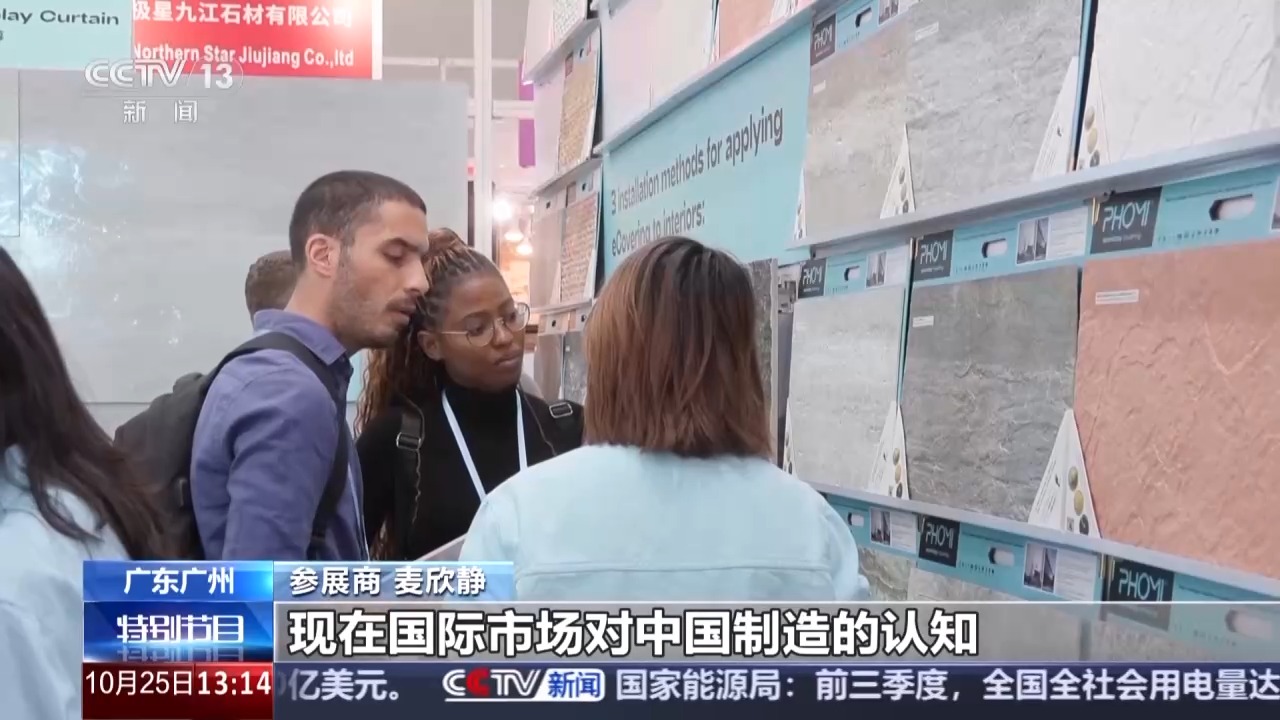
Group 1 - The second phase of the Canton Fair showcased innovative designs, particularly in the building and decoration materials sector, highlighting a stone wall that doubles as a high-definition display screen, winning a design innovation award [1] - The stone wall features inorganic nano materials that provide UV resistance, making it more durable than traditional LED screens [1] - The fair serves as a significant international platform for exhibitors, with increased global recognition of Chinese manufacturing capabilities, balancing cost control with high-quality production [3] Group 2 - A rotating shoe cabinet with an electric lifting system attracted attention from overseas buyers, demonstrating advancements in convenience and functionality [5] - The innovations reflect the ongoing transformation and upgrading of China's home decoration industry, focusing on material research and model upgrades to enhance competitiveness [5]
A股“五好生” 比亚迪、阳光电源、迈瑞医疗等156家公司的持续增长样本观察|寻找“受尊敬”企业系列报道
Jing Ji Guan Cha Wang· 2025-10-15 02:24
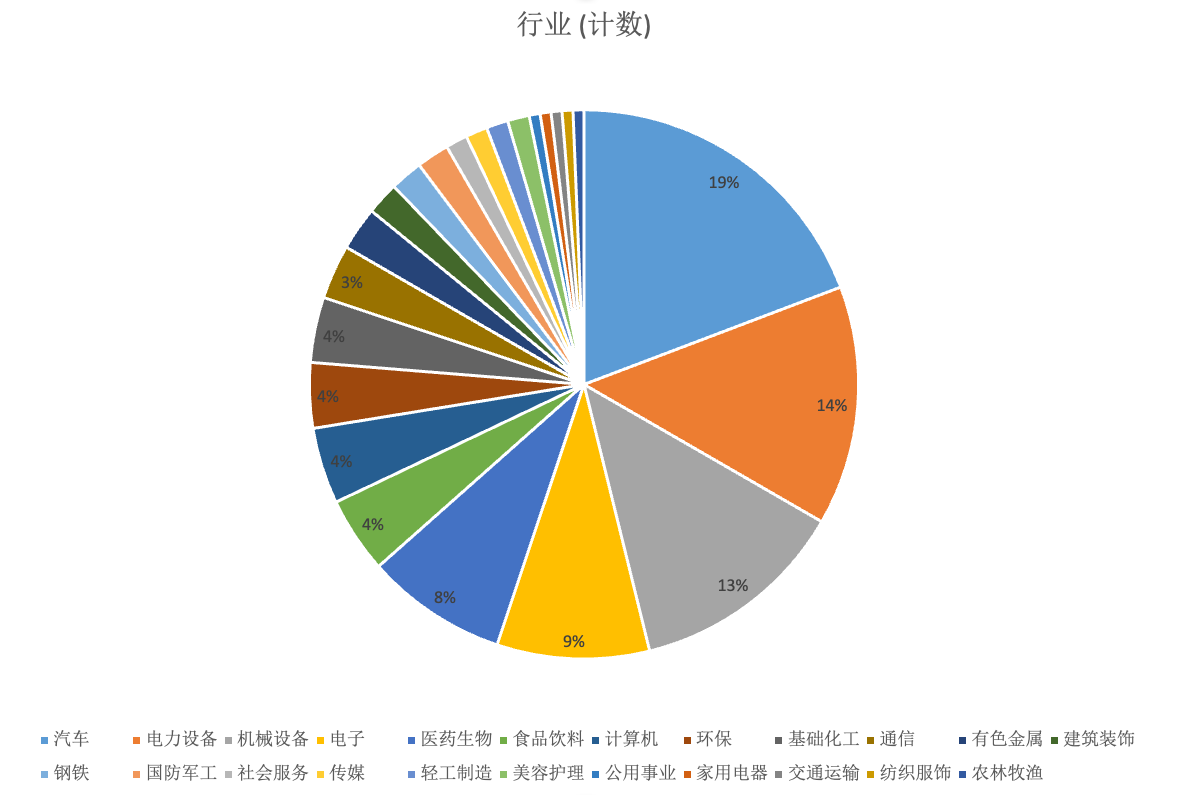
Core Insights - The evaluation criteria for companies in China are shifting from a focus on single profit metrics to a multidimensional assessment of capabilities, emphasizing long-term competitiveness through sustained growth in assets, revenue, net profit, R&D investment, and employee compensation [1][19] - A total of 156 companies in the A-share market have met the criteria of achieving positive growth across these five dimensions for three consecutive years, indicating a robust foundation for sustainable development [1][13] Industry Distribution - The 156 companies are primarily distributed across sectors such as machinery, electronics, power equipment, pharmaceuticals, and automotive, highlighting the transformation and upgrading of China's manufacturing industry through technological accumulation and talent investment [2][5] - The automotive sector leads with 30 companies, followed by power equipment (22), machinery (20), electronics (14), and pharmaceuticals (13), collectively accounting for over 63% of the total [3][5] Key Industries and Representative Companies - **Automotive (30 companies)**: This sector includes traditional vehicles, new energy vehicles, and smart solutions, showcasing China's leadership in the global automotive industry transformation [6] - BYD (002594.SZ) has demonstrated strong growth through vertical integration and significant R&D investment, establishing a robust competitive barrier [6] - Fuyao Glass (600660.SH) has capitalized on the trend of automotive intelligence and consumer upgrades, enhancing product value and driving revenue growth [7] - **Power Equipment (22 companies)**: This sector benefits from the dual carbon strategy, with growth driven by advancements in renewable energy technologies and smart grid construction [8] - Sungrow Power Supply (300274.SZ) has seen rapid growth due to its leadership in photovoltaic inverters and energy storage systems [8] - Guoxuan High-tech (002074.SZ) focuses on battery technology, leveraging continuous investment in R&D to build a competitive edge [8] - **Machinery (20 companies)**: This sector reflects the transformation of Chinese manufacturing, with companies benefiting from domestic industrial upgrades [9] - Times Electric (688187.SH) has sustained growth through its core competencies in rail transit equipment and expansion into new industries [9] - Tiandi Technology (600582.SH) leads in intelligent coal mining equipment, achieving steady growth through technological advancements [10] - **Electronics (14 companies)**: This sector has shown significant growth, driven by demand in semiconductors, high-end components, and consumer electronics [11] - Northern Huachuang (002371.SZ) has benefited from the expansion of domestic wafer fabrication, leading to rapid revenue growth [11] - Haiguang Information (688041.SH) has established a strong presence in the domestic CPU market, capitalizing on the demand for localized computing power [11] - **Pharmaceuticals (13 companies)**: This sector is driven by aging populations and increased health awareness, with companies focusing on R&D in innovative drugs and high-end medical devices [12] - Mindray Medical (300760.SZ) has built core competencies through continuous innovation in medical technology [12] - East China Pharmaceutical (000963.SZ) is expanding its growth through innovative drug development and aesthetic medicine [12] Five-Dimensional Growth Logic - Achieving positive growth across the five dimensions is a complex task, with only 156 out of 5,383 A-share companies meeting this standard, indicating a strong correlation between R&D investment and sustainable growth [13][18] - The combination of total assets, revenue, net profit, R&D investment, and employee compensation reflects a company's health and sustainability, with each dimension interlinked [14][15][16]




猛玛,小品类做出大生意
盐财经· 2025-09-04 11:58
Core Viewpoint - The article discusses the transformation of Chinese manufacturing from a "world factory" to a stage focused on technological innovation, product design, and brand output, particularly highlighting the rapid growth of the wireless lavalier microphone market driven by the rise of live streaming and short videos [2][6]. Market Overview - The global wireless lavalier microphone market reached a sales figure of $1.428 billion (approximately 10.361 billion RMB) in 2023, with projections to grow to $2.299 billion (approximately 16.681 billion RMB) by 2030, reflecting a compound annual growth rate (CAGR) of 6.94% [6]. - North America is the largest consumer market, accounting for 35.24%, while China and Europe hold shares of 26.67% and 21.23%, respectively [6]. Competitive Landscape - The market is characterized by intense competition, with brands like Moman leveraging technology and innovation, while established brands like DJI and RODE upgrade their products [8]. - A price war is evident, with low-cost products flooding the market, including white-label microphones available for as low as 7 RMB on platforms like 1688 [8]. Moman's Strategy and Innovation - Moman's rise in the market is highlighted as a textbook case of success, having established a leading market share in just two years after its founding in 2017 [10]. - The launch of Moman's first wireless microphone, Lark 150, introduced a charging case design that addressed key pain points of battery life, pairing, and storage, setting a new industry standard [12]. - Moman's focus on "noise reduction" has differentiated its products, allowing creators to capture clear audio even in noisy environments, which has been a significant factor in its market success [13]. Product Development and User Engagement - Moman emphasizes lightweight design and user-centric product development, with innovations like the LARK MIX and LAAR M2, which have gained popularity among professional users [14][17]. - The brand actively engages with users for feedback, leading to continuous improvements and adaptations in their product offerings [16][17]. Global Expansion - Moman's international revenue accounts for 65%-70%, showcasing its ambition beyond the domestic market, although initial overseas efforts faced challenges [22]. - The company invests 20% of its revenue in R&D, building a robust technical barrier and gaining recognition among global creators [23]. Future Outlook - The wireless microphone market is entering a new phase, with Moman's comprehensive product lineup putting pressure on both low-cost white-label products and traditional brands [27]. - The future competition will hinge on technological innovation and the ability to create a complete product ecosystem, as the demand for high-quality audio continues to grow across various applications [28].