中蒙俄经济走廊

Search documents
二连浩特口岸2025年出入境流量攀历史新高
Xin Hua She· 2026-01-06 03:23
Core Insights - The total number of inbound and outbound personnel at the Erenhot Border Inspection Station reached 2.819 million in 2025, marking a historical high and a growth of 8.9% compared to 2024 [1] - The number of transportation vehicles processed was 759,000, also a record high, with a year-on-year increase of 12.2% [1] - Erenhot Port serves as a crucial gateway for China's northern opening and is a key node in the Belt and Road Initiative and the China-Mongolia-Russia Economic Corridor [1] Group 1: Traffic and Trade Growth - The port has established a comprehensive land port structure integrating rail, road, and air transport, enhancing its role as a "golden channel" for cross-border trade and cultural exchange between China and Mongolia [1] - The cross-border tourism market in China has been recovering, leading to a significant increase in the flow of inbound and outbound personnel, with nearly 14,000 people processed in a single day [1] Group 2: Efficiency Improvements - The Erenhot Border Inspection Station has implemented "smart port" initiatives to enhance customs efficiency, including the promotion of an online appointment platform for border inspection services [2] - New intelligent verification stations and mobile verification units have been introduced at road inspection sites, significantly improving inspection efficiency [2] - A "one-stop" joint inspection facility has been established in collaboration with customs, increasing overall customs efficiency by 50% [2]
二连浩特口岸出入境流量创历史新高
Ren Min Wang· 2025-12-23 15:21
Core Viewpoint - The Inner Mongolia Erenhot Port, as China's largest land port to Mongolia, has seen a steady increase in inbound and outbound passenger and cargo traffic since 2025, highlighting its vital role in the China-Mongolia-Russia Economic Corridor [2][3][5]. Summary by Category - **Traffic Statistics** - As of December 22, the Erenhot border inspection station has processed 2.753 million inbound and outbound passengers and 741,000 transportation vehicles (trains/aircraft), marking a historical high [2][3][5][6]. - The number of passengers increased by 8.8% and the number of vehicles by 12.1% compared to the same period last year [2][3][5][6]. - **Economic Significance** - The growth in traffic at the Erenhot Port underscores its ongoing vitality as a key node in the China-Mongolia-Russia Economic Corridor [2][3][5][6].

二连浩特铁路口岸中欧班列货运量突破500万吨 创历史新高
Nei Meng Gu Ri Bao· 2025-12-17 04:47
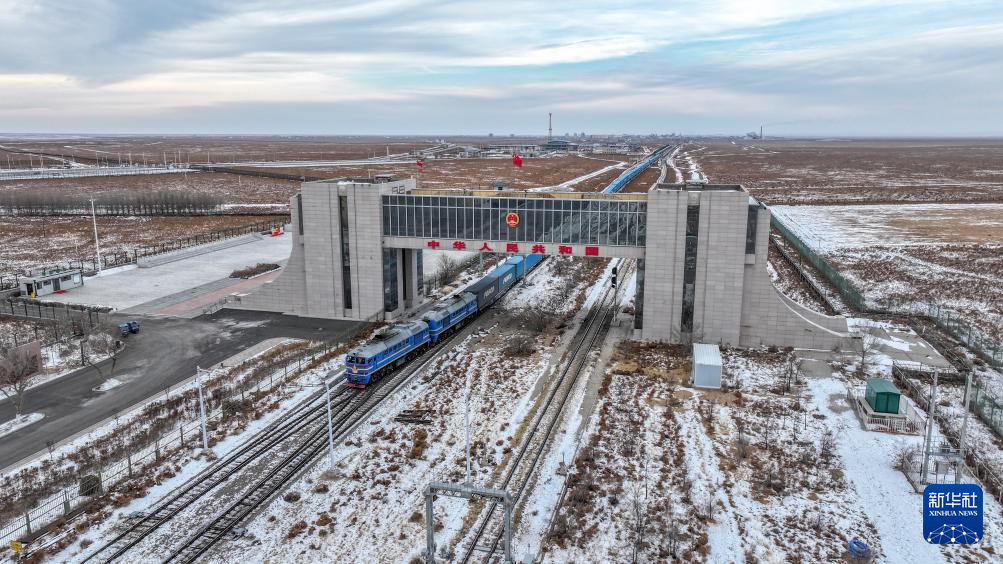
转自:草原云 记者从中国铁路呼和浩特局集团有限公司获悉,今年年初截至12月15日,二连浩特铁路口岸中欧班列货 物运量突破500万吨、同比增长22.7%,创历史新高。 内蒙古日报·草原云记者:高慧 转自:草原云 记者从中国铁路呼和浩特局集团有限公司获悉,今年年初截至12月15日,二连浩特铁路口岸中欧班列货 物运量突破500万吨、同比增长22.7%,创历史新高。 二连浩特铁路口岸。 二连浩特铁路口岸地处中蒙俄经济走廊核心,是中欧班列中通道唯一进出境铁路口岸,自2013年通行首 趟中欧班列以来,运量规模稳步增长,累计通行中欧班列超2.1万列。 二连浩特铁路口岸。 二连浩特铁路口岸地处中蒙俄经济走廊核心,是中欧班列中通道唯一进出境铁路口岸,自2013年通行首 趟中欧班列以来,运量规模稳步增长,累计通行中欧班列超2.1万列。 铁路部门持续织密国际物流网。今年以来二连浩特铁路口岸先后增加"芜湖—莫斯科""琉璃河—明斯 克""大同—谢利亚季诺"中欧班列运行线路,目前运行中欧班列线路达74条,通达德国、波兰等10余个 国家70多个枢纽站点,国内辐射中欧班列大部分首发城市。 为保障中欧班列"快进快出",铁路部门通过优化运输组织 ...
经济财政实力与债务研究
新世纪评级· 2025-12-12 05:27
Economic Performance - Heilongjiang Province's GDP reached 1.65 trillion yuan in 2024, ranking 25th among all provinces in China, with a year-on-year growth of 3.2%, which is 1.8 percentage points lower than the national average[2] - The province's primary industry added value was 320.3 billion yuan, growing by 2.9%, while the secondary industry saw a decline of 0.2% to 414.7 billion yuan, and the tertiary industry grew by 4.7% to 912.6 billion yuan[2][22] - In the first three quarters of 2025, Heilongjiang's GDP was 1.15 trillion yuan, with a year-on-year growth of 4.8%, still below the national growth rate of 5.2%[2] Fiscal Strength - Heilongjiang's general public budget revenue was 145.2 billion yuan in 2024, a 4.0% increase, ranking 25th among provinces, with a tax ratio of 60.0%, down 1.5 percentage points from the previous year[5][35] - The province's budget self-sufficiency rate was only 22.5% in 2024, indicating a high reliance on upper-level subsidies, which accounted for 45.6% of total fiscal revenue[5][33] - In the first half of 2025, the general public budget revenue was 77.3 billion yuan, a 3.4% increase, with a self-sufficiency rate improving to 27.7%[5][44] Debt Situation - By the end of 2024, Heilongjiang's government debt reached 962.8 billion yuan, an increase of 113.0 billion yuan from the previous year, ranking 24th nationally[8] - The ratio of local government debt to general public budget revenue was 6.63 times, placing it 7th highest in the country, indicating a heavy debt burden relative to fiscal capacity[8] - As of September 2025, the total government debt had risen to 1.063 trillion yuan, maintaining its 24th position among provinces[8] Regional Economic Disparities - Harbin and Daqing are the leading cities, with GDPs of 601.6 billion yuan and 281.6 billion yuan respectively, together accounting for 53.6% of the province's total GDP[3][49] - In 2024, 10 cities experienced economic growth while 3 cities (Qitaihe, Hegang, and Jixi) faced declines, with Qitaihe's GDP dropping by 7.2%[3][50] - The economic structure is increasingly dominated by the tertiary sector, with 8 cities having over 50% of their GDP from services in 2024[3][53]
辽宁“十五五”规划建议:深入参与东北亚经贸合作;高水平建设东北海陆大通道
Zheng Quan Shi Bao Wang· 2025-12-01 01:05
Group 1 - The core viewpoint of the article emphasizes the importance of enhancing the open cooperation hub function in Liaoning Province's economic and social development plan for the 15th Five-Year period [1] - The plan aims to optimize the open layout and deeply integrate into the high-quality construction of the "Belt and Road" initiative, strengthening cooperation in trade, investment, industry, and culture with countries and regions involved in the initiative [1] - It highlights the intention to deepen exchanges and cooperation with RCEP member countries and to establish Liaoning as a significant strategic support for national openness towards the east and north [1] Group 2 - The article outlines the commitment to actively participate in Northeast Asia's economic cooperation and the construction of the China-Mongolia-Russia Economic Corridor [1] - It mentions the goal of enhancing cooperation with Central Asia, Southeast Asia, and Europe and the United States, while also improving collaboration with Hong Kong, Macau, and Taiwan [1] - The plan includes the construction of international friendship cities and support for cities capable of hosting major foreign affairs activities to attract influential international organizations to Liaoning [1] Group 3 - The development of a high-level Northeast land-sea corridor is emphasized, with a focus on accelerating infrastructure connectivity and improving transportation channels [1] - The article discusses the promotion of multimodal transport and enhancing the efficiency of key port customs and transit operations [1] - It supports the establishment of the China-Europe Railway Express (Shenyang) assembly center and the international road transport (TIR) assembly center in Shenyang, as well as the development of Dalian as a Northeast Asia international shipping and logistics center [1] Group 4 - The plan aims to develop a corridor economy, attracting high-end equipment manufacturing, clean energy, and deep processing of agricultural products [1] - It seeks to enhance the capacity of the north-south grain and alcohol transport corridors and supports the construction of national grain logistics hubs in Dalian and Yingkou-Panjin [1] - The article also mentions the need to streamline energy channels and improve the layout of oil and gas pipelines and coastal LNG receiving stations [1]
回眸“十四五” | 多维发力强服务 呼和浩特海关助力内蒙古外贸高质量发展
Nei Meng Gu Ri Bao· 2025-11-28 14:37
Core Insights - The "14th Five-Year Plan" has led to significant growth in Inner Mongolia's foreign trade, with an average annual growth rate of 18.3%, surpassing the national average by 10.3 percentage points, and a total trade volume of 852.37 billion yuan, an 81% increase from the previous five-year period [1][3]. Group 1: Trade Facilitation and Policy Support - The implementation of national customs integration and the upgrade of the "single window" for international trade to 964 functions have streamlined cross-border trade processes [3]. - The number of foreign trade enterprises in Inner Mongolia increased from 8,300 in 2020 to 19,400 by October 2025, with companies engaged in import and export rising from 2,472 to 3,540 [3]. - Various support measures, such as "policy delivery by customs heads" and "one-stop service packages," have resolved 116 issues for 71 enterprises in the import-export process [3]. Group 2: Infrastructure and Platform Development - The establishment of the China-Mongolia Economic Cooperation Zone and the increase in import-export value of Hohhot and Ordos comprehensive bonded zones from 1.26 billion yuan in 2020 to 13.24 billion yuan by 2024 [3]. - The launch of cross-border e-commerce pilot zones in Ordos, Baotou, and Erenhot has enhanced trade capabilities [3]. - The successful operation of various designated regulatory sites, including the 24-hour trial operation of the Erenhot-Zamyn-Uud highway port, has improved logistics efficiency [3]. Group 3: International Trade and Export Growth - The Erenhot railway port has facilitated over 15,000 China-Europe freight trains during the "14th Five-Year Plan," expanding routes to 74 and covering over 140 domestic and international cities [4]. - High-value goods such as domestic automobiles and electronics account for over 40% of exports, with a notable increase in the export of specialty products [4]. - The export of dairy products reached 15,300 tons valued at 288 million yuan in the first ten months of this year, marking a year-on-year increase of 227.66% and 300% respectively [5]. Group 4: Customs Cooperation and Regulatory Innovations - The customs cooperation between China and Mongolia has deepened, with the implementation of AEO mutual recognition and regular meetings between border customs [5]. - Innovations in regulatory systems are planned for the "15th Five-Year Plan" to align with high-level institutional openness, further supporting the construction of a significant northern opening hub for China [5].
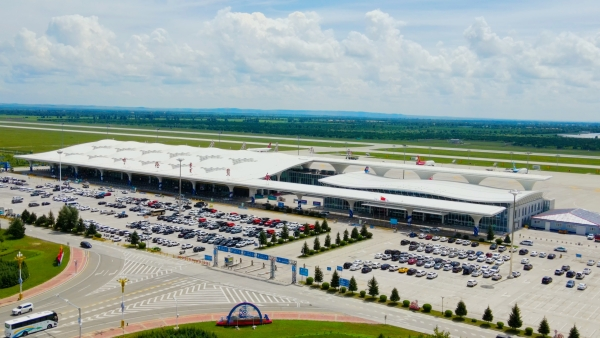
呼伦贝尔海拉尔机场更名为呼伦贝尔海拉尔国际机场
Zhong Guo Min Hang Wang· 2025-11-25 03:56
Core Points - The Civil Aviation Administration of China has approved the renaming of Hailar Airport to Hailar International Airport, enhancing its status as a significant gateway for northern openness [1][4] - Hailar Airport has been pivotal in accelerating regional openness and promoting high-quality economic and social development, supported by local government and the Inner Mongolia Airport Group [1][4] Group 1 - The airport has continuously improved its hardware facilities and expanded its route network, currently operating 10 international and regional routes, including destinations like Chita, Vladivostok, and Hong Kong [1] - As of November 20, 2023, the airport's international passenger throughput is expected to reach 30,000 by 2025, with a forecast of exceeding 35,000 by the end of the year, marking a historical high [1] - Future plans include adding international routes to cities in Northeast Asia, such as Seoul, and resuming flights to Irkutsk, Russia, to further enhance the international route network [1] Group 2 - The renaming of Hailar Airport aligns with the Belt and Road Initiative and aims to improve the international route network in Inner Mongolia [4] - The airport is set to enhance its aviation service capabilities and openness, contributing to the construction of the China-Mongolia-Russia Economic Corridor and serving as a crucial aviation support for national northern openness [4]
“十四五”时期 中欧班列中通道进出境中欧班列超1.5万列
Ren Min Ri Bao Hai Wai Ban· 2025-11-06 03:08
Core Insights - The "14th Five-Year Plan" period has seen over 15,000 China-Europe Railway Express trains pass through the Erenhot railway port in Inner Mongolia, with a year-on-year increase of 11.4% in the first three quarters of this year [1] Group 1: Trade and Economic Impact - The Erenhot port is a crucial node in the Belt and Road Initiative and the China-Mongolia-Russia Economic Corridor, serving as the only entry and exit port for the China-Europe Railway Express "Central Corridor" [1] - There are currently 74 operational routes for the China-Europe Railway Express from this port, covering over 10 countries in Asia and Europe, and more than 140 domestic and international cities or stations [1] Group 2: Export Goods and Value Addition - The types of goods exported via the China-Europe Railway Express are increasingly diversified, with high-value-added products such as domestic automobiles, machinery, and electronic appliances now accounting for over 40% of the total exports [1] Group 3: Customs and Operational Efficiency - To enhance the smooth and efficient customs clearance of the China-Europe Railway Express, the Hohhot Customs has promoted a "railway rapid customs clearance" model and encouraged companies to apply for manifest consolidation [1] - The customs authority has implemented a 24/7 appointment customs clearance service and established a regular communication mechanism for customs and railway handovers, ensuring the continuous and stable growth of the China-Europe Railway Express [1] - Currently, the average daily customs supervision of inbound and outbound China-Europe Railway Express trains reaches 12 [1]
中欧班列中通道进出境班列货运量突破2000万吨
Xin Hua Wang· 2025-10-15 06:52
Core Insights - The cargo volume of the China-Europe Railway Express, supervised by Hohhot Customs and passing through the Erenhot port, has exceeded 20.57 million tons since its launch in 2013, with nearly 21,000 trains operated [1] Group 1: Operational Highlights - Erenhot port is a crucial node in the Belt and Road Initiative and the China-Mongolia-Russia Economic Corridor, currently operating 74 routes that cover over 10 countries and more than 140 domestic and international cities or stations [1] - The return trip of the China-Europe Railway Express from Erenhot has achieved a 100% full container rate [1] Group 2: Cargo Composition - The types of goods exported via the China-Europe Railway Express are increasingly upgraded, with high-value-added products such as domestic automobiles, machinery, and electronics now accounting for over 40% of the total cargo [1] Group 3: Customs Efficiency - Hohhot Customs has implemented a 7×24 hour appointment customs clearance service, ensuring strict review and efficient release, which guarantees the safe passage of the China-Europe Railway Express [1] - The "railway rapid customs clearance" model has been promoted to enhance the efficiency and convenience of customs clearance for the China-Europe Railway Express, with an average of 12 trains monitored daily by Erenhot Customs [1]
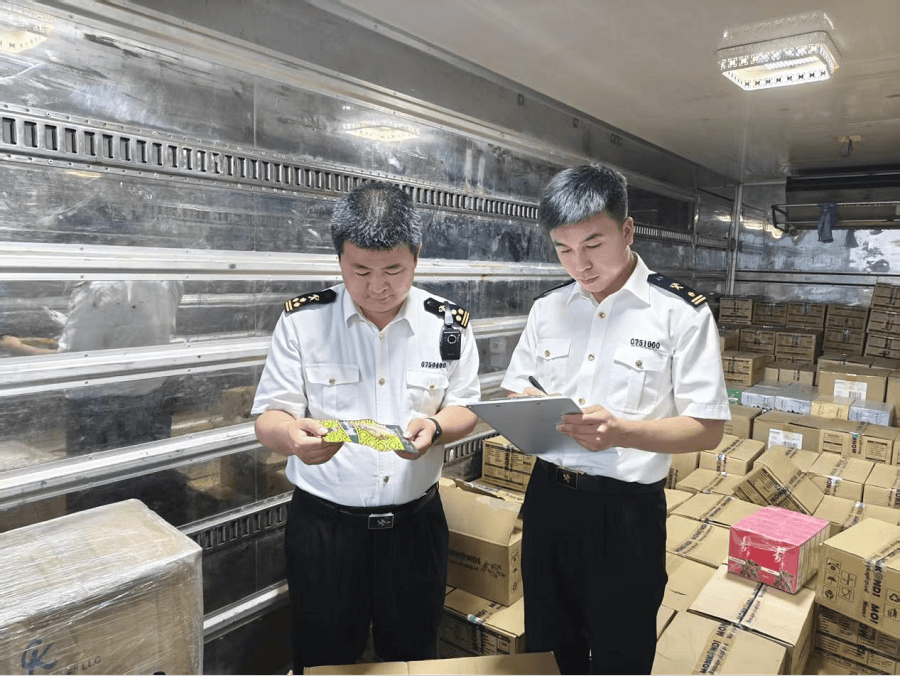
策克口岸中蒙边民互市贸易区恢复商品进口
Sou Hu Cai Jing· 2025-09-25 07:22
Core Insights - The resumption of imports at the Alashan Ceke Port marks a significant step in optimizing policies and expanding functions within the China-Mongolia border trade zone, with the first batch of imported goods valued at over 600,000 yuan [1][3] Group 1: Trade and Economic Impact - The imported goods include popular items from Mongolia such as chocolate, candy, cashmere products, and beverages, which have activated the consumer market [1] - The resumption of trade not only broadens income channels for border residents but also deepens the economic cooperation between China and Mongolia [3] Group 2: Customs and Regulatory Efficiency - The Ejin Banner Customs has enhanced service levels and collaboration with local units, facilitating smoother customs processes through proactive engagement with businesses [1] - The customs implemented convenient mechanisms like "appointment inspection" and "advance declaration" to expedite the clearance process, significantly reducing time and operational costs for merchants [1] Group 3: Safety and Compliance - Ejin Banner Customs maintains a strict adherence to safety protocols, ensuring all imported goods meet national safety standards to protect the rights of border merchants and consumers [3] - The customs authority is committed to continuously optimizing regulatory service models to support high-level operations and quality development of the trade zone [3]