
航空服务

Search documents
交通运输产业行业研究:1-2 月快递业务量同比增长 7% 中东地缘扰动持续影响航运
SINOLINK SECURITIES· 2026-03-22 12:10
Investment Rating - The report does not explicitly provide an investment rating for the transportation sector Core Views - The transportation index decreased by 2.2% during the week of March 14-20, 2026, underperforming the Shanghai Composite Index by 0.2% [1] - The logistics sector is expected to improve due to rising chemical prices, with a focus on companies like Milkyway, Hongchuan Wisdom, and others [3] - The air travel sector is seeing a recovery with a 3.34% increase in planned international passenger flights for the summer season of 2026 [4] - The shipping sector is facing geopolitical pressures, but the oil transportation index remains high due to geopolitical factors [5] - The road and rail sectors are showing resilience, with increased truck traffic and a focus on coal transportation [6] Summary by Sections Transportation Market Review - The transportation index fell by 2.2%, while the Shanghai Composite Index dropped by 2.4%, ranking 5th out of 29 sectors [1][13] Industry Fundamental Status Tracking Shipping and Ports - The export container shipping market is under pressure from geopolitical tensions, with the CCFI index at 1120.61 points, up 4.5% week-on-week but down 6.0% year-on-year [5][22] - The oil transportation index BDTI increased to 2849.2 points, reflecting a 1.3% week-on-week rise and a 194.6% year-on-year increase [39] Aviation and Airports - The average daily flights increased by 4.79% year-on-year, with domestic flights up by 17.85% [4] - The Brent crude oil price rose to $112.19 per barrel, impacting operational costs for airlines [74] Rail and Road - National railway passenger volume increased by 10.53% year-on-year, while freight volume saw a slight decline of 0.59% [86] - The number of trucks on highways increased by 14.75% week-on-week, indicating a robust road transport sector [90] Express and Logistics - The express delivery sector saw a revenue increase of 7.9% year-on-year, with major companies like Zhongtong Express expected to recover in market share and profitability [2]
霍启刚:今年拟提交8条两会建议,涉及提升居民收入等方面
Bei Jing Ri Bao Ke Hu Duan· 2026-02-26 06:19
Core Viewpoint - The representative from Hong Kong, Huo Qigang, plans to submit eight proposals during the Two Sessions, focusing on integrating Hong Kong International Airport into the national civil aviation system and ensuring food security through the utilization of both domestic and international markets, as well as enhancing residents' income and building an olive-shaped society [1][5]. Group 1: Civil Aviation Proposals - The 2024 guidance from the Civil Aviation Administration of China and the National Development and Reform Commission introduces a "3+7+N" international aviation hub system, which has shown effectiveness in integrating domestic international routes, but some airports and routes are experiencing resource constraints [3][7]. - Huo Qigang suggests incorporating Hong Kong International Airport into a new strategic framework of "1+3+7+N" to leverage Hong Kong's unique position as an international aviation "super connector" [3][7]. - Recommendations include differentiating the functional roles of Hong Kong and the three major hubs (Beijing, Shanghai, Guangzhou) and establishing a national-level collaborative development mechanism for aviation hubs to optimize the allocation of core resources such as air rights and slots [3][7]. Group 2: Food Security and Economic Development - Huo Qigang emphasizes the importance of utilizing both domestic and international markets to ensure national food security, reflecting his concern as an external director of COFCO Group [4][7]. - The proposals also focus on enhancing residents' income, promoting "expanding the middle class and reducing the lower class," and building an olive-shaped society as key areas of interest [4][7]. Group 3: Additional Proposals - Other proposals include accelerating the expansion of long-haul routes from Hong Kong International Airport using the capacity of mainland airlines, establishing Hong Kong as an international aircraft parts processing and trading center, and promoting high-quality sports development to advance the Greater Bay Area into a world-class bay area [4][8]. - The creation of a comprehensive consumption ecosystem for the ice and snow economy and the sustainable development system, as well as promoting the large-scale application of technology to assist the disabled, are also highlighted as part of the proposals aimed at achieving common prosperity and supporting the "14th Five-Year Plan" for social development [4][8].


Grupo Aeroportuario del Pacifico(PAC) - 2025 Q4 - Earnings Call Transcript
2026-02-25 16:02
Financial Data and Key Metrics Changes - Passenger traffic decreased by 0.9% in Q4 2025 compared to Q4 2024, with a notable decline in Jamaica due to Hurricane Melissa [3][4] - Combined aeronautical and non-aeronautical service revenues increased by 12.8%, with aeronautical revenues growing by 12.6% and non-aeronautical revenues by 13.3% quarter-over-quarter [5][6] - EBITDA increased by 7.5% to MXN 5.1 billion, with an EBITDA margin of 63.8%, reflecting higher concession fees and increased operational costs [6][7] - Net income declined due to higher financial expenses and lower interest income, alongside deferred tax adjustments [7] Business Line Data and Key Metrics Changes - Aeronautical revenues for the full year grew by 19.4%, driven by a new tariff and a 3.7% increase in passenger traffic in Mexico [7][8] - Non-aeronautical revenue increased by 26.5% for the year, with revenue per passenger rising to MXN 152 from MXN 123 in 2024 [8] - The commercial segment in Mexico showed strong performance, particularly in cargo, food and beverage, and retail [6] Market Data and Key Metrics Changes - In Jamaica, passenger traffic was significantly impacted by Hurricane Melissa, leading to a nearly 35% decline in traffic during the quarter [4][5] - Recovery in hotel capacity in Jamaica is expected to reach 100% by the 2026 winter season, supporting long-term growth potential [5] Company Strategy and Development Direction - The company is focused on four growth pillars: strengthening connectivity, expanding commercial revenues, disciplined execution of infrastructure programs, and maintaining a long-term leverage strategy [15] - A strategic transaction to integrate the Cross Border Xpress platform is underway, aimed at enhancing operational efficiency and expanding service capabilities [10] Management's Comments on Operating Environment and Future Outlook - Management expressed confidence in the long-term fundamentals of the Jamaican market despite recent challenges [5] - For 2026, passenger traffic is expected to grow between 2% and 5%, with total revenues projected to increase by 8% to 11% year-over-year [14][15] Other Important Information - The company closed 2025 with MXN 10.5 billion in cash and cash equivalents, having strengthened its capital structure through bond issuance [9] - CapEx for 2025 was MXN 12.4 billion, focusing on major terminal expansions and capacity enhancements [9] Q&A Session Summary Question: Can you provide details on Guadalajara and Puerto Vallarta cancellations and bookings? - Management reported significant cancellations initially but noted a recovery with only four cancellations in Puerto Vallarta and eleven in Guadalajara the following day [18] Question: Will there be an expansion in the U.S. beyond CBX? - Management indicated that they are exploring opportunities for expansion in the U.S. while maintaining disciplined capital allocation [20] Question: What is the expected timing for pending tariff adjustments? - Management outlined a series of tariff increases implemented throughout 2025, with additional increases expected in the summer [26][27] Question: Can you break down traffic increase expectations for Mexico and Jamaica? - Management expects a traffic increase of 2% to 5% in Mexico, while Jamaica may see a slight decline of 2% to 0% due to hotel capacity recovery [30][33] Question: What are the priorities for capital allocation now that the Turks and Caicos process is over? - Management emphasized focusing on the CBX project and exploring other opportunities that align with the company's strategic goals [36]

2026春运|长白春早・医暖空港・情满旅途 中医文化与民航服务的新春交响
Zhong Guo Min Hang Wang· 2026-02-14 10:47
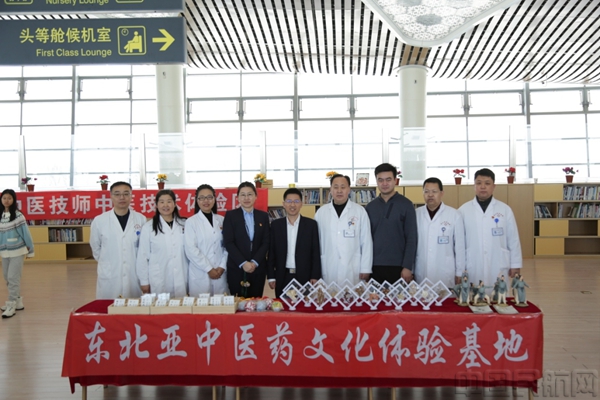
Core Viewpoint - The Long Bai Mountain Airport is enhancing passenger services during the Spring Festival by collaborating with Changchun University of Traditional Chinese Medicine to offer health services and cultural experiences, showcasing the "Aviation Traditional Chinese Medicine Pavilion" brand [1][5]. Group 1: Health Services - Over 20 traditional Chinese medicine experts and masters provided one-stop health consultation services, addressing common spring health issues such as liver qi stagnation and dampness accumulation [3]. - The event featured ear acupressure and shoulder-neck massage services, which attracted many travelers [3]. - Two types of health teas, "Clear Throat and Benefit Throat Drink" and "Dried Grass Bitter Tea," were offered to travelers [3]. Group 2: Cultural Experience - The successful event reflects the deepening of the "Aviation Traditional Chinese Medicine Pavilion" brand and embodies the airport's philosophy of "empowering services with culture and conveying warmth through services" [5]. - A DIY area for making herbal sachets allowed travelers to create sachets with health benefits and festive meanings under the guidance of traditional medicine practitioners [5]. - A display of eight traditional Chinese medicinal materials attracted families, promoting the transmission of traditional health knowledge [5][6]. Group 3: Future Plans - Long Bai Mountain Airport plans to continue its collaboration with Changchun University of Traditional Chinese Medicine to establish a seasonal health service model [7]. - The airport aims to further explore the cultural resources of ginseng and traditional Chinese medicine, enriching the "Three Fragrance Airport" concept [7]. - The initiative is expected to enhance the airport's cultural connotation and regional competitiveness while contributing to the development of the Jilin ginseng industry and the inheritance of traditional Chinese medicine culture [7].
春运人潮勾勒中国蓬勃图景
Xin Lang Cai Jing· 2026-02-12 10:18
Core Viewpoint - The Spring Festival travel rush (Chunyun) in 2026 is expected to reflect the vitality of China's economy and society, with a projected total of 9.5 billion trips across the country, showcasing the significance of this unique phenomenon in understanding contemporary China [1][4]. Group 1: Transportation Capacity and Infrastructure - The total number of railway and civil aviation passengers during the Spring Festival is anticipated to reach 540 million and 95 million, respectively, with a peak day capacity of over 14,000 passenger trains, representing a year-on-year increase of 5.3% [1]. - By the end of 2025, China's railway operating mileage is expected to reach 165,000 kilometers, with over 50,000 kilometers of high-speed rail, establishing the world's largest and most advanced high-speed railway network [2]. Group 2: Service Quality and Passenger Experience - The railway department plans to add and optimize over 560 passenger trains to enhance travel convenience, ensuring that public slow trains continue to operate for remote areas [3]. - Special attention is given to the ticketing needs of students, migrant workers, and the elderly, with services such as appointment ticketing and artificial seating arrangements to improve the overall travel experience [3]. Group 3: Economic Impact and Tourism - The Spring Festival travel rush serves as a significant indicator of China's economic vitality, with a notable increase in tourist bookings from countries like Argentina (up 900%) and European nations (over 200%) [4]. - The integration of tourism and transportation services during the Spring Festival is expected to create a vibrant holiday economy, enhancing China's international image and cultural exchange [4].
国新办发布会详解2026年春运安排:2月2日启动,95亿人次流动
Jing Ji Guan Cha Wang· 2026-01-29 14:16
Core Viewpoint - The 2026 Spring Festival travel rush (Chunyun) is expected to see a record high of 9.5 billion trips, with a significant focus on optimizing transportation and ensuring safety during the 40-day period from February 2 to March 13 [1][2]. Group 1: Transportation Capacity and Organization - The travel volume is projected to reach 9.5 billion trips, with self-driving trips accounting for about 80% [1] - Railway passenger volume is expected to reach 540 million, while civil aviation is projected to handle 95 million passengers, both surpassing historical peaks [1] - On peak travel days, over 14,000 passenger trains will be operated, with a 5.3% increase in seating capacity compared to last year [4][7] - The civil aviation sector will increase flights to key airports and popular tourist destinations, with an average of 19,400 flights per day, a 5% increase [4][9] Group 2: Safety and Risk Management - Safety is prioritized, with departments focusing on identifying and addressing major risks and vulnerabilities [2][3] - Transportation and public security departments will conduct safety inspections in key provinces and focus on risk prevention in passenger and freight transport [2][3] Group 3: Service Improvement and Customer Experience - Efforts will be made to enhance service quality at transportation hubs, optimizing ticket purchasing, security checks, and transfers [2][5] - The railway sector will implement a new ticketing strategy, including a limited-time free refund policy for mistakenly purchased tickets [7][8] - Civil aviation will improve services for elderly travelers and families, including special meals and play areas for children [9][10] Group 4: Support for New Energy Vehicles - By the end of 2025, there will be 71,500 electric vehicle charging stations at highway service areas, with a significant increase in capacity to meet the growing demand from electric vehicle owners [11][12] - During the Spring Festival, measures will be taken to enhance charging services, including mobile emergency charging devices and real-time updates on charging station availability [12]
涉及养老机构服务、儿童用品安全性等
Xin Lang Cai Jing· 2026-01-18 22:34
Emerging Fields - The release of 4 national standards for industrial internet platforms supports the scalable development and application of industrial internet platforms [1] - 4 national standards for digital supply chains are aimed at enhancing the resilience of industrial chains through digitalization [1] - 5 national standards for smart factory safety integration promote high-quality and sustainable development in manufacturing through data-driven management [1] - National standards for the classification and comprehensive utilization of recyclable rare earth secondary resources support the recycling of rare earth resources [1] Transportation and Green Low-Carbon - 23 national standards related to railway freight transport, intelligent transport, and aviation services facilitate efficient development in transportation [1] - 7 national standards for explosion-proof industrial vehicles and off-road forklifts promote the standardized development of the industrial vehicle sector [1] - 3 logistics national standards for multimodal transport service quality assessment and the integration of logistics and manufacturing industries guide the integration of transport modes [1] - 17 national standards for carbon capture, green factory evaluation, and greenhouse gas emission accounting assist in achieving carbon neutrality goals [1] Safety Production - 13 mandatory national standards for production safety accident investigation and economic loss statistics enhance safety emergency capabilities in hazardous chemical enterprises [2] - 4 mandatory national standards in the fire safety sector improve the fire performance and quality of building insulation materials and rescue equipment [2] - 28 national standards related to feed, pesticides, plant quarantine, and animal husbandry provide a technical foundation for agricultural production safety [2] Daily Life - 6 national standards for children's products, including portable baby sleep baskets and VOC emission measurement, aim to enhance product quality and safety [2] - 3 national standards for elderly care institutions standardize care practices and improve the quality of life services [2] - 5 national standards for traditional Chinese medicine better protect public health through classification and assessment [2] - 5 national standards for musical instruments, including pianos and electric instruments, cater to the cultural and spiritual needs of the public [2] - 2 mandatory national standards for sports venues, including climbing and fencing, ensure safety in fitness activities [2] Additional Standards - The market regulatory authority has also released national standards in areas such as government services, wind power generation systems, water conservation, and agricultural products [2]
海南航空合作伙伴交流展望会成功举办 携手赋能自贸港新篇章
Zhong Guo Min Hang Wang· 2026-01-16 04:57
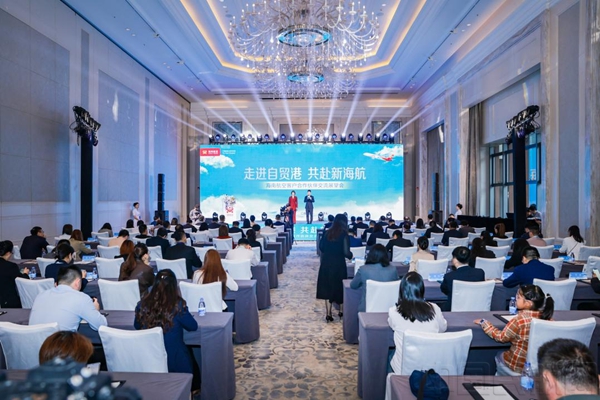
Core Insights - The event titled "Entering the Free Trade Port, Embracing New Hainan Airlines" was held on January 15, 2026, in Haikou, gathering nearly a hundred representatives from over 30 enterprises, including Huawei and Alibaba, to discuss cooperation opportunities and development prospects [1][4]. Group 1: Event Overview - The event featured discussions on free trade port policies, promotion of Hainan Airlines' core products and international route network, and cultural experiences, showcasing the airline's achievements in safety, service innovation, green development, and international expansion [4]. - Hainan Airlines aims to act as a "bridge" for the construction of the free trade port, emphasizing the importance of collaboration with partners to seize historical opportunities for development [4][5]. Group 2: Strategic Partnerships - During the event, Hainan Airlines signed major customer cooperation agreements with Wuhan Tianhe Airport and Beijing University of Science and Technology, reflecting its commitment to customer-centric service and market expansion [4][5]. - The agreements signify Hainan Airlines' efforts to enhance aviation network collaboration and deepen industry-academia integration, expanding the breadth and depth of hub construction and school-enterprise cooperation [4]. Group 3: Future Directions - Hainan Airlines plans to maintain an open posture, leveraging quality products and reliable services to collaborate with more partners in seizing opportunities presented by the free trade port [5][6]. - The airline is focused on enhancing its service matrix to support the construction of the free trade port, aiming to provide an exceptional travel experience for global passengers [6].

空客:2044年中国将成全球航空服务最大市场 达638亿美元
2 1 Shi Ji Jing Ji Bao Dao· 2026-01-15 14:39
Core Insights - The core viewpoint of the article is that the aviation aftermarket service market is shifting towards China, which is projected to become the largest market by value, growing from $24.8 billion in 2025 to $63.8 billion by 2044 [2][9]. Group 1: Market Growth and Projections - China is expected to receive approximately 9,570 new aircraft over the next 20 years, doubling its fleet size to 10,620 aircraft by 2044, with over 90% being next-generation efficient aircraft [2][4]. - The domestic market is a major driver, with passenger transport volume expected to increase by 17% compared to pre-pandemic levels in 2019, and international routes recovering to over 90% of 2019 levels [4]. Group 2: Key Growth Areas in Aviation Services - The largest segment of the aftermarket service market is non-wing maintenance and repair, projected to grow from $17 billion in 2025 to $44.8 billion by 2044, driven by an expanding global fleet and increasing engine maintenance needs [4]. - Daily maintenance services are expected to double from $3 billion in 2025 to $6.8 billion by 2044, while modification and upgrade services will grow from $1.8 billion to $3.1 billion in the same period [4]. Group 3: Digital Transformation and Workforce Needs - The fastest-growing segment is the digital and connected market, expected to rise from $1.4 billion in 2025 to $5.1 billion by 2044, including predictive maintenance and seamless passenger experiences [5]. - The aviation industry in China will require over 485,000 new technical personnel by 2044, including 131,000 pilots, 143,000 maintenance technicians, and 211,000 cabin crew [5]. Group 4: Operational Efficiency and Cost Savings - Chinese airlines are accelerating digital transformation, with over 9,000 aircraft expected to have onboard connectivity, leading to operational cost savings of over $2.2 billion and additional fuel cost savings of $5.7 billion [7]. - The latest GSF report indicates a slight adjustment in fleet size projections, with a decrease of 540 aircraft from the previous year’s estimate, attributed to a change in data collection methods [7]. Group 5: Global Market Share - Currently, China's aviation service market accounts for only 15.59% of the global market, but it is projected to rise to 20.5% by 2044, surpassing Europe, the CIS, and North America [9].

事关稀土资源再利用、儿童用品安全性等 一批重要国家标准发布
Yang Shi Xin Wen· 2026-01-15 12:47
Emerging Fields - The release of 4 national standards for industrial internet platforms supports the large-scale development and application of industrial internet platforms [1] - 4 national standards for digital supply chains are aimed at enhancing the resilience of industrial chains through digitalization [1] - 5 national standards for smart factory safety integration promote high-quality and sustainable development in manufacturing through data-driven management [1] - National standards for the classification and comprehensive utilization of recyclable rare earth secondary resources support the recycling of rare earth resources [1] Transportation and Green Low-Carbon - 23 national standards related to railway freight transport, intelligent transport, and aviation services facilitate efficient development in transportation [1] - 7 national standards for explosion-proof industrial vehicles and off-road forklifts promote the standardized development of the industrial vehicle sector [1] - 3 logistics national standards for multimodal transport service quality assessment and the integration of logistics and manufacturing industries promote standard alignment across transport modes [1] - 17 national standards for carbon dioxide capture, green factory evaluation, and greenhouse gas emission accounting assist in achieving carbon neutrality goals [1] Safety Production - 13 mandatory national standards for production safety accident investigation and economic loss statistics enhance safety emergency capabilities in hazardous chemical enterprises [2] - 4 mandatory national standards in the fire safety sector improve the fire performance and quality of building insulation materials and rescue equipment [2] - 28 national standards related to feed, pesticides, plant quarantine, and animal husbandry provide a technical foundation for agricultural production safety [2] Daily Life - 6 national standards for children's products, including portable baby sleep baskets and VOC emission measurement, aim to improve product quality and safety [2] - 3 national standards for elderly care institutions standardize care practices and enhance the quality of life services [2] - 5 national standards for traditional Chinese medicine better protect public health [2] - 5 national standards for musical instruments, including pianos and electric instruments, cater to the cultural and spiritual needs of the public [2] - 2 mandatory national standards for sports venues ensure safety in fitness activities [2] Additional Standards - The market regulatory authority also released national standards related to government services, wind power generation systems, water conservation, and agricultural products [2]