装备

Search documents
《制造业数字化转型发展报告(2025年)》显示:我国制造业数字化转型进入规模化普及阶段
Zhong Guo Fa Zhan Wang· 2026-02-26 05:31
Core Insights - The report indicates that China's manufacturing digital transformation is entering a phase of large-scale popularization, with 89.6% of large-scale industrial enterprises expected to undergo digital transformation by December 2025, and a digital equipment penetration rate of 57.7% [1][2] Group 1: Current Status of Digital Transformation - As of December 2025, the digital transformation rate among key industries shows significant differentiation, with the automotive, shipbuilding, and electronic information manufacturing sectors leading at 94.4%, 94.2%, and 93.9% respectively [1] - The electronic information and equipment manufacturing sectors are categorized in the first tier, while consumer goods and raw materials industries are in the second tier [1] Group 2: Policy and Strategic Framework - The policy framework for promoting digital transformation in manufacturing has been continuously improved, with the State Council approving the "Manufacturing Digital Transformation Action Plan" in May 2024, and the Ministry of Industry and Information Technology issuing implementation guidelines by the end of the year [2] - The goal is for large-scale industrial enterprises in major industrial provinces and key parks to achieve full digital transformation coverage by 2027, and to complete a round of digital transformation by 2030 [2] Group 3: Future Directions and Recommendations - The report emphasizes the need for a systematic approach to advance digital transformation, focusing on improving development quality and efficiency, and integrating smart manufacturing as a primary direction [3] - It suggests strengthening new infrastructure like industrial internet, promoting typical scenario cultivation, demonstration transformation, and large-scale promotion, while also enhancing technology research, standard formulation, security protection, and policy support [3]
工信部出台产业技术基础公共服务平台管理办法
仪器信息网· 2025-12-15 09:07
Core Viewpoint - The article discusses the release of the "Management Measures for Industrial Technology Basic Public Service Platforms" by the Ministry of Industry and Information Technology, emphasizing the importance of these platforms in supporting industrial development and technological innovation [3][8]. Summary by Sections General Principles - The purpose of the measures is to implement the manufacturing power strategy, enhance the industrial support system, and cultivate authoritative and foundational public service platforms for industrial technology [10]. - The service platforms are defined as specialized institutions that provide essential support services across the entire chain of technological innovation activities, from research and development to industrialization [10]. Application - Applicants for service platforms must clearly define their service industry and scope, focusing on key sectors such as equipment, petrochemicals, steel, non-ferrous metals, construction materials, light industry, textiles, food, pharmaceuticals, new information technology, biotechnology, new energy, new materials, and more [13][14]. Basic Requirements - Applicants must have independent legal status and engage primarily in industrial technology basic services, with at least 60% of their business related to this area [14]. - They should have a strong reputation in the industry, a well-established operational mechanism, and a minimum of one year of relevant service experience [14]. - The platforms must also possess high-level professional talent, necessary infrastructure, and technical capabilities, including having equipment valued at no less than 10 million yuan or annual service revenue exceeding 10 million yuan [14]. Review and Publication - The Ministry of Industry and Information Technology will conduct annual reviews of the service platforms, with evaluations based on submitted annual reports and performance assessments [24]. - A third-party organization or expert group will be responsible for reviewing applications and conducting on-site evaluations if necessary [18]. Operation - Service platforms are required to strengthen their institutional norms, adhere to principles of fairness and integrity, and accept government guidance and social supervision [21]. - They must also enhance their operational capabilities, improve service quality, and adapt to industry trends and technological developments [22]. Dynamic Management - The Ministry will implement dynamic management of the service platforms, conducting annual evaluations and comprehensive reviews every three years [24]. - Platforms that fail to meet performance standards or engage in fraudulent activities may be removed from the official list and barred from reapplication for three years [25].


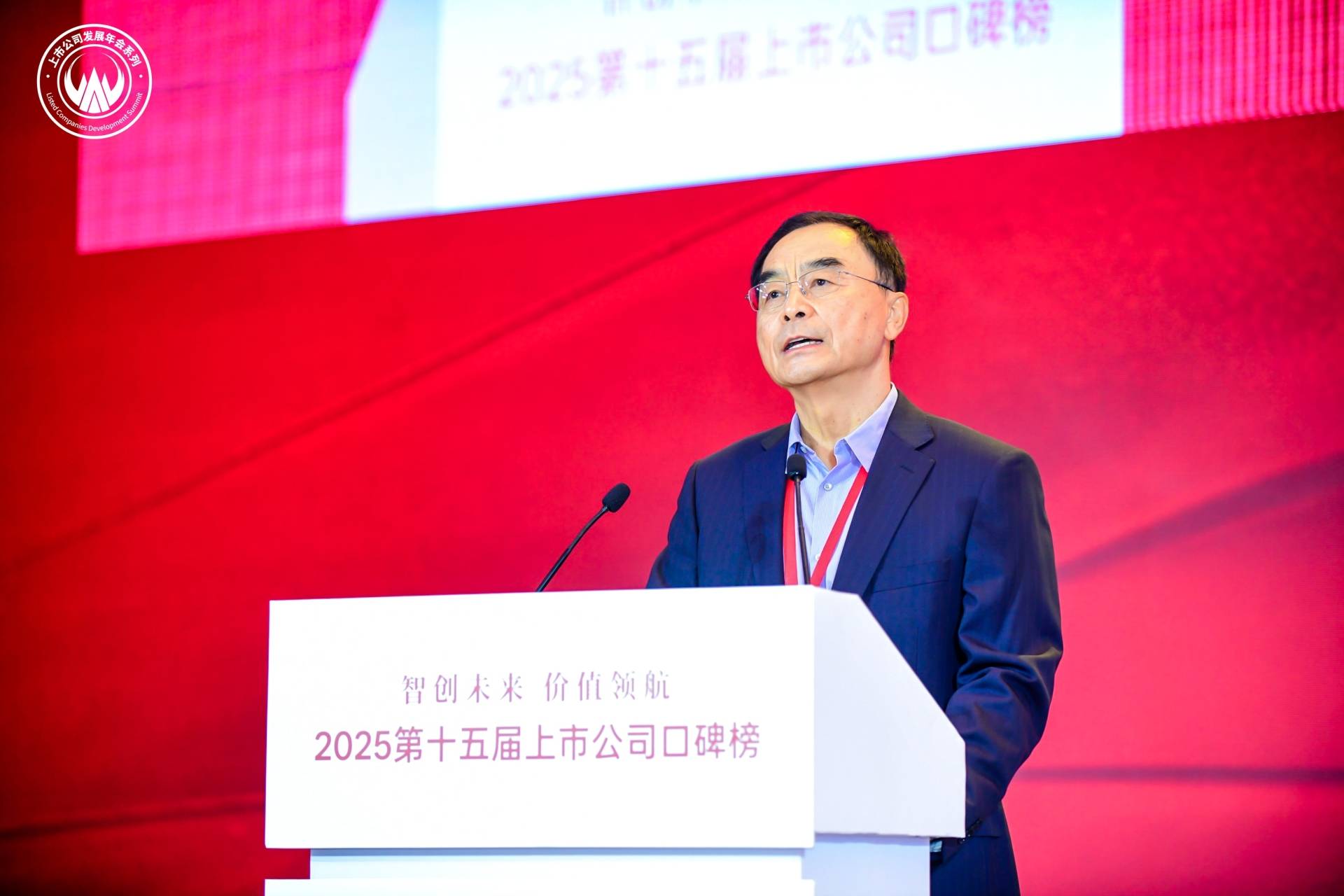
总量超33万亿元!清华大学教授赵平:中国上市公司品牌价值快速提升,彰显经济高质量发展成效
Sou Hu Cai Jing· 2025-12-13 02:08
Core Insights - The event held from December 11 to 13 in Haikou focused on the policy paths and global opportunities under the new customs closure of Hainan Free Trade Port, gathering elites from government, enterprises, and research sectors [1] - Professor Zhao Ping from Tsinghua University presented the "2025 China Listed Companies Brand Value Blue Book," emphasizing the importance of brand value in empowering high-quality development of listed companies [1][4] Summary by Category Brand Value Overview - The 2025 Blue Book evaluated 3,000 listed companies, with a total brand value of 332,416 billion yuan, reflecting an 8.8% increase from 2024 [5][7] - The top three industries by brand value are retail (40,874 billion yuan), finance (39,864 billion yuan), and internet (37,232 billion yuan) [5][8] - The leading regions in brand value are Beijing (93,418 billion yuan), Guangdong (69,089 billion yuan), and Zhejiang (37,713 billion yuan) [10] Company Performance - Among the 3,000 listed companies, 1,246 are from Shenzhen Stock Exchange, 1,214 from Shanghai Stock Exchange, 461 from Hong Kong Stock Exchange, 20 from Beijing Stock Exchange, and 59 from overseas [5] - The brand value threshold for inclusion in the Blue Book is 6.1 million yuan, which decreased by 0.2 million yuan compared to 2024 [5] Concentration and Changes - The top 100 companies account for 61.6% of the total brand value, an increase of 3.3 percentage points from 2024 [7] - There were 237 new entrants to the total ranking, representing 7.9% of the companies, while 1,371 companies saw an increase in brand value, and 1,626 experienced a decline [7] Industry Insights - Out of 37 industries, 25 experienced growth in brand value, with the fastest-growing sectors being catering (49%), retail (36%), and education (31%) [8] - The most represented industries in terms of the number of companies are equipment, electronics, and pharmaceuticals, with 417, 260, and 258 companies respectively [8] Regional Performance - Brand value increased in 21 regions compared to 2024, with Shanghai, Guangdong, and Zhejiang showing the highest growth rates of 25%, 20%, and 14% respectively [13] - The regions with the most companies listed are Guangdong (494), Zhejiang (370), and Beijing (329) [13] Long-term Trends - From 2020 to 2025, the total brand value of the top 3,000 companies grew from 212,998 billion yuan to 332,416 billion yuan, reflecting a nominal compound annual growth rate of 9.3% [14] - Industrial sector leads in brand value at 53,687 billion yuan, with daily consumer goods, utilities, information services, and healthcare also showing significant growth rates exceeding 12.5% [17]
经济财政实力与债务研究
新世纪评级· 2025-12-12 05:27
Economic Performance - Heilongjiang Province's GDP reached 1.65 trillion yuan in 2024, ranking 25th among all provinces in China, with a year-on-year growth of 3.2%, which is 1.8 percentage points lower than the national average[2] - The province's primary industry added value was 320.3 billion yuan, growing by 2.9%, while the secondary industry saw a decline of 0.2% to 414.7 billion yuan, and the tertiary industry grew by 4.7% to 912.6 billion yuan[2][22] - In the first three quarters of 2025, Heilongjiang's GDP was 1.15 trillion yuan, with a year-on-year growth of 4.8%, still below the national growth rate of 5.2%[2] Fiscal Strength - Heilongjiang's general public budget revenue was 145.2 billion yuan in 2024, a 4.0% increase, ranking 25th among provinces, with a tax ratio of 60.0%, down 1.5 percentage points from the previous year[5][35] - The province's budget self-sufficiency rate was only 22.5% in 2024, indicating a high reliance on upper-level subsidies, which accounted for 45.6% of total fiscal revenue[5][33] - In the first half of 2025, the general public budget revenue was 77.3 billion yuan, a 3.4% increase, with a self-sufficiency rate improving to 27.7%[5][44] Debt Situation - By the end of 2024, Heilongjiang's government debt reached 962.8 billion yuan, an increase of 113.0 billion yuan from the previous year, ranking 24th nationally[8] - The ratio of local government debt to general public budget revenue was 6.63 times, placing it 7th highest in the country, indicating a heavy debt burden relative to fiscal capacity[8] - As of September 2025, the total government debt had risen to 1.063 trillion yuan, maintaining its 24th position among provinces[8] Regional Economic Disparities - Harbin and Daqing are the leading cities, with GDPs of 601.6 billion yuan and 281.6 billion yuan respectively, together accounting for 53.6% of the province's total GDP[3][49] - In 2024, 10 cities experienced economic growth while 3 cities (Qitaihe, Hegang, and Jixi) faced declines, with Qitaihe's GDP dropping by 7.2%[3][50] - The economic structure is increasingly dominated by the tertiary sector, with 8 cities having over 50% of their GDP from services in 2024[3][53]
吉林省“十五五”规划建议:把发展经济的着力点放在实体经济,再造老工业基地竞争新优势
Zheng Quan Shi Bao Wang· 2025-12-11 04:36
Core Insights - The "14th Five-Year" period has seen significant achievements in revitalizing Jilin's economy, with stable GDP growth and improved economic structure [1] - The focus is on building a modern industrial system, emphasizing the transformation of traditional industries and the growth of strategic emerging industries [2][3] - There is a strong push for innovation and the establishment of a robust technological platform, with a notable increase in high-tech enterprises [1][2] Economic Development - Jilin's GDP has shown stable growth, with a continuous optimization of the economic structure and enhanced resilience and vitality [1] - The province has implemented effective strategies to expand domestic demand, particularly in tourism and consumption sectors [1] Industrial Transformation - The strategy emphasizes the optimization and upgrading of traditional industries, including the transition of the automotive sector to new energy vehicles and the petrochemical industry towards higher quality and reduced oil dependency [2] - There is a focus on fostering strategic emerging industries such as new energy, new materials, and biomanufacturing, with specific targets for growth in these sectors [3][4] Future Industry Layout - Jilin aims to seize opportunities in future industries like artificial intelligence, hydrogen energy, and advanced manufacturing, with plans to develop a comprehensive ecosystem around these sectors [4] - The province is set to enhance its capabilities in high-performance computing and develop new battery technologies [4] Modern Service Industry - The development of the modern service industry is prioritized, with initiatives to enhance service quality and integrate with advanced manufacturing and agriculture [5] - There is a specific focus on promoting the ice and snow economy, including the development of related tourism and equipment industries [5] Infrastructure Development - Jilin plans to advance its infrastructure system, balancing new construction with the renovation of existing facilities, and enhancing digital infrastructure [6] - Key projects include the expansion of transportation networks and the optimization of water and energy resource management [6]
工信部印发重要管理办法
中国能源报· 2025-12-10 08:45
Core Viewpoint - The Ministry of Industry and Information Technology (MIIT) has issued the "Management Measures for Industrial Technology Basic Public Service Platforms" to enhance the foundation of industrial technology and promote new industrialization [1][3]. Group 1: General Principles - The purpose of the measures is to implement the strategy of a manufacturing powerhouse, improve the industrial support system, and cultivate authoritative and forward-looking public service platforms for industrial technology [4]. - The service platforms are defined as specialized institutions that provide technical support services across the entire chain of technology innovation activities, from research and development to industrialization [4]. Group 2: Application Process - Service platform applicants must clearly define their service industry and scope, focusing on key sectors such as equipment, petrochemicals, steel, non-ferrous metals, construction materials, light industry, textiles, food, pharmaceuticals, new information technology, biotechnology, new energy, new materials, and more [5]. - Applicants must meet specific criteria, including having independent legal status, a high level of public credibility, and a minimum of one year of experience in providing industrial technology basic services [6]. Group 3: Review and Publication - The MIIT will delegate third-party professional organizations or form expert groups to evaluate the applications and service capabilities of the platforms [7]. - A list of recommended service platforms will be determined based on the review results and will be publicly announced for five working days [7]. Group 4: Operation - Service platforms are required to strengthen their institutional norms, adhere to principles of fairness and integrity, and continuously improve their operational capabilities and service quality [8]. - Each platform must submit an annual operational report detailing their capacity building and service operations to the MIIT [8]. Group 5: Dynamic Management - The MIIT will implement dynamic management of the service platforms, conducting annual evaluations and comprehensive reviews every three years [9]. - Platforms that fail to meet performance standards may be required to undergo a one-year rectification period and will be removed from the list if they do not improve [9].

工信部印发产业技术基础公共服务平台管理办法
Zhong Guo Xin Wen Wang· 2025-12-10 07:26
Core Viewpoint - The Ministry of Industry and Information Technology (MIIT) has issued the "Management Measures for Public Service Platforms for Industrial Technology Foundation" to accelerate new industrialization and strengthen the foundation of industrial technology [1]. Group 1: General Principles - The measures aim to implement the strategy of a manufacturing powerhouse, improve the industrial foundation support system, and cultivate authoritative and forward-looking public service platforms for industrial technology [2]. - The public service platforms are defined as specialized institutions that provide essential support services for technology innovation activities across the entire chain from research and development to industrialization, focusing on key areas of industry [2]. Group 2: Application Process - The application for service platforms is voluntary and based on a recommendation system, with a focus on key industries such as equipment, petrochemicals, steel, and new technologies like artificial intelligence and quantum information [4]. - Applicants must meet specific criteria, including having independent legal status, a significant portion of their business (over 60%) related to industrial technology services, and a strong reputation within the industry [5][6]. Group 3: Review and Publication - The MIIT will guide and manage the service platforms, with provincial departments responsible for the creation and recommendation of platforms in their regions [3]. - A third-party professional organization or expert group will evaluate the applications and service capabilities, leading to the publication of a recommended list of service platforms [7][8]. Group 4: Operation and Management - Service platforms are required to enhance their operational capabilities, improve service quality, and adapt to industry trends while ensuring compliance with government guidelines [9]. - Platforms must submit an annual operational report detailing their service capabilities and objectives, and any changes in management or service scope must be reported to the relevant authorities [9][10]. Group 5: Dynamic Management - The MIIT will conduct regular performance evaluations of the service platforms, with annual evaluations and comprehensive reviews every three years [10][11]. - Platforms that fail to meet evaluation standards or engage in misconduct may be removed from the official list and barred from reapplication for three years [12].
工信部印发《产业技术基础公共服务平台管理办法》
Zheng Quan Shi Bao Wang· 2025-12-10 06:52
Core Viewpoint - The Ministry of Industry and Information Technology (MIIT) has revised and issued the "Management Measures for Public Service Platforms of Industrial Technology Foundation" to accelerate the advancement of new industrialization and strengthen the foundation of industrial technology [1] Group 1: Key Industries and Fields - The service focus industries and fields include equipment, petrochemical, steel, non-ferrous metals, building materials, light industry, textiles, food, pharmaceuticals, new generation information technology, biotechnology, new energy, new materials, new energy vehicles, instruments and meters, safety and emergency, civil explosives, civil aviation, shipbuilding and marine engineering, green environmental protection, artificial intelligence, metaverse, brain-computer interface, quantum information, and new energy storage [1] Group 2: Service Scope - The main service scope includes metrology and testing, standard verification and testing, quality reliability testing and inspection, certification and accreditation, industrial information, intellectual property, and technology achievement transformation [1]
工信部:截至2024年底累计培育国家绿色工厂6430家
Zhong Guo Xin Wen Wang· 2025-10-31 03:04
Core Viewpoint - The Ministry of Industry and Information Technology (MIIT) of China aims to promote green manufacturing and design, with a target of cultivating 6,430 national green factories and 491 green industrial parks by the end of 2024, contributing over 20% to the national output value [1][2]. Group 1: Achievements in Green Manufacturing - As of the end of 2024, MIIT has established 451 green design enterprises and developed over 40,000 green products [1][2]. - The national green factories and parks are expected to significantly enhance the production efficiency and reduce operational costs for enterprises, leading to improved product value and brand image [1][2]. Group 2: Impact on Green Trade - The promotion of green design and manufacturing is seen as a foundation for expanding green trade, enabling the development of new industries such as renewable energy and environmental protection [2][3]. - There is a growing consumer demand for green products, allowing Chinese enterprises to better meet international market needs and adapt to new trade regulations [2][3]. Group 3: Future Plans and Strategies - MIIT plans to enhance green design and manufacturing efforts, aiming for a 40% output value share from green factories by 2030 [3]. - The strategy includes promoting green supply chains and developing zero-carbon factories and parks to support the overall green transition [3].
经济大省如何挑大梁?河南今年前三季度“成绩单”呈“五稳”态势
Zhong Guo Xin Wen Wang· 2025-10-29 07:41
Core Viewpoint - The economic performance of Henan province in the first three quarters of this year shows a "five stability" trend, with a GDP growth of 5.6%, ranking second in the central region, indicating the province's solid commitment to its economic responsibilities [1][3]. Economic Performance - Henan's GDP growth reached 5.6%, placing it second in the central region [1] - The province's industrial added value, fixed asset investment, and retail sales of consumer goods all ranked second in the central region [1] - The agricultural output is projected to exceed 1.3 trillion jin, with a first industry added value growth of 3.1% [3] Industrial Growth - 33 out of 41 major industrial categories in Henan experienced positive growth, with an overall growth rate of 80.5% [3] - Key industries such as automotive and parts grew by 20%, equipment by 14.3%, food by 10%, electronic information by 9.2%, and new materials by 8.9% [3] Investment and Consumption - Investment in projects over 100 million yuan increased by 8.4%, contributing 5.4 percentage points to total investment growth [4] - Private investment grew by 7.5%, surpassing the national average of 10.6% [4] - Retail sales of consumer goods increased by 9.9%, with 21 out of 23 categories showing growth [4] Foreign Trade - The total import and export value reached 643.18 billion yuan, a year-on-year increase of 18.7%, marking a historical high for the province [5] - The number of foreign trade enterprises increased by 11.4% to 13,300 [5] Development Dynamics - The province has implemented measures to integrate into the national market, with significant progress in market-oriented reforms [6] - New business registrations increased by 14%, with 429,000 new enterprises established [6] Technological and Green Development - The transaction value of technology contracts exceeded 200 billion yuan, with high-tech manufacturing growing by 13.9% [6] - Renewable energy generation capacity reached 54.8%, and air quality improved significantly [6] Social Welfare - Urban employment increased by 998,000, with per capita disposable income reaching 23,700 yuan, a growth of 5.3% [7] - Public services have been enhanced, with new educational facilities and significant progress in key social projects [7]