串级萃取理论

Search documents
中美俄稀土储量差距,美国180万吨,中国稀土资源是多少呢?
Sou Hu Cai Jing· 2025-06-27 20:31
Core Insights - Rare earth elements are crucial for modern technology, including smartphones, electric vehicles, and military applications, despite their name suggesting scarcity [2][14] - China dominates the global rare earth market with 44 million tons of reserves, accounting for 36.67% of the total 120 million tons worldwide, while the US has only 1.5% [2][10] - The US faces significant challenges in rare earth production due to environmental regulations and high costs, leading to a reliance on Chinese imports for 70% of its needs [7][10] Group 1: China's Dominance - China's geological conditions are favorable for rare earth deposits, with significant mining operations in Inner Mongolia and Jiangxi [4][5] - Technological advancements, such as the "cascade extraction theory" developed in the 1970s, have allowed China to produce high-purity rare earth products efficiently [5][10] - In 2023, China produced 240,000 tons of rare earths, representing 68% of global output, supported by its extensive mining and processing capabilities [9][10] Group 2: US Challenges - The US has historically relied on the Mountain Pass mine, which ceased operations in 1998 due to environmental concerns and high costs [7][10] - Efforts to revive domestic production have been slow, with the US producing only 20,000 tons in 2022, far below its demand [10][11] - The US government has initiated plans to build a domestic rare earth supply chain, but significant technological and financial hurdles remain [10][15] Group 3: Russia's Position - Russia holds 10 million tons of rare earth reserves, primarily located in Siberia, but faces high extraction costs and outdated technology [9][12] - The country aims to develop its rare earth industry by 2030, but progress has been slow, and current production is insufficient to meet domestic demand [11][12] - Russia's strategy includes seeking international cooperation for technology transfer, but challenges in infrastructure and investment persist [12][17] Group 4: Market Dynamics - Global demand for rare earths is expected to double in the next decade, driven by advancements in clean energy and high-tech industries [14][17] - China's strict export controls and environmental regulations have led to increased prices for rare earths, benefiting its economy while straining foreign buyers [14][15] - The competitive landscape is evolving, with countries like the US and Australia attempting to enhance their production capabilities to reduce reliance on China [14][17]


“稀土之父”徐光宪:让中国稀土从“按吨卖”变成“按克算”!
Sou Hu Cai Jing· 2025-06-23 11:04
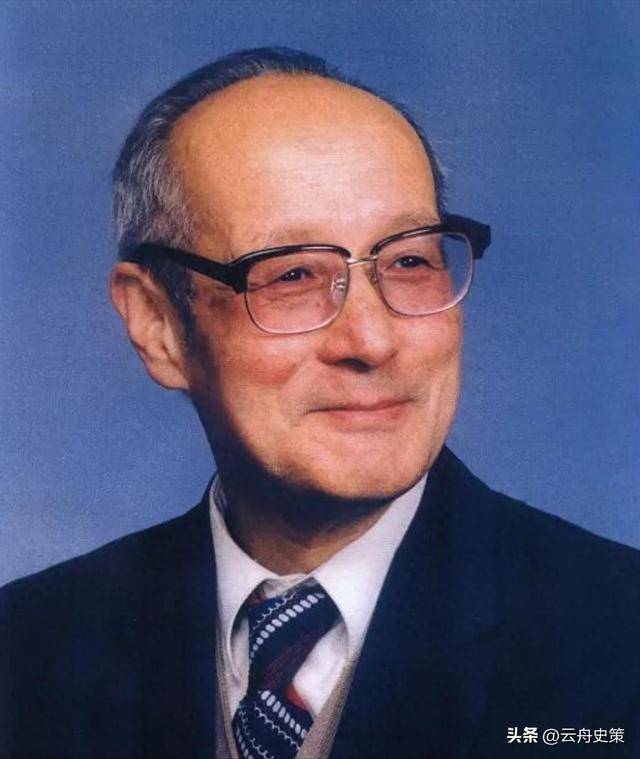
Core Viewpoint - The article highlights the transformative impact of Xu Guangxian on China's rare earth industry, emphasizing how his innovative extraction methods shifted the global market dynamics, allowing China to dominate over 90% of the high-purity rare earth market and challenge Western monopolies [1][3][35]. Group 1: Historical Context - China previously sold rare earth materials at low prices and had to import refined products at high costs, leading to significant economic losses [1]. - In the 1970s, a critical military task required the separation of rare earth elements praseodymium (Pr) and neodymium (Nd), which was a recognized global challenge due to their similar chemical properties [7][9]. Group 2: Xu Guangxian's Contributions - Xu Guangxian, born in 1920, returned to China after studying in the U.S. and focused on rare earth extraction techniques [12][14]. - He developed a novel extraction method called "extraction method" that improved efficiency compared to the traditional "workshop" approach [16]. - Xu's team utilized a large number of separating funnels in a labor-intensive process to refine the extraction technique, which took over a hundred days for simulations [18][20]. Group 3: Technological Breakthroughs - Xu's innovative approach led to the creation of a mathematical model that simplified the extraction process, allowing for rapid optimization of production parameters [24][26]. - This breakthrough, termed "one-step amplification," enabled theoretical models to directly inform large-scale production, significantly enhancing efficiency [28]. Group 4: Industry Impact - By the 1990s, Chinese companies controlled over 90% of the global high-purity rare earth market, leading to the decline of international competitors [35]. - The article notes that the initial success led to price wars among domestic companies, undermining the value of rare earth resources [37]. Group 5: Strategic Concerns - Xu Guangxian raised concerns about the sustainability of China's rare earth resources, advocating for protective measures to prevent depletion and environmental damage [39][41]. - His efforts resulted in significant national policy changes aimed at safeguarding rare earth resources and promoting strategic advantages for China [43]. Group 6: Legacy - Xu's teachings and contributions have influenced generations of chemists and rare earth specialists in China, ensuring the continuation of his scientific spirit and dedication to national interests [46].
这对科学夫妻,在北大锅炉房里撬动世界稀土格局
Sou Hu Cai Jing· 2025-06-15 05:33
Core Insights - China has maintained a dominant position in rare earth mining and refining over the past 30 years, with projections indicating that it will continue to lead global rare earth processing and refining output significantly for the next 15 years [1] - In the 1970s, despite having the world's richest rare earth resources, China was unable to produce high-purity rare earth products and had to export raw materials cheaply while importing refined products at high prices [4][6] - The story of scientists Xu Guangxian and Gao Xiaxia illustrates the struggle to break free from technological constraints imposed by Western companies, leading to significant advancements in China's rare earth industry [5][8] Industry Overview - Rare earth elements, comprising 17 chemical elements, are essential for modern industry, enhancing the properties of materials used in various high-tech applications [8] - In the 1970s, China's rare earth industry was characterized by a lack of technology, leading to a cycle of exporting raw materials and importing refined products, which was economically disadvantageous [6][10] - Western companies, such as France's Rhone Poulenc, dominated the international rare earth market, controlling advanced separation technologies that China could not access due to high costs and strict confidentiality [9][11] Technological Breakthroughs - Xu Guangxian and Gao Xiaxia initiated a scientific revolution in a makeshift laboratory, developing a new extraction method known as "cascade extraction" to separate rare earth elements with high purity [14][21] - The cascade extraction theory allowed for continuous and efficient industrial production, overcoming the limitations of traditional methods like ion exchange and crystallization [22][23] - The successful application of this theory in industrial settings marked a turning point for China's rare earth industry, leading to a significant shift in the global market dynamics [27][31] Historical Impact - By 1980, Xu and Gao's contributions were recognized as they both became members of the Chinese Academy of Sciences, reflecting the transformative impact of their work on the rare earth industry [30] - The widespread adoption of cascade extraction technology led to China's dominance in the rare earth market, capturing over 90% of the global share by the present day [40][42] - The legacy of Xu and Gao's work continues to influence China's position in high-tech industries, showcasing the importance of scientific innovation in national development [43][44]
中国稀土往事,尊严与梦想!
首席商业评论· 2025-06-13 04:28
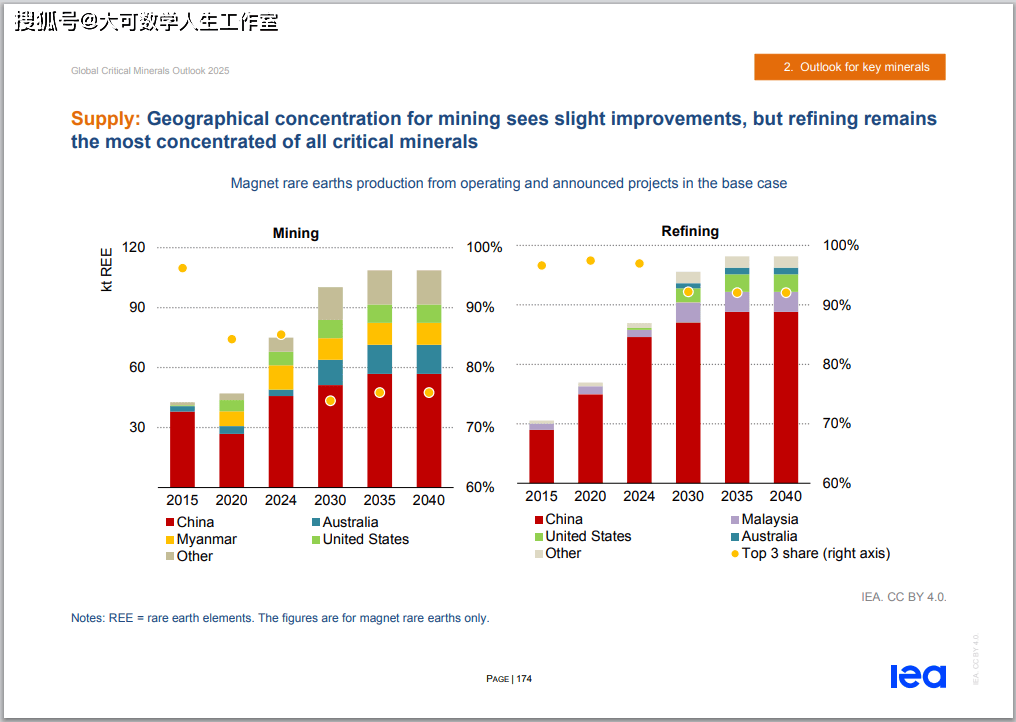
Core Viewpoint - China's rare earths are crucial materials for manufacturing permanent magnets, significantly impacting products like high-speed motors. The country has various strategies to leverage its resources effectively [1]. Group 1: Historical Context and Development - In the 1980s, Wang Zhenxi developed sintered NdFeB magnets, breaking foreign technology monopolies with a magnetic energy product of 38 MGOe [7]. - China has the world's largest rare earth reserves, accounting for approximately 30%-40% of global resources, but faced technological monopolies from the US, France, and Japan in the 1960s [17]. - The breakthrough in rare earth separation technology by Xu Guangxian in the 1970s led to China dominating the market, achieving 90% market share by 1990 [20]. Group 2: Current Market Dynamics - As of 2023, China produced 61% of the world's rare earth resources and holds 92% of the global refining capacity [14]. - The competition has shifted from separation processing to manufacturing high-performance permanent magnet materials, particularly NdFeB magnets, which are widely used in various industries [22][24]. - Chinese companies like Zhongke Sanhuan have made significant advancements, with over 200 patents, including more than 60 invention patents covering core technologies in rare earth permanent magnet manufacturing [27]. Group 3: International Relations and Trade - The US heavily relies on China for rare earth imports, with 70% of its rare earth compounds and metals sourced from China between 2020 and 2023 [48]. - The geopolitical landscape has led to increased tensions, with the US government implementing tariffs and export controls on rare earth elements [48]. - Chinese companies are expanding their global footprint, with investments in foreign rare earth mines, such as the Mountain Pass mine in the US, which exports nearly 50,000 tons of rare earth concentrates to China annually [37]. Group 4: Future Prospects - The demand for high-performance rare earth materials is expected to grow, particularly in sectors like electric vehicles and robotics, with companies like Jinli Permanent Magnet planning new factories in Mexico [42]. - The ongoing competition and technological advancements in rare earth processing and manufacturing will continue to shape the industry landscape, with Chinese firms actively participating in global supply chains [46].
美国稀土库存即将耗尽,军工巨头面临停工!特朗普向中国紧急求助
Sou Hu Cai Jing· 2025-06-11 05:43
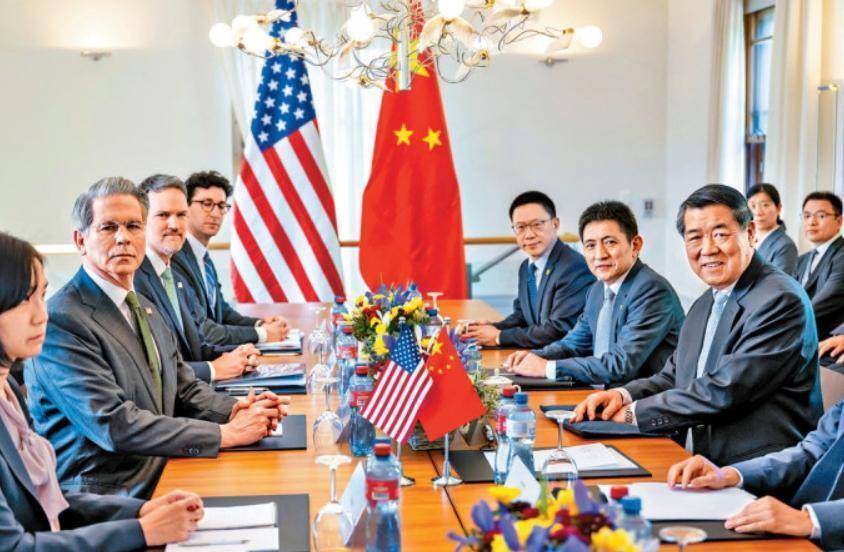
Group 1 - The core issue of the recent US-China trade talks is the critical role of rare earth elements, particularly samarium, which is essential for military applications and is predominantly sourced from China [3][4][6] - The US is facing a depletion of its rare earth inventory due to China's strict export controls implemented after the tariff war initiated by the Trump administration [2][3] - China currently holds a 92% share of the global rare earth refining capacity, establishing a dual monopoly from resource extraction to processing, making it difficult for the US to bypass China's rare earth supply chain [8] Group 2 - The US is seeking assistance from China to maintain its military capabilities, indicating a shift in the power dynamics where the US must approach China for cooperation [2][8] - China's strategy includes export controls and advanced extraction technologies, which have significantly reduced production costs and environmental impact, allowing China to dominate the rare earth market [6][8] - The expectation that China will fully lift its export restrictions on military-related rare earth products is low, as the US officials aim to negotiate but face significant challenges [8]
一对科学夫妻如何撬动世界稀土格局
Guan Cha Zhe Wang· 2025-06-10 00:23
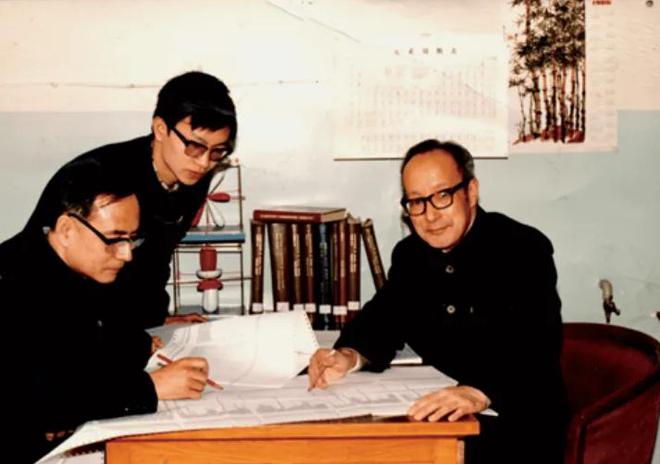
Core Viewpoint - The article highlights the journey of Xu Guangxian and Gao Xiaoxia, who played a pivotal role in transforming China's rare earth industry from a state of dependency and humiliation to a position of global leadership through scientific innovation and perseverance [1][31]. Group 1: Historical Context - In the 1970s, China possessed approximately 37% of the world's rare earth reserves but was unable to produce high-purity rare earth products, leading to a cycle of exporting raw materials cheaply and importing refined products at high prices [1][4][31]. - The rare earth elements, often referred to as "industrial vitamins," are essential for modern technology, impacting various industries from defense to consumer electronics [3][4]. Group 2: Technological Challenges - Western companies, particularly Rhone Poulenc, dominated the rare earth market, controlling advanced separation technologies and imposing strict conditions on technology transfer to China [5][6][31]. - The existing methods for rare earth separation, such as ion exchange and fractional crystallization, were costly and inefficient, prompting the need for a new approach [16][17]. Group 3: Scientific Breakthrough - Xu Guangxian proposed a novel extraction method known as "cascade extraction," which allowed for continuous processing and higher purity levels, overcoming the limitations of traditional methods [17][20]. - The successful application of this theory in industrial settings marked a significant turning point for China's rare earth industry, leading to the first successful industrial-scale extraction of rare earth elements in 1974 [20][24]. Group 4: Impact and Recognition - By 1980, Xu and Gao were recognized as academicians of the Chinese Academy of Sciences, reflecting their contributions to the rapid advancement of China's rare earth industry [23][31]. - The cascade extraction technology led to China capturing over 90% of the global rare earth market share, fundamentally altering the international landscape of the industry [31][33]. Group 5: Legacy - The story of Xu and Gao symbolizes the triumph of Chinese scientists over technological barriers and their commitment to national development, serving as an inspiration for future generations [34][35].
稀土到底多重要?少了它,美国六代机或只能是张PPT
Sou Hu Cai Jing· 2025-05-06 12:27
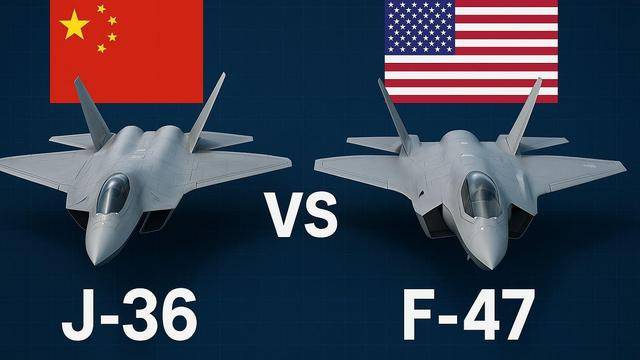
Core Viewpoint - China's J-36 fighter jet has successfully completed five test flights, while the U.S. sixth-generation fighter jet program appears to be stalled, potentially remaining at the conceptual stage indefinitely [1] Group 1: U.S.-China Trade and Rare Earths - The U.S. trade war initiated by Trump has significantly impacted the U.S. aerospace industry, revealing a critical dependency on China's control over rare earth elements [3] - In response to the trade war, China's Ministry of Commerce implemented export license controls on seven heavy rare earth elements, effectively targeting U.S. military contractors like Lockheed Martin and Boeing [3][4] - China's strong countermeasures are attributed to the contributions of Xu Guangxian, known as the "Father of Rare Earths," who developed a method to significantly improve the extraction and purification of rare earth elements [4][5] Group 2: China's Rare Earth Dominance - China holds approximately 44 million tons of rare earth oxide reserves, accounting for 34% of global reserves, with approved mining quotas reaching 240,000 tons in 2023 [5] - The global rare earth industry is heavily reliant on China, which produces about 70% of rare earth minerals and possesses 85% of deep processing capabilities [5] - From 1950 to 2019, China submitted over 26,000 patents in the rare earth field, far surpassing Japan and the U.S., indicating a strong technological and industrial advantage [5] Group 3: Impact on U.S. Military Technology - Rare earth elements are essential for modern high-tech equipment, including the F-35 fighter jet, which requires 408 kg of rare earth materials for optimal performance [7] - The U.S. sixth-generation fighter jet program is hindered by its reliance on rare earths, making progress toward operational aircraft unlikely without access to these materials [9] Group 4: U.S. Response and Challenges - The U.S. is attempting to revive the Mountain Pass mine and form a "rare earth alliance" with Australia and Canada, but these efforts have not yielded significant results [9][11] - Despite investing billions, the U.S. lacks the deep processing capacity to independently establish a rare earth supply chain, relying instead on Chinese partners for purification [11] - Companies like Tesla are reducing rare earth usage in their electric motors, but this compromises performance, while military firms are exploring alternative materials, which may also reduce efficiency [11]