稀土产业

Search documents
China continues to dominate rare earths as diversification efforts gain momentum
Yahoo Finance· 2026-03-24 15:03
Global Rare Earths Production - Global rare earths production is estimated to have increased by 2.6% in 2025 over 2024, reaching 390,000 tonnes of rare-earth oxide (REO) [1] - China dominates the global rare earths market, accounting for 69.2% of global output in 2025 and processing nearly 90% of global rare earths [1] Major Producers - The US and Australia are the second and third largest producers, contributing 13.1% and 7.4% of global production in 2025, respectively [2] - The US's output reached 51,000 tonnes in 2025, supported by federal initiatives like the Defense Production Act (DPA) [3] - Australia produced 29,000 tonnes in 2025, focusing on downstream processing and magnet supply chains through government-backed programs [4] Other Contributors - Myanmar contributed 22,000 tonnes, recovering from earlier disruptions, but remains a high-risk supplier due to regulatory uncertainty and environmental scrutiny [4] - Thailand's mine output doubled from 2,100 tonnes in 2024 to 4,800 tonnes in 2025, functioning as a processing hub for refining rare earths [5] - Nigeria's output is estimated to have declined from 7,200 tonnes in 2023 to 1,500 tonnes in 2025 due to geological survey limitations and technical challenges [6]
行业ETF风向标丨恒生科技ETF半日成交近35亿元 4只稀土ETF半日涨幅超2.5%
Mei Ri Jing Ji Xin Wen· 2026-02-27 13:52
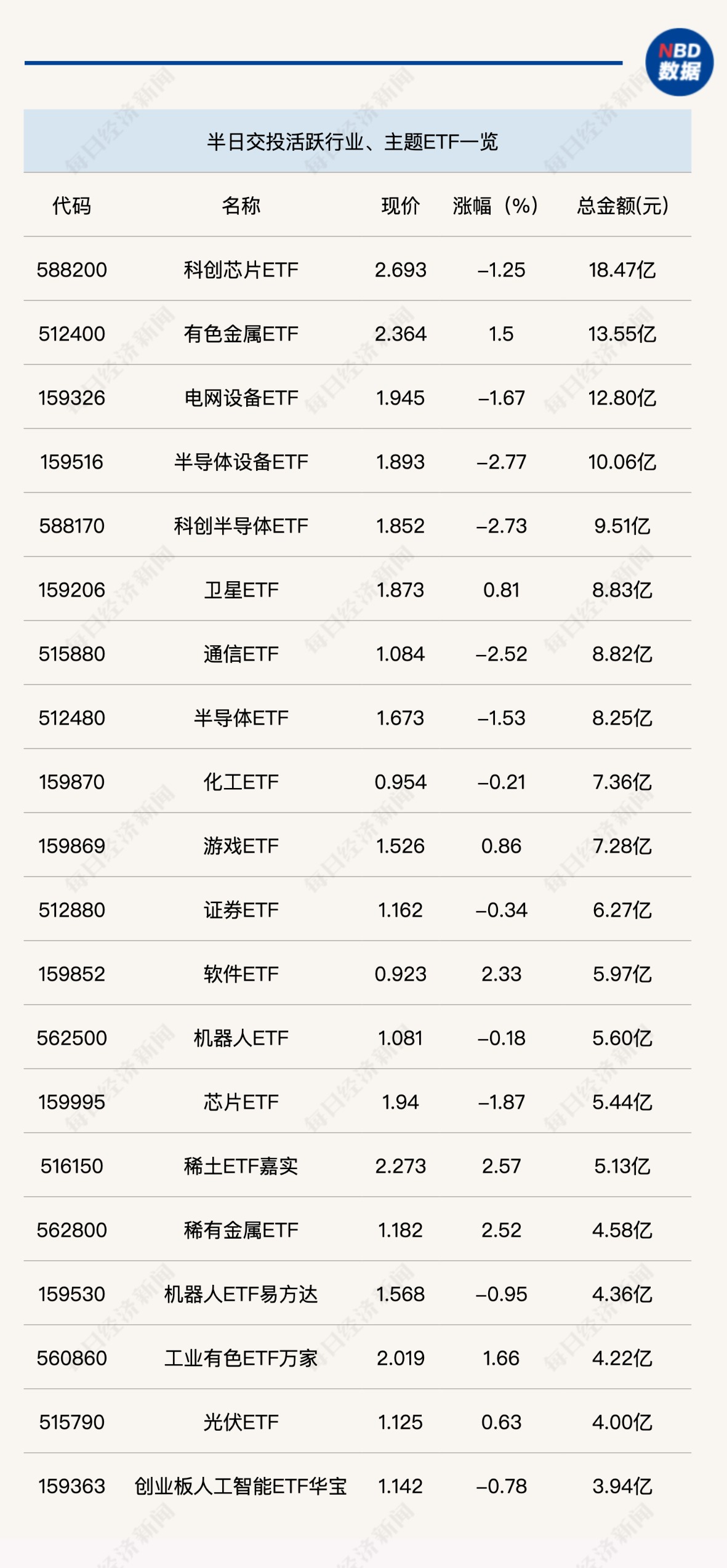
Core Viewpoint - The trading activity of various ETFs, particularly in the technology and materials sectors, remains robust, with significant transaction volumes reported for both domestic and cross-border ETFs. Group 1: Domestic ETFs - The active trading of domestic ETFs includes the following: - Sci-Tech Chip ETF (588200) with a trading volume of 1.847 billion yuan and a price decrease of 1.25% [2] - Nonferrous Metals ETF (512400) showing a trading volume of 1.355 billion yuan and a price increase of 1.5% [2] - Power Grid Equipment ETF (159326) with a trading volume of 1.280 billion yuan and a price decrease of 1.67% [2] - Other notable ETFs include Semiconductor Equipment ETF (159516) with a trading volume of 1.006 billion yuan and a price decrease of 2.77% [2], and Sci-Tech Semiconductor ETF (588170) with a trading volume of 0.951 billion yuan and a price decrease of 2.73% [2]. Group 2: Cross-Border ETFs - The cross-border ETF market shows significant activity, particularly: - Hang Seng Technology ETF (513130) with a trading volume of 3.451 billion yuan and no price change [4] - Hang Seng Technology Index ETF (513180) with a trading volume of 2.749 billion yuan and a price increase of 0.15% [4] - Hong Kong Securities ETF (513090) with a trading volume of 2.158 billion yuan and a price decrease of 1.06% [4]. Group 3: Rare Earth ETFs - Rare Earth ETFs are experiencing notable performance: - Rare Earth ETF (159713) increased by 2.7% with a trading volume of 0.173 billion yuan [6] - The ETF tracks the China Securities Rare Earth Industry Index, which reflects a high concentration of companies involved in rare earth mining, processing, and trading [7]. - The index's major constituents include: - Northern Rare Earth (600111) with a weight of 14.90% [8] - Goldwind Technology (002202) with a weight of 7.08% [8] - Xiamen Tungsten (600549) with a weight of 6.81% [8].

供给趋紧下稀土“涨价潮”持续,板块走强推动稀土ETF(516780)成交放量
Mei Ri Jing Ji Xin Wen· 2026-02-27 07:03
Group 1 - The core viewpoint of the articles highlights the recent surge in rare earth prices driven by supply constraints and downstream inventory replenishment, leading to a strong performance in the rare earth sector and increased trading volume in the rare earth ETF (516780) [1] - As of February 26, 2026, the average prices for praseodymium and neodymium oxide, praseodymium and neodymium metal, and neodymium metal were 886,100 CNY/ton, 1,081,000 CNY/ton, and 1,136,300 CNY/ton respectively, reflecting increases of 45,700 CNY/ton, 76,000 CNY/ton, and 96,300 CNY/ton compared to pre-holiday levels [1] - The continuous rise in rare earth prices is linked to the supply-side reforms and the upcoming supply-side documents for 2024-2025, indicating ongoing industry adjustments [1] Group 2 - The rare earth ETF (516780) is designed to closely track the CSI Rare Earth Industry Index, which includes companies involved in rare earth mining, processing, trading, and applications, with top constituents being Northern Rare Earth, Goldwind Technology, Xiamen Tungsten, China Aluminum, and Gree Environmental [2] - As of June 30, 2025, the number of holders of the rare earth ETF (516780) reached 32,100, making it the only rare earth-themed ETF with over 20,000 holders in the market during that period [2] - The fund manager of the rare earth ETF, Huatai-PB Fund, is among the first ETF managers in China, focusing on providing transparent, convenient, and low-cost index products for investors [2]




稀土板块活跃,指数涨超2%,稀土ETF易方达(159715)半日净申购超1000万份
Sou Hu Cai Jing· 2026-02-27 04:42
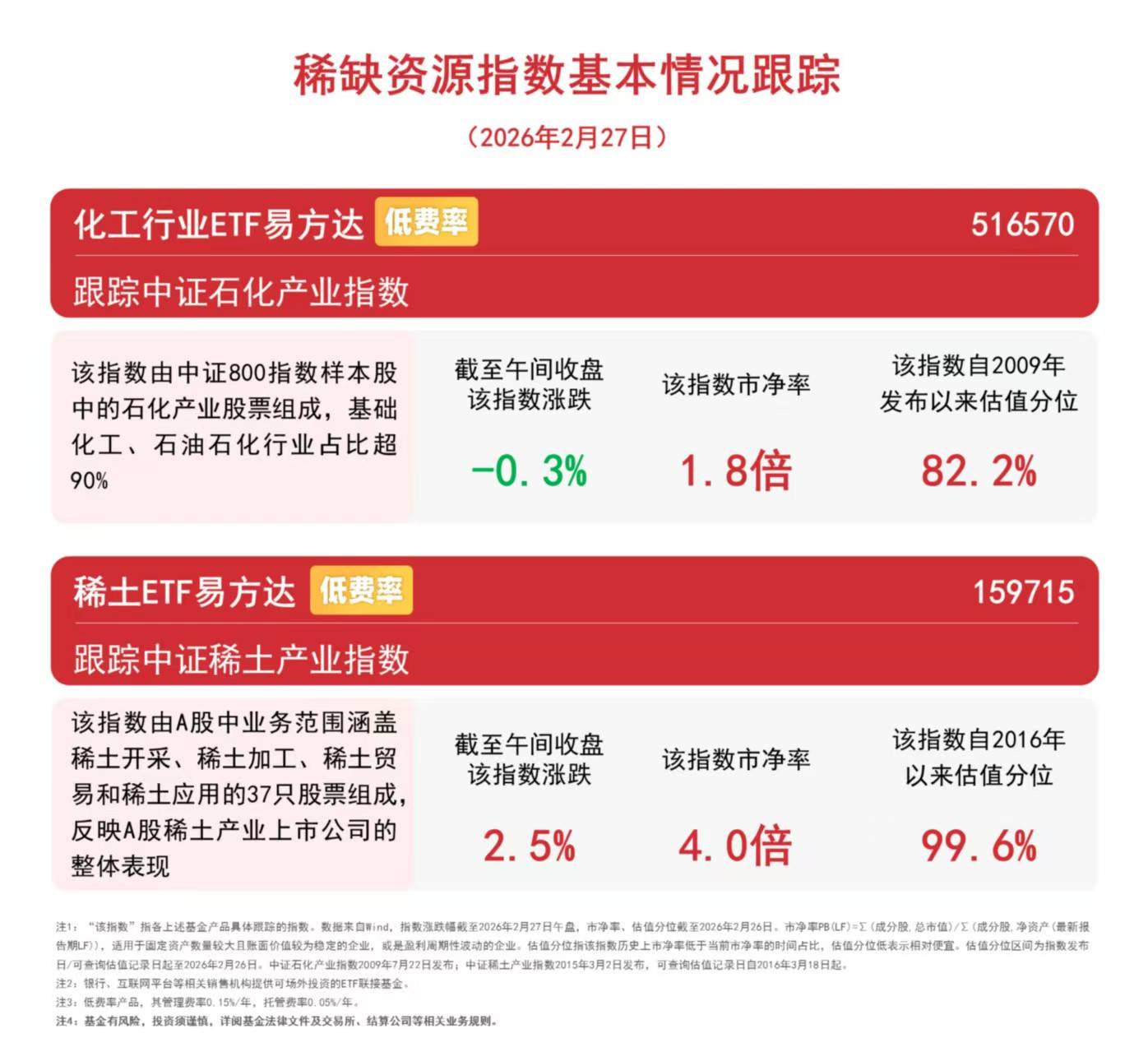
Group 1 - The core viewpoint of the news is that the China Securities Rare Earth Industry Index has increased by 2.5%, while the China Securities Petrochemical Industry Index has decreased by 0.3% [1] - The rare earth ETF, specifically the E Fund (159715), has seen significant investor interest, with net subscriptions exceeding 10 million units in half a day [1]
稀土永磁板块持续走高!稀土ETF(516780)2月以来累计吸金4.5亿元!
Mei Ri Jing Ji Xin Wen· 2026-02-25 06:08
Group 1: Market Performance and Trends - The rare earth sector continues to show strong performance post-Spring Festival, with prices of key products like praseodymium-neodymium oxide and terbium oxide rising due to tight supply and increased procurement demand from downstream magnetic material companies [1] - As of February 24, 2026, the rare earth ETF (516780) has seen a trading volume of 200 million yuan, surpassing the previous day's total, indicating heightened market interest [2] - The rare earth ETF has attracted a net inflow of 448 million yuan since February 2026, making it one of the few ETFs in the A-share market with net inflows exceeding 300 million yuan during the same period [2] Group 2: Fund Management and Strategy - The fund manager of the rare earth ETF, Huatai-PB Fund, is one of the first ETF managers in China and has a strong track record in managing various ETFs, including the leading CSI 300 ETF [3] - The rare earth ETF and its linked funds are designed to closely track the CSI Rare Earth Industry Index, which covers the entire rare earth industry chain, providing investors with effective tools to capitalize on industry opportunities [2]
日本深海稀土开采引热议,中方淡定回应显实力
Sou Hu Cai Jing· 2026-02-14 03:29
Group 1 - Japan has announced the successful extraction of rare earth-containing sediment from the seabed near Minami-Torishima, which is seen as a significant step towards reducing dependence on specific countries and enhancing economic security [2][4] - The rare earth deposit is located 1,800 kilometers southeast of Tokyo and is claimed to have a high reserve of 16 million tons, potentially meeting global demand for hundreds of years, primarily consisting of heavy rare earths [6][8] - The extraction process faces significant challenges due to the depth of 6,000 meters, where equipment must withstand 550 times atmospheric pressure, making operations difficult and increasing the likelihood of equipment failure [8][10] Group 2 - The estimated cost of extracting one kilogram of rare earth ore ranges from 8,000 to 15,000 Japanese yen, approximately 400 RMB, which is higher than the cost of purchasing refined rare earths [10][11] - Japan's rare earth purification technology is relatively advanced, but it still lags behind China's capabilities, which can achieve purities of up to 6N compared to Japan's 4N [11][13] - The cost advantage of Chinese rare earth production is significant, with estimates showing that Chinese companies can produce at 3 to 4 USD per kilogram, while competitors like Lynas face costs of 10 to 15 USD per kilogram [13][14] Group 3 - China's dominance in the rare earth industry is attributed to its ability to produce high-purity, low-cost, and low-pollution rare earths, making it difficult for other countries to compete unless there are significant changes in the industry [16] - The current geopolitical landscape suggests that Japan's ambitions in the rare earth sector may not be realized during the tenure of its current leadership, especially given China's control over the rare earth supply chain [16]

五矿会议聚焦稀土出口,百亿规模稀土ETF嘉实(516150)一键布局国内稀土产业链机遇
Xin Lang Cai Jing· 2026-02-13 02:48
Group 1 - The core viewpoint of the news highlights the decline of the China Rare Earth Industry Index by 1.00% as of February 13, 2026, with mixed performance among constituent stocks, indicating market volatility in the rare earth sector [1] - China Minmetals Import and Export Chamber of Commerce announced a conference on March 25, 2026, to discuss export policies and market conditions for rare earth and rare metals, aiming to address challenges faced by enterprises in exports [1] - Huaxi Securities reported that QS Company's solid-state battery technology has achieved delivery of the QSE-5 cell and completion of the Eagle production line, reflecting the urgent global demand for higher-performance batteries, with rare earth-based catalysts and hydrogen storage materials accelerating into next-generation energy technologies [1] Group 2 - As of January 30, 2026, the top ten weighted stocks in the China Rare Earth Industry Index include Northern Rare Earth, Goldwind Technology, Xiamen Tungsten, and others, collectively accounting for 61.43% of the index [2] - The Jiashi Rare Earth ETF (516150) closely tracks the China Rare Earth Industry Index, serving as a convenient tool for investors to access the domestic rare earth industry chain [2] - Investors can also utilize the Jiashi Rare Earth ETF linked fund (011036) to seize investment opportunities in the rare earth sector [3]
6.94亿吨,土耳其发现大量稀土?放卫星也撼动不了中国第一地位
Sou Hu Cai Jing· 2026-02-12 05:16
Core Viewpoint - The recent discovery of a massive rare earth resource in Turkey, estimated at 694 million tons, has the potential to disrupt the global rare earth market, which has been dominated by China, the largest supplier accounting for 90% of global demand [3][10]. Group 1: Importance of Rare Earth Elements - Rare earth elements are essential in various industries, including military, textiles, chemicals, agriculture, and advanced technologies like artificial intelligence [1]. - The unique physical properties of rare earths significantly enhance the performance of military equipment, contributing to the technological advancements seen in modern warfare [1]. Group 2: Turkey's Rare Earth Discovery - Turkey's recent announcement of discovering 694 million tons of rare earth resources has garnered significant attention, as this amount is 5.75 times the total known global reserves and 15.8 times that of China's reserves [3]. - The claim that Turkey's rare earth resources could generate billions in revenue has raised skepticism, as the actual extractable amount may be much lower than reported due to the distinction between raw ore and refined resources [5][8]. Group 3: China's Dominance in the Rare Earth Market - China maintains a dominant position in the global rare earth industry, not only due to its substantial reserves but also because of its advanced extraction technologies and complete industrial chain [10]. - Despite Turkey's potential discovery, it is unlikely to challenge China's leadership, as the country has established a robust supply chain and technological superiority in refining and processing rare earth elements [10][12]. - The U.S. and other countries continue to rely on China for rare earth processing, highlighting the challenges in overcoming technological dependencies [12].
稀土产品价格加速上涨!稀土ETF(516780)昨日强势吸金2.9亿元,成交环比大增超185%
Xin Lang Cai Jing· 2026-02-11 06:09
Core Viewpoint - The domestic rare earth market is experiencing a price increase, reflecting a tight supply-demand balance, driven by strict production controls and rising demand from various industries [1][4]. Group 1: Price Trends - As of February 10, 2026, the average price of praseodymium and neodymium oxide is 850,200 CNY/ton, up by 51,400 CNY/ton; the average price of praseodymium and neodymium metal is 1,016,000 CNY/ton, up by 39,700 CNY/ton; the average price of dysprosium oxide is 1,412,200 CNY/ton, up by 11,400 CNY/ton; and the average price of terbium oxide is 6,234,300 CNY/ton, up by 20,000 CNY/ton [1][4]. - The core category, praseodymium and neodymium oxide, has seen a cumulative increase of over 39% compared to the beginning of the year when it was priced at 610,000 CNY/ton [1][4]. Group 2: Supply and Demand Dynamics - The strong price trend indicates a continued tight supply-demand situation in the rare earth market, reinforcing bullish market expectations [1][4]. - On the supply side, China, as the dominant producer, implements strict total control and export restrictions on rare earth mining, limiting the release of supply capacity and weakening global trade flow, leading to tight inventories in both domestic and international markets [1][4]. - On the demand side, rapid development in industries such as new energy vehicles, military aerospace, and advanced manufacturing has created significant demand for rare earths [1][4]. Group 3: Investment Opportunities - The supply-demand dynamics of rare earths are primarily influenced by domestic industrial policies and the rigid demand from new energy and high-end manufacturing, with relatively low correlation to global macro liquidity and risk aversion [2][5]. - The rare earth ETF (516780) saw a strong net inflow of 290 million CNY in a single day, with a trading volume of 428 million CNY, representing a significant increase of over 185% compared to the previous trading day [2][5]. - The ETF and its linked funds closely track the CSI Rare Earth Industry Index, which covers various segments of the rare earth industry, providing investors with effective tools to capture development opportunities [2][5]. Group 4: Key Companies - As of February 10, 2026, the top five constituents of the CSI Rare Earth Industry Index include Northern Rare Earth, Goldwind Technology, Xiamen Tungsten, China Aluminum, and Greeenme, all of which are competitive leading companies in the industry [2][5].
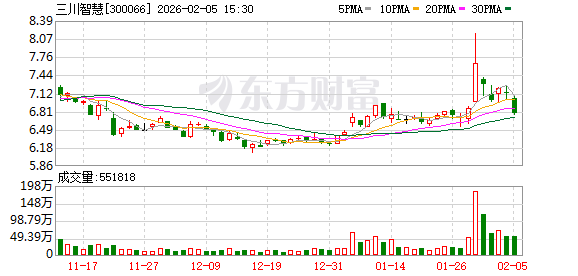
三川智慧:公司始终以开放和前瞻的视角看待全球稀土产业的发展
Zheng Quan Ri Bao· 2026-02-05 13:38
Core Viewpoint - The company maintains an open and forward-looking perspective on the development of the global rare earth industry, indicating a commitment to monitoring market dynamics and regional opportunities in the future [2] Group 1 - The company responded to investor inquiries on February 5, emphasizing its proactive approach to the rare earth sector [2] - The company will continue to focus on market trends and regional opportunities as part of its strategic outlook [2]