
买方投顾转型

Search documents
销售渠道变局
中国基金报· 2025-11-23 09:00
Core Insights - The article highlights the transformation of fund sales channels from mere transaction platforms to partners that provide long-term investment guidance and support [3][8][10] - Recent initiatives by major financial institutions, such as intelligent service suggestions for profit-taking and personalized investment advice, indicate a shift towards a customer-centric approach in the fund industry [5][7][10] Group 1: Industry Trends - The public fund high-quality development action plan proposes a classification evaluation mechanism for sales institutions, incorporating metrics like investor profit and holding period [5] - Major sales institutions are responding to regulatory calls by enhancing their service offerings, such as providing intelligent suggestions for profit-taking to help investors lock in gains [5][10] - The introduction of systems like "Time Points" by Yingmi Fund, which rewards customers based on their investment duration, reflects a growing emphasis on long-term investment strategies [7][10] Group 2: Service Innovation - The fund sales industry is evolving from a focus on product sales to prioritizing service depth and quality, aiming to address the issue of "funds making money while investors do not" [8][10] - Enhanced services include personalized investment advice, emotional support during market fluctuations, and educational guidance to foster long-term investment habits [8][11] - The competition among sales channels is shifting towards providing differentiated services that emphasize customer engagement and support [10][11] Group 3: Future Directions - The industry is expected to continue its service transformation, driven by regulatory guidance, technological advancements, and changing customer needs [11][12] - Key capabilities for successful transformation include professional research capabilities, intelligent technology for user profiling, refined accompanying services, and compliance with fiduciary responsibilities [11] - Future advisory services are anticipated to become more personalized, dynamic, and integrated into clients' life scenarios, enhancing the overall investment experience [12]



南方基金亮相第十九届金博会 以金融赋能书写公募新篇章
第一财经· 2025-11-19 07:37
Core Viewpoint - The article highlights the participation of Southern Fund at the 19th Shenzhen International Financial Expo, emphasizing its commitment to various financial sectors including pension finance, technology finance, green finance, inclusive finance, and digital finance, showcasing its comprehensive asset management capabilities and responsibilities in supporting national strategies and economic growth [1][2]. Group 1: Technology Finance - Southern Fund enhances its "platform-based, integrated, multi-strategy" research and investment system, increasing allocation to strategic emerging industries to support the development of new productive forces [2]. Group 2: Green Finance - The company integrates ESG principles into its long-term strategy and daily operations, continuously improving its ESG rating system and expanding its green financial product offerings, aiming to be a leader in ESG investments [2]. Group 3: Inclusive Finance - Southern Fund is advancing its buy-side advisory transformation by creating the "Sinan Advisory" service platform, launching unique products that promote shared benefits and risk-sharing between investors and managers [2]. Group 4: Pension Finance - In response to national pension strategies, Southern Fund showcases a comprehensive pension finance system covering all three pillars, with a focus on innovating third-pillar personal pension products, having launched various types of pension products that span from 2030 to 2060 [3]. Group 5: Digital Finance - The company is driving digital transformation using cloud-native technology to enhance its research and investment capabilities and service efficiency, aiming to become a "smart asset management company" [2]. Group 6: Customer-Centric Approach - The immersive and interactive experience at the expo reflects Southern Fund's customer-centric philosophy, demonstrating its commitment to "finance for the people" and enhancing financial literacy among investors through engaging activities [4]. Group 7: Future Outlook - Southern Fund plans to continue leveraging investment opportunities in the Guangdong-Hong Kong-Macao Greater Bay Area, focusing on the "five major articles" to guide financial resources into the real economy, promoting high-quality development in the public fund industry [4].
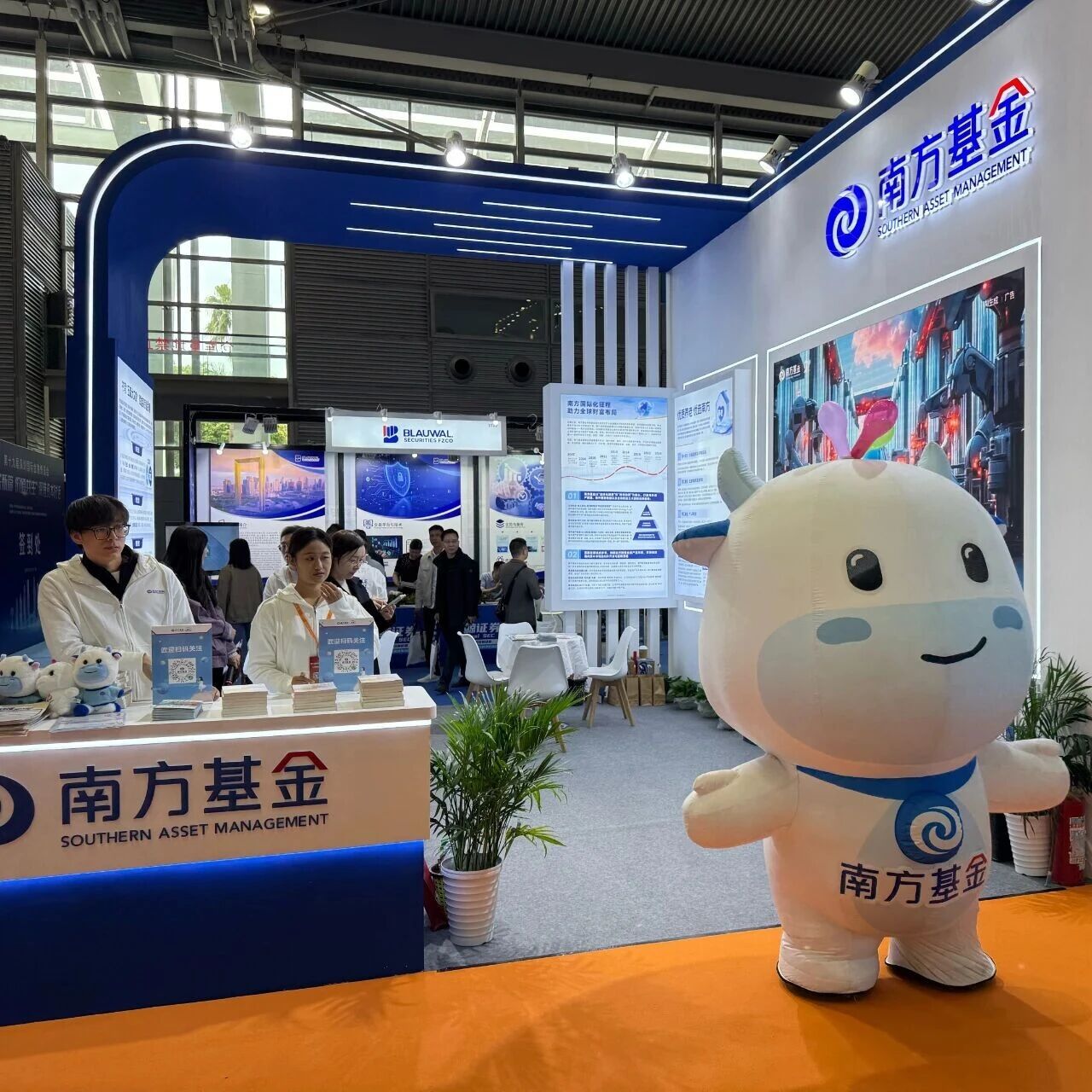
南方基金亮相第十九届金博会 以金融赋能书写公募新篇章
Zhong Guo Jing Ji Wang· 2025-11-19 02:53
本届金博会恰逢个人养老金制度实施三周年,南方基金重点展出了覆盖一二三支柱的完备养老金融体系 以及推动第三支柱个人养老金产品创新的具体实践。在个人养老金方面,南方基金已推出涵盖养老目标 日期型、养老目标风险型、养老指数型等多种类型的个人养老金产品矩阵,覆盖2030年到2060年等主要 日期的一系列产品。同时,南方基金作为首批通过中国结算个人养老系统验收测试和首批上线个人养老 金业务的基金管理人,至今已有十余只产品纳入个人养老金产品名录,以技术、产品与服务驱动推动养 老三支柱建设走深走实。 展会现场,南方基金以"专业+趣味"的沉浸式体验,让金融服务更具温度。全运会"大湾鸡"周边、智能 互动机器人与"阿梦"人形玩偶成为展区焦点,吸引众多观众驻足。南方基金通过多媒体展示与专业顾问 讲解,帮助观众直观理解基金产品的特点。此外,展区还设有趣味互动游戏,在轻松氛围中向投资者传 递长期投资、价值投资理念,助力提升投资者金融素养,让金融服务更贴近大众需求。 11月19日,以"产业金融新高地,科创赋能向未来"为主题的第十九届深圳国际金融博览会在深圳会展中 心盛大启幕。作为国内首批规范的基金管理公司,南方基金精彩亮相本次金博会,围 ...
广发证券(000776) - 2025年11月18日投资者关系活动记录表
2025-11-18 13:00
Group 1: Wealth Management Business - The company focuses on high-quality development and digital transformation in wealth management, emphasizing high-quality client groups and efficient online operations [2] - It aims to enhance multi-asset allocation capabilities and improve the comprehensive service system for institutional clients [2] - The company is committed to building AI service functions and promoting the application of wealth management AI models [2] - Compliance is a priority, with a strict adherence to regulatory standards [2] Group 2: Investment Banking Business - The company serves the real economy's high-quality development and acts as a "gatekeeper" for capital markets [3] - It strengthens industry resources and professional capabilities, focusing on industrial and technology investment banking [3] - The company is enhancing its cross-border collaboration and talent development to support Chinese enterprises' overseas expansion [3] - Digital transformation and risk management are key areas of focus for improving operational efficiency [3] Group 3: Derivatives Business - As a primary dealer in over-the-counter derivatives, the company leverages its pricing and trading expertise to enhance product offerings [3] - It aims to provide asset allocation and risk management solutions for institutional clients through innovative strategies [3] Group 4: Investment Management Business - The investment management segment includes asset management, public fund management, and private fund management [3] - The company is building a diverse product supply system and enhancing its brand in asset management [3] - As of September 2025, the public fund management scale of Guangfa Fund and E Fund ranks third and first in the industry, respectively, excluding money market funds [4] Group 5: Compliance and Communication - The company ensures accurate and timely information disclosure, adhering to regulatory requirements [4] - There were no incidents of undisclosed significant information leaks during the investor communication process [4]

广发证券(000776) - 2025年11月12日投资者关系活动记录表(一)
2025-11-12 10:58
Group 1: Investment Management Business - The investment management segment includes asset management, public fund management, and private fund management, leveraging resources to create a diverse product supply system [2] - As of September 2025, the public fund management scale of Guangfa Fund and E Fund, excluding money market funds, ranks 3rd and 1st in the industry, respectively [2] Group 2: Wealth Management Business - The company focuses on high-quality customer management and efficient online operations, enhancing customer base and standardized operations [3] - It is accelerating the transition to buy-side investment advisory and improving multi-asset allocation capabilities [3] - The company is implementing AI service functions and promoting the application of wealth brokerage AI models [3] Group 3: Derivatives Business - As a primary dealer in the OTC derivatives market, the company strengthens team and system development, focusing on product creation and risk management solutions for institutional clients [4] Group 4: Investment Banking Business - The company aims to support the high-quality development of the real economy and enhance its role as a service provider for direct financing [5] - It is deepening its presence in key regions like the Greater Bay Area and Yangtze River Delta, while promoting cross-border collaboration [5] - The company is advancing its digital transformation and risk management capabilities to ensure stable development [5]
国泰海通|基金评价:高质量发展时代公募基金行业回顾与展望
国泰海通证券研究· 2025-10-30 11:48
Group 1: Core Views - The public fund industry in China is entering a new stage of high-quality development, characterized by profound changes in fund products, companies, sales models, and environmental patterns [1][2] - The future opportunities for different types of public fund products vary, with a focus on active equity funds, passive equity funds, fixed income funds, and innovative products like REITs [1] Group 2: Public Fund Development Trends - Active equity funds will see more standardized benchmark indices, shifting the assessment focus from relative rankings to excess returns [1] - Passive equity funds have rapidly developed over the past two years, with index replication funds reducing fees to benefit investors, while enhanced index products, though currently small in scale, show promising future growth [1] - In fixed income funds, active bond funds and fixed income plus products are thriving in a low-interest-rate environment, and bond index funds are also entering a rapid growth phase [1] - Innovative products such as REITs are accelerating issuance, and multi-asset allocation funds of funds (FOFs) remain a blue ocean market [1] Group 3: Fund Company Development Outlook - The public fund company landscape shows a clear "Matthew Effect," where larger companies can maintain their strengths while smaller firms may benefit from specialized development [2] - The trend in investment research systems is moving towards integration, with a shift from creating star fund managers to building company-wide investment research brands [2] - AI is expected to permeate various aspects of fund company management, talent development, and investment research capabilities [2] Group 4: Public Fund Sales Environment Outlook - The sales model is transitioning from a focus on short-term scale to prioritizing long-term client interests and quality service [2] - The fund sales industry is undergoing ecological restructuring centered around advisory services, with a dual focus on buyer advisory transformation and diversified asset allocation [2] - The emergence of institutional direct sales platforms is anticipated, which will test the differentiated research service capabilities of distribution agencies [2] - Potential market dynamics include a strong market concentration, a dual-driven sales environment of direct and indirect sales, a combination of diversification and digitalization, and a new landscape of high-quality development [2]

高质量发展时代公募基金行业回顾与展望
Haitong Securities International· 2025-10-30 04:01
Report Industry Investment Rating No relevant content provided. Core Viewpoints of the Report - The development trend of public funds emphasizes equities, benchmarks, and long - term perspectives. Different types of public funds face different opportunities. For example, active equity funds will standardize benchmark indices and shift from focusing on relative rankings to excess returns; passive equity funds are experiencing the resonance of fee reduction and product innovation; fixed - income funds, especially those with "fixed - income +" products, are booming in the low - interest - rate era; and innovative products such as REITs are accelerating issuance while multi - asset allocation FOFs remain a blue ocean [2]. - The development prospect of fund companies is to return to investment research. Both large and comprehensive fund companies and small and niche ones are worth looking forward to. The industry shows a Matthew effect, and companies should choose different development strategies according to their scale. The investment research system is moving towards integration, and the back - office of fund companies may be empowered by AI [2]. - The sales environment of public funds is shifting from focusing on scale to enhancing investors' sense of gain. The sales model is changing from "emphasizing new issuance and neglecting continuous operation" to "emphasizing continuous operation and optimizing services", and the industry is undergoing ecological reshaping around investment advisory services. The establishment of institutional direct - sales platforms will test the differentiated research and service capabilities of代销 institutions [3]. Summary According to the Directory 1. Public Fund Development Trends: Emphasizing Equities, Benchmarks, and Long - Term Perspectives 1.1 Active Equity Funds: Standardization of Benchmark Indices and Transition from Relative Ranking to Excess Returns - **Benchmark Index Standardization**: The "Action Plan for Promoting the High - Quality Development of Public Funds" strengthens the binding effect of performance comparison benchmarks. Currently, the benchmark indices of active equity funds are mostly representative broad - based, industry - themed, and style indices. However, most funds do not strictly track the benchmarks, and the industry deviation is in the range of 0.35 - 0.75. This year, 177 funds have changed their performance comparison benchmarks, and the trend is to make them more in line with actual investments. Future benchmark design will be more representative, standardized, and closer to actual investment directions [8][12][21]. - **Serious Assessment**: The assessment should be long - term and focus on excess returns. Long - term assessment helps fund managers adhere to investment concepts, and funds with stable long - term performance have better cumulative returns and risk control. Emphasizing excess returns can tie fund managers' interests with investors and reduce tail risks. Funds that achieve positive excess returns in the long - term have better performance and risk control [24][25][33]. 1.2 Passive Equity Funds: Resonance of Fee Reduction and Product Innovation and Acceleration of the Improvement of the Characteristic Index System - **Replicating Index Funds**: The product spectrum is rich, with a significant leading - company effect. As of September 30, 2025, the total scale of stock ETFs reached 411.7167 billion yuan, and the average daily trading volume in 2025 was 1.24 billion yuan. The management fees of ETFs are relatively low, and many large - scale broad - based ETFs have reduced fees. In the future, differentiated indices may become a blue ocean, and fund companies can carry out forward - looking layout and differentiated competition [43][46][54]. - **Index - Enhanced Products**: These products have both discipline and the ability to obtain excess returns. As of June 30, 2025, the total scale of over - the - counter index - enhanced funds was 20.1028 billion yuan. They can achieve differentiated layout by diversifying tracking indices and developing enhanced ETFs, and are expected to become an important link between passive and active investments [56][60][65]. 1.3 Active Fixed - Income Funds: The Booming of "Fixed - Income +" Products in the Low - Interest - Rate Era and the Popularity of Long - Term Investment Products - In the low - interest - rate environment since 2024, the scale of "fixed - income +" funds has increased. In the first half of 2025, the scale of "fixed - income +" funds increased by 232.3 billion yuan, with the scale of stable products surpassing that of balanced products. Stable "fixed - income +" funds have lower returns but better risk control, and the dividend - low - volatility strategy is suitable for them. With regulatory encouragement and the low - interest - rate environment, "fixed - income +" products are expected to continue to grow [66][69][79]. 1.4 Passive Fixed - Income Funds: Accelerated Trend and Continuous Emergence of Innovative Products Supported by Policies - The development of fixed - income index funds has gone through several stages, including the budding, trial, accelerated growth, slow growth, and explosive growth stages. As of Q2 2025, there were 243 bond index funds with a total scale of 1.42 trillion yuan. In the future, the tool - oriented trend of bond funds will be strengthened, ETFs will play a more important role, and innovative products will continue to emerge under policy support [80][84][94]. 1.5 Innovative Products: Accelerated Issuance of REITs and Multi - Asset Allocation FOFs Remain a Blue Ocean - **REITs Products**: With policy support, the issuance of REITs products has accelerated. As of June 30, 2025, there were 75 products with a total scale of 16.4087 billion yuan. REITs have unique asset allocation attributes, such as combining stock, bond, and alternative investment characteristics, having a long - term maturity, and rich underlying asset types. They are important tools for institutional investors' asset allocation and have broad development prospects [98][101][104]. - **FOF**: FOFs are suitable carriers for multi - asset allocation. Multi - asset allocation FOFs and ETF - FOFs are still a blue ocean. Currently, the scale of multi - asset allocation FOFs accounts for a relatively low proportion of all FOFs, but with the growth of asset - allocation demand and policy support, their scale and number are expected to increase significantly [106][109][113]. 2. Fund Company Development Trends: Return to Investment Research, Both Large and Comprehensive and Small and Niche Are Worth Looking Forward To 2.1 Company Strategic Positioning Selection: Comprehensive vs. Characteristic - **Industry Pattern of Public Funds**: The industry pattern of public funds will continue to concentrate on the top. Although the concentration of China's public fund industry has not increased significantly in the past five years, it is expected to rise in the future. The concentration of equity funds is higher than that of fixed - income funds, and the development trends of the two are different [117][118][123]. - **Comprehensive Fund Companies**: Large fund companies should be positioned as comprehensive fund companies. By referring to the development paths of E Fund and China Asset Management, comprehensive fund companies should maintain their advantages in active equity products and strengthen other product lines, such as passive equity, active Hong Kong stocks, passive fixed - income, and FOF products [125][126][127]. - **Characteristic Fund Companies**: Small and medium - sized fund companies should combine their endowments and deeply cultivate their advantages to achieve characteristic development [2]. 2.2 Investment Research System Construction: Platformization and Branding - The investment research system is moving towards integration, and the key is to achieve "harmony with differences". The investment team is shifting from creating star fund managers to building the brand of the company's investment research [25]. 2.3 Back - Office of Fund Companies: AI Empowers to Improve Efficiency - The back - office of fund companies should pay attention to long - term assessment to ensure the construction of talent echelons, actively introduce employee stock ownership to play a long - term incentive mechanism, and use AI to empower the entire business chain system of funds [29]. 3. Outlook on the Sales Environment of Public Funds: From Scale to Sense of Gain 3.1 Shift from Emphasizing New Issuance to Emphasizing Continuous Operation and Improve the Service Ability for Individual Customers - Policy guidance promotes the transformation of public fund sales from "emphasizing new issuance" to "emphasizing continuous operation and service", and strengthens the customer holding experience [31]. 3.2 Investment Advisory Services Change the Sales Industry Ecosystem, and the Rise of Buyer - Side Investment Advisory and Multi - Asset Allocation - The industry is transforming to the buyer - side investment advisory model and promoting multi - asset allocation, which will reshape the sales industry ecosystem [34]. 3.3 The Establishment of Institutional Direct - Sales Platforms Is Expected, Testing the Differentiated Research and Service Capabilities of代销 Institutions - The development of direct - sales platforms will pose challenges to代销 channels.代销 institutions should strengthen their buyer - side capabilities, deepen cooperation with funds, and transform towards multi - asset allocation, long - term value, and personalized services when serving institutional investors [39]. 3.4 Outlook on the Pattern of the Public Fund Sales Environment - The sales environment of public funds may present a pattern of "the strong getting stronger", a dual - drive of "direct sales +代销", a combination of diversification and digitalization, and a new situation of high - quality development [3].
“有水才有鱼”!券业大咖共话财富管理新机遇,看点频出
Zheng Quan Shi Bao Wang· 2025-10-17 23:59
Core Insights - The transformation towards buy-side investment advisory services has become a core path for the development of wealth management in the securities industry, driven by market recovery and industry changes [1][2][3] - A comprehensive capability building, ecological platform layout, and deep organizational transformation are essential for securities firms to transition from "selling products" to "managing assets" [1][2] Industry Mission and Service Philosophy - The mission of the Chinese securities industry is shifting from "zero-sum game" to growing together with clients, focusing on the stable appreciation of residents' wealth [2] - Investment advisory is viewed as a systematic capability that encompasses education, research, and investment [2] - Firms must enhance their comprehensive capabilities to compete with top international institutions, making the buy-side advisory transformation a necessary choice amid declining commission rates and narrowing spreads [2] Practical Insights from Regional Firms - Trust is fundamental in wealth management, especially in regions with strong local cultures, where close relationships between clients and advisors are crucial [2] - Securities firms should help clients achieve wealth preservation and appreciation through diversified product allocation, regardless of market fluctuations [2] ETF Business Development - The ETF market is expanding rapidly, becoming a focal point for wealth management strategies, although growth may lag behind other financial institutions [4][5] - Securities firms should integrate research and accompanying services to build core capabilities in client segmentation, intent insight, and asset allocation [4] - The ETF market's supply is rich, but client consumption capabilities need improvement; firms are developing strategies to enhance ETF service capabilities [5] Organizational Change and Assessment Mechanisms - Organizational transformation is critical for the buy-side advisory transition, requiring firms to balance short-term profits with long-term value [6] - Firms are moving towards a centralized management model for advisory teams, focusing on unified training and assessment to elevate professional standards [6] - The assessment of advisors should shift from sales metrics to comprehensive dimensions like AUM growth and client profitability [6] Technology and Future Outlook - AI and digitalization are expected to fundamentally change the service models and organizational structures of investment advisory [6] - Future advisory roles may diverge into standardized services driven by AI and deep advisory roles based on experience [6] - Firms need to proactively develop technological capabilities to reshape their organizational structures and business models [6][7]


“有水才有鱼”!券业大咖共话财富管理新机遇,看点频出
券商中国· 2025-10-17 23:42
Core Viewpoint - The transformation towards buy-side investment advisory services has become the core path for the development of wealth management in the securities industry, driven by market recovery and industry changes. Firms must return to a client-centric approach through systematic capability building, ecological platform layout, and deep organizational transformation to achieve the transition from "selling products" to "managing assets" [1][3]. Group 1: Buy-Side Advisory Transformation - The mission of the Chinese securities industry is shifting from a "zero-sum game" to growing together with clients, emphasizing the importance of a systematic capability in investment advisory that includes education, research, and investment [3][5]. - The buy-side advisory transformation is a necessary choice against the backdrop of declining commission rates and narrowing spreads, requiring a return to the essence of service for sustainable growth [5][7]. - The success of buy-side advisory relies on the deep integration of asset management capabilities, advisory capabilities, and client service capabilities [7][8]. Group 2: ETF Business Development - The ETF market has seen significant growth, becoming a key focus for securities firms' wealth management strategies, although the growth rate may lag behind that of insurance and bank wealth management subsidiaries [10][11]. - Securities firms should leverage ETF products not just as investment vehicles but as tools for client engagement and service, emphasizing the need for personalized services despite potential standardization of products [10][11]. - The ETF ecosystem involves collaboration among exchanges, fund companies, market makers, and investors, with a focus on enhancing trading liquidity to support wealth management initiatives [10][11]. Group 3: Organizational Change and Assessment Reforms - Organizational transformation is crucial for the buy-side advisory transition, requiring firms to make firm decisions between short-term gains and long-term value [12][13]. - The assessment of advisory personnel should shift from sales metrics to comprehensive dimensions such as AUM growth and client profitability, closely linking with long-term client interests [12][13]. - Technology and AI are expected to reshape advisory services and organizational structures, leading to a bifurcation of advisory roles into standardized services and deep advisory based on experience [12][13].
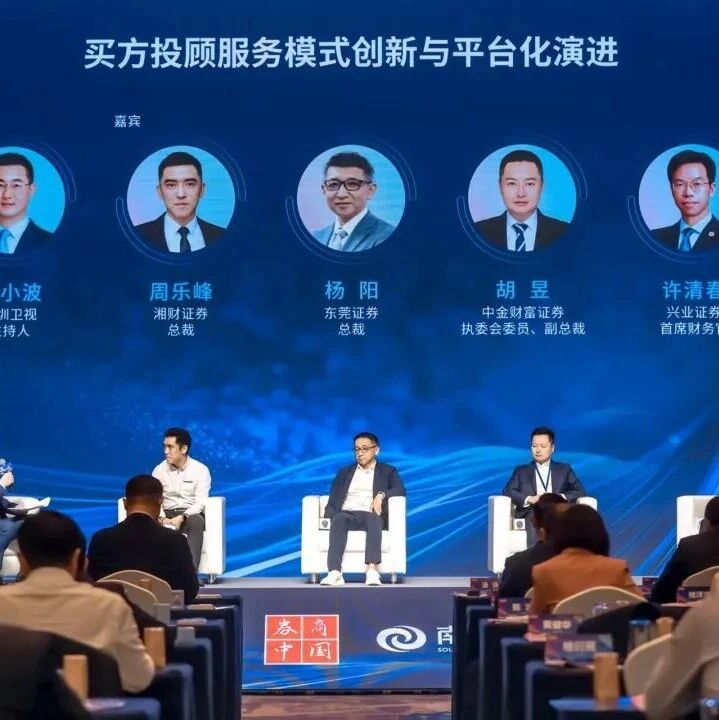
券商需回归客户本位 从“卖产品”向“管资产”跨越
Zheng Quan Shi Bao· 2025-10-15 18:10
Core Insights - The transformation towards buy-side advisory services has become a core pathway for the development of wealth management in the securities industry, driven by market recovery and industry changes [1][2][3] - Firms must return to a client-centric approach, focusing on systematic capability building, ecological platform layout, and deep organizational change to transition from "selling products" to "managing assets" [1][2] Buy-Side Advisory Transformation - The mission of the Chinese securities industry is shifting from "zero-sum games" to growing together with clients, emphasizing the importance of a systematic capability in advisory services [2][3] - The buy-side advisory transformation is a necessary response to declining commission rates and interest margins, requiring firms to focus on service fundamentals for sustainable growth [2][3] ETF Business Development - The ETF market is expanding rapidly, becoming a focal point for wealth management strategies, although growth may lag behind insurance and bank wealth management products [4][5] - Firms should leverage ETFs not just as products but as business vehicles, enhancing core capabilities in client segmentation, intent insight, and asset allocation [4][5] Organizational Change and Assessment Reforms - Organizational transformation is crucial for the buy-side advisory shift, requiring firms to balance short-term profits with long-term value [6][7] - Assessment mechanisms should move away from sales metrics to focus on AUM growth, client profitability, and service activity, aligning closely with client interests [6][7] Localized Practices - Firms like Dongguan Securities emphasize localized practices, retaining strong client relationships at the branch level while empowering advisors through tools and incentives from headquarters [7]