企业结汇

Search documents
人民币汇率破7,可持续吗?
Sou Hu Cai Jing· 2025-12-25 14:08
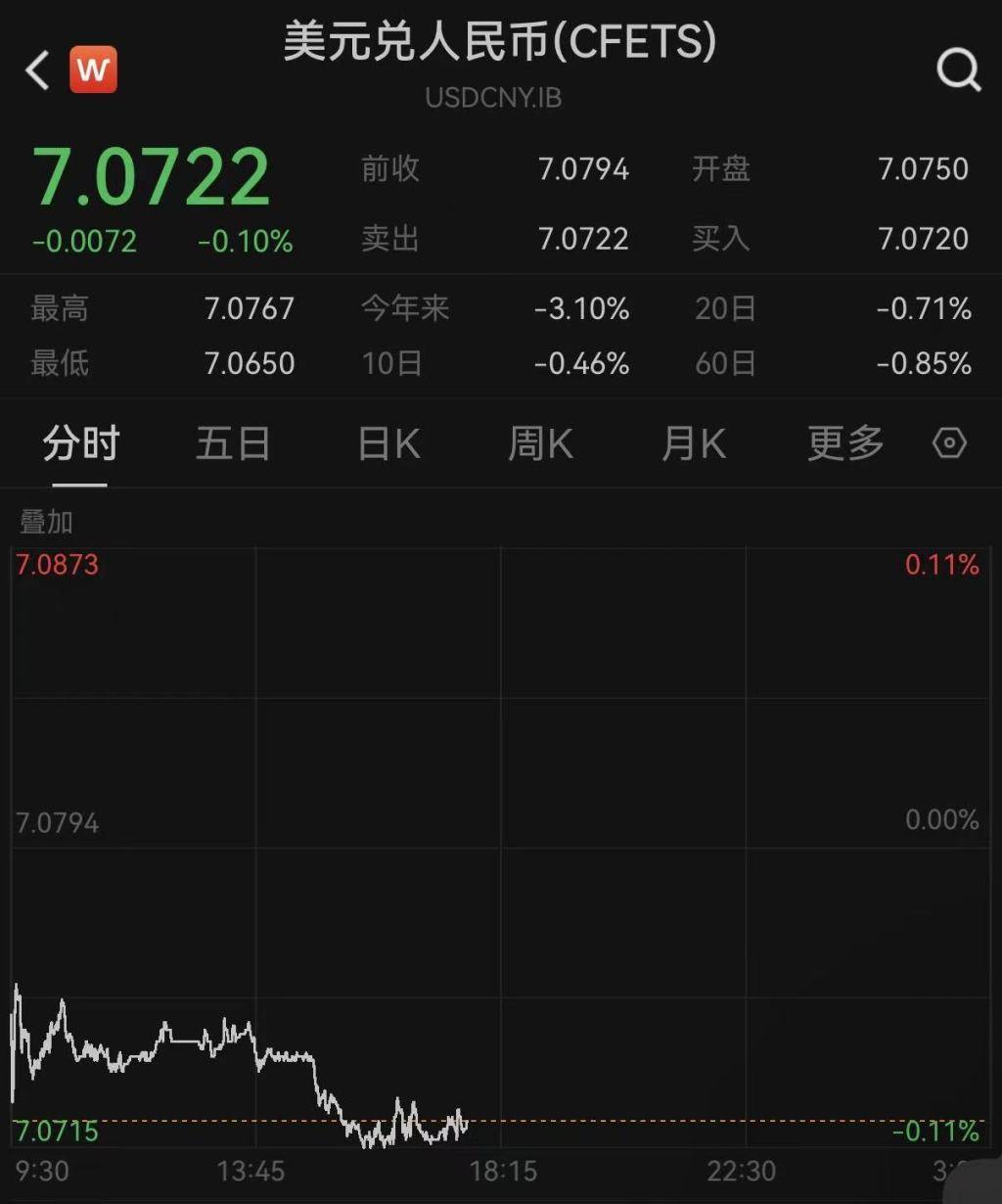
Core Viewpoint - The offshore RMB has surpassed the 7.0 mark against the USD for the first time in 2024, reaching a high of 6.9985, while the onshore RMB also broke the 7.01 threshold, marking a new high since September 27, 2024 [1][2]. Group 1: Market Dynamics - The 7.0 level is a significant "watershed" for the RMB exchange rate, causing market participants to hold their breath as it approaches [2]. - The short-term probability of the RMB breaking 7 is high, but sustaining below this level in the long term faces multiple uncertainties [3]. - The recent RMB appreciation is attributed to a combination of factors that have been building up over time [4]. Group 2: External Influences - The weakening of the USD index has created favorable external conditions, with the Federal Reserve entering a rate-cutting cycle since September, reducing rates by a total of 75 basis points this year [5][8]. - The expectation of continued rate cuts by the Federal Reserve has led to a significant drop in the USD index, facilitating the appreciation of the RMB and other non-USD currencies [8]. Group 3: Domestic Factors - The People's Bank of China (PBOC) has adopted a relaxed stance towards the RMB's appreciation, allowing the currency to strengthen without intervention, as indicated by the adjustment of the counter-cyclical factor to a positive value [9][11]. - Year-end corporate foreign exchange settlements have contributed to the RMB's appreciation, as companies convert their foreign earnings into RMB [12][13]. Group 4: Economic Context - The current RMB appreciation reflects a broader struggle for "pricing power" and "game rules" in the global market, with the U.S. attempting to reverse its industrial hollowing through protectionist measures [16][17]. - China's response has been to avoid excessive competition and allow the RMB to appreciate, thereby shifting costs to Western economies [18][21]. - The recent trade surplus exceeding $1 trillion for the first 11 months of the year indicates China's strong export performance amid these dynamics [18]. Group 5: Strategic Implications - The current RMB appreciation is seen as a strategic move by the state to prepare for manufacturing upgrades, although there may be measures to control rapid appreciation in the short term [21][22].

破7!人民币大幅升值,有人年初存美元,如今倒亏钱
Mei Ri Jing Ji Xin Wen· 2025-12-25 03:28
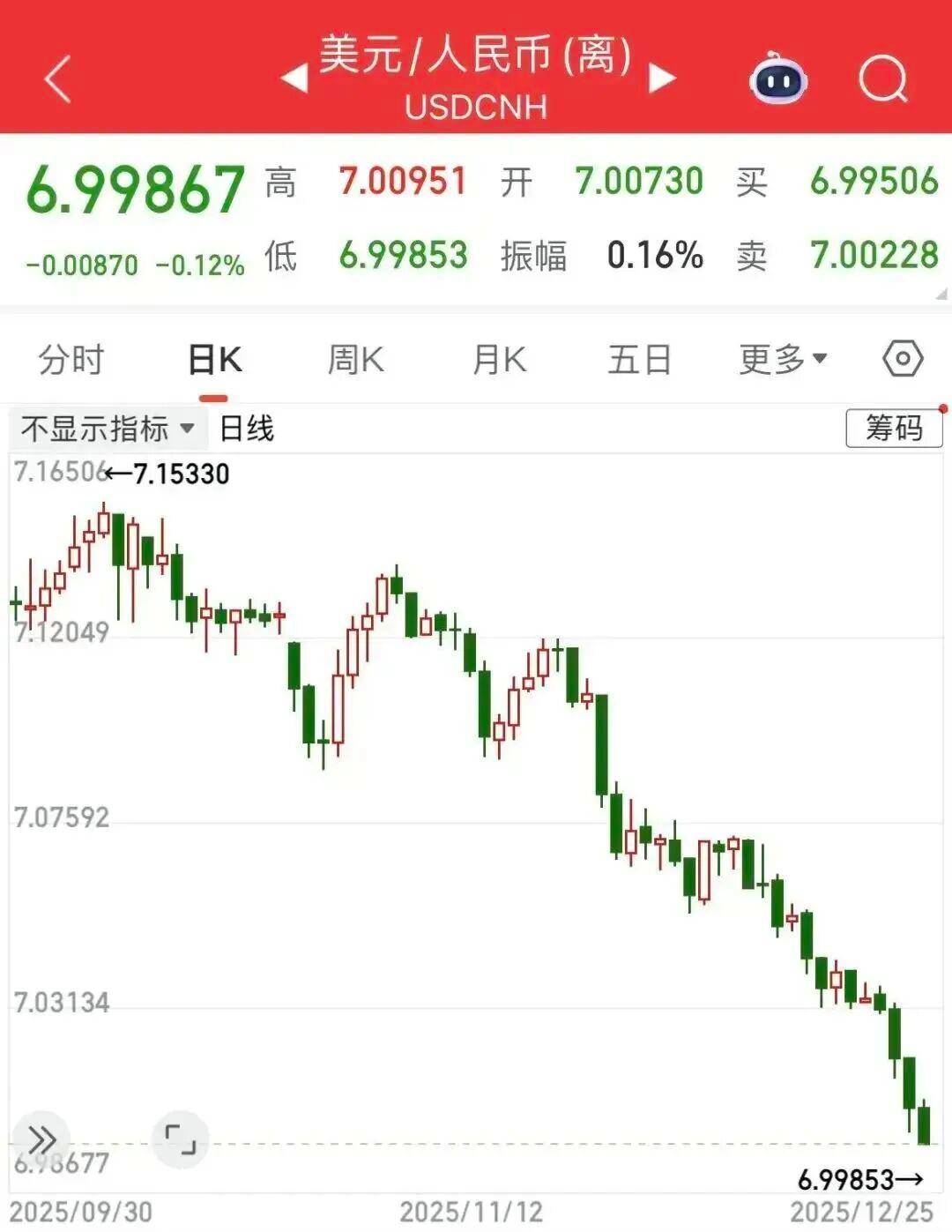
Core Viewpoint - The recent appreciation of the Chinese yuan against the US dollar has led to negative returns for dollar deposits, impacting individuals and families with foreign currency holdings [2][3][6]. Group 1: Currency Exchange Trends - The offshore yuan has shown a significant upward trend against the US dollar, with the exchange rate reaching 7.3368 by December 31, 2024 [1]. - Since November 21, the yuan has been steadily rising from around 7.11, with expectations of breaking the 7 mark increasing [6]. - The yuan's appreciation is attributed to a combination of external pressures easing, internal economic resilience, and market expectations shifting [7]. Group 2: Impact on Individuals and Families - Individuals holding dollar deposits have experienced losses due to the yuan's appreciation, with one case showing a loss of 1,033 yuan on an 8,400 dollar deposit [2]. - Families with children studying abroad benefit from the yuan's strength, as it reduces the cost of tuition and living expenses in foreign currencies [3][8]. Group 3: Market Implications - The appreciation of the yuan is expected to positively influence the Chinese stock and bond markets, enhancing the attractiveness of yuan-denominated assets [8]. - Increased demand for yuan due to seasonal currency exchange needs from businesses is contributing to the currency's strength [7].
破“7”渐近,人民币中间价今日调升79个基点
Sou Hu Cai Jing· 2025-12-25 03:11
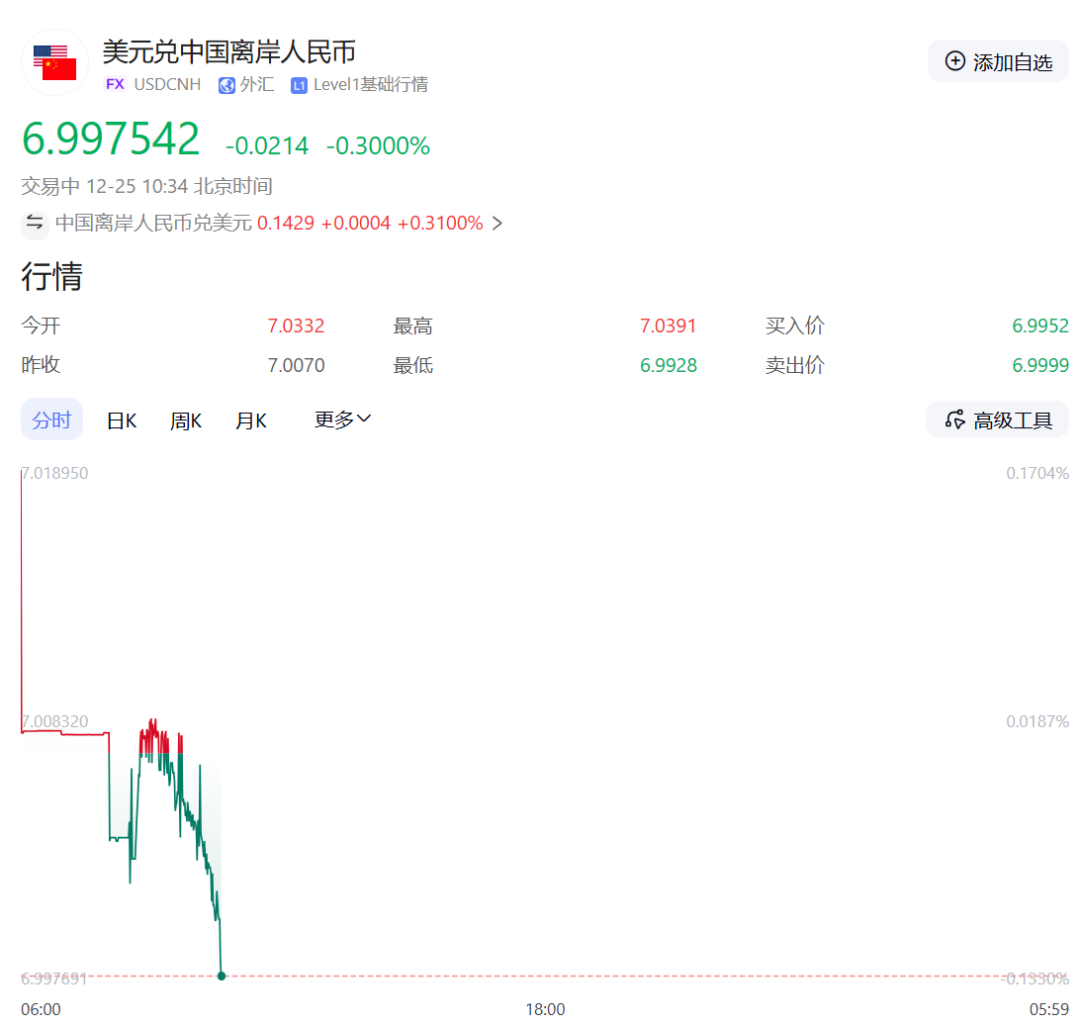
Core Viewpoint - The recent appreciation of the Renminbi (RMB) against the US dollar is attributed to the weakening of the US dollar index and increased demand for currency exchange by enterprises as the year-end approaches, which may enhance the attractiveness of China's capital markets to foreign investors [1][3]. Group 1: Currency Exchange Rate Movements - On December 25, the People's Bank of China announced that the central parity rate of the RMB against the US dollar was set at 7.0392, a significant increase of 79 basis points from the previous trading day [1]. - The RMB's central parity rate had already risen by 52 basis points on December 24, marking the highest appreciation since September 30, 2024 [1]. - The offshore RMB hit a low of 7.0032 against the US dollar, while the onshore RMB also fell to 7.0133, indicating a strong upward trend towards the "7.0" threshold [1]. Group 2: Factors Influencing RMB Strength - The RMB's strength in December is primarily driven by two factors: the weakening of the US dollar index, which fell below 100 due to market expectations of continued interest rate cuts by the Federal Reserve in 2026, and increased seasonal demand for currency exchange from enterprises as the year-end approaches [1][3]. - The recent appreciation of the RMB has also boosted market sentiment, further pushing up the RMB's value [1]. Group 3: Implications for Trade and Investment - The appreciation of the RMB is expected to increase foreign exchange gains for foreign investors, thereby enhancing confidence in the domestic capital market [3]. - For foreign trade enterprises, the recent RMB appreciation may reduce exchange profits for exporters while lowering costs for importers [3]. - Experts advise foreign trade companies to avoid betting on a one-sided RMB exchange rate trend and to utilize foreign exchange derivatives to manage exchange rate risks effectively [3]. Group 4: Regulatory Outlook and Future Expectations - The financial regulatory authorities have maintained a clear stance on stabilizing the exchange rate, emphasizing the importance of keeping the RMB at a reasonable and balanced level [3][4]. - The market anticipates that the RMB may continue to approach the 7.0 threshold in the short term, with a possibility of temporarily breaking below it, but a sustained one-sided appreciation is not expected in the medium to long term [3][4].
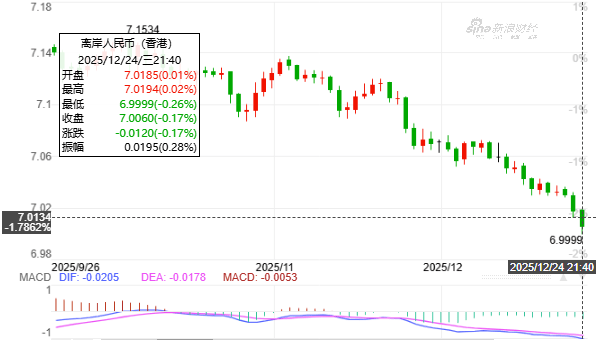
离岸人民币兑美元升穿7.0!是什么在助推这波上涨,谁将受益?
Sou Hu Cai Jing· 2025-12-24 14:43
Group 1 - The core driving factors for the recent appreciation of the offshore RMB against the USD include a shift in economic focus towards domestic demand and consumption, significant gold purchases by the central bank, and a weakening USD due to market conditions [1][4][5] - The offshore RMB has seen a strong upward trend, breaking the 7.0 mark against the USD, reaching 6.9999, the highest since October 2024, with onshore RMB also surpassing 7.02 [1][2] - The appreciation trend began in late November 2025, with onshore and offshore RMB appreciating over 900 and 1000 basis points respectively, with annual appreciation rates of 3.7% and 4.4% [4][5] Group 2 - The international metal market has experienced a surge in prices, with spot gold exceeding $4500 per ounce, silver above $70 per ounce, and copper reaching $12000 per ton, all setting historical peaks [2] - Domestic exporters are increasingly converting their foreign currency receipts into RMB immediately upon arrival, indicating a shift in behavior due to currency fluctuations [2][5] Group 3 - The appreciation of the RMB is expected to benefit several industries, particularly the non-ferrous metals sector, which is closely tied to price movements and performance in the context of global liquidity [9] - Import-dependent industries such as paper manufacturing, aviation, and oil refining will also benefit from the RMB appreciation, as it reduces costs for raw materials priced in USD [11][12][16] - Financial institutions, including banks and brokerages, are likely to see increased opportunities due to foreign capital inflows and the appreciation of RMB-denominated assets [16] Group 4 - The appreciation of the RMB may put pressure on export-oriented industries, which will need to find ways to balance profit margins amid rising costs and competitive pricing challenges [18] - Key sectors to watch include non-ferrous metals and paper manufacturing, which are expected to resonate positively with the appreciation and price increases, while consumer and pharmaceutical sectors may also attract foreign investment [18]
多因素共振推动人民币汇率创新高
Zhong Guo Zheng Quan Bao· 2025-12-16 20:19
Core Viewpoint - The recent appreciation of the Renminbi (RMB) against the US dollar has been significant, with the onshore RMB rising from approximately 7.11 to 7.04, marking an increase of over 700 basis points since late November [1][2]. Group 1: Exchange Rate Performance - On December 16, the onshore RMB closed at 7.0425 against the US dollar, up 80 basis points from the previous close, reaching a 14-month high [1]. - The offshore RMB also surpassed the 7.04 mark, closing at 7.0382, an increase of 52 basis points, and also achieving a new high since October 2024 [2]. - The central parity rate for the RMB against the US dollar was set at 7.0602, up 54 basis points from the previous trading day [2]. Group 2: Factors Influencing Appreciation - The RMB's recent strength is attributed to a weaker US dollar environment and strong domestic equity market performance attracting foreign capital inflows [1][2]. - Increased corporate demand for currency settlement as the year-end approaches has contributed to the RMB's seasonal strength, with historical data indicating a peak in foreign exchange surplus before the Spring Festival [3]. - The performance of the Chinese stock market has also drawn cross-border capital back, providing additional support for the RMB's appreciation [3]. Group 3: Future Outlook - Experts predict that the RMB will maintain a strong position in the short term, with expectations of moderate appreciation continuing into 2026 [3][4]. - The overall trend for the RMB against the US dollar in 2025 is expected to show a pattern of "weak first, strong later, with narrowed fluctuations" [3]. - The balance of economic growth, international payments stability, and RMB internationalization will be crucial for the RMB's future trajectory [4].
内外因素支撑韧性,人民币汇率强势升破7.05
Sou Hu Cai Jing· 2025-12-16 03:36
Core Viewpoint - The RMB to USD exchange rate has shown a steady upward trend, recently surpassing the 7.05 mark, reaching a 14-month high, driven by a weak USD environment and strong domestic equity market performance attracting foreign investment [1][2]. Group 1: Exchange Rate Trends - On November 15, both onshore and offshore RMB against USD broke the 7.05 threshold, with onshore reaching a high of 7.0471 and offshore hitting 7.0381 [5]. - The RMB central parity rate was adjusted up by 54 points to 7.0602 on November 16, marking the highest level since October 9, 2024 [2]. - Analysts expect the RMB to maintain a strong position against the USD in the short term, with a potential moderate appreciation by 2026 [2][5]. Group 2: Economic Factors Influencing the RMB - The recent rise in the RMB is attributed to two main factors: the decline of the USD index below 100 around the Federal Reserve's interest rate cut and increased corporate demand for currency exchange at year-end [6]. - The Chinese economy is showing stable performance, with strong export growth and a peak in currency settlement demand before the Spring Festival, contributing to the RMB's appreciation [5][6]. - The central economic work conference emphasized maintaining the RMB exchange rate's stability at a reasonable level, indicating a supportive external environment for the RMB in 2026 [5].
多重因素协同助推 人民币短期“破7”概率大
Sou Hu Cai Jing· 2025-12-04 16:52
Core Viewpoint - The recent acceleration of the Chinese yuan's appreciation against the US dollar has sparked market interest, with increasing discussions about whether the exchange rate can break the 7.0 mark. Group 1: Exchange Rate Trends - As of December 4, the yuan's central parity against the US dollar was adjusted up by 21 basis points to 7.0733, the highest level since October 14, 2024. The onshore yuan closed at 7.069, down 29 basis points from the previous trading day [1][2] - Since November, the yuan has entered a rapid appreciation phase, with significant increases of 506 basis points and 595 basis points against the US dollar for onshore and offshore rates, respectively, since November 20 [2] - The central parity has shown a narrow upward trend, with fluctuations observed in early December, indicating a potential for further appreciation [2][3] Group 2: Factors Supporting Appreciation - Market expectations for a Federal Reserve rate cut in December have been a direct driver of the yuan's appreciation, contributing to a decline in the US dollar index below 100 [5] - The approaching year-end has led to a surge in corporate foreign exchange settlement demand, which has further supported the yuan's exchange rate. In September, banks reported a settlement surplus of $51 billion, and this trend is expected to continue into the fourth quarter [6][7] - The overall export performance has been strong, with a 5.3% year-on-year increase in dollar-denominated exports in the first ten months of the year, contributing to concentrated settlement demand from enterprises [7] Group 3: Market Predictions - Experts predict a high probability of the yuan breaking the 7.0 mark in the short term, supported by seasonal settlement demand and a weaker dollar index due to anticipated Fed rate cuts [8] - Attention is drawn to the upcoming Federal Reserve meeting on December 11, which may influence the dollar's performance and the yuan's central parity adjustments [8] - Despite the potential for short-term appreciation, uncertainties remain regarding the yuan's ability to maintain levels below 7.0 in the long term, influenced by various factors including US tariffs and global trade dynamics [9]
升值势头延续!人民币汇率短期“破7”概率大
Di Yi Cai Jing· 2025-12-04 13:56
Core Viewpoint - The recent acceleration of the Renminbi's appreciation against the US dollar has sparked market interest, with increasing discussions about whether the exchange rate can break the 7.0 mark [1][9]. Exchange Rate Trends - Since November, the Renminbi has entered a rapid appreciation cycle, with further consolidation in December. As of December 3, the onshore and offshore Renminbi rates were 7.0661 and 7.0583, respectively, marking an increase of 506 and 595 basis points since November 20 [2]. - On December 4, the onshore Renminbi closed at 7.069, a slight decrease of 29 basis points from the previous trading day. The central parity rate has shown a narrow upward trend since December began, reaching its highest level since October 14, 2024, at 7.0733 [3][1]. Market Dynamics - The central bank's recent adjustments indicate a signal of "stabilizing the exchange rate" and guiding two-way fluctuations, as the central parity has been consistently set above the market price [4]. - The global currency market has seen increased volatility since late September, yet the Renminbi has maintained a relatively strong position against the US dollar, contributing to a dual strength scenario for both currencies [4]. Factors Supporting Appreciation - The market's expectations of a Federal Reserve rate cut in December have been a direct driver of the Renminbi's appreciation, with the dollar index falling below 100 [6]. - The seasonal demand for currency conversion by enterprises at year-end has also supported the Renminbi's exchange rate. Data from the foreign exchange administration shows significant surpluses in bank settlements, indicating strong demand for currency conversion [7][8]. Short-term Outlook - Experts predict a high probability of the Renminbi breaking the 7.0 mark in the short term, supported by seasonal demand and favorable economic conditions [10]. - The upcoming Federal Reserve meeting on December 11 is expected to influence market sentiment and the Renminbi's exchange rate [10]. Long-term Considerations - Despite the potential for short-term appreciation, there are uncertainties regarding the Renminbi's ability to maintain levels below 7.0 in the long run. Factors such as US tariffs and global trade dynamics may exert downward pressure on the Renminbi [11][12]. - The regulatory environment and economic policies are expected to provide a stabilizing effect on the Renminbi, with a balanced approach to managing exchange rate fluctuations [12][13].
人民币汇率短期“破7”概率大,潜在“结汇潮”影响有多大
Di Yi Cai Jing· 2025-12-04 13:21
Core Viewpoint - The recent appreciation of the Renminbi (RMB) against the US dollar has sparked discussions about whether it can break the 7.0 mark, with short-term optimism but long-term uncertainties remaining [1][10][12]. Exchange Rate Trends - The RMB entered a rapid appreciation phase in November, with further consolidation in December, showing significant short-term gains against the US dollar [2][6]. - As of December 4, the onshore RMB closed at 7.069, slightly down from the previous trading day, while the central parity rate reached its highest level since October 14, 2024, at 7.0733 [3][10]. Market Influences - The market's expectation of a Federal Reserve rate cut in December has been a direct driver of the RMB's appreciation, alongside seasonal corporate demand for currency conversion at year-end [6][8]. - Data from the foreign exchange administration indicates a significant surplus in bank settlements, with a notable increase in corporate settlement demand expected in the fourth quarter [7][9]. Economic Support Factors - The stability of the domestic economic fundamentals is providing core support for the RMB exchange rate, with multiple favorable factors contributing to its appreciation [9][13]. - The "14th Five-Year Plan" has also bolstered market confidence in the long-term stability of the Chinese economy, further supporting the RMB [1][12]. Future Outlook - Experts predict a high probability of the RMB breaking the 7.0 mark in the short term, driven by seasonal demand and favorable market conditions [11][14]. - However, uncertainties remain regarding the RMB's ability to maintain levels below 7.0 in the long term, influenced by various domestic and international factors [12][14].
升破7.07!人民币对美元汇率续创去年10月中旬以来新高
Sou Hu Cai Jing· 2025-12-01 10:40
Core Viewpoint - The Chinese Yuan (CNY) continues to appreciate against the US Dollar (USD), reaching new highs not seen since mid-October of the previous year, driven by various economic factors and market expectations. Exchange Rate Performance - On December 1, the CNY/USD spot exchange rate broke the 7.07 mark, peaking at 7.0650, marking a new high since mid-October of the previous year. The closing rate was 7.0725, an increase of 69 basis points from the previous trading day, also setting a new closing high since mid-October [1] - The onshore CNY/USD central parity rate was reported at 7.0759, up 30 basis points, the highest since October 14, 2024 [4] Economic Factors Influencing Appreciation - The macro team at GF Securities noted that the CNY's accelerated appreciation is more endogenous, particularly as the USD remained relatively strong in November. Key reasons include: - A joint arrangement reached during economic discussions in Kuala Lumpur at the end of October, reducing uncertainties in China's export environment [5] - The "14th Five-Year Plan" draft emphasizes economic development and aims for a significant increase in the consumption rate, which positively influences market expectations for the CNY [5] - The central bank's issuance of 450 billion CNY in central bank bills in Hong Kong supports the strengthening of the CNY [5] - The fourth quarter typically sees a peak in corporate foreign exchange settlements, with strong export performance leading to concentrated demand for CNY conversion [5] Market Expectations - According to Industrial Research, the CNY is expected to maintain its appreciation momentum from late November, with potential opportunities arising from fluctuations in the A-share market and external risk sentiment, as well as the anticipated interest rate cuts by the Federal Reserve [6]