全产业链协同创新

Search documents
AI赋能和场景驱动 半导体“新范式”突围
2 1 Shi Ji Jing Ji Bao Dao· 2025-11-15 10:09
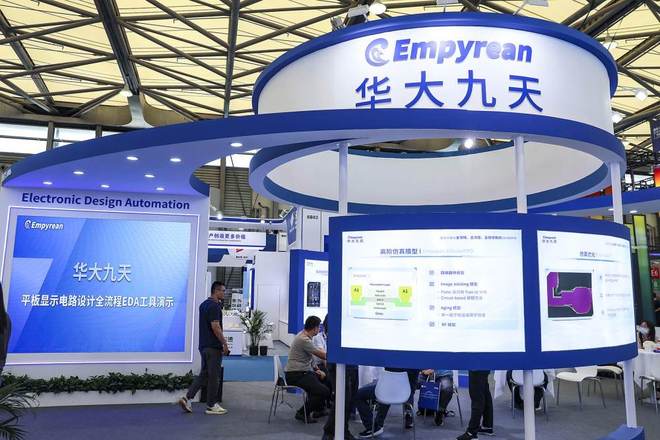
Core Insights - The semiconductor and integrated circuit industry is focusing on collaborative innovation across the entire supply chain to enhance self-innovation capabilities and core competitiveness in the global technology competition [1][7][8] - Shenzhen is positioning itself as a leader in the semiconductor market, leveraging its complete electronic information ecosystem and AI industry foundation to drive chip innovation and industrial upgrades [1][9][10] Industry Overview - The rise of the semiconductor industry is characterized by collaborative innovation across key areas such as design, manufacturing, materials, and equipment, as showcased at the recent high-tech fair [2] - The EDA (Electronic Design Automation) tools market, valued at over $10 billion, is crucial for the semiconductor manufacturing industry, which is worth hundreds of billions [2] - Domestic EDA market share is currently below 3%, dominated by international giants like Synopsys, Cadence, and Siemens EDA [2][3] Company Developments - Huada Jiutian has become the fourth largest EDA tool provider in China, with a comprehensive product line covering 80% of mainstream EDA design tools and achieving over 50% of the domestic EDA market [3] - The company has developed a full-custom design platform for EDA tools, with around 70 commercialized products [2][3] AI and Material Innovation - AI is being utilized to enhance advanced packaging materials, with efforts to create a closed-loop AI-driven platform for material design and testing [5] - The automotive sector presents significant opportunities for domestic chips, but also imposes high entry barriers due to stringent performance requirements [5][6] Market Trends - The domestic integrated circuit industry is entering a critical phase of breakthroughs and harvests, with strong performance in domestic equipment and materials [7][8] - The semiconductor industry is experiencing a shift in global competition dynamics, driven by advancements in AI technology [8][9] Future Projections - Shenzhen's semiconductor and integrated circuit industry is projected to reach a scale of 256.4 billion yuan in 2024, reflecting a year-on-year growth of 26.8% [10] - Continued rapid growth is expected in the first half of 2025, with an anticipated scale of 142.4 billion yuan, marking a 16.9% increase year-on-year [10]


从“田间”到“舌尖” 重庆食农产业“链”出全球新图景
Sou Hu Cai Jing· 2025-10-21 08:54
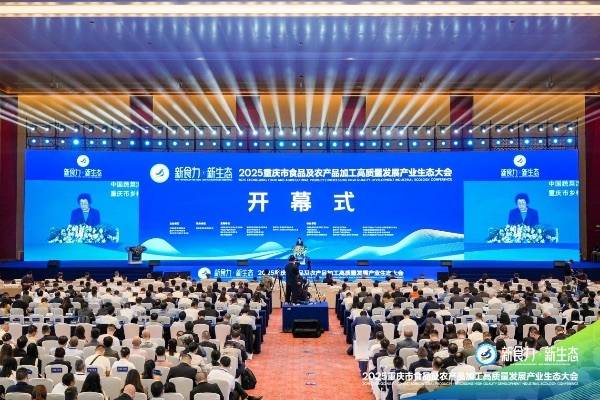
Core Insights - Chongqing is focusing on the development of food and agricultural product processing as a key strategy to cultivate a trillion-level ecological characteristic industry, integrating it into the city's "33618" modern manufacturing cluster system as one of the three major five-hundred billion-level pillar industries [1][3] - The 2025 Chongqing Food and Agricultural Product Processing High-Quality Development Industry Ecological Conference was held from October 15 to 17, 2023, emphasizing high-quality, intelligent, and sustainable development in the food and agricultural processing industry [1][3] - The conference showcased nearly 20 star products, highlighting the innovation and brand strength in Chongqing's food and agricultural processing sector [1][3] Industry Development Trends - The food and agricultural product processing industry in Chongqing is experiencing robust growth, with a total output value expected to exceed 330 billion yuan in 2024, and the number of large-scale enterprises reaching 1,356, an 18% increase from 2020 [3][5] - The city has established 10 national-level advantageous characteristic industry clusters and 13 national modern agricultural industrial parks, enhancing its industrial capabilities [5][8] Policy and Technological Support - Chongqing has implemented a "1+4+N" policy framework, introducing special policies to address financing and logistics bottlenecks, while traditional industries like Fuling pickled vegetables and Fengjie navel oranges are being upgraded [5][8] - The city is prioritizing technological innovation and digital transformation, collaborating with domestic and international research institutions to tackle key agricultural technology challenges [7][8] Collaborative Innovation - The conference emphasized the importance of full industry chain collaborative innovation as a driving force for high-quality development in the modern food and agricultural industry [8][9] - Various districts are showcasing their collaborative efforts in the food supply chain, with initiatives aimed at enhancing the value of local specialties and improving market access [9][13] Rural Revitalization - The food and agricultural product processing industry is positioned as a cornerstone of Chongqing's manufacturing sector and a connector for rural revitalization [9][16] - The conference included discussions on high-quality development paths for county economies, focusing on the integration of local resources and collaborative models [9][16]
央视点名:这台国产仪器打破国外长期封锁,实现关键突破
仪器信息网· 2025-10-16 09:06
Core Viewpoint - The article highlights the breakthrough of China's 90GHz oscilloscope, marking a significant advancement in high-end electronic measurement instruments and addressing the long-standing "bottleneck" in chip technology due to Western restrictions on exports [4][5][6]. Group 1: Product Launch and Significance - On October 15, 2025, Shenzhen Wanliyan Technology Co., Ltd. launched its flagship product, a 90GHz bandwidth ultra-high-speed real-time oscilloscope, achieving the highest level in China and the second globally [5]. - This oscilloscope features four channels, each independently supporting 90GHz bandwidth and a sampling rate of 200G, representing a new benchmark for domestic real-time oscilloscopes [5]. - The launch is seen as a critical breakthrough in high-end electronic measurement instruments, providing essential support for the development of next-generation communication, artificial intelligence, and aerospace technologies in China [6]. Group 2: Market Challenges - The oscilloscope market in China faces three main challenges: 1. Supply challenge: High-speed interface testing for chips below 7nm requires oscilloscopes with bandwidths above 60GHz to 90GHz, while Western products reach up to 110GHz, leaving a significant gap [9]. 2. Efficiency challenge: The exponential increase in testing complexity due to higher interface speeds is severely slowing down the R&D process [10]. 3. Experience challenge: Traditional button-based interactions are inadequate for modern engineers' needs for complex testing scenarios [11]. Group 3: Technological Innovation and User Experience - The success of the 90GHz oscilloscope is attributed to deep technological accumulation and extensive industry collaboration, involving key technologies such as processes, materials, chips, and software algorithms [13]. - The oscilloscope features a fully touch-screen design and gesture recognition capabilities, enhancing user experience and operational efficiency, akin to modern smartphones and electric vehicles [13][14]. - Feedback from users, including top institutions like Shanghai Jiao Tong University, indicates significant improvements in usability and efficiency, with some stating it "liberates testing productivity" [14]. Group 4: Industry Positioning and Market Strategy - The company emphasizes that the launch of the 90GHz product is not intended to undermine domestic competitors but to collectively enhance China's instrument and meter industry reputation [15]. - The oscilloscope provides a crucial alternative in the domestic market, especially as the Wassenaar Arrangement's restrictions on high-speed real-time oscilloscopes are set to change, while U.S. regulations remain at 60GHz [15]. - The company aims to create a long-lasting brand that can be trusted for quality and performance, similar to the evolution seen in the electric vehicle sector [15].
翟美卿:粤商要勇于“饮头啖汤”,敢于啃“硬骨头”
2 1 Shi Ji Jing Ji Bao Dao· 2025-09-30 04:04
Core Viewpoint - The concept of "chain leader" enterprises emphasizes collaboration and co-creation rather than monopolization, as articulated by Zhai Meiqing, the honorary president of the Guangdong Provincial Chamber of Commerce [1] Group 1: Innovation and Technology - The new generation of Guangdong merchants is encouraged to tackle core technological challenges, likened to being the first to "taste the soup" in business [2] - Xiangjiang Group has developed the world's first industrial production line for lithium carbonate from aluminum hydroxide mother liquor, with an annual capacity exceeding 10,000 tons and a lithium recovery rate over 90%, sufficient to meet the battery needs of 200,000 electric vehicles [2] - The company has achieved significant technological breakthroughs in the new energy materials sector through AI-driven sensor networks that optimize purification processes to meet battery-grade standards [2] Group 2: Strategic Alignment - Innovation must be integrated into national strategies to maintain control over innovation and achieve high-quality development [2] - The role of "chain leader" enterprises includes building platforms, establishing rules, and promoting collaborative innovation across the entire industry chain [2] - The shift from a trial-and-error approach to a focus on independent innovation is essential for navigating the complexities of technological advancement [2]
中策橡胶将携手联想集团和联想新视界 共同推动全产业链协同创新
Zheng Quan Shi Bao Wang· 2025-09-18 01:16
Group 1 - The core viewpoint of the article is the strategic partnership formed between Zhongce Rubber, Lenovo (Beijing) Co., Ltd., and Lenovo New Vision (Zhejiang) Industrial Internet Research Institute to integrate "AI + manufacturing" for innovation and productivity enhancement [1] Group 2 - The collaboration aims to promote deep integration of AI technologies within the manufacturing sector [1] - The partnership is expected to accelerate the cultivation of new productive forces across the entire industry chain [1]

从《浪浪山小妖怪》看国漫人如何“拼好团”
Zhong Guo Xin Wen Wang· 2025-08-11 14:01
Core Insights - The animated film "Wang Wang Mountain Little Monsters" has achieved significant success, grossing over 600 million yuan, setting a record for domestic 2D animated films in China [1] - The film is a derivative of the short animation "Chinese Tales" and features a story about a grassroots team embarking on an adventure [1] - The film's success is attributed to a collaborative approach among industry professionals, fostering innovation and creativity within the animation sector [4] Group 1 - "Wang Wang Mountain Little Monsters" has surpassed 600 million yuan in box office revenue, breaking the record for domestic 2D animated films in China [1] - The film was released on August 2 and is based on the short animation "Chinese Tales: The Summer of Little Monsters" [1] - A themed exhibition at the Zhejiang Provincial Museum complements the film, offering an immersive experience that redefines the interaction between animation and the public [1][2] Group 2 - The exhibition features interactive games and realistic recreations of scenes from the film, enhancing audience engagement [2] - The collaborative environment in Hangzhou's Yichuang Town has led to a community of creators sharing ideas and resources, which is essential for the growth of the animation industry [4] - The film has over 30 announced collaborations across various sectors, including automotive, food and beverage, and merchandise, creating a comprehensive commercial strategy [4] Group 3 - The success of "Wang Wang Mountain Little Monsters" is seen as a sign of maturity in the Chinese animation industry, showcasing a full industry chain collaboration [6] - The film effectively transforms classic symbols from "Journey to the West" into contemporary narratives that resonate with young audiences [6] - The emphasis on content and cross-industry collaboration is viewed as crucial for establishing a unique position for Chinese animation on the global stage [6]

协同创新为海洋产业蓄能
Jing Ji Ri Bao· 2025-06-19 22:12
Core Insights - The marine strategic emerging industries in China are experiencing significant growth, with new orders, delivered orders, and hand-held orders increasing by 57.1%, 114.3%, and 24.2% year-on-year respectively in Q1 of this year [1] - The added value of marine emerging industries is projected to grow by 7.2% in 2024, surpassing the growth rate of the marine gross production value by 1.3 percentage points [1] Group 1: Industry Development - The marine strategic emerging industries include sectors such as seawater utilization, marine biotechnology, marine renewable energy, marine new materials, marine equipment manufacturing, deep-sea strategic resource development, and modern marine services [1] - Increased investment and research from research institutions and enterprises are accelerating the technological upgrades in marine strategic emerging industries [1] Group 2: Policy and Support - There is a need for enhanced policy support, including the formulation of development plans, financial subsidies, tax incentives, and diversified capital investment channels to promote sustainable industry growth [2] - Establishing industrial bases and parks to nurture leading technology enterprises and specialized small and medium-sized enterprises in the marine emerging industries is essential for fostering industry clusters [2] Group 3: Innovation and Collaboration - Promoting collaborative innovation across the entire industry chain is crucial, particularly in developing marine renewable energy technologies and deep-sea biological resource utilization [2] - Strengthening cooperation between enterprises and educational institutions is necessary to ensure the output and transformation of research results, accelerating the cultivation of high-quality projects in marine strategic emerging industries [2] Group 4: Energy Security - Accelerating the exploration of marine oil and gas resources and the construction of deep-water oil and gas fields is vital for ensuring sustainable marine energy supply [3] - The development of integrated offshore photovoltaic demonstration projects is aimed at creating a new energy cycle involving photovoltaic power generation, hydrogen production, and new energy storage [3]
系统创新 机制破题 技术攻坚——中国石油独山子石化公司以科技创新驱动全链跃升
Zhong Guo Hua Gong Bao· 2025-05-16 02:18
Core Insights - The company has achieved large-scale application of its self-developed polypropylene lithium battery separator material T98 series, with cumulative supply exceeding 10,000 tons by the end of April [1] - The company has established an innovative ecosystem covering "basic research - technology development - industrial application," leading to the highest new material output among refining enterprises in the China National Petroleum Corporation [1] Group 1: Innovation and Technology - The company has built a molecular-level refining model that predicts logistics and properties accurately, covering over 2,000 hydrocarbon molecules, processing 8 million tons of crude oil annually, generating additional benefits of over 300 million yuan, and reducing CO2 emissions by 80,000 tons [2] - Smart factory initiatives include intelligent inspection robots and energy management systems, enhancing operational efficiency and reducing carbon emissions [2] - The predictive maintenance accuracy of equipment has reached 92% through the use of infrared thermal imaging and radar scanning technologies [3] Group 2: Mechanism and Talent Development - The company has created an innovation ecosystem with internal incentives and external collaborations, establishing a "three-level four-dimensional" incentive mechanism that rewards basic research, technology development, and achievement transformation [4] - The average salary of research personnel is 28% higher than that of management positions, fostering a competitive environment for innovation [4] - Collaborations with top universities and research institutions have been established to enhance talent development and innovation capabilities [4] Group 3: Product Development and Market Position - The company has developed a comprehensive range of metallocene polyethylene film materials, becoming the largest producer in China, and has achieved stable production using ring pipe technology for metallocene polypropylene [5][6] - The company has broken the dependency on imports for solution polymerized styrene-butadiene rubber, achieving a domestic market share of 45% [6] - The company plans to build a new materials base with an annual production capacity of 1 million tons, focusing on advanced fields such as polyolefin elastomers and carbon fiber materials [6]

CIBF2025在深圳开幕
Huan Qiu Wang· 2025-05-16 01:54
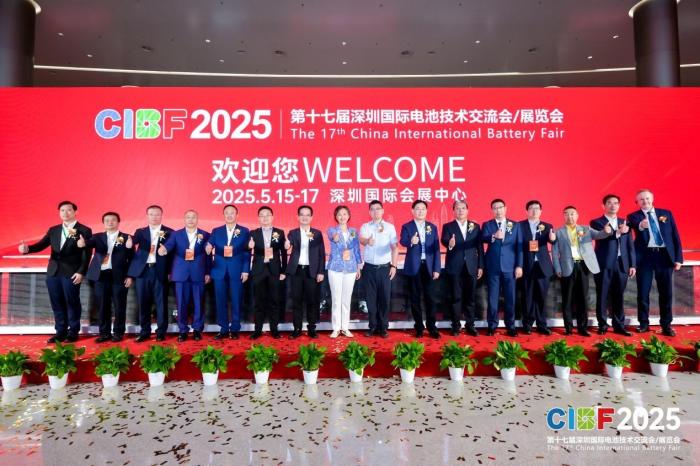
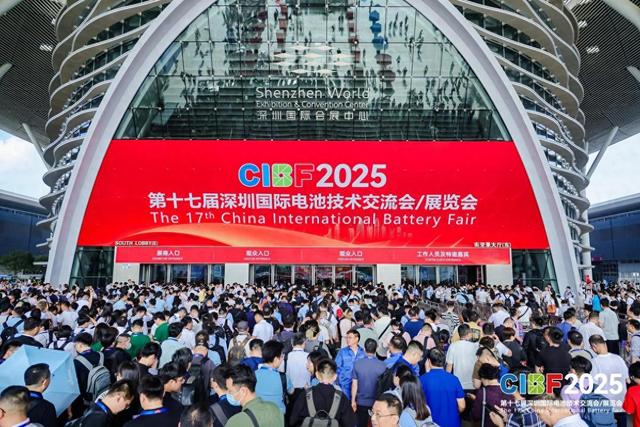
Group 1 - The 17th Shenzhen International Battery Technology Exchange and Exhibition (CIBF2025) opened on May 15, 2025, focusing on battery technology revolution and industry chain collaboration [1][3] - The event is expected to attract over 3,200 top global exhibitors and more than 400,000 professional visitors, with an exhibition area exceeding 300,000 square meters [3] - CIBF2025 aims to serve as a comprehensive platform covering the entire industry chain from materials to applications, enhancing international cooperation and innovation [3][4] Group 2 - In the first quarter of 2025, the production of new energy vehicles, lithium-ion power batteries, and solar cells increased by 45.4%, 39.2%, and 18.5% year-on-year, respectively, indicating strong growth momentum in China's renewable energy sector [4] - China's newly installed renewable energy capacity reached 76.75 million kilowatts in the first quarter of 2025, a year-on-year increase of 21%, accounting for approximately 90% of the new installations [4] - The event showcased next-generation battery technologies, including solid-state batteries and sodium-ion batteries, with significant advancements expected in energy density and production capabilities [4][5] Group 3 - The integration of AI in battery management systems and automated disassembly technologies highlights China's leading position in battery lifecycle management [5] - CIBF2025 features an "International Pavilion" to facilitate competition and cooperation between domestic and foreign companies in resource recycling and recovery technologies [7] - The successful hosting of CIBF2025 is anticipated to further promote the development of the global new energy industry and support economic recovery [7]
第十七届深圳国际电池技术交流会在深圳开幕
Zhong Guo Xin Wen Wang· 2025-05-15 14:39
Core Insights - The 17th Shenzhen International Battery Technology Exchange Conference/Exhibition (CIBF2025) opened on May 15, focusing on battery technology revolution and industry chain collaboration [1][3] - The International Energy Agency (IEA) predicts global battery demand will surge to 3500 GWh by 2030, with China leading in technology iteration and standard setting [1] - CIBF2025 has transformed into a comprehensive platform covering the entire industry chain, with an exhibition area exceeding 300,000 square meters and attracting over 3,200 exhibitors and more than 400,000 professional visitors [1][3] Industry Trends - The current period is critical for China's economic transition to high-quality development and the deepening reform of the new energy sector [3] - By 2025, the new energy industry is expected to shift from "scale expansion" to "quality upgrade," showing strong development momentum [3] - Production of new energy vehicles, lithium-ion power batteries, and solar cells has increased by 45.4%, 39.2%, and 18.5% year-on-year, respectively, contributing significantly to stable growth [3] Renewable Energy Developments - In the first quarter of 2025, newly installed renewable energy capacity reached 76.75 million kilowatts, a year-on-year increase of 21%, accounting for approximately 90% of new installations [3] - This marks a new phase in China's energy structure adjustment [3] Exhibition Highlights - CIBF2025 features 15 exhibition halls and includes over 200 academic reports and four high-end summits to decode industry trends [3] - Key topics include advanced battery technology seminars and discussions on electric aviation and next-generation battery technologies [3]