
智能家居系统

Search documents
人工智能推动产业转型升级的路径探索
Xin Lang Cai Jing· 2026-02-13 16:24
Core Insights - Artificial intelligence (AI) is a key driver of profound changes in industries, fundamentally reshaping global industrial development and international competition [1][6] - The exploration of AI's role in industrial transformation is crucial for building a modern industrial system and promoting high-quality economic development [1][6] Group 1: AI Empowering Industrial Transformation - AI technology releases the value of data elements, optimizing collaborative decision-making across the entire industrial chain [1][6] - AI enables early identification and accurate forecasting of market demand changes by integrating various information sources [2][6] - In the automotive industry, AI systems can dynamically adjust production plans and procurement strategies based on real-time data [3][6] Group 2: AI in Production Processes - AI integrates IoT and production management data for global dynamic optimization of production scheduling and energy management [4][6] - AI models autonomously adjust energy supply strategies to achieve precise energy-saving goals [4][6] - The integration of AI throughout the production process enhances resource allocation efficiency and system resilience [4][6] Group 3: Innovation in Products and Services - AI endows products with capabilities such as environmental perception and autonomous decision-making, transforming them into intelligent partners [5][6] - AI facilitates the transition from standardized service delivery to personalized, proactive service models [5][6] - The deep integration of AI with product functions and service processes shifts the focus of industrial competition towards data-driven capabilities and service responsiveness [5][6]
《商学院》杂志专访贝恩公司刘洋:破局“绿色悖论”——以创新与责任重塑可持续消费
Sou Hu Cai Jing· 2026-02-09 09:12
Core Insights - The article emphasizes the importance of sustainable consumption, highlighting that 80% of consumers are highly concerned about sustainability and prefer companies that offer innovative, affordable, and sustainable products [1][4][5] Group 1: Consumer Trends - Consumers face a "green paradox" due to high prices, poor performance of eco-friendly products, and confusing labels, leading to a disconnect between their intentions and actual purchasing behavior [1][7] - The article identifies three key trends shaping future consumption patterns: sustainable consumption as a dominant theme, the shift of market power towards consumers, and the supply-side innovation gap [4][6][7] Group 2: Corporate Actions - Companies are transitioning from the "slogan era" to the "action era," focusing on genuine sustainable practices rather than superficial marketing [5][6] - CEOs are increasingly converting sustainability commitments into actionable strategies, such as supply chain optimization and product design innovation, despite a decrease in public discourse on sustainability [5][6] Group 3: Market Dynamics - The market power is shifting towards consumers, who now have access to more information and choices, making it essential for companies to provide genuine value to earn consumer trust [6][12] - The article discusses the "sustainability consumption gap," indicating that the lack of affordable and high-performing sustainable products is a significant barrier to consumer adoption [7][11] Group 4: Consumer Segmentation - The article highlights the importance of understanding consumer demographics, noting that different generations exhibit varying levels of commitment to sustainable practices, with Baby Boomers showing more engagement than Gen Z [9][10] Group 5: Product and Service Innovation - Companies must ensure that their products not only have sustainable attributes but also meet performance, price, and user experience expectations [11][14] - The success of sustainable products, such as electric vehicles, is attributed to their ability to offer superior value beyond just being eco-friendly, thus appealing to consumer needs [13][14] Group 6: Organizational Integration - Sustainability should not be treated as a separate initiative but integrated into core business strategies across all departments to ensure effective implementation [15][16] - Companies are encouraged to adopt a dual-value approach, linking sustainability with clear business value and consumer demand to drive organizational change [15][16]


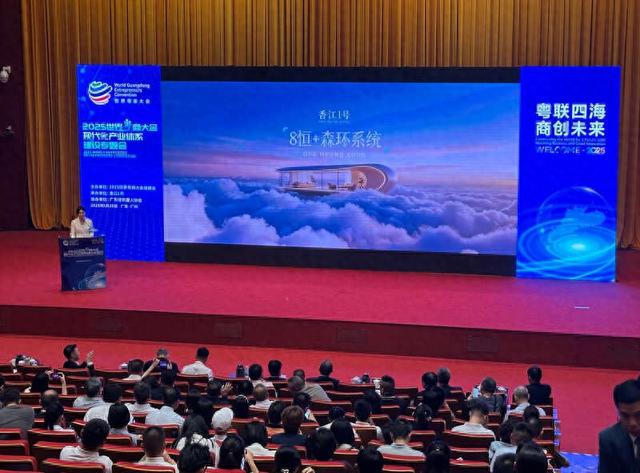
粤商代表聚焦“现代化产业体系建设”展开对话
Xin Lang Cai Jing· 2025-12-28 15:19
Group 1 - The 2025 World Cantonese Business Conference focused on the construction of a modern industrial system, with discussions led by representatives of outstanding Cantonese businesses [1] - Chen Lei, Deputy Director of the Guangdong Provincial Department of Industry and Information Technology, presented policies supporting innovation in the artificial intelligence and robotics sectors, providing a strategic blueprint for future planning [1] - City leaders from Guangzhou, Shenzhen, Shaoguan, and Dongguan promoted their investment environments, showcasing regional industrial vitality and investment prospects [1] Group 2 - National Committee member and Chairman of Xiangjiang Group, Zhai Meiqing, emphasized the importance of integrating enterprise innovation into national strategy for achieving high-quality development [3] - Zhai highlighted the role of "leading enterprises" in fostering collaborative innovation across the entire industry chain, rather than monopolizing resources [3] - The conference featured discussions on the application of humanoid robots in industry transformation and the commercial pathways for data-driven intelligent applications across various sectors [3] Group 3 - The conference released the "2025 Top 100 Private Enterprises in Guangdong Province" list, which was based on voluntary applications and audited revenue data for 2024 [5] - The entry threshold for the Top 100 Private Enterprises list was set at 12.332 billion yuan [5]
AI消费电子:智能生活的新引擎
Sou Hu Cai Jing· 2025-12-25 08:21
Core Insights - The integration of artificial intelligence (AI) with consumer electronics is transforming daily interactions with technology, leading to a projected market size of 19,772 billion yuan in China by 2024, reflecting a 6% year-on-year growth driven by AI applications [1][2] Group 1: Current State and Scale of AI in Consumer Electronics - The consumer electronics industry is experiencing a new industrialization trend characterized by "demand-driven technology and technology reshaping industries" [2] - By Q3 2025, global smartphone shipments are expected to reach approximately 323 million units, marking a 2.6% year-on-year increase, with AI and foldable screen innovations driving high-end upgrades [2] Group 2: Product Forms and Application Scenarios of AI Consumer Electronics - AI smartphones are evolving from traditional communication tools to intelligent assistants, with predictions indicating that global shipments of generative AI smartphones could reach 369 million units by 2025 [5] - The AI glasses market in China is projected to see explosive growth, with Q1 2025 shipments expected to reach 494,000 units, a 116.1% increase year-on-year, and total annual shipments forecasted at 2.907 million units [5] - Wearable devices are transitioning from simple notification tools to comprehensive health management platforms, with global smartwatch shipments expected to grow by 3% year-on-year by Q3 2025, alongside a 9% increase in average selling prices [5] Group 3: Core Technologies Driving AI Consumer Electronics - The advancement of dedicated AI chips, such as Neural Processing Units (NPUs), is crucial for enhancing device intelligence and operational efficiency [7] - The trend of edge AI is becoming more prominent, allowing AI processing to shift from the cloud to local devices, which enhances user privacy and reduces cloud computing costs [7] Group 4: Challenges and Issues Facing AI Consumer Electronics - The industry faces significant challenges, including technological bottlenecks where international tech giants dominate foundational software and cloud computing services [9] - Supply chain stability is a concern, influenced by global economic complexities and trade restrictions affecting upstream industries [11] - Compatibility issues among different brands' smart devices hinder user experience, necessitating multiple apps for control [11] Group 5: Future Trends and Outlook - The integration of AI with consumer electronics is expected to deepen, with AI becoming a core value that actively perceives user needs and provides multi-dimensional responses [13] - Global spending on generative AI is projected to grow from $225 billion in 2023 to $699 billion by 2030, with a compound annual growth rate of 21% [13] - The way humans interact with technology will undergo revolutionary changes, with natural language interactions gradually replacing touch controls [13] - Personalization and adaptability will become key competitive advantages, with AI systems learning user habits to provide tailored experiences [15]

安居宝股价涨5.05%,金元顺安基金旗下1只基金位居十大流通股东,持有264.67万股浮盈赚取74.11万元
Xin Lang Cai Jing· 2025-12-24 06:52
Group 1 - The core viewpoint of the news is that Anjubao's stock price increased by 5.05%, reaching 5.82 CNY per share, with a total market capitalization of 3.266 billion CNY as of the report date [1] - Anjubao, established on December 29, 2004, and listed on January 7, 2011, specializes in the production and sales of building intercom systems, smart home systems, anti-theft alarm systems, parking systems, monitoring systems, and cables [1] - The revenue composition of Anjubao includes: building intercom systems (49.97%), smart home systems (15.62%), property leasing (11.92%), parking systems and barrier advertising (10.41%), monitoring systems and system integration (7.58%), and others (4.50%) [1] Group 2 - Among Anjubao's top ten circulating shareholders, Jinyuan Shun'an Fund has a fund that entered the top ten shareholders, holding 2.6467 million shares, which is 0.8% of the circulating shares [2] - The Jinyuan Shun'an Yuanqi Flexible Allocation Mixed Fund (004685) has achieved a return of 42.84% this year, ranking 1611 out of 8088 in its category [2] - The fund manager, Miao Weibin, has a tenure of 9 years and 11 days, with the fund's total asset size at 1.432 billion CNY and a best return of 571.13% during his tenure [3]

安居宝跌2.12%,成交额2353.69万元,主力资金净流出150.50万元
Xin Lang Cai Jing· 2025-12-23 02:09
Group 1 - The core viewpoint of the news is that Anjubao's stock price has experienced fluctuations, with a recent decline of 2.12% and a total market value of 3.115 billion yuan [1] - Anjubao's stock price has increased by 15.87% year-to-date, but has seen a decline of 8.72% over the last five trading days and 7.65% over the last twenty days [2] - The company reported a significant decrease in revenue and net profit for the period from January to September 2025, with revenue of 107 million yuan, down 30.48% year-on-year, and a net loss of 33.17 million yuan, down 56.06% year-on-year [2] Group 2 - Anjubao's main business segments include building intercom systems (49.97% of revenue), smart home systems (15.62%), and property leasing (11.92%) [2] - The company has not distributed any dividends in the last three years, with a total payout of 304 million yuan since its A-share listing [3] - As of September 30, 2025, Anjubao's top ten circulating shareholders include a new shareholder, Jinyuan Shun'an Yuanqi Flexible Allocation Mixed Fund, holding 2.6467 million shares [3]
安居宝股价跌5%,金元顺安基金旗下1只基金位居十大流通股东,持有264.67万股浮亏损失82.05万元
Xin Lang Cai Jing· 2025-12-19 05:47
Group 1 - The core point of the news is that Anjubao's stock price dropped by 5% to 5.89 CNY per share, with a trading volume of 112 million CNY and a turnover rate of 5.64%, resulting in a total market capitalization of 3.306 billion CNY [1] - Anjubao, established on December 29, 2004, and listed on January 7, 2011, specializes in the production and sales of building intercom systems, smart home systems, anti-theft alarm systems, parking systems, monitoring systems, and cables [1] - The revenue composition of Anjubao's main business includes: building intercom systems (49.97%), smart home systems (15.62%), property leasing (11.92%), parking systems and barrier advertising (10.41%), monitoring systems and system integration (7.58%), and others (4.50%) [1] Group 2 - Among Anjubao's top ten circulating shareholders, the Jinyuan Shun'an Fund has a fund that entered the top ten shareholders in the third quarter, holding 2.6467 million shares, which accounts for 0.8% of the circulating shares [2] - The Jinyuan Shun'an Yuanqi Flexible Allocation Mixed Fund (004685) has a current scale of 1.432 billion CNY and has achieved a return of 41.91% this year, ranking 1387 out of 8098 in its category [2] - The fund manager, Miao Weibin, has a tenure of 9 years and 6 days, with the fund's best return during his tenure being 557.04% and the worst being -28.79% [3]
安居宝股价涨5.18%,金元顺安基金旗下1只基金位居十大流通股东,持有264.67万股浮盈赚取82.05万元
Xin Lang Cai Jing· 2025-12-18 02:42
Group 1 - The core viewpoint of the news is that Anjubao's stock price increased by 5.18%, reaching 6.29 CNY per share, with a trading volume of 73.93 million CNY and a turnover rate of 3.62%, resulting in a total market capitalization of 3.53 billion CNY [1] - Anjubao, established on December 29, 2004, and listed on January 7, 2011, is located in Guangzhou, Guangdong Province, and specializes in the production and sales of building intercom systems, smart home systems, anti-theft alarm systems, parking systems, monitoring systems, and cables [1] - The main business revenue composition of Anjubao includes: building intercom systems (49.97%), smart home systems (15.62%), property leasing (11.92%), parking systems and barrier advertising (10.41%), monitoring systems and system integration (7.58%), and others (4.50%) [1] Group 2 - Among Anjubao's top ten circulating shareholders, a fund under Jinyuan Shun'an, specifically the Jinyuan Shun'an Yuanqi Flexible Allocation Mixed Fund (004685), entered the top ten in the third quarter, holding 2.6467 million shares, which accounts for 0.8% of the circulating shares [2] - The Jinyuan Shun'an Yuanqi Flexible Allocation Mixed Fund has a current scale of 1.432 billion CNY and has achieved a return of 40.69% this year, ranking 1586 out of 8100 in its category [2] - The fund manager, Miao Weibin, has a tenure of 9 years and 5 days, with the fund's best return during his tenure being 554.51% and the worst return being -28.79% [3]
创新场景打通消费品供需适配“新通道”
Ren Min Wang· 2025-12-09 01:31
Group 1 - The core idea of the news is the implementation of a new policy aimed at enhancing the adaptability of consumer goods supply and demand, encouraging businesses to create products that meet consumer needs [1][3] - The policy, issued by six departments, includes 19 key tasks focused on empowering both supply and demand sides, with an emphasis on new fields and industries such as smart connected vehicles and smart home technology [2][3] - The initiative aims to address long-standing mismatches in the consumer market, setting development goals for 2027 and 2030 to foster new growth points in consumption [3] Group 2 - The policy supports a diverse supply system, promoting health, sports, and interest-based consumption, leading to a surge in products that cater to various age groups and needs [2][3] - The transformation in consumer behavior is highlighted, with a shift from merely having products to seeking quality and emotional connection in purchases [3] - The expected outcome of these measures is a more intelligent, flexible supply side and a more willing and enjoyable consumption experience for consumers, ultimately driving high-quality economic development in China [3]
尼尔森IQ Kent Dahn:全球科企可借AIE进亚洲市场
2 1 Shi Ji Jing Ji Bao Dao· 2025-12-05 10:12
Core Insights - The Guangdong-Hong Kong-Macao Greater Bay Area (GBA) is a global leader in the smart equipment and electronics industry, accounting for 40% of global smartphone production and 70% of consumer drone production, showcasing strong manufacturing and innovation capabilities [1] - The GBA is expected to remain a major engine for China's economic growth due to its unique advantages, including a complete and competitive supply chain, significant industry clustering effects, and a comprehensive technology innovation ecosystem [2] Industry Advantages - The GBA's solid position in the global electronics industry is attributed to three core advantages: a competitive supply chain covering all production stages, a high concentration of tech companies fostering collaborative innovation, and a supportive ecosystem for startups that integrates education, incubation, and capital [2] - Compared to Western Europe and developed Asian countries, the GBA excels in supply chain integration, hardware manufacturing, and the rapid incorporation of digital technologies like AI and IoT into hardware products, enabling high-cost performance and quick market responsiveness [3] Market Entry Solutions - The collaboration between Macau and Zhuhai effectively addresses two major challenges faced by global tech companies entering the GBA market: Macau serves as an international trade hub simplifying market access and compliance, while Zhuhai provides a robust manufacturing base for rapid product commercialization [4] Event Features - The AIE (2025 Global Intelligent Machinery and Electronics Expo) distinguishes itself from other exhibitions like CES through its "dual-city" model, showcasing a full industry chain from technology to application, emphasizing "first-release economy," and integrating exhibition, forums, and investment to support technology commercialization [5] Industry Changes - The global smart equipment and electronics industry is undergoing significant changes, including the deep integration of AI with hardware, accelerated digital transformation in manufacturing, and a shift towards scenario-based smart consumer electronics [6] Future Prospects - Promising electronic sub-sectors for the coming years include low-altitude economy (eVTOLs, drones), smart medical devices, and industrial robots, driven by factors such as aging populations, advancements in AI and 5G, supportive innovation policies in the GBA, and increasing demand for green smart manufacturing [7]