
全球经济一体化

Search documents
【环球财经】肯尼亚媒体:美国关税政策挤压非洲发展空间
Xin Hua She· 2025-08-09 08:57
Core Viewpoint - The article discusses the impact of the U.S. government's imposition of punitive tariffs, highlighting the potential negative effects on global trade, economic growth, and geopolitical stability, particularly for African economies that are already vulnerable [1]. Group 1: Impact of U.S. Tariffs - The U.S. tariff barriers are expected to increase the cost of imported goods, leading to a restructuring of global supply chains [1]. - Punitive tariffs may disrupt trade channels in critical sectors such as commodities, electronics, and textiles [1]. Group 2: Vulnerability of African Economies - African economies are highly dependent on export trade, foreign investment, and multilateral trade systems, making them more susceptible to the adverse effects of punitive tariffs [1]. - The ongoing trade war exacerbates the challenges faced by African nations, which are already dealing with debt crises, climate disasters, and recovery from the COVID-19 pandemic [1]. Group 3: Specific Impact on Kenya - Kenya is projected to lose 600,000 jobs and over 13 billion Kenyan shillings in fiscal revenue due to the end of the grace period for U.S. tariffs on Kenyan exports [1]. - The lack of policy tools to mitigate trade shocks further complicates Kenya's economic situation compared to larger economies with fiscal buffers [1]. Group 4: Regional Trade Dynamics - The African Continental Free Trade Agreement (AfCFTA) is progressing, but intra-African trade only accounts for 18% of total African trade, insufficient to offset the impacts of global trade disruptions [2]. - To mitigate the effects of U.S. tariff policies, African nations need to diversify trade, reduce reliance on the U.S. market, strengthen regional trade under the AfCFTA framework, and deepen cooperation with BRICS countries [2].
全球瞭望丨肯尼亚媒体:美国关税政策挤压非洲发展空间
Xin Hua She· 2025-08-09 08:17
Core Viewpoint - The article discusses the impact of the U.S. government's imposition of punitive tariffs, highlighting the potential negative effects on global trade, economic growth, and geopolitical stability, particularly for African economies [1]. Group 1: Economic Impact - The U.S. tariff barriers are expected to increase the cost of imported goods, leading to a restructuring of global supply chains [1]. - The punitive tariffs may disrupt trade channels in key sectors such as commodities, electronics, and textiles [1]. - African economies, which heavily rely on export trade, foreign investment, and multilateral trade systems, will face increased economic vulnerability due to these tariffs [1]. Group 2: Specific Case of Kenya - Kenya is projected to experience significant adverse effects from the U.S. tariffs, with an estimated loss of 600,000 jobs and over 13 billion Kenyan shillings in fiscal revenue [1]. - The end of the grace period for tariffs on Kenyan goods entering the U.S. poses a severe challenge for the country [1]. Group 3: Regional Trade Dynamics - Despite the ongoing progress of the African Continental Free Trade Agreement, intra-African trade accounts for only 18% of total African trade, which is insufficient to mitigate the impacts of global trade disruptions [2]. - The article emphasizes the need for African nations to diversify their trade strategies, reduce dependency on the U.S. market, and strengthen regional trade under the African Continental Free Trade Area framework [2].
摊牌了,美国两院联合提案,废除中方一项地位,专家:比加税严重!
Sou Hu Cai Jing· 2025-08-06 01:46
Core Viewpoint - A proposal from some U.S. lawmakers aims to revoke China's Most-Favored-Nation (MFN) status, which has been in place since China's accession to the WTO in 2001, potentially destabilizing U.S.-China trade relations and impacting the global economy more severely than tariffs imposed during the Trump administration [1][3]. Group 1: Economic Implications - The revocation of MFN status would lead to higher tariffs on Chinese goods, which could increase costs for American consumers who rely heavily on Chinese products, including electronics and household items [3][4]. - The U.S. aims to reduce dependence on Chinese goods and restore its manufacturing sector, but this approach may be overly idealistic given the hollowing out of U.S. manufacturing and the outflow of technology and capital [3][4]. - The proposal could result in a short-term weakening of the Chinese economy, but the long-term consequences would likely be detrimental to U.S. consumers, who would face higher prices [3][4]. Group 2: Global Trade Dynamics - The U.S. lawmakers' proposal underestimates China's ability to respond to challenges, as China's economic structure has evolved beyond low-cost manufacturing, making its position in the global supply chain nearly unassailable [4][5]. - The attempt to isolate China through such policies contradicts the trend of globalization, and could lead to greater difficulties for the U.S. if trade conflicts arise [4][5]. - Revoking MFN status undermines the principles of fair trade established by the WTO and could destabilize the international trade system, which has been built on the foundation of mutual economic cooperation [5][7]. Group 3: Political Motivations - The proposal reflects deeper political motivations to curb China's rise and restore U.S. manufacturing, but it fails to recognize the interdependence of U.S.-China economic relations [3][7]. - The U.S. has historically advocated for free trade, and reversing this stance could lead to global criticism and opposition from other economic entities [4][5].


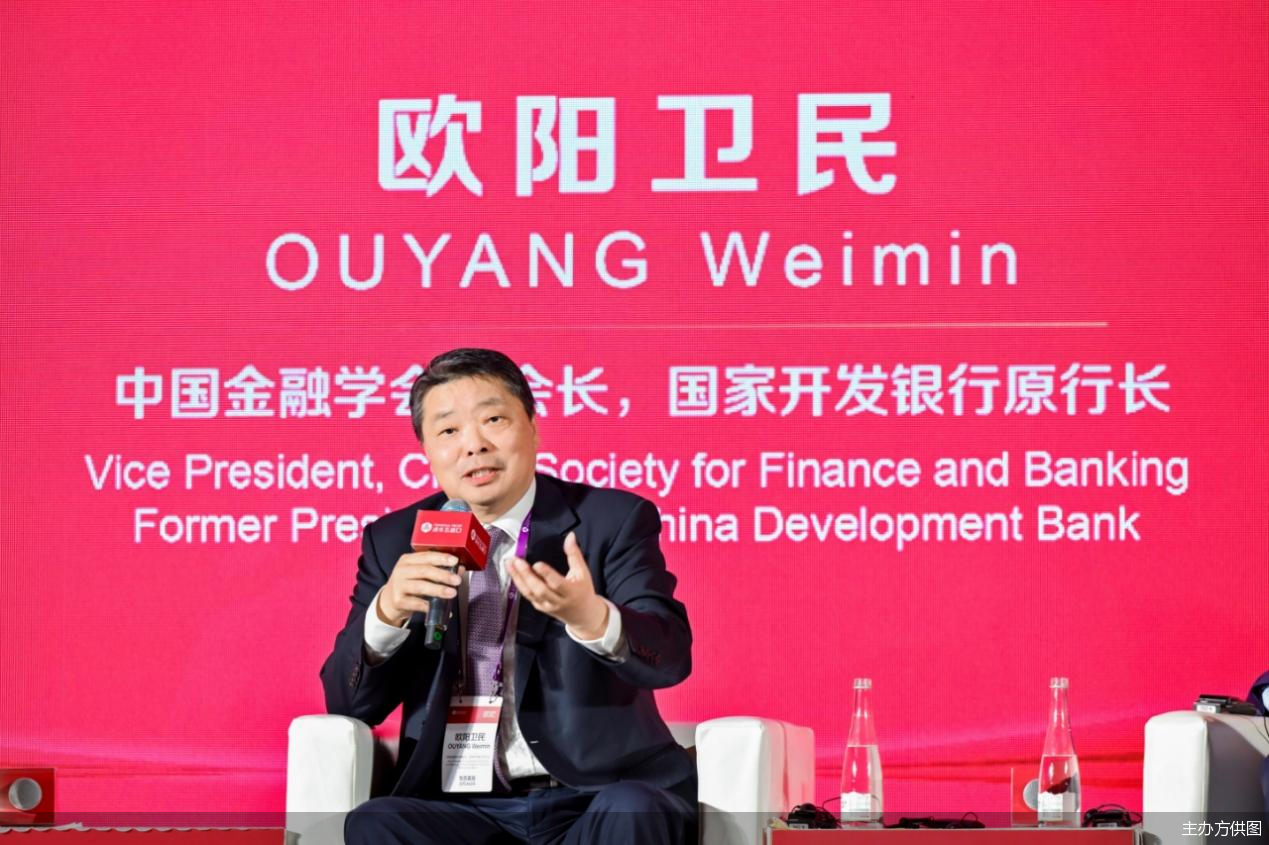
全球金融论坛|中国金融学会副会长欧阳卫民:坚信全球经济一体化产业分工合作是大势所趋
Zhong Guo Jing Ying Bao· 2025-05-19 22:15
Group 1 - The trend of global economic fragmentation is becoming increasingly significant, driven by trade and technological decoupling, policy divergence, and rising global uncertainty [1][2] - Fragmentation is a relative concept compared to globalization and integration, characterized by weakened economic ties between countries, increased trade barriers, intentional technological decoupling, and restrictions on factor mobility [2][3] - The past 15 years have shown a continuous process of fragmentation, with recent trends indicating a clear decoupling in global trade structures, particularly highlighted by the Russia-Europe divide following the Ukraine conflict [2][3] Group 2 - The rise of populism and extremism has significantly impacted global fragmentation, with many countries believing that privatization, free markets, and trade liberalization are optimal solutions, while the era of super globalization is considered over [3] - The trade conflict between the US and China is a key driver accelerating global fragmentation, with ongoing complaints from the US regarding trade barriers, intellectual property protection, and market access issues [3] - Geopolitical factors have led to fragmentation between the US and China, with a shift in focus from economic efficiency to economic security, which may have substantial implications for future development [3] Group 3 - There is a need to establish a strong awareness of a shared human destiny and confidence in the inevitability of global economic integration and cooperation in industrial division [4] - Recommendations include encouraging technological innovation and cooperation, maintaining overall financial market stability, promoting educational reform, and enhancing policy coordination and communication [4] - A dual approach is suggested to advance globalization while addressing the challenges posed by fragmentation [4]
2025五道口金融论坛|欧阳卫民:贸易保护主义、民粹主义首先源于认知偏差
Bei Jing Shang Bao· 2025-05-17 22:59
Group 1 - The concept of fragmentation is defined as the phenomenon where global trade, investment, and technology exchanges become increasingly divided into relatively independent economic groups and regions due to cognitive biases, geopolitical factors, populism, and trade protectionism [2] - Trade protectionism and populism stem from cognitive biases, such as the belief that trade surpluses are exploitative and that tariffs primarily burden exporting countries rather than importing ones [2] - The recent agreement between the US and China to suspend most mutual tariffs highlights the importance of cooperation in the face of fragmentation [2] Group 2 - Constructive global cooperation is essential in addressing common challenges such as economic recession, climate change, and technological transformation [3] - There is a need to correct cognitive biases and emphasize the importance of economic trade balance and the relationship between trade deficits and the status of sovereign currencies as world currencies [3] - Encouraging technological innovation and cooperation, strengthening international capital ties, and improving policy coordination and transparency are crucial steps to counter fragmentation [3] Group 3 - The approach to dealing with conflicts should involve a firm commitment to beliefs, principles, and actions, emphasizing that globalization is an unstoppable trend [4] - The notion of "everyone's well-being is the true well-being" should guide efforts to address the issues of fragmentation [4]
欧洲央行管委马赫鲁夫:全球经济一体化目前已陷入停滞,甚至出现倒退;过去几周,变化的速度和规模都在加快。
news flash· 2025-05-13 08:10
Group 1 - The core viewpoint is that global economic integration is currently stagnating and even regressing, with changes occurring at an accelerated pace in recent weeks [1]
财政部部长蓝佛安:中方呼吁世行等国际组织倡导非歧视原则、自由贸易原则等,共同维护开放合作的国际环境
news flash· 2025-04-25 23:03
Core Viewpoint - The Chinese government emphasizes the importance of non-discrimination and free trade principles to maintain an open and cooperative international environment, especially in light of rising trade protectionism that poses risks to global poverty reduction and development efforts [1] Group 1: Economic Contributions and Policies - China has maintained a contribution rate of approximately 30% to global economic growth in recent years [1] - The Chinese government plans to adopt more proactive macroeconomic policies to achieve its annual growth targets amidst a complex external environment [1] - China has implemented zero-tariff treatment for products from all least developed countries with which it has established diplomatic relations, demonstrating its commitment to reform and opening up [1] Group 2: International Cooperation - The Chinese government calls on international organizations like the World Bank to advocate for non-discrimination and free trade principles [1] - China expresses willingness to further open its market to share its vast market potential with the world, aiming for mutual benefits and win-win outcomes [1]