全球金融资产价格

Search documents
9月末外汇储备规模33387亿美元 较8月末上升165亿美元
Sou Hu Cai Jing· 2025-10-07 03:09
Core Viewpoint - As of September 2025, China's foreign exchange reserves reached $333.87 billion, reflecting an increase of $16.5 billion from the end of August, marking a growth rate of 0.5% [1] Economic Context - The increase in foreign exchange reserves is influenced by macroeconomic data, monetary policy, and expectations from major economies, leading to slight fluctuations in the US dollar index and an overall rise in global financial asset prices [1] - The stability and progress of China's economy, along with achievements in high-quality development, contribute positively to maintaining the stability of foreign exchange reserves [1]
权威数读|多重因素综合作用,8月外汇储备规模上升
Xin Hua She· 2025-09-07 11:18
Core Insights - As of the end of August 2025, China's foreign exchange reserves reached 33,222 billion USD, an increase of 29.9 billion USD from the end of July, representing a growth rate of 0.91% [1][4]. Group 1 - The increase in foreign exchange reserves is attributed to a combination of exchange rate adjustments and changes in asset prices [7]. - The stable performance of China's economy demonstrates strong resilience and vitality, which supports the maintenance of foreign exchange reserves at a stable level [1].


中国8月末外汇储备较7月末上升299亿美元
第一财经· 2025-09-07 04:05
Group 1 - As of the end of August 2025, China's foreign exchange reserves reached 332.22 billion USD, an increase of 29.9 billion USD from the end of July, representing a growth rate of 0.91% [1] - The rise in foreign exchange reserves in August 2025 was influenced by expectations regarding monetary policies of major economies and macroeconomic data, leading to a decline in the US dollar index and an overall increase in global financial asset prices [1] - The stability of China's economic operation, demonstrating strong resilience and vitality, has supported the maintenance of foreign exchange reserves at a stable level [1]

8月末中国外汇储备规模为33222亿美元,较7月末上升299亿美元
Sou Hu Cai Jing· 2025-09-07 02:43
Core Viewpoint - As of the end of August 2025, China's foreign exchange reserves reached 33,222 billion USD, reflecting an increase of 29.9 billion USD from the end of July, marking a growth rate of 0.91% [1] Group 1: Foreign Exchange Reserves - China's foreign exchange reserves increased due to the impact of major economies' monetary policy expectations and macroeconomic data, leading to a decline in the US dollar index and an overall rise in global financial asset prices [1] - The rise in foreign exchange reserves is supported by the stability and resilience of the Chinese economy, which has shown progress [1] Group 2: Economic Indicators - The increase in foreign exchange reserves is attributed to a combination of exchange rate adjustments and changes in asset prices [1] - The data indicates that the Chinese economy is maintaining a stable performance, which is crucial for sustaining the foreign exchange reserve levels [1]
我国外储规模保持稳中有升
Jing Ji Ri Bao· 2025-08-08 07:19
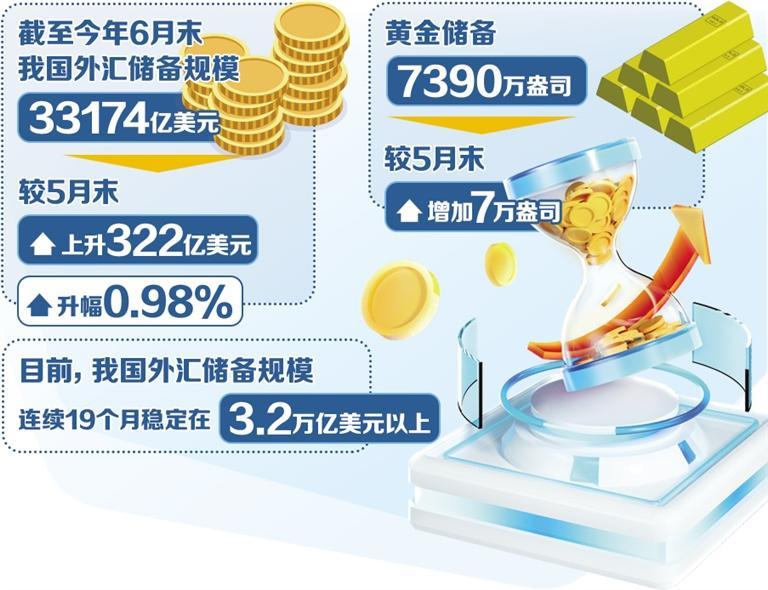
Group 1 - As of the end of June, China's foreign exchange reserves reached $33,174 billion, an increase of $322 billion from the end of May, marking a rise of 0.98% [2] - The increase in foreign exchange reserves is attributed to the depreciation of the US dollar, which fell by 2.5% to a three-year low of 96.9, leading to a collective appreciation of non-USD currencies [2][3] - The rise in global financial asset prices, including a 1.0% increase in the USD-denominated global bond index and a 5.0% rise in the S&P 500 index, also supported the increase in foreign reserves [2][3] Group 2 - Analysts believe that the significant depreciation of the US dollar has enhanced the valuation of non-USD assets within China's foreign reserves, contributing to the larger increase in reserves for June [3] - The current level of foreign reserves is considered to be at a moderately sufficient level, providing support for maintaining the RMB exchange rate and acting as a buffer against external shocks [3] - China's economy is expected to continue its steady growth, and resilient foreign trade is likely to help maintain the stability of foreign exchange reserves [3] Group 3 - As of the end of June, China's gold reserves amounted to 7.39 million ounces, an increase of 70,000 ounces from the end of May, indicating a continued strategy of increasing gold holdings [4] - The importance of gold as a widely recognized ultimate payment method is increasing, especially in the context of rising geopolitical risks and the diminishing reliability of traditional safe-haven assets like the US dollar [4] - Gold is viewed as a non-sovereign credit reserve asset that can effectively hedge against single currency risks and optimize the structure of foreign exchange reserves [4]
7月末中国外汇储备为32922亿美元
Zhong Guo Xin Wen Wang· 2025-08-08 02:32
Core Insights - As of July 2025, China's foreign exchange reserves stood at $32,922 billion, a decrease of $252 billion from the end of June, with gold reserves at 73.96 million ounces [1] - The increase in the US dollar index in July, influenced by macroeconomic data and monetary policy expectations, led to fluctuations in global financial asset prices, impacting the valuation of China's foreign exchange reserves [1] - The People's Bank of China has increased its gold holdings for the ninth consecutive month, maintaining a steady pace of gold accumulation [1] Economic Context - The National Foreign Exchange Administration believes that China's economic fundamentals remain strong, with advantages and resilience that support the stability of foreign exchange reserves [2] - The ongoing uncertainty in global trade and geopolitical factors is expected to drive central banks and investors to continue increasing their gold investments, providing ongoing support for gold prices [1]
我国外汇储备规模为32922亿美元
Ren Min Ri Bao Hai Wai Ban· 2025-08-07 21:00
Core Viewpoint - As of the end of July, China's foreign exchange reserves stood at $32,922 billion, reflecting a decrease of $25.2 billion or 0.76% from the end of June [1] Group 1: Foreign Exchange Reserves - The decline in foreign exchange reserves is attributed to factors such as macroeconomic data, monetary policy, and expectations from major economies, leading to fluctuations in global financial asset prices [1] - The State Administration of Foreign Exchange indicated that despite the decrease, the long-term supportive conditions and fundamental trends for maintaining foreign exchange reserves remain unchanged due to China's strong economic foundation, advantages, resilience, and potential [1]

外汇储备连续20个月超3.2万亿美元,黄金储备九连涨
Sou Hu Cai Jing· 2025-08-07 11:45
Foreign Exchange Reserves - As of July 2025, China's foreign exchange reserves stood at $32,922 billion, a decrease of $252 billion from June, marking a decline of 0.76% [1] - The decline in reserves is attributed to the rise in the US dollar index and fluctuations in global financial asset prices, with the dollar index increasing by 3.2% to 100.0, the highest since late May [3][4] - Despite the decrease, China's foreign exchange reserves remain above $3.2 trillion, providing a solid foundation for maintaining the RMB exchange rate at a reasonable equilibrium [3][4] Gold Reserves - The People's Bank of China has increased its gold reserves for the ninth consecutive month, reaching 7,396 million ounces (approximately 2,300.41 tons), with a month-on-month increase of 6,000 ounces [2][6] - The total value of gold reserves rose by $10 billion to $243.985 billion, representing 7.41% of the total foreign exchange reserves, which is still below the global average of around 15% [2][6] - The increase in gold reserves is driven by the need to optimize international reserve structure and enhance the credibility of the sovereign currency, especially in light of geopolitical uncertainties and the weakening confidence in the dollar system [6][7] Economic Outlook - The macroeconomic policies in China are prepared to adapt flexibly to ongoing risks and challenges, with a focus on maintaining stable economic growth supported by proactive fiscal and monetary policies [5] - The central bank's strategy includes a steady increase in gold reserves while managing costs and diversifying international reserves to mitigate market risks and geopolitical uncertainties [7][8] - A recent survey indicated that over 90% of central banks expect to increase their gold holdings in the next 12 months, reflecting a growing trend towards gold as a safe-haven asset [8]
ETO交易平台:我国外汇储备规模4月上升 趋势背后的原因是什么?
Sou Hu Cai Jing· 2025-05-14 11:06
Core Insights - China's foreign exchange reserves reached $32,817 billion at the end of April, increasing by $41 billion from March, marking a 1.27% rise and maintaining stability above $3.2 trillion for 17 consecutive months [1][6] Group 1: Reasons for Increase in Foreign Exchange Reserves - The decline in the US dollar index positively impacted China's foreign exchange reserves, as it led to an appreciation of other currencies relative to the dollar, increasing the value of non-dollar assets in the reserves [3] - Global financial asset prices exhibited mixed trends in April, affecting the asset allocation of China's foreign exchange reserves. The appreciation of some assets contributed to the increase, while declines in others had a counterbalancing effect [4] Group 2: Stability of China's Economy - China's economy is showing positive trends with strong resilience and vitality, providing a solid foundation for the stable growth of foreign exchange reserves. This stability enhances market confidence in RMB assets and attracts more foreign investment [5] - The continuous stability of foreign exchange reserves above $3.2 trillion reflects the effectiveness of China's macroeconomic policies and robust financial regulation, as well as its increasing position in the global economy [6] Group 3: Positive Implications of Stable Foreign Exchange Reserves - The stable growth of China's foreign exchange reserves not only indicates stable economic development but also contributes positively to global economic stability. It enhances market confidence in the RMB and increases China's influence in international financial markets [7] - The stability of foreign exchange reserves provides a strong safeguard for China to respond to global economic uncertainties, with a commitment to maintaining prudent macroeconomic policies and promoting high-quality economic development [7]
重磅公布!中国3月末外汇储备32407亿美元,央行连续五个月增持黄金
新浪财经· 2025-04-08 01:04
Core Viewpoint - China's foreign exchange reserves have remained stable above $3.2 trillion for 16 consecutive months, with a slight increase in March 2025, attributed to various macroeconomic factors and the central bank's ongoing gold purchases [1][3][4]. Group 1: Foreign Exchange Reserves - As of March 2025, China's foreign exchange reserves stood at $32,407 billion, an increase of $134 billion from February, representing a 0.42% rise [3][4]. - The increase in reserves is influenced by the depreciation of the US dollar index and fluctuations in global financial asset prices, with the dollar index falling by 3.2% to 104.2 in March [4]. - In the first quarter of 2025, China's foreign exchange reserves increased by a total of $38.3 billion, indicating a steady recovery [4]. Group 2: Gold Reserves - The central bank has increased its gold reserves for five consecutive months, with the total gold reserves reaching 7.37 million ounces by the end of March 2025, an increase of 90,000 ounces from February [6][7]. - The international gold price showed an overall upward trend in March, reaching a historical high, although it faced downward pressure in early April due to market liquidity issues and stronger dollar index [7][10]. - Market analysts suggest that while short-term gold prices may face challenges, long-term factors such as geopolitical risks and central bank purchases could support gold prices [10].