
全面电动化

Search documents
官宣:2025高工锂电年会暨15周年庆典议程发布
高工锂电· 2025-08-20 10:46
Core Viewpoints - The article highlights the significant growth and transformation of China's power battery industry over the past 15 years, marking its evolution from a nascent stage to a global leader in manufacturing [2][3][4] - It emphasizes the upcoming challenges and opportunities as the industry enters a new 15-year phase starting in 2025, focusing on electric transportation, energy system transformation, and the emergence of new applications and business models [2][3] Event Overview - The 2025 High-Performance Lithium Battery Annual Conference will celebrate the 15th anniversary of the industry and will take place from November 18-20, 2025, at the JW Marriott Hotel in Shenzhen [2][5] - The event will feature a comprehensive agenda with 12 specialized sessions covering various aspects of the lithium battery industry, including innovation, supply chain strategies, and new market opportunities [10][11] Key Highlights - The conference will gather over 1,000 companies from the lithium battery supply chain and more than 1,500 industry leaders, showcasing the significance of the event [10] - The event will include the prestigious High-Performance Golden Ball Awards, recognized for its credibility and authority in the industry [10] Specialized Sessions - The agenda includes sessions on topics such as comprehensive electrification, battery innovation, AI empowerment in battery technology, and zero-carbon factories [9][12][15][18] - Specific discussions will focus on the competitive landscape of battery technologies, including advancements in LFP systems, solid-state batteries, and the integration of AI in battery design and manufacturing [17][19] Future Outlook - The article anticipates that the next 15 years will be marked by the need for Chinese lithium battery companies to integrate into the global market and develop multinational operations [3][4] - It calls for a collective effort to address the challenges and seize the opportunities presented by the evolving energy landscape and technological advancements [3][4]


汽车视点丨 “两年13款、All in 新能源” ,上汽MG年轻化再升级
Zhong Guo Jin Rong Xin Xi Wang· 2025-07-01 09:51
Core Viewpoint - The Chinese automotive industry is undergoing a significant transformation with a strong focus on new energy vehicles (NEVs), as exemplified by MG's commitment to an "All in NEV" strategy, which aims to launch 13 new models over the next two years, covering various energy forms including pure electric, hybrid, and extended-range vehicles [1][4][5]. Group 1: MG's Strategic Moves - MG has launched two new models, the 2026 MG5 starting at 59,900 yuan and the 2026 Cyberster starting at 319,800 yuan, with plans for the MG4 to be released in September [1]. - The brand's strategy emphasizes that "All in NEV" does not equate to abandoning fuel vehicles, as the newly launched MG5 is a fuel vehicle, indicating a dual approach to meet current and future market demands [4][5]. - MG's sales have seen a significant increase, with May sales up over 60% year-on-year and a cumulative increase of 29% from January to May [6]. Group 2: Market Position and Challenges - Despite strong sales, MG faces challenges such as reliance on price incentives and a fragmented product line, with a price gap from 60,000 to 300,000 yuan that may confuse brand identity [6][7]. - The brand aims to fill this price gap with new models across various price ranges, enhancing its market presence and addressing current pain points [7]. - MG's focus on technology integration, including a partnership with OPPO for a new car-machine ecosystem, aims to attract younger consumers and enhance brand appeal [8][9]. Group 3: Industry Context - Major traditional automakers like Audi and Volvo are adjusting their electrification timelines, indicating a cautious approach to fully abandoning fuel vehicles [3][4]. - The industry is expected to see a 25% year-on-year increase in sales of plug-in hybrid and pure electric vehicles, reaching 22 million units by 2025, while many automakers will continue to offer both fuel and electric vehicles [4].


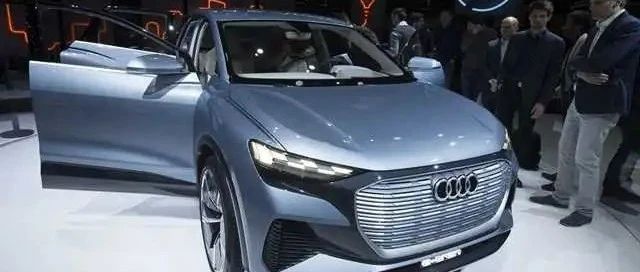
奥迪取消“2033全面电动化”计划
Mei Ri Shang Bao· 2025-06-25 22:17
Group 1 - Audi has reversed its previous plan to stop developing and selling internal combustion engine vehicles by 2033, now not setting a clear end date for this transition [2] - The decision is influenced by the observation that the tipping point for electric vehicles in North America is being delayed, while China reached this tipping point last year [2][3] - Audi's 2024 performance report indicates a revenue of approximately €64.5 billion, down 8% year-on-year, and an operating profit of €3.9 billion, a significant drop of 38% [2] Group 2 - Despite the global slowdown in electric vehicle transition, Audi is accelerating its electric vehicle strategy in China, launching the Q6L e-tron family and opening over 500 new stores by mid-July [4] - Audi is collaborating with local companies like Huawei and SAIC Group to enhance its offerings in the Chinese market, including smart driving solutions and a new sub-brand [4] - The company plans to streamline its product line by phasing out certain internal combustion models, with the A1 and Q2 likely to be discontinued, while the A3 and Q3 will remain as entry-level models [4][5]
奥迪中国回应撤回停售燃油车计划
news flash· 2025-06-19 03:29
Core Viewpoint - Audi China has paused its plan for full electrification, highlighting the significant differences in market development globally, particularly between North America and China [1] Group 1: Market Dynamics - The "turning point" for the North American market is noticeably delayed, while the turning point for the Chinese market in the new energy vehicle sector was reached last year [1] - The new energy vehicle market in China includes hybrid models, range-extended models, and pure electric vehicles [1] Group 2: Product Strategy - Audi China emphasizes the need for a flexible and stable product portfolio to adapt to market volatility and diversity in the coming years [1] - The company does not rule out other possibilities to ensure that its product lineup remains flexible and aligned with market demands, while maintaining a long-term goal for a fully electric product range [1]
奥迪确认暂停全面电动化计划!
第一财经· 2025-06-18 13:08
Core Viewpoint - Audi has reversed its previous plan to stop developing and selling internal combustion engine vehicles by 2033, and no clear timeline for cessation has been set [1][2]. Group 1: Strategic Adjustments - Audi will launch a new series of internal combustion and plug-in hybrid vehicles between 2024 and 2026, providing greater flexibility for the next decade [1]. - The company is shifting its focus to developing a platform architecture and software systems for large vehicles within the Volkswagen Group, marking a transition to "software-defined vehicles" [1][2]. - Audi's strategic adjustments are centered on two key areas: software-defined vehicles and advanced driver assistance technologies [3]. Group 2: Market Dynamics - The global automotive market is experiencing uneven development in electric vehicle adoption, prompting Audi to implement a region-specific development strategy [2]. - Other automakers, such as Volvo and Mercedes-Benz, have also adjusted their electrification plans, indicating a broader trend in the industry [2]. - The electric vehicle market is showing signs of slowing demand, while internal combustion vehicles continue to generate higher profits, necessitating strategic adjustments by automakers [2]. Group 3: Partnerships and Innovations - Audi is collaborating with FAW to produce models based on the PPE luxury electric platform, with the Q6L e-tron already in pre-sale [4]. - A partnership with SAIC is underway to develop pure electric intelligent connected vehicles tailored for the Chinese market [4]. - Starting in 2025, Audi will integrate Huawei's advanced intelligent driving assistance system into new platform products [4].
解析比亚迪“闪充”:全面电动化可期
Xin Lang Cai Jing· 2025-03-24 06:33
Core Insights - BYD's Super e-platform introduces key technologies such as flash charging batteries, high-speed motors, and advanced silicon carbide power chips, achieving significant breakthroughs in production records [1] - The flash charging system allows for a 400km+ range with just 5 minutes of charging, marking a significant advancement in electric vehicle technology [1] - The introduction of a 10C flash charging system, supported by a self-developed liquid-cooled megawatt charging system, aims to enhance charging infrastructure across the country [1][2] Technology Innovations - BYD's innovations in battery technology include molecular-level electrolyte design, nano-level separator micro-pore design, and micro-level electrode adaptive reconstruction, resulting in a 50% reduction in internal resistance [2] - The thermal management system features a dual-sided composite flow channel design, improving heat exchange area by 100% and heat exchange performance by 90% [2] - Safety tests for the flash charging blade battery have been successfully passed, demonstrating robustness against various impact scenarios [2] Market Implications - The advancements in flash charging technology are expected to alleviate concerns about charging infrastructure, potentially increasing the penetration rate of electric vehicles in the domestic market [2] - The competitive landscape in the industry is anticipated to shift as leading automotive and battery companies enhance their R&D efforts to develop high-rate performance products [3] - Companies such as BYD, Geely, and Xpeng are highlighted as key players to watch in the evolving electric vehicle market [3] Investment Opportunities - Investment recommendations include focusing on leading automotive companies with advanced technology layouts, battery manufacturers with comprehensive solutions, and suppliers with technological advantages in fast-charging components [3] - Specific companies mentioned for potential investment include CATL, EVE Energy, and various suppliers of conductive agents and lithium iron phosphate materials [3]
