
农业新质生产力

Search documents
大国粮仓 积蓄力量
Ren Min Ri Bao· 2026-02-24 22:07
Core Insights - China's grain production reached 1.4 trillion jin in 2025, maintaining its position as the world's largest producer [1] - The per capita grain availability in China surpassed 500 kg, exceeding the internationally recognized food security line [1] - The implementation of the national food security strategy has significantly improved grain production capacity, ensuring food security for over 1.4 billion people [1] Group 1 - The focus on food security is a top priority for governance, as emphasized by President Xi Jinping [1] - The construction of high-standard farmland and the use of advanced agricultural technologies, such as drones and robots, are driving new productivity in agriculture [1] - Policies like subsidies and insurance are enhancing farmers' willingness to produce grain, contributing to a diversified food supply system [1] Group 2 - The start of the 14th Five-Year Plan is marked by a commitment to maintaining grain production and ensuring food security [2] - The achievements from the 13th Five-Year Plan provide confidence and a foundation for future efforts in food security [2] - The goal is to firmly grasp the initiative in food security to support the modernization of China [2]
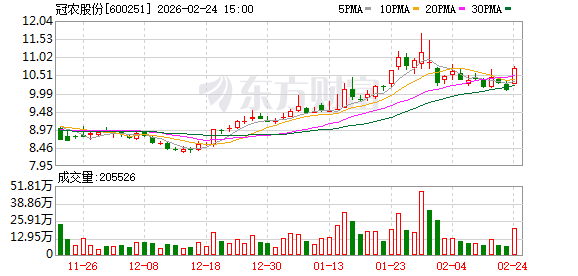
冠农股份:公司围绕农业新质生产力培育与农业科技创新方向稳步探索推进
Zheng Quan Ri Bao· 2026-02-24 11:10
Core Viewpoint - The company is actively responding to the central government's directives on agricultural innovation and is exploring new agricultural productivity through technology [2] Group 1: Company Initiatives - The company's wholly-owned subsidiary, Guannong Digital Agriculture Technology Co., Ltd., has developed the "Little Iron Bull" digital agriculture comprehensive service platform to enhance raw material quality [2] - The platform provides services in planting management, agricultural machinery operations, and raw material harvesting, aiming to improve service efficiency and precision for farmers [2] - The company plans to continuously track industry technology trends and steadily advance the application and layout of relevant technologies to enhance its development quality and effectiveness [2]


一粒“科技米”背后的产学融合试验
Xin Lang Cai Jing· 2026-02-17 22:46
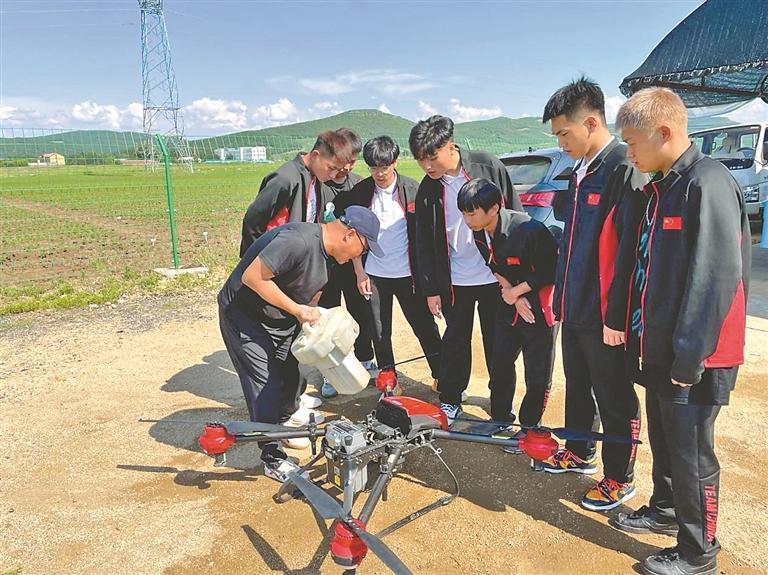
Core Insights - The article highlights the successful development of low-glycemic rice with a glycemic index of 51 and stable β-glucan content above 10.8%, positioning it as a health food for diabetics [3] - The integration of technology, education, and industry at Heilongjiang Agricultural Economic Vocational College is emphasized as a key strategy for rural revitalization [3][7] Group 1: Research and Development - The college's focus on agricultural productivity is driven by technological innovation, aligning its curriculum with the province's modern industrial system and agricultural development needs [3][4] - The establishment of key laboratories for high-yield breeding and disease prevention in cold climates demonstrates a targeted research approach to address local agricultural challenges [4] Group 2: Practical Training and Industry Integration - The college incorporates hands-on training in its curriculum, with over half of the coursework conducted in production bases or enterprises, enhancing students' practical skills [5] - The collaboration with industry leaders and research institutions aims to create a comprehensive innovation ecosystem that addresses real-world agricultural problems [6] Group 3: Outcomes and Future Directions - The college has successfully developed proprietary agricultural products and achieved high-quality completion of provincial research projects, contributing to local agricultural advancements [6] - Future goals include transforming every research platform into an "innovation engine" to support rural revitalization and ensuring that students become vital contributors to the agricultural sector [7][8]
团圆桌上话丰年
Xin Lang Cai Jing· 2026-02-16 18:20
Group 1 - The article highlights the festive atmosphere during the New Year's Eve celebrations among the workers and families in the region, emphasizing the joy of reunion and the hard work that led to a fruitful year [1][4] - The focus is on the agricultural achievements of local families, such as the successful cultivation of cotton and winter jujubes, which have led to significant income increases through diversified farming practices [2][3] - The article mentions the strategic goals for 2025, aiming to establish the region as a key supplier of high-quality agricultural and livestock products, with an emphasis on sustainable practices and technological advancements in farming [3][8] Group 2 - The development of agritourism is highlighted as a means to enhance local economies, with operators like Yang Jie planning to transform their businesses by integrating tourism and marketing strategies [5][6] - The use of advanced agricultural machinery and technology is noted, with a reported increase in cotton yield due to the adoption of smart farming equipment, which is expected to further improve productivity in the coming years [7][8] - The article underscores the importance of community support and family involvement in agricultural ventures, which contributes to a positive outlook for future growth and prosperity [5][9]
罗定稻米:“地标+”与“紫云英+”助推绿色“广货”香飘世界|广货行天下
Nan Fang Nong Cun Bao· 2026-02-13 02:33
Core Viewpoint - The article highlights the development and branding of "Luoding Rice," emphasizing its geographical indication status and the integration of ecological practices to enhance quality and market reach [2][14][18]. Group 1: Brand Development and Recognition - Luoding City, known as the "granary of South Guangdong," has been recognized for its rice production, winning the title of "National Advanced Grain Production County" five times since 1990 [12][13]. - "Luoding Rice" was officially approved as a national geographical indication product in 2014, leading to a significant increase in brand value, which peaked at 4.518 billion yuan [14][15]. - The brand has received multiple national honors, including "Top Ten Regional Public Brands" and "National Special Excellent New Agricultural Products" [16]. Group 2: Ecological Practices and Innovations - The city has adopted the "Purple Vetch+" ecological model to enhance soil health and reduce fertilizer use, with an expected reduction of 25%-30% in fertilizer application and a quality improvement of rice by one grade [31][38]. - In 2025, the area planted with Purple Vetch is projected to reach 20,400 acres, contributing to sustainable agricultural practices [33]. - The integration of Purple Vetch into rice cultivation has led to increased organic matter in the soil and improved economic returns for farmers, with an estimated income increase of over 300 yuan per acre [39]. Group 3: Market Expansion and International Reach - Luoding Rice has been actively participating in various agricultural expos and cultural events, enhancing its brand visibility and market penetration [54][70]. - In 2024, the city signed 16 agricultural cooperation projects worth over 408 million yuan, focusing on rice order planting and deep processing [57]. - The international market for Luoding Rice is expanding, with exports to Europe, the USA, and Japan increasing by 18% in 2025 [75][76]. Group 4: Future Prospects and Strategic Initiatives - The city aims to leverage free trade agreements like RCEP to promote its rice products internationally, integrating green planting with e-commerce and cross-border direct mail [76]. - The establishment of a national green rice industry brand demonstration zone and a geographical indication product protection demonstration zone reflects the commitment to high-quality development [50]. - The modern agricultural industrial park for rice is projected to achieve an annual output value of 1.5 billion yuan, showcasing the potential for high-quality growth [51].

赵刚主持召开省政府第四次常务会议
Shan Xi Ri Bao· 2026-02-13 00:42
Group 1 - The provincial government is focusing on implementing the "Three Rural" work to promote comprehensive rural revitalization, guided by Xi Jinping's important instructions [1][2] - The meeting discussed and agreed on the implementation opinions for agricultural modernization and rural revitalization, emphasizing the importance of food security and agricultural productivity [2] - Key tasks include consolidating poverty alleviation achievements, enhancing rural public services, and promoting the development of county-level industries [2] Group 2 - The meeting highlighted the need to adhere to ecological civilization principles and enhance environmental protection responsibilities, aiming for improved ecological quality in the province [3] - Specific focus areas include pollution prevention, ecological safety in key regions, and the development of a high-level ecological protection plan [3]
陈博彰开展春节走访慰问
Chang Sha Wan Bao· 2026-02-12 02:08
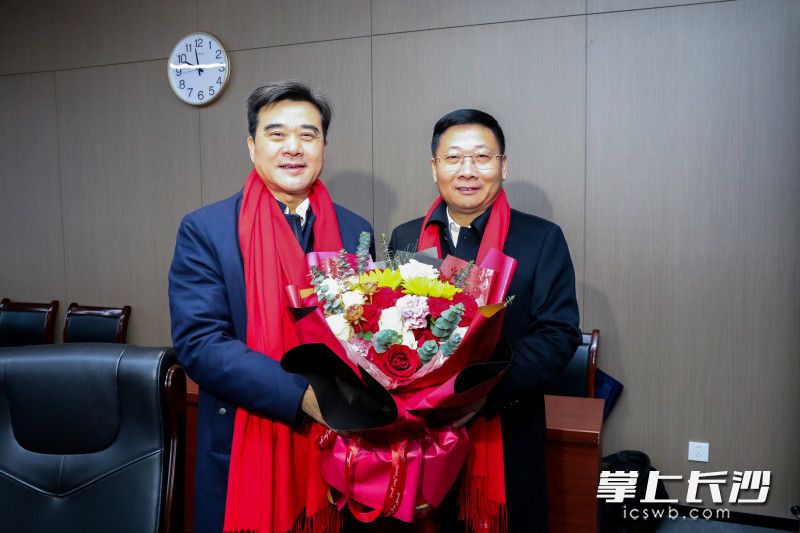
Group 1 - The city mayor, Chen Bozhang, visited and extended New Year greetings to academicians, experts, retired officials, and underprivileged citizens, emphasizing the government's care and warmth [1][3][5][8][10][13][16][17] - Chen Bozhang acknowledged the contributions of academicians Bai Lianyang and Shan Yang in advancing agricultural technology and encouraged them to continue leading in research and talent development [6] - The mayor expressed gratitude to retired officials Yuan Hankun and Du Yuanming for their significant contributions to the city's development and encouraged them to share their insights for the city's progress [11] - Chen Bozhang praised veteran party member Tan Su'e for her dedication to grassroots governance and volunteer service, urging her to continue promoting party policies [14] - During a visit to underprivileged citizen Xie Kan, the mayor offered encouragement and highlighted the importance of government support and community assistance in improving living conditions [17]
理响中国·聚焦2026“三农”工作丨 四项重点任务它居首位!一图解读中央一号文件关键部署
Yang Guang Wang· 2026-02-12 02:00
Core Viewpoint - The central government has issued its first document for the "14th Five-Year Plan" period, focusing on enhancing agricultural production capacity and quality efficiency as a primary task in the agricultural sector [1]. Group 1: Key Tasks in Agriculture - The document outlines four key tasks, with the foremost being the enhancement of agricultural comprehensive production capacity and quality efficiency [1]. - The goal is to stabilize grain production at approximately 1.4 trillion jin (around 700 million tons) through the integration of quality land, seeds, machinery, and methods [3]. - There is a shift from focusing solely on quantity to balancing both quantity and quality, optimizing planting structures and regional layouts to improve grain varieties and quality [4]. Group 2: Agricultural Production and Technology - A new round of actions is to be implemented to increase grain production capacity by 100 billion jin, solidifying the foundation of grain production [8]. - Emphasis is placed on utilizing arable land effectively, maintaining strict management of land use, and combating illegal land destruction [9]. - The document calls for the enhancement of agricultural technology innovation, focusing on core technologies and efficient application of scientific achievements, integrating modern technologies like artificial intelligence into agricultural development [11]. Group 3: Disaster Prevention and Trade Coordination - Strengthening the agricultural disaster prevention and mitigation system is highlighted, with improved monitoring and emergency response mechanisms to cope with extreme weather [14]. - The document advocates for the diversification of agricultural product imports and the cultivation of internationally competitive agricultural enterprises, while also supporting the export of advantageous specialty agricultural products [16].

科技支撑沈阳市乡村全面振兴
Xin Lang Cai Jing· 2026-02-11 21:49
Core Viewpoint - The "Rural Comprehensive Revitalization Plan (2024-2027)" issued by the Central Committee of the Communist Party of China and the State Council emphasizes the dual drive of technology and reform to promote the revitalization of rural industries, talent, culture, ecology, and organization. Group 1: Achievements in Rural Revitalization - Significant progress has been made in agricultural high-quality development in Shenyang, focusing on seed resource creation, smart equipment research and development, and technology service supply [1]. - The seed industry revitalization action has been effectively advanced, with 39 core projects initiated and several varieties recognized as national excellent varieties, leading to a national promotion area of over 15 million mu for new corn varieties [2]. - Agricultural facility equipment levels have steadily improved, with the average loss rates for rice and corn reduced to 1.63% and 1.62%, respectively, and a mechanization rate of over 98% expected for major grain crops by 2025 [3]. - Progress in digital rural construction includes the establishment of 4,000 new 5G base stations, achieving over 98% coverage in administrative villages, and a stable internet penetration rate of over 70% in rural areas [4]. - The green transformation of agriculture has deepened, with a comprehensive utilization rate of livestock and poultry manure reaching 78% and straw utilization achieving over 92% [5]. Group 2: Talent Development in Rural Areas - The rural technology talent team is growing, with over 6,500 young farmers trained, and many obtaining vocational skills and technology management certificates [6]. - Technology special commissioners have been deployed to serve rural areas, with 5,841 instances of service provided across various agricultural districts [7]. Group 3: Challenges in Rural Revitalization - There are still significant shortcomings in agricultural innovation technology, with a need for more original and disruptive innovations to drive transformation [8]. - Cultural revitalization faces challenges due to rural population hollowing, leading to weakened participation in cultural construction and talent outflow [9]. - The integration of digital technology and ecological industries is not yet coordinated, hindering green and low-carbon development [10]. - Organizational revitalization struggles with a "digital divide" and insufficient digital literacy among rural leaders, leading to mismatches in skills and tools [11]. Group 4: Recommendations for Improvement - Establish a special fund for technological support in rural revitalization, focusing on original agricultural technology innovation and the development of local characteristic industries [12]. - Innovate the application model for technology transfer, promoting collaboration between academia and industry to enhance rural development [13]. - Enhance regional technological innovation capabilities by fostering cross-regional cooperation and establishing high-standard agricultural technology demonstration bases [14]. - Improve incentives for agricultural technology personnel to work in rural areas, including establishing a project library for rural revitalization technology services [15].
以统筹“四型农业”为重点发展农业新质生产力
Xin Lang Cai Jing· 2026-02-11 20:52
Core Viewpoint - The article emphasizes the importance of developing new agricultural productivity tailored to local conditions, which is crucial for advancing agricultural modernization and building a strong agricultural nation in China [1][2]. Summary by Sections Agricultural New Productivity - Agricultural new productivity is a deepening and expansion of productivity theory in the agricultural sector, focusing on enhancing the quality of agricultural productivity to support rural revitalization and the foundation of Chinese-style modernization [1]. - The "14th Five-Year Plan" suggests a coordinated development of technological agriculture, green agriculture, quality agriculture, and brand agriculture, providing a clear path for the development of new agricultural productivity [1]. Unique Characteristics of Agricultural New Productivity - Agricultural new productivity has unique characteristics compared to industrial productivity, including: 1. Unique driving forces, with the biological seed industry revolution being central [2]. 2. Unique objects of action, where labor involves living organisms, necessitating adherence to natural laws [2]. 3. Unique constraints, as agricultural activities are heavily dependent on natural resources and ecological environments [2]. 4. Unique value goals, which include not only economic benefits but also the responsibility of ensuring stable food supply [2]. Emphasis on Local Adaptation - The development of agricultural new productivity requires a deeper understanding of local conditions, emphasizing: 1. Greater emphasis on synergy with natural conditions, ensuring technology aligns with local ecological contexts [2]. 2. Greater emphasis on systematic adaptability of technology, integrating with local economic conditions [2]. 3. Greater emphasis on resilience against diverse risks, including climate change and market fluctuations [2]. Four Types of Agriculture - The "14th Five-Year Plan" proposes the coordinated development of four types of agriculture as pillars for new agricultural productivity: 1. Technological agriculture as the engine for systemic innovation in production factors [3]. 2. Green agriculture as the foundation for a low-carbon circular production system [4]. 3. Quality agriculture as a standard to elevate industry value [5]. 4. Brand agriculture as a means to achieve market and regional value [6]. New Production Relations - The development of new agricultural productivity requires corresponding production relations, including: 1. Reforming rural key areas to eliminate institutional barriers and stabilize land contracts [7]. 2. Enhancing multi-source investment and policy coordination to improve agricultural support policies [8]. 3. Promoting efficient aggregation and optimization of advanced production factors [9]. 4. Cultivating diverse operating entities and social service systems to support new agricultural productivity [10].