减脂增肌

Search documents
医药生物行业跟踪周报:2025ADA重磅数据披露,关注减脂增肌、Amylin及口服赛道-20250629
Soochow Securities· 2025-06-29 13:44
Investment Rating - The report maintains an "Overweight" rating for the pharmaceutical and biotechnology industry [1] Core Insights - The report highlights significant data disclosures from the 2025 ADA conference, emphasizing the potential of weight loss and muscle gain drugs, particularly in the Amylin and oral medication segments [10][16] - The report suggests focusing on differentiated drug development in weight loss, particularly the combination of multi-target GLP-1 with Amylin for enhanced efficacy [10][16] Industry Trends - The A-share pharmaceutical index has increased by 1.6% this week and 6.2% year-to-date, while the H-share biotechnology index has seen a rise of 2.7% this week and 52.7% year-to-date [9] - Notable stock performances include Shenzhou Cell (+30%), Haooubo (+27%), and Huaren Health (+25%) in the A-share market, while JunTai Holdings (+63%) and Jingyou Pharmaceutical (+62%) led in the H-share market [9] Research and Development Progress - Significant advancements in innovative drugs and modified drugs have been reported, with a focus on approvals and clinical submissions [6] - The report details the approval of the GLP-1R/GCGR dual agonist "Masitide" by Innovent Biologics, marking it as the first of its kind globally for obesity management [10][16] Specific Recommendations - The report ranks sub-industries as follows: Innovative drugs > CXO > Traditional Chinese medicine > Medical devices > Pharmacies > Pharmaceutical commerce [11] - Recommended stocks based on growth potential include: BGI, Innovent Biologics, and Hengrui Medicine, while undervalued stocks in traditional Chinese medicine include: Zhaoli Pharmaceutical and Dong'e Ejiao [11]

GLP-1减重新势力来袭,市场竞争再升级
2 1 Shi Ji Jing Ji Bao Dao· 2025-06-27 13:34
Group 1: Core Insights - Cinda Biologics announced that its drug, Masitide (a dual receptor agonist for glucagon and GLP-1), received approval from the National Medical Products Administration (NMPA) for long-term weight management in adults with obesity or overweight [1] - The approval was based on the results of a Phase III clinical study (GLORY-1), which demonstrated significant weight loss and improvements in metabolic indicators among participants [1][3] - Masitide is the first and only approved dual receptor agonist for obesity, with a unique structure that extends its half-life to 10 days and promotes fat burning [1][3] Group 2: Market Context - China has approximately 500 million adults classified as overweight or obese, making it the largest market for obesity treatments globally [2] - The World Obesity Federation estimated that the economic losses due to overweight and obesity in China could reach around $283.3 billion in 2020, highlighting the public health burden [2] - The Chinese government has initiated health management actions aimed at curbing the rising trend of obesity by 2030 [2] Group 3: Competitive Landscape - The approval of Masitide intensifies competition in the GLP-1 market, which is projected to grow significantly, with a global market size of approximately $52.83 billion in 2024, reflecting a 46% year-on-year increase [5][6] - Major players in the GLP-1 market include Novo Nordisk and Eli Lilly, which together hold over 80% of the market share [5][6] - The global GLP-1 receptor agonist market is expected to reach $100 billion by 2030, attracting both domestic and international pharmaceutical companies [6] Group 4: Commercial Strategy - Cinda Biologics plans to set the price of Masitide based on its enhanced efficacy compared to single-target GLP-1 products, while considering the pricing of existing similar products in the market [3][4] - The company aims to ensure sufficient production capacity and supply chain management to meet market demand post-launch [4][5] - Cinda Biologics will leverage its existing advantages in public hospital channels while expanding into private hospitals and online retail to maximize product accessibility [5] Group 5: Future Directions - Cinda Biologics is actively pursuing clinical research for new indications of Masitide beyond weight management and diabetes [5] - The competitive landscape is evolving, with a focus on innovative drug formulations and treatment approaches, including long-acting and oral formulations [7][8] - The emphasis on health management in China is expected to enhance the accessibility and affordability of weight management drugs, driving further growth in the GLP-1 market [8]
GLP-1药物未来方向标:减脂增肌、口服剂型、超长效制剂赛道掘金
Ping An Securities· 2025-06-24 06:51
Investment Rating - The report maintains an "Outperform" rating for the pharmaceutical industry [1]. Core Insights - The GLP-1 drug market is expected to see significant growth, with projections indicating that the market size for GLP-1 drugs in the U.S. for diabetes and obesity could reach approximately $100 billion by 2030 [4][5]. - The report identifies three key potential growth areas within the GLP-1 sector: fat loss and muscle gain, oral formulations, and ultra-long-acting formulations [5]. Summary by Sections Part 1: GLP-1 Drug Market Outlook - The GLP-1 receptor agonists (RA) have shown strong performance in glucose control and weight loss, with the drug semaglutide projected to achieve sales of $29.3 billion in 2024, closely competing with the leading drug, K drug, which is expected to generate $29.5 billion [5][4]. - The global market for GLP-1 RAs is anticipated to reach $100 billion by 2030, driven by expanding indications and accumulating clinical data [5]. Part 2: Trend One - Opportunities in Fat Loss and Muscle Gain - GLP-1 RAs have demonstrated effectiveness in fat loss, but the issue of muscle loss needs to be addressed. Pharmaceutical companies are increasingly focusing on the fat loss and muscle gain segment, with the ActRII pathway being a hot research direction [5][4]. - Future fat loss and muscle gain drugs are expected to complement GLP-1 drugs, enhancing their market position and lifecycle [5]. Part 3: Trend Two - Oral GLP-1 Drugs - Oral formulations of GLP-1 drugs offer significant convenience over injections, improving patient compliance. Novo Nordisk leads in this area with its oral semaglutide, while Eli Lilly's Orforglipron is progressing rapidly in clinical trials [5][4]. Part 4: Trend Three - Ultra-Long-Acting GLP-1 Drugs - Ultra-long-acting GLP-1 RAs are designed to extend the duration of action and reduce dosing frequency, significantly enhancing patient adherence. Some investigational products may allow for administration every four weeks [5][4]. Part 5: Investment Recommendations - The report suggests focusing on investment opportunities in the fat loss and muscle gain segment, oral formulations, and ultra-long-acting formulations. Specific companies to watch include: - Fat loss and muscle gain: Likai Pharmaceutical - Oral formulations: Heng Rui Medicine, East China Pharmaceutical, and Galenica - Ultra-long-acting formulations: Zhongsheng Pharmaceutical, Ganli Pharmaceutical, and Tonghua Dongbao [5].
增肌减脂新一代靶点:礼来携手来凯医药-B(02105),美国I期临床启动在即
智通财经网· 2025-04-22 01:03
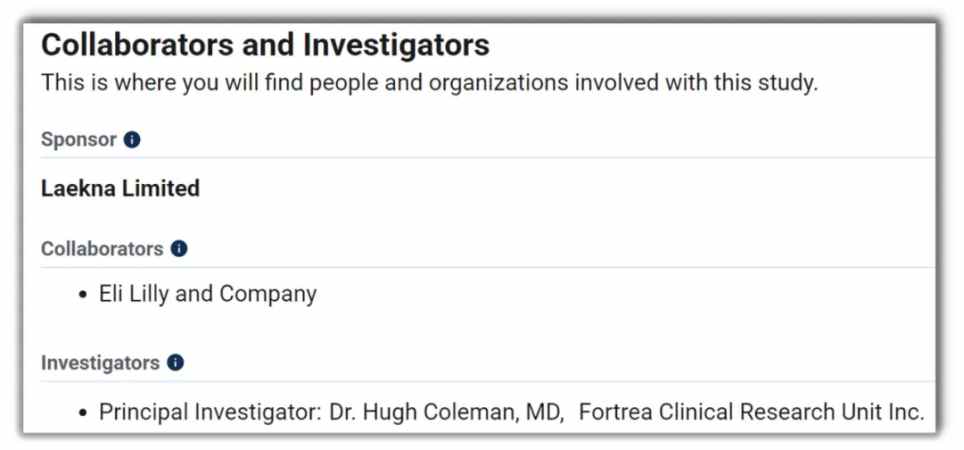
Core Insights - The article highlights the collaboration between Lai Kai Pharmaceutical and Eli Lilly for the LAE102 clinical trial targeting obesity in the U.S. [1][2] - Lai Kai's LAE102 is a monoclonal antibody targeting ActRIIA, entering clinical trials alongside Eli Lilly's Bimagrumab, indicating a competitive landscape in the obesity treatment sector [1][3][9] - Eli Lilly is intensifying its focus on ActRII targets, launching multiple clinical trials for Bimagrumab in a short timeframe, reflecting confidence in its potential [3][6] Company Developments - Lai Kai Pharmaceutical has updated its clinical trial protocol for LAE102, which is set to begin patient enrollment by the end of April 2025 [1][2] - The partnership with Eli Lilly allows Lai Kai to retain global rights for LAE102 while Eli Lilly manages the trial in the U.S. [1] - Lai Kai's ongoing Phase I trials in China have shown promising safety and tolerability results, with no severe adverse events reported [12] Industry Trends - Eli Lilly's strategy to combine Bimagrumab with other treatments aims to address the muscle loss associated with GLP-1 weight loss drugs, positioning it as a leading player in the metabolic drug market [4][6] - The ActRII target is gaining traction as a promising area for drug development, with both Lai Kai and Eli Lilly actively pursuing research in this space [8][13] - The competitive landscape is evolving, with Lai Kai's differentiated approach to targeting ActRIIA potentially offering advantages over Eli Lilly's dual-target Bimagrumab [9][11] Market Potential - The article suggests that Lai Kai Pharmaceutical, with a market capitalization of 5 billion HKD, has significant growth potential in the metabolic drug sector as it advances its clinical pipeline [15] - The increasing focus on ActRII as a target for obesity treatment reflects broader industry trends towards innovative solutions for weight management [4][14]