创意经济

Search documents
南财快评|广东为何“大手笔”拥抱全球创作者?
2 1 Shi Ji Jing Ji Bao Dao· 2025-10-28 06:27
Core Viewpoint - Guangdong is actively embracing global content creators through substantial support policies, aiming to enhance its cultural and creative economy while attracting talent and fostering innovation in the digital economy [1][2][3]. Group 1: Event Overview - The "2025 Content Creator Carnival" in Guangzhou gathered over 600 global creators and representatives from MCN institutions and mainstream media [1]. - The event was supported by various governmental bodies and Tencent, promoting the message "Come to Guangdong for Creation" [1]. Group 2: Policy Support - The "Quality Content Creation Support Policy Package" was launched, offering tailored support based on local district characteristics, including financial incentives, technical support, and comprehensive living guarantees for creators [2]. - Specific initiatives include tax incentives, rent exemptions, and industry rewards up to 10 million yuan in districts like Guangzhou and Shenzhen [2]. Group 3: Strategic Importance - The carnival reflects a global demand for high-quality creative works amid technological advancements, particularly in AI and digital content [3]. - To maintain its competitive edge, Guangdong aims to leverage its strong manufacturing base and transition into the digital economy by focusing on the creative economy and content production [3][4]. Group 4: Cultural and Economic Context - Guangdong has a rich cultural heritage and a robust creative industry, with over 60 billion yuan in animation industry output, representing nearly one-third of the national total [4]. - The region's historical and contemporary cultural assets provide a foundation for modern service industry development and higher value-added economic activities [4]. Group 5: Broader Economic Impact - Content creation is interconnected with various sectors, driving advancements in technology and providing creative support for industries like e-commerce, tourism, and education [5]. - The rise of content creation has led to new job opportunities, particularly for the youth, fostering diverse career paths in the digital economy [5].
广东为何“大手笔”拥抱全球创作者?
2 1 Shi Ji Jing Ji Bao Dao· 2025-10-28 06:17
Core Insights - The "2025 Content Creator Carnival" in Guangdong aims to attract global content creators by promoting high-quality content creation and offering substantial support policies [1][2][3] Group 1: Event Overview - The event gathered over 600 global creators, MCN institutions, and mainstream media representatives, emphasizing the importance of high-quality content creation [1] - Local governments in Guangzhou and Shenzhen announced tailored support policies for content creators, focusing on creating a specialized content creation ecosystem [1][2] Group 2: Support Policies - The support policies include benefits such as venue rental discounts, technical empowerment, brand enhancement, content development support, and financial services [2] - Specific initiatives include Guangzhou's "Eight Major Projects" offering tax incentives and living subsidies, and Shenzhen's "Ten Measures" providing up to 10 million yuan in industry rewards [2] Group 3: Strategic Importance - The carnival reflects a global demand for high-quality creative works amid technological advancements, particularly in AI and digital content [3][4] - Guangdong aims to leverage its strong manufacturing base to establish a foothold in the digital economy and creative industries [3][4] Group 4: Cultural and Economic Context - Guangdong has a rich cultural heritage and a robust creative industry, with over 60 billion yuan in animation industry output, representing nearly one-third of the national total [4][5] - The content creation industry is interconnected with various sectors, driving technological advancements and creating diverse employment opportunities [5]
世界知识产权组织总干事邓鸿森:创意经济有三大趋势
Zhong Guo Jing Ji Wang· 2025-10-17 10:11
Group 1 - The core viewpoint emphasizes the significant role of copyright in the creative economy, allowing creators to maintain control over their content while motivating innovators to reach new audiences and markets [1] Group 2 - The first trend identified is the rise of digital technology as a shaper and driver of the creative economy, with copyright in the digital economy accounting for one-third of all patent applications, enhancing content accessibility and providing new tools for creators [2] - Digital technology has transformed market scale, depth, and complexity, leading to new content dissemination methods and blurring traditional boundaries, exemplified by the success of short dramas in China, which generated a scale of 50.5 billion yuan in 2024 [2] Group 3 - The second trend is the changing geography of innovation, where the digital revolution has made markets more open and barriers lower, with the short drama industry's success spreading globally, indicating a profound shift in global entertainment consumption patterns [2] Group 4 - The third trend is the shift in trade from tangible to intangible assets, with a focus on intellectual property and intangible assets, as seen in Indonesia where artisans use digital platforms and blockchain for copyright protection [3] - The proliferation of mobile and computer technology has led to unlimited content access, prompting governments worldwide to capture value from intellectual property and enhance creative ecosystems, as reflected in the rising positions of Asian, Arab, and African countries in global innovation indices [3]
从2025年服贸会看中国创意经济如何发力
Xin Hua She· 2025-09-14 14:06
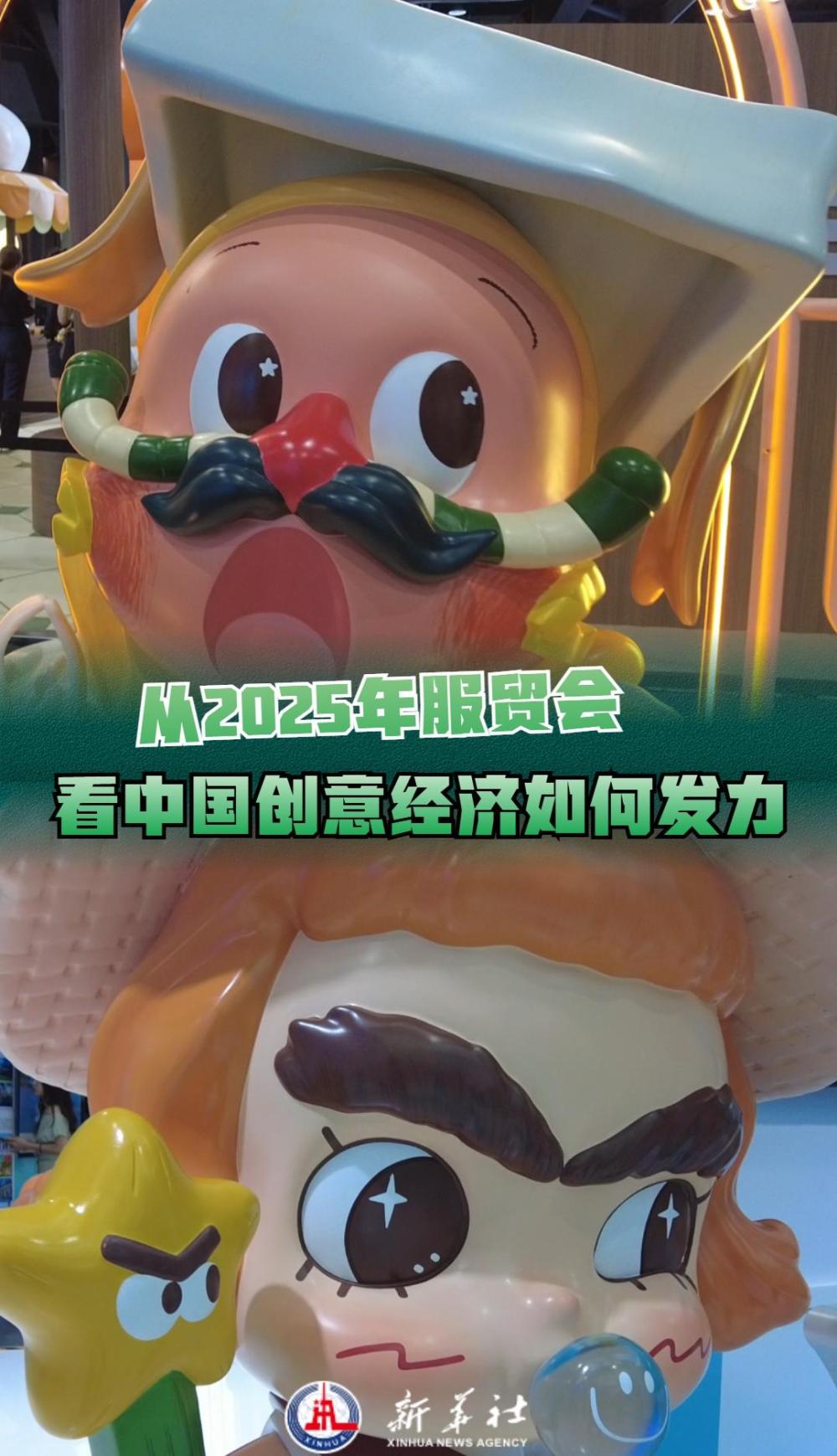
Core Insights - The 2025 China International Service Trade Fair showcased a variety of cultural and creative products that became the highlight of the event, attracting significant attention from attendees [1] - The exhibition featured classic animated derivatives like "Tianshu Qitan," "Hulu Brothers," and "Nezha Nao Hai," which resonated with the collective memories of the "70s" and "80s" generations, sparking nostalgia [1] - The rise of trend culture and emotional consumption in China has led to a vibrant creative economy, demonstrating significant advancements in innovation and design capabilities [1] Industry Highlights - The cultural tourism service exhibition area saw the debut of collaborative trendy toys from the China Open Tennis Tournament, which engaged fans in enthusiastic interactions [1] - Products incorporating intangible cultural heritage, such as the Bubble Mart Molly dolls, attracted considerable attention, with many attendees eager to take photos [1] - The overall landscape of China's creative economy is flourishing, showcasing a diverse array of innovative products that are both popular and commercially successful [1]

新华全媒+丨从2025年服贸会看中国创意经济如何发力
Xin Hua Wang· 2025-09-14 07:27
Core Insights - The 2025 China International Service Trade Fair showcased a variety of cultural and creative products that became the highlight of the event, attracting significant attention from attendees [1] - The exhibition featured classic animated derivatives like "Tianshu Qitan," "Hulu Brothers," and "Nezha Conquers the Dragon King," which resonated with the collective memories of the "post-70s" and "post-80s" generations, sparking nostalgia [1] - The rise of trend culture and emotional consumption in China has invigorated the creative economy, leading to a diverse and vibrant market for innovative products [1] Industry Trends - The cultural and creative products displayed at the fair demonstrated a notable improvement in China's innovation and design capabilities, indicating a shift towards a more dynamic creative economy [1] - The event highlighted the successful integration of traditional craftsmanship with modern design, as seen in products like the Bubble Mart Molly dolls, which attracted significant social media engagement [1] - The collaboration with events like the China Open Tennis Tournament introduced new collectible trends, further engaging fans and enhancing the interactive experience at the fair [1]
锦秋基金被投数美万物:破解 Nano Banana 实物化难题,让 3D 设计实现全民平权 | Jinqiu Spotlight
锦秋集· 2025-09-11 04:00
Core Viewpoint - The article discusses the emergence of "数美万物" (Math Magic) as a transformative player in the AI-driven creative economy, focusing on its innovative platform "Hitems" that enables users to turn creative ideas into physical products through advanced AI technologies [3][6][52]. Investment and Company Background - "锦秋基金" (Jinqiu Capital) has invested in "数美万物" during its angel round in 2024 and its Pre-A round in 2025, with the latter round raising several million dollars and valuing the company at approximately $150 million [3][4]. - The founding team of "数美万物" includes key members from the original Douyin (TikTok) team, enhancing its credibility and potential for innovation [3]. Technology and Platform Features - The core platform "Hitems" utilizes generative AI technology to provide a full-service chain from creation to production and consumption, allowing users to generate high-fidelity product images from keywords, pictures, or sketches [6]. - "Hitems" employs proprietary AI 3D modeling technology and a mature supply chain system to convert creators' ideas into tangible products, significantly lowering the barriers for entry into 3D design and production [6][50]. User Engagement and Community Initiatives - A recent campaign called "手办免费造" (Free Figurine Creation) was launched to engage users in the process of creating physical products from AI-generated designs, allowing participants to win free figurines [7][8]. - The platform encourages community interaction, enabling users to share their creations and participate in contests, thus fostering a collaborative environment [6][8]. Market Potential and Economic Impact - The article highlights the potential for a new wave of creativity and economic growth driven by AI, suggesting that if ordinary individuals can design and create 3D models, it could lead to a significant expansion of the creative economy [52]. - The platform's ability to democratize access to 3D design tools is compared to the historical impact of Ford's assembly line on the automotive industry, suggesting a similar transformation in the creative sector [51][52]. Production and Commercialization - "造好物" (Zaohaowu) offers a flexible supply chain network that allows creators to produce as few as one item, drastically reducing the cost and complexity of bringing creative ideas to market [50]. - The platform's approach to commercialization includes leveraging data analytics to identify market trends and facilitate connections between creators and potential consumers, thereby enhancing the viability of new products [44][45]. Conclusion - The integration of AI in the creative process is positioned as a game-changer, enabling a broader range of individuals to participate in design and production, ultimately leading to a more vibrant and diverse creative economy [56].

泰国批准8.45亿铢影视激励计划
人民网-国际频道 原创稿· 2025-08-20 03:40
Group 1 - The Thai Ministry of Culture approved an incentive plan totaling 845 million THB to attract foreign film production teams to Thailand and promote the domestic film and digital content industry [1] - The funding will support seven foreign films shot in Thailand, with a total investment of 4.48 billion THB, through cash rebate incentives [1] - Six international film festivals were officially certified to strengthen Thailand's position as a regional hub for film and cultural activities [1] Group 2 - A cash rebate mechanism was established for local productions, offering a 15% rebate for films with a budget of at least 20 million THB, and up to 30% for projects exceeding 50 million THB that have international distribution channels or promote social and cultural values [1] - New incentive measures for digital content were approved, allowing foreign companies to receive a 20% cash rebate if they hire Thai teams for animation and visual effects with contracts of at least 5 million THB [2] - The meeting discussed the progress of the 2008 Film and Video Act amendment and strategies to expand the distribution of Thai film works domestically and internationally, emphasizing the role of the creative economy in driving sustainable economic growth [2]
新华视点|潮流IP让世界感知中国创意经济“软实力”
Xin Hua Wang· 2025-08-12 06:37
Core Insights - LABUBU has gained significant global popularity, creating a buying frenzy in cities like London, Paris, Los Angeles, and Milan this year [1] - The rise of LABUBU represents the growing reputation of Chinese trendy IPs, which have ignited a surge in trend consumption [3] - The influence of celebrities and social media has also helped LABUBU attract a large following among China's "Generation Z" [4] Industry Analysis - The success of Chinese trendy IPs in leading international trend consumption is attributed to their ability to accurately capture consumer emotional needs, providing unique emotional value that transcends traditional toy functions [5] - Chinese brands are reconstructing global young consumers' perceptions through emotional resonance, designer incubation, ecosystem support, and international business operations, marking a new phase for Chinese trendy culture going global [5] - The popularity of Chinese trendy IPs reflects the increasing cultural influence of China, promoting Chinese design and creativity globally and enhancing recognition and understanding of Chinese culture [7]
景德镇火了,超过35岁的景漂走了
Hu Xiu· 2025-07-09 13:37
Core Viewpoint - The article discusses the transformation of Jingdezhen from a traditional porcelain production center to a vibrant hub for young artists and creators, highlighting the influx of "Jingdrifters" who seek artistic freedom and community in the city. Group 1: Historical Context - Jingdezhen gained fame during the Song Dynasty for its high-quality porcelain, particularly the Qingbai ware, which was highly sought after by the imperial court [6][7]. - The city became a center for porcelain production due to its unique kaolin clay and the influx of skilled artisans from various regions [9][10]. - Despite its historical significance, Jingdezhen faced economic challenges in the 19th and 20th centuries due to competition from other regions and changes in trade policies [16][17]. Group 2: Current Demographics and Trends - The city has seen a net inflow of population over the past decade, with an increase of 136,000 people, 80% of whom are young individuals [11]. - Currently, there are approximately 60,000 "Jingdrifters" in a city with a population of less than 900,000 [5]. - Jingdezhen Ceramic University, the only university in China named after ceramics, has over 20,000 full-time students, contributing to the creative atmosphere [12]. Group 3: Artistic and Economic Development - The establishment of the Yimei Industrial Park in 2022 serves as a creative base for artists and students from major art academies across China [13]. - The city offers low living costs and a complete industrial chain, making it an attractive place for young artists to experiment and create [13][14]. - Various markets and creative spaces, such as the Letian Market, have emerged, providing platforms for artists to sell their work and engage with consumers [20][21]. Group 4: Challenges and Future Outlook - Despite the growth in artistic activity, Jingdezhen's economy has struggled to keep pace with national and provincial averages, with the city being ranked last in economic output among Jiangxi's 11 cities [31]. - The local government has initiated plans to support "Jingdrifters" by addressing key issues such as healthcare, housing, and education [31]. - The city is experiencing a shift towards becoming a popular tourist destination, which has led to challenges such as rising costs and competition among local artisans [25][27].
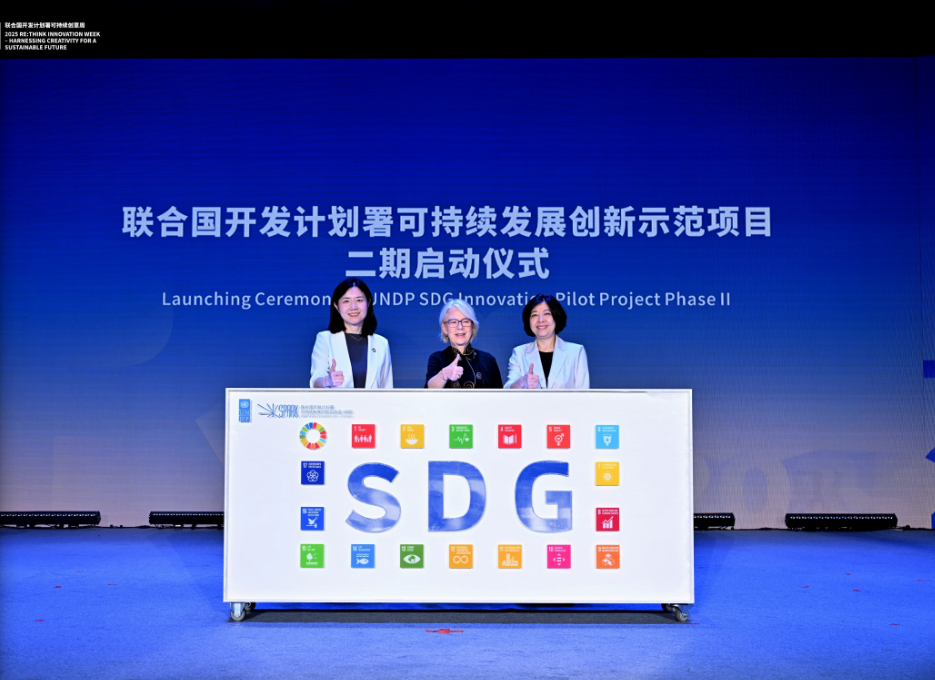
Re:Think 2025可持续创意周开幕 全球创意力量汇聚成都高新区 共绘城市可持续发展新图景
Di Yi Cai Jing· 2025-07-09 10:20
Group 1 - The Re:Think 2025 Sustainable Creative Week, themed "Creativity Leading a Sustainable Future," is hosted by UNDP with support from UNESCO and FAO, gathering global leaders in creative industries, urban planning experts, and technology innovators to discuss how the creative industry can empower urban IP development, drive economic growth, and enhance well-being [3][5] - The second phase of the UNDP Sustainable Development Innovation Demonstration Project was officially launched, aiming to enhance Chengdu High-tech Zone's innovation capabilities and deepen local implementation of the UN Sustainable Development Goals (SDGs) from 2025 to 2029 [4][11] - The event serves as a significant international exchange platform in Southwest China, supporting Chengdu High-tech Zone's innovation-driven development strategy and showcasing the potential of the creative economy in promoting urban sustainable development [5][11] Group 2 - The World Food Forum (China) Chengdu Project Office was inaugurated, focusing on three core areas: global youth action, promoting technological innovation, and investment initiatives to mobilize youth and drive agricultural transformation towards achieving SDGs [7] - A series of pre-event activities ignited a "creative sustainability" wave in Chengdu, including a light show and a sustainable creative night market, enhancing the city's innovative atmosphere [8][10] - The event week will focus on "innovation practice" and "industry empowerment," featuring training sessions for Chinese enterprises on UN procurement strategies, aiming to build a platform for understanding sustainable international public procurement [10][11] Group 3 - The Re:Think 2025 event is seen as a benchmark for the UNDP Sustainable Development Innovation Demonstration Project, which has already established a consulting committee, completed nine research reports, and conducted over 50 training sessions, impacting more than 2,400 global enterprises and over 1,000 Chengdu High-tech Zone companies [11][13] - The Chengdu High-tech Zone aims to leverage the Re:Think event as a window to showcase its international image and foster collaboration for sustainable development at both local and global levels [13]