双轨战略

Search documents
逆势增长背后:茅台酱香酒的战略定力与全链条价值重构
新华网财经· 2025-08-11 09:28
Core Viewpoint - The article highlights the resilience and strategic initiatives of Guizhou Moutai Sauce Aroma Liquor Company amidst a challenging period for the liquor industry, emphasizing its strong brand, product focus, channel support, and service enhancement to achieve its operational goals and maintain growth momentum [1][2]. Group 1: Industry Context and Company Performance - In the first half of 2025, the liquor industry is undergoing a deep adjustment cycle, with consumption patterns rapidly restructuring [1]. - Guizhou Moutai Sauce Aroma Liquor Company achieved a revenue of 246.84 billion yuan in 2024, representing a year-on-year growth of 19.65% [1]. - Moutai Group's strategic determination and collaboration with distributors have been crucial in navigating the industry's challenges [1]. Group 2: Strategic Investments and Research Development - On July 22, 2025, Moutai Group announced a joint investment of 1 billion yuan to establish the Guizhou Moutai Distillery (Group) Science and Technology Research Institute, focusing on innovation in liquor brewing technology and industry chain advancements [3]. - Moutai's R&D investment increased by 11% in 2024, with a target of 10.2% growth in 2025, reflecting a commitment to technological transformation [3]. - The establishment of the research institute aims to create a comprehensive research system covering the entire liquor production chain, enhancing the industry's future prospects [3]. Group 3: Financial Resilience and Brand Strength - Moutai is the only trillion-level enterprise in the liquor industry to maintain over 15% growth for three consecutive years, with total revenue reaching 1,741.44 billion yuan and profit totaling 1,196.39 billion yuan in 2024, both showing year-on-year increases of 15.66% and 15.41% respectively [5]. - The brand's strong recognition and premium positioning allow it to dominate the high-end market despite shifting consumer trends [5]. - Moutai has established a comprehensive control over its supply chain, enhancing its ability to withstand risks [5]. Group 4: Market Strategies and Consumer Engagement - Moutai Sauce Aroma Liquor Company is implementing a "three-end synergy" strategy to enhance channel connectivity between brands and consumers, actively engaging with new retail platforms [8]. - The company is transitioning from merely selling products to promoting a lifestyle, enhancing consumer value through cultural and quality experiences [11]. - Initiatives include hosting events to elevate brand experience and launching product upgrades to meet consumer expectations [11]. Group 5: Future Outlook and Industry Leadership - Moutai's leadership emphasizes the importance of a strong brand quality advantage, stable channel resources, and adaptability in responding to market changes [12]. - The company aims to drive the industry towards value-driven growth, setting a standard for combating counterfeit products and promoting sales regulations [12]. - Moutai's innovative and regulatory approach is expected to solidify its position as a leader in high-quality development during the industry's adjustment phase [12].



从卖咖啡到卖“解决方案”
Jing Ji Ri Bao· 2025-08-02 00:36
Core Insights - The company has successfully transitioned from coffee OEM to establishing its own brand within three years, leveraging technological innovation and a full industry chain layout to overcome regional limitations [1][2] Group 1: Technological Innovation - The core of the company's coffee product success lies in technological breakthroughs, particularly the self-developed vacuum freeze-drying technology at -40 degrees Celsius, which preserves 90% of the coffee bean flavor and allows for 3-second cold water solubility [1] - The flexible production line can handle 10 types of coffee beans simultaneously, catering to diverse customer needs [1] Group 2: Market Positioning and Strategy - The company has established a direct sourcing supply chain with Ethiopia, capitalizing on the Belt and Road Initiative, and currently produces over 80% of China's freeze-dried coffee powder sourced from Ethiopian beans [2] - The annual production capacity of freeze-dried coffee powder has reached 1,000 tons, with an annual output value exceeding 500 million yuan [2] - The company has implemented a dual-track strategy of online and offline sales, launching its own brand on e-commerce platforms in 2022, achieving a repurchase rate of over 40% during the "Double 11" shopping festival [2] Group 3: Service-Oriented Transformation - The company is shifting from providing single freeze-dried powder to offering customized "coffee solutions," including specific packaging and roasting levels tailored to clients in the restaurant and new tea beverage sectors [3] - Future plans include transforming OEM business into "technology output," integrating high-quality African raw materials with manufacturing technology from Henan, and establishing a model of "African raw materials - Henan manufacturing - global sales" [3]
观车 · 论势 || 从宝马中国战略转向看燃油车抬头、电动车降量
Zhong Guo Qi Che Bao Wang· 2025-06-10 01:11
Group 1 - BMW Group has adjusted its future sales forecasts for electric models, reducing estimates for BMW and MINI brands by over 20% for some models, while increasing projections for certain gasoline vehicles [1] - Traditional automakers like Geely and Chery are also balancing their strategies between electric and gasoline vehicles, with Geely maintaining over 40% sales from gasoline vehicles and Chery achieving over 50% in 2024 [1][2] - The shift in strategy from aggressive electric vehicle targets to a more rational approach reflects the current market trend of coexistence between gasoline and electric vehicles [1] Group 2 - The gasoline vehicle market remains robust, with a penetration rate rebounding to 57.57% in Q1 2025, and regions like the Northwest showing a 68% ownership rate for gasoline vehicles [2] - The development of gasoline vehicles is supported by technological upgrades, such as Geely's CMA architecture and Changan's new high-pressure direct injection technology, which enhance fuel efficiency [3] - New regulations set to be implemented in 2025 will impose stricter safety standards on electric vehicles, increasing production costs for automakers [4] Group 3 - The call for "equal rights" for gasoline and electric vehicles is gaining traction, potentially diminishing the advantages of electric vehicles in terms of purchase incentives and road access [4] - The presence of hidden costs associated with electric vehicles and high depreciation rates for used electric cars indicate a long-term coexistence of both vehicle types in the market [4] - The industry is at a pivotal moment in 2025, questioning whether the rise of gasoline vehicles is a temporary phenomenon or a rational adjustment following the rapid growth of electric vehicles [4]
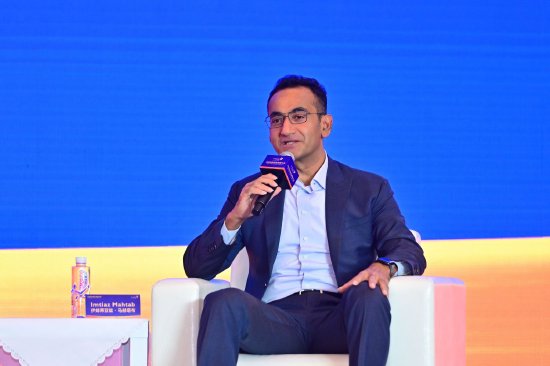
沙特奥贝坎投资Imtiaz Mahtab:沙特2030愿景与中国“一带一路”倡议的深度协同
Xin Lang Cai Jing· 2025-05-20 02:34
Group 1 - The Saudi Vision 2030 aligns closely with China's Belt and Road Initiative, indicating a strategic partnership between the two nations [3] - Over the past three years, Saudi Arabia has procured $50 billion worth of Chinese products and services, becoming one of the largest purchasers globally [3] - Saudi Arabia is undergoing an economic transformation comparable to China's in 2000, with significant infrastructure projects worth trillions of dollars underway [3] Group 2 - Infrastructure remains the primary engine of growth, but the focus of cooperation is shifting towards technology sectors such as new energy vehicles, battery technology, and electronics manufacturing [3] - Saudi Arabia is implementing a "dual-track strategy" to restructure its global supply chain, enhancing local supply chain resilience while providing Chinese companies with new opportunities to mitigate geopolitical risks [4] - The collaboration between China and Saudi Arabia is expanding into emerging fields like digital economy and green energy, moving from traditional infrastructure to technological cooperation [4]