逆周期投资

Search documents
中国船舶租赁(03877):分红率提升,净利润受税率提升影响同比下滑
SINOLINK SECURITIES· 2026-03-27 09:43
Investment Rating - The report maintains a "Buy" rating for China Ship Leasing (03877.HK) [1] Core Views - The company reported total revenue of HKD 4.044 billion for 2025, a slight increase of 0.2% year-on-year, while net profit decreased by 12.4% to HKD 1.845 billion, primarily due to a significant tax rate increase influenced by the "pillar two" policy [1] - The return on equity (ROE) was 12.6%, down 3.1 percentage points year-on-year, and the company declared a dividend of HKD 0.16 per share, resulting in a dividend payout ratio exceeding 50% [1] - The company has a fleet of 135 vessels, with an average age of 4.5 years and an average remaining lease term of 7.4 years, indicating a focus on mid-to-high-end vessel types [2] - The financial expenses decreased by 24% year-on-year, with an average funding cost of 2.91%, benefiting from a diversified financing model [2] Summary by Relevant Sections Performance Overview - In 2025, the company experienced a decline in net profit due to the early termination of some financing lease projects and the retrospective application of the "pillar two" framework leading to higher tax rates [3] - The projected net profits for 2026-2028 are estimated at HKD 2.05 billion, HKD 2.18 billion, and HKD 2.44 billion, with year-on-year growth rates of 11%, 7%, and 12% respectively [3] Operational Analysis - The fleet composition includes 114 operational vessels and 21 under construction, with a significant portion of contracts in clean energy equipment and container ships [2] - The company signed contracts for 10 new vessels in 2025, with a total contract value of USD 519 million, all being mid-to-high-end types [2] Financial Metrics - The company’s total revenue for 2025 was HKD 4.044 billion, with a projected growth rate of -8% for 2025, followed by a recovery in subsequent years [7] - The basic earnings per share for 2025 is projected at HKD 0.30, with a gradual increase expected in the following years [7]
中国船舶租赁:港股公司点评:分红率提升,净利润受税率提升影响同比下滑-20260327
SINOLINK SECURITIES· 2026-03-27 08:24
Investment Rating - The report maintains a "Buy" rating for China Ship Leasing (03877.HK) [1] Core Views - The company reported total revenue of HKD 4.044 billion for 2025, a slight increase of 0.2% year-on-year, while net profit decreased by 12.4% to HKD 1.845 billion, primarily due to a significant increase in tax rates influenced by the "pillar two" policy [1] - The company has a high dividend payout ratio exceeding 50%, with a dividend of HKD 0.16 per share [1] - The company has a fleet of 135 vessels, with an average age of 4.5 years and an average remaining lease term of 7.4 years, indicating a strong operational capability [2] - The company signed contracts for 10 new vessels in 2025, with a total contract value of USD 519 million, all of which are mid-to-high-end vessels [2] - The financial cost decreased by 24% year-on-year, with an average funding cost of 2.91%, benefiting from a diversified financing model [2] - The company is expected to achieve net profits of HKD 2.050 billion, HKD 2.184 billion, and HKD 2.445 billion for 2026, 2027, and 2028 respectively, with year-on-year growth rates of 11%, 7%, and 12% [3] Summary by Sections Performance Overview - In 2025, the company experienced a decline in net profit due to increased tax rates, while revenue showed slight growth [1] - The return on equity (ROE) was 12.6%, down 3.1 percentage points year-on-year [1] Operational Analysis - The fleet composition includes various types of vessels, with a notable increase in the share of clean energy vessels [2] - The average remaining lease term of the operational fleet is 7.4 years, indicating stability in revenue generation [2] Financial Metrics - The company’s total assets decreased by 5.2% year-on-year, primarily due to the sale of three cargo vessels [2] - The receivables from leasing decreased by 10.5% year-on-year, attributed to early terminations of some financing lease projects [2] - The projected revenue growth rates for the upcoming years are modest, reflecting the current market conditions [3]
韩国芯片,赚麻了!
芯世相· 2026-03-21 01:06
Core Viewpoint - The South Korean semiconductor industry has experienced a dramatic turnaround from despair in 2022 to significant growth in 2023, largely driven by the AI boom and strategic investments in high-bandwidth memory (HBM) technology [5][6]. Group 1: Industry Overview - In early 2022, the South Korean semiconductor sector faced severe challenges, with a continuous decline in export value and storage chip prices plummeting [5]. - By March 2023, South Korea's chip exports exceeded $20 billion for three consecutive months, with February's exports surging by 160.8% year-on-year, marking a historic high of $25.16 billion [5][6]. - The semiconductor sector's contribution to South Korea's total exports rose from 16.3% to 34.7% year-on-year, becoming a crucial economic driver [5]. Group 2: Strategic Investments - The AI wave has prompted major tech companies like Microsoft, Meta, Amazon, and Google to plan investments of approximately $650 billion in AI infrastructure by 2026, with a significant portion directed towards GPUs and HBM, where South Korea holds a dominant position [5][6]. - SK Hynix and Samsung, the two leading HBM manufacturers, control nearly 80% of the global market share, with SK Hynix's entire HBM production capacity for 2026 already sold out [6]. Group 3: Risk and Reward - In 2022, while competitors reduced production and cut costs, SK Hynix and Samsung chose to increase their investment in HBM technology, with SK Hynix boosting its R&D spending by 30% [7][8]. - This strategic decision to focus on HBM, despite the industry's downturn, positioned them favorably for the subsequent AI boom, as traditional memory could not meet the demands of AI models [8][10]. Group 4: Collaborative Efforts - SK Hynix established a dedicated AI storage R&D team in 2020, focusing on collaboration with NVIDIA, which has led to a close partnership where engineers from both companies work side by side [9][10]. - This collaboration has allowed SK Hynix to respond quickly to NVIDIA's needs, enhancing their competitive edge over rivals like Micron, which lacks such close integration [11][13]. Group 5: Historical Context - The success of South Korea in the HBM sector is attributed to a long history of strategic, aggressive investments during industry downturns, a practice initiated in the 1980s by Samsung's founder [17][18]. - Both Samsung and SK Hynix have consistently chosen to invest heavily during market slumps, allowing them to emerge stronger and capture market share when conditions improve [19][20].


韩国芯片,彻底爆了!
是说芯语· 2026-03-10 13:02
Core Viewpoint - The South Korean semiconductor industry has experienced a dramatic turnaround from despair in 2022 to significant growth in 2023, primarily driven by the AI boom and the demand for high-bandwidth memory (HBM) chips [4][5][6]. Group 1: Industry Performance - In early 2023, South Korea's semiconductor exports exceeded $20 billion for three consecutive months, with February seeing a year-on-year increase of 160.8%, reaching a record high of $25.16 billion [5]. - The share of semiconductor exports in South Korea's total exports rose from 16.3% in the previous year to 34.7%, highlighting its critical role in the economy [5]. Group 2: Strategic Decisions - During the downturn in 2022, while competitors cut orders and reduced production, SK Hynix and Samsung decided to increase investment in HBM technology, betting on future AI demands [9][11]. - SK Hynix's CEO emphasized the importance of investing in next-generation technology, stating that even if AI developments take time, preparation must begin immediately [11]. Group 3: Technological Leadership - SK Hynix and Samsung dominate the HBM market, holding nearly 80% of the global share, with SK Hynix's entire HBM production capacity for 2026 already sold out [8][12]. - The companies' commitment to HBM development has positioned them as key players in the AI infrastructure, with significant investments leading to advancements in HBM3E technology [11][12]. Group 4: Collaborative Innovation - SK Hynix established a close partnership with NVIDIA, embedding engineers at NVIDIA's headquarters to address technical challenges in HBM and GPU integration [17][18]. - This collaboration has allowed SK Hynix to respond quickly to NVIDIA's needs, enhancing their competitive edge over rivals like Micron [18][20]. Group 5: Historical Context and Future Outlook - The success of South Korea in the HBM sector is attributed to a long history of strategic investments during industry downturns, allowing them to emerge as leaders in the semiconductor market [23][30]. - Projections indicate that SK Hynix's operating profit for 2025 could reach 45 trillion KRW (approximately 212.8 billion RMB), with HBM being a core profit driver [22].

大类资产及择时观点月报(2026.03):黄金信号转为负向-20260304
GUOTAI HAITONG SECURITIES· 2026-03-04 09:30
- The macro momentum model allocation signal for March 2026 indicates negative signals for the stock market, positive signals for the bond market, and negative signals for the gold market based on the latest data at the end of February 2026[4][9][12] - The counter-cyclical allocation model predicts the macroeconomic environment for Q1 2026 as Slowdown, with the allocation ratios for underlying assets being 20% for CSI 300, 0% for CNI 2000, 30% for Nanhua Commodity, and 50% for ChinaBond Treasury Total Wealth Index[7] - The cumulative return of the industry composite trend factor portfolio from January 2015 to February 2026 is 143.48%, with an excess return of 52.95%[14] - The industry composite trend factor for February 2026 is 0.24, maintaining a positive signal[14] - The macro momentum model uses various sub-factors such as PMI, PPI, CFETS RMB Index, and others to generate signals for different markets[9][12] - The counter-cyclical allocation model uses credit spread and term spread to predict economic growth and inflation changes for the next quarter, classifying the macro environment into Growth, Inflation, and Slowdown stages[7] - The industry composite trend factor is constructed from industry-level indicators to observe market trends, with significant absolute values indicating potential market uptrends or downtrends[13] - The cumulative net value of the counter-cyclical strategy based on a 20-80 stock-bond benchmark is shown in the report[10] - The industry composite trend factor portfolio's performance and signals are illustrated with the Wind All A Index[16][17]

国金证券:首次覆盖中国船舶租赁给予“买入”评级 目标价2.64港元
Zhi Tong Cai Jing· 2026-02-09 06:23
Core Viewpoint - The report from Guojin Securities forecasts that the net profit attributable to the parent company of China Ship Leasing (03877) will be HKD 2.16 billion, HKD 2.30 billion, and HKD 2.48 billion for the years 2025-2027, representing year-on-year growth rates of 3%, 6%, and 8% respectively. The lower profit growth in 2025 is attributed to the completion of certain financing leasing and loan projects, leading to a decline in related income, as well as a tax expense of HKD 140 million due to the retrospective application of the Basel II framework starting in 2025. The company demonstrates counter-cyclical investment capability, leading operational capacity, low funding costs, and a high dividend payout ratio (approximately 40%), with a projected dividend yield of about 7% at the current price. A target price of HKD 2.64 is set based on a 1x PB for 2026, initiating coverage with a "Buy" rating [1]. Group 1: Diverse Business Structure - As of the first half of 2025, the company's revenue breakdown from operating leasing, financing leasing, loan borrowing, and ship brokerage is 60%, 27%, 12%, and 1% respectively. The company primarily focuses on long-term leasing, providing revenue growth certainty. The net asset value of the company's ship assets and the scale of receivables from leasing are projected to grow at a compound annual growth rate (CAGR) of 20% from 2020 to 2024. The estimated operating leasing yield and financing leasing yield for 2024 are 14.4% and 7.8% respectively. In addition to long-term leases, the company utilizes its industry expertise to deploy some self-operated and joint venture ships in the spot and short-term market, contributing approximately 30% to profits from 2021 to 2024 [1]. Group 2: Leading Operational Capability - The company's fleet is characterized by diversity, high value, and youth, with a fleet size of 143 vessels as of the first half of 2025. According to Clarkson data, as of September 2025, the company's ship asset value ranks 7th among Chinese leasing companies and 2nd among non-bank leasing companies. The company is one of only four Chinese shipping leasing companies covering all ship types. The company is also leading in green transformation, with 91% of its vessels being energy-efficient as of September 2025, ranking 2nd among the top ten leasing companies in terms of vessel quantity. The average age of the fleet is 4.13 years, lower than comparable peers, and new ships generally comply with environmental policies, resulting in lower maintenance costs and strong appeal to quality customers [2]. Group 3: Low Funding Costs - The company holds a high credit rating, with Fitch and S&P both rating it A- as of the first half of 2025. The average funding cost is 3.1%, which is below the industry average. With the Federal Reserve expected to cut interest rates three times in 2025, and the majority of the company's liabilities denominated in USD, the average funding cost is anticipated to decline further [3].

中国神秘“金矿大王”,靠隐忍捡漏1000亿
3 6 Ke· 2026-02-03 10:02
Core Viewpoint - The recent sharp decline in gold prices has led to significant losses for both individual investors and trading platforms, while the founder of Luoyang Molybdenum, Yu Yong, has emerged as a major beneficiary due to his control over cobalt resources, which are increasingly critical in the global market [1][3][5]. Group 1: Market Impact - Individual investors have reported losses after a sudden drop in gold prices, with some losing thousands after previously making significant profits [1]. - The gold trading platform "Jie Wo Rui" has faced severe financial issues, leaving hundreds of merchants at risk of losing their investments [3]. Group 2: Yu Yong's Success - Yu Yong, the founder of Luoyang Molybdenum, controls nearly one-third of the global cobalt supply, positioning his company advantageously in the market [5][7]. - His wealth has surged to 95 billion, drawing attention from U.S. officials who express concerns over the concentration of cobalt supply in Chinese hands [7]. Group 3: Background and Strategy - Yu Yong's journey from a paper factory worker to a prominent figure in the mining industry is marked by strategic foresight and patience [9][11]. - He acquired Luoyang Molybdenum during a period of financial distress for the company, recognizing its potential despite competition from larger firms [11][13]. - By adopting a strategy of becoming a minority shareholder initially, he was able to implement significant reforms that turned the company around, leading to substantial profit growth [14][16]. Group 4: Major Investments - Yu Yong's first major gamble was acquiring the TFM copper-cobalt mine in the Democratic Republic of Congo for $2.65 billion during a market downturn, which later proved to be a lucrative investment as cobalt prices soared [18][20]. - His second significant acquisition was the KFM copper-cobalt mine for $550 million, further solidifying his control over cobalt resources [21][23]. Group 5: Strategic Vision - Yu Yong's success is attributed to his long-term vision, focusing on future industry trends rather than short-term gains, particularly in the context of the global energy transition [24][25]. - He has strategically invested in the entire supply chain, including a significant stake in CATL, allowing for a vertically integrated operation from mining to battery production [29][31]. - This integration provides Luoyang Molybdenum with enhanced pricing power and risk management capabilities in the fluctuating market [29][31].

全球视野看家电:从三星电子看家电龙头产业升级之路
Changjiang Securities· 2026-01-18 14:25
Investment Rating - The report maintains a "Positive" investment rating for the home appliance industry [13] Core Insights - The report analyzes Samsung Electronics' successful transition from home appliances to semiconductor storage, display panels, and mobile phones, providing a reference for China's leading home appliance companies in their industrial upgrades [4] - Samsung Electronics has achieved an average annual compound growth rate of 19% in net profit from 1993 to 2024, making it the largest and fastest-growing home appliance company globally [7][34] - The report emphasizes the importance of proactive engagement with industry changes and policy opportunities during the growth phase of home appliances, highlighting Samsung's strategic investments and efficiency improvements [8][9] Summary by Sections Background and Timing - Samsung Electronics entered the semiconductor storage industry in 1983 when the penetration rate of home appliances in South Korea was rapidly increasing, supported by a strong GDP growth rate of over 10% [8][46] - The company capitalized on government support and market opportunities to navigate early losses and establish a profitable cycle in the semiconductor industry [8][46] Challenges and Strategies - Samsung leveraged its latecomer advantage and implemented a counter-cyclical investment strategy to quickly capture market share, achieving a 39% market share in the storage sector by 2024 [9] - The company focused on efficiency and cost advantages across various dimensions, including organizational structure and production strategies [9] Effects and Outcomes - By 2017, Samsung surpassed Intel to become the world's largest semiconductor manufacturer, with R&D investment increasing from 2% in 1980 to 12% in 2024 [10] - The company successfully expanded into display panels and mobile phones, creating a synergistic industrial system that enhanced its brand image and market position [10] Comparison with Midea Group - Midea Group is positioned to achieve significant industrial upgrades, with a projected 22% revenue contribution from non-home appliance sectors by 2024 and a growth rate of 15%-20% in recent years [11] - The report highlights Midea's advantages in cash flow stability and efficiency, suggesting a strong potential for industrial upgrades [11]

时代正在呼唤中国的“黑石”丨CV荐书
投中网· 2026-01-11 07:12
Core Viewpoint - The article discusses the potential for China to develop its own version of Blackstone in the VC/PE market, highlighting the shift from a focus on growth-stage investments to an increasing interest in merger and acquisition (M&A) funds [3][4]. Group 1: Changes in the VC/PE Landscape - The traditional VC/PE landscape in China has been dominated by growth-stage investments, with a prevailing belief that China could not produce a firm like Blackstone due to limitations in leveraging equity investments [3][4]. - Recently, there has been a notable shift, with more domestic leading institutions beginning to explore M&A funds, indicating a growing interest in this area [3][4]. Group 2: Blackstone's Investment Philosophy - Blackstone's success over the past 40 years is attributed not to financial engineering but to bold counter-cyclical investments and deep operational capabilities [4][5]. - The book illustrates that Blackstone has achieved impressive returns with low or no leverage in many successful projects, challenging the notion that leverage is essential for private equity success [4][5]. Group 3: The Role of PE in Economic Transformation - The role of PE firms has become increasingly essential in modern capital markets, especially for companies facing growth bottlenecks or operational challenges [5][6]. - The current economic restructuring in China presents opportunities for PE firms to assist traditional industries in upgrading and transforming, similar to the role PE played in the U.S. during the 1980s [5][6]. Group 4: Future of Chinese PE Firms - The reputation of M&A funds in China has been mixed, often associated with capital operation strategies that neglect corporate governance [6]. - There is a need for investment firms in China to develop industry insights and operational expertise, akin to Blackstone, to effectively support companies in achieving turnaround or growth [6].


后巴菲特时代,阿贝尔可能比巴菲特赚得更狠!
Xin Lang Cai Jing· 2026-01-04 01:24
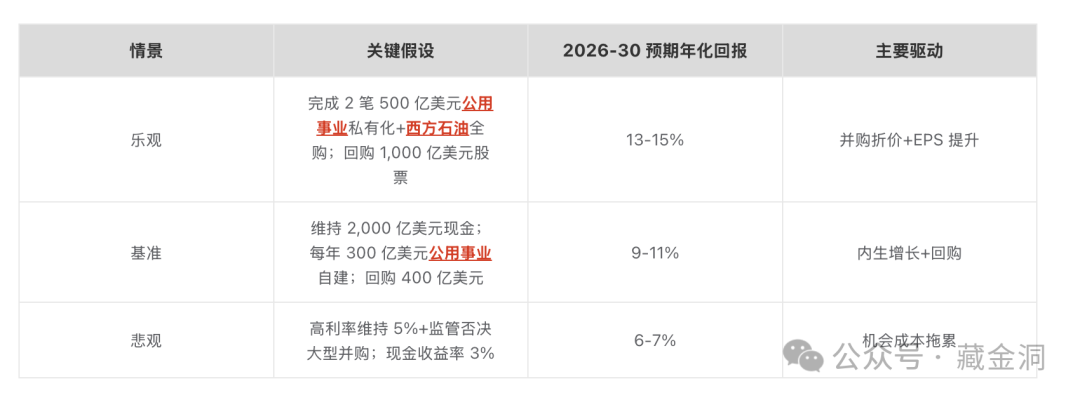
Core Viewpoint - The transition from Warren Buffett to Abel marks a significant shift in Berkshire Hathaway's strategy, moving from brand investment to resource control, with a focus on hard assets and cash management [1][7][30]. Group 1: Financial Position - Berkshire Hathaway's cash reserves have reached a record high of $381 billion, surpassing the total market value of its stock holdings, which stands at $283 billion [17][18]. - This unprecedented cash position indicates a strategic pivot, suggesting that Abel views the current stock market as inflated and prefers liquidity as a strategic asset [19][20]. Group 2: Leadership Transition - Abel, who has a background in energy and railroads, is characterized as a pragmatic and aggressive leader, contrasting with Buffett's more romantic investment philosophy [10][14]. - Abel's approach is expected to focus on acquiring distressed hard assets, such as utilities and infrastructure, rather than traditional consumer brands [21][23][28]. Group 3: Investment Strategy - The investment strategy under Abel is anticipated to shift towards "survival" rather than "pleasure," emphasizing essential services and resources [28][30]. - Abel's recent acquisition of $4.3 billion in Google stock reflects a strategic interest in stable cash flow assets related to AI data centers, rather than speculative technology investments [28]. Group 4: Market Outlook - The current market environment is characterized by high valuations and rising interest rates, which are seen as challenges for companies in utilities and energy sectors [20][21]. - Abel's strategy may involve privatization and full acquisitions of struggling companies, aiming to generate revenue through essential services rather than stock price appreciation [25][26]. Group 5: Future Projections - Projections for Berkshire's annualized returns from 2026 to 2030 vary based on different scenarios, with optimistic estimates suggesting returns of 13-15% through strategic acquisitions and share buybacks [29]. - The company is expected to evolve into a more stable income-generating entity, resembling a super bond or enhanced utility index ETF, with reduced volatility and increased dividend potential [3][30].