可持续商业模式

Search documents
综合施策助力智能微电网破局提速
Zhong Guo Dian Li Bao· 2025-11-07 02:36
Core Viewpoint - The development of smart microgrids in China has made significant progress in recent years, driven by supportive policies and practical applications across various sectors, although challenges remain in terms of regulations, business models, and market participation [1][2][3][4]. Policy Developments - The "Action Plan for Accelerating the Construction of a New Power System (2024-2027)" encourages the construction of smart microgrid projects tailored to local conditions [1]. - The National Energy Administration has recognized smart microgrids as a new type of resource aggregation entity, supporting their development in industrial enterprises and parks [1]. - In May 2025, the National Energy Administration included smart microgrids in the pilot directions for the construction of a new power system [1]. Practical Applications - Provinces like Jiangsu, Guangdong, and Shandong have launched numerous smart microgrid pilot projects across various scenarios, including residential, commercial, industrial parks, and islands [2]. - Industrial parks have utilized smart microgrids to achieve local consumption of renewable energy and reduce electricity costs, while islands have improved power supply stability and living conditions through these systems [2]. - The economic viability of smart microgrids is becoming apparent as the costs of renewable energy and storage decrease, leading to commercial applications [2]. Challenges - Existing policies lack clarity on property rights, operational models, and responsibility allocation for smart microgrids [2]. - There is a gap in top-level design, unified interface standards, and technical specifications, affecting equipment compatibility and system interoperability [2]. - A sustainable business model and mature operational model for smart microgrids are currently lacking, with few market participation cases and unclear trading mechanisms [2][4]. Recommendations for Development - It is essential to improve policies and regulations by establishing clear management methods for smart microgrid projects and developing a comprehensive technical standard and specification system [3]. - Innovative business models should be explored to broaden revenue channels for smart microgrid operators, including participation in ancillary service markets and demand response mechanisms [4]. - Establishing special subsidies and diversified financing channels is crucial to reduce investment costs and attract more social capital into smart microgrid projects [4].
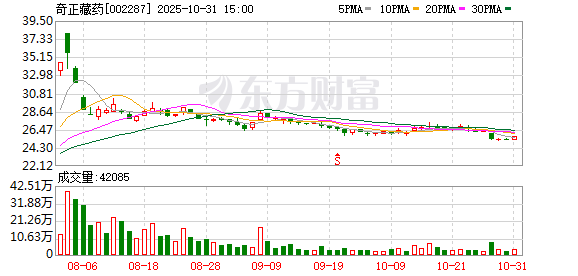
奇正藏药获2025拉姆·查兰管理实践杰出奖 可持续管理模式再获认可
Zheng Quan Shi Bao Wang· 2025-10-31 07:09
Core Insights - The Ram Charan Management Practice Award recognized Qizheng Tibetan Medicine for its outstanding case study on sustainable business models and governance practices [2][4] - The award highlights Qizheng's innovative approaches in the sustainable development of traditional Chinese medicine and ethnic medicine [2] Company Overview - Qizheng Tibetan Medicine has prioritized biodiversity and environmental protection in the Qinghai-Tibet Plateau [2] - The company has conducted resource surveys on over 120 Tibetan medicinal materials and established standards for more than 60 local varieties [2] - Qizheng has implemented research on cultivation techniques for 58 medicinal materials, creating a functional base system covering over 500,000 acres [2] Environmental Practices - The company actively promotes low-carbon principles and high-standard green production [2] - Qizheng has built an intelligent factory and established an environmental management system covering all production stages [2] Cultural and Educational Initiatives - Through the Qizheng Foundation, the company promotes Tibetan medicine culture via grassroots education and clinic initiatives [3] - Qizheng aims to create a symbiotic business ecosystem with stakeholders [3] Strategic Planning - The company has developed a "Strategic Five Trees" model, linking disease, health, technology, products, and brand for seamless strategic and operational integration [3] - Qizheng enforces a "one-vote veto" system in product development, ensuring that any marketable variety relying on endangered resources is not advanced without proper resource planning [3] Organizational Development - Qizheng is advancing organizational youthfulness and establishing a modern management system to attract and cultivate professional talent [3]


短评丨从“输血”到“造血”
Zhong Guo Zi Ran Zi Yuan Bao· 2025-09-17 07:48
Core Viewpoint - The launch of the first ecological protection and restoration industry special fund in Zhejiang represents an innovative financial tool and a significant transformation in ecological governance, aiming to attract social capital for sustainable ecological protection and economic development [1][2] Group 1: Fund Launch and Objectives - The fund aims to address the challenge of making social capital willing to invest, stay, and achieve returns in ecological protection [1] - It breaks away from the traditional reliance on fiscal investment for ecological restoration by utilizing market mechanisms to engage social capital as active participants [1] Group 2: Investment Scope and Innovative Models - The fund's investment scope includes both public welfare areas like ecosystem restoration and extends to sectors such as ecological agriculture and tourism [1] - Two innovative paths are identified: 1. "Ecological Restoration + Industry Integration," where regions like Anji and Pujiang combine land restoration with cultural and tourism industries to generate returns [1] 2. "Ecological Restoration + Rights Packaging," exemplified by Shaoxing Keqiao linking mining rehabilitation with tourism development rights, adhering to the principle of "whoever restores benefits" [1] Group 3: Economic and Ecological Value Transformation - The exploration in Zhejiang embodies the "Two Mountains" concept, demonstrating that green mountains and gold mountains can coexist through effective transformation mechanisms [2] - By assigning economic attributes to ecological resources and utilizing market-based methods for rights allocation, dormant ecological assets can be activated to drive common prosperity [2]
被在华留学生吐槽身份认证难!夸克回应
Xi Niu Cai Jing· 2025-09-16 07:35
Group 1 - Quark has launched an "Education Plan" aimed at nearly 70 million college teachers and students nationwide, offering free membership benefits and exclusive discounts [1] - Many international students in China have reported difficulties in completing identity verification, preventing them from accessing the free membership benefits, leading to discussions on social media about the issue [1] - Quark's official response indicated that foreign students in China can verify their status through the China Higher Education Student Information (CHESI) system, but some may face delays due to data entry issues at their universities [3] Group 2 - Quark has introduced a new independent education app called "Quark Learning," which features functions such as photo-based problem-solving, homework correction, and personalized materials, promoting a "0 yuan anytime inquiry" slogan [6] - The app aims to disrupt the current education market dominated by companies like iFLYTEK, ByteDance, and Zuoyebang, by providing targeted one-on-one tutoring based on students' learning stages and historical mistakes [6] - The sustainability of Quark Learning's free model is uncertain, as the K12 online question bank market in China is projected to reach approximately 8.6 billion yuan in 2024, with a low payment rate of less than 15% [6][7]

超2亿补贴已发放!内蒙古多措推动新型储能电站加快建设
中关村储能产业技术联盟· 2025-08-25 09:32
Core Viewpoint - Inner Mongolia is leading the exploration of sustainable business models for new energy storage systems, with a total compensation amount exceeding 200 million yuan for discharge volume by mid-2025, aiming to accelerate the construction of a new power system [2][3]. Group 1: Policy and Compensation - The Inner Mongolia Energy Bureau has issued a notification to accelerate the construction of new energy storage systems, providing a compensation standard of 0.35 yuan per kilowatt-hour for projects completed by 2025 [2]. - The compensation for discharge volume will be implemented on a principle of "one year fixed, ten years fixed," ensuring long-term support for the investment owners of energy storage stations [2]. - By mid-2025, the total compensation amount transferred to new energy storage stations by Inner Mongolia Power Company and State Grid Mengdong Electric Power Company reached 20,875.16 million yuan [3]. Group 2: Market Dynamics - New energy storage systems are crucial for enhancing the consumption of renewable energy, but many face profitability challenges, necessitating the exploration of sustainable business models [2]. - Independent new energy storage stations can participate in the electricity spot market, charging during low-price periods and discharging during peak prices to earn profit from price differences, transforming from cost centers to profit centers [2].

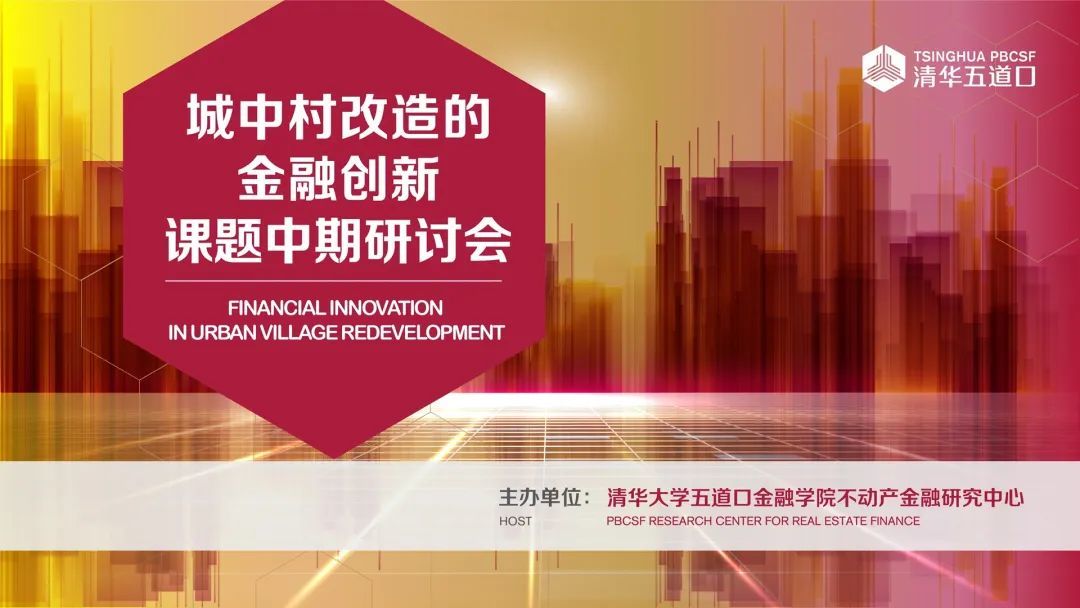
破解城中村改造瓶颈:如何构建可持续商业模式?|宏观经济
清华金融评论· 2025-07-18 10:27
Core Viewpoint - The core focus of the article is on the financial innovation required for the sustainable transformation of urban villages in China, emphasizing the need for a comprehensive commercial model to overcome existing challenges in urban village redevelopment [3][12]. Group 1: Meeting Overview - The Tsinghua University Wudaokou Financial Institute's Real Estate Financial Research Center hosted a seminar on July 12, focusing on financial innovations in urban village redevelopment [4]. - Key attendees included former CSRC Chairman Xiao Gang and other industry leaders, highlighting the importance of collaboration among various stakeholders [4][7]. Group 2: Challenges and Solutions - Urban village redevelopment faces significant challenges such as slow progress, imbalanced responsibilities among participants, mismatched funding timelines, unclear land ownership, and lengthy approval processes [7][9]. - The need for a sustainable commercial model is emphasized, which should include systematic reforms tailored to different redevelopment methods [7][10]. Group 3: Expert Insights - Experts provided insights on the necessity of a clear process framework to facilitate capital entry and the importance of sustainable and high-quality development goals [8][9]. - Recommendations include exploring mechanisms for collective land market entry, diversifying compensation models for residents, and adjusting planning dynamically to meet future demands [9][10]. Group 4: Financial Tools and Policy Recommendations - Suggestions for financial tool innovation include assessing the effectiveness of various financial products and ensuring that innovations are based on sustainable redevelopment models [10][11]. - The article discusses the importance of matching fiscal resources with social capital and exploring differentiated financing structures for public and market-oriented projects [12][11]. Group 5: Conclusion - The meeting concluded with a call for a new commercial model that relies on financial innovation to address both institutional and funding bottlenecks in urban village redevelopment [12].
深度研讨|破解城中村改造瓶颈:如何构建可持续商业模式?
Feng Huang Wang Cai Jing· 2025-07-17 02:20
Core Insights - The core focus of the seminar is on how financial innovation can facilitate the transformation of urban villages through policy collaboration, tool innovation, and a closed-loop model to create a sustainable ecosystem [2][4][9] Group 1: Challenges and Opportunities - Urban village transformation is strategically valuable for new urbanization, economic and real estate transition, and social equity, but faces challenges such as slow progress, imbalanced responsibilities among participants, mismatched funding timelines, unclear land ownership, and lengthy approvals [4][5] - The need for a sustainable business model is emphasized as a prerequisite for breakthrough progress in urban village transformation [6][9] Group 2: Financial Tools and Policy Recommendations - Recommendations include exploring effective mechanisms for collective land market entry, transitioning from one-time compensation to diversified long-term benefits for residents, and establishing a national urban renewal guiding fund to attract long-term capital [6][7] - Financial innovation should be based on sustainable transformation models, with a focus on optimizing processes and policies [7][9] Group 3: Stakeholder Engagement and Implementation - The seminar highlighted the importance of engaging various stakeholders, including government, market participants, and residents, to enhance participation and ensure the successful implementation of urban village transformation projects [4][5] - It is suggested that financial support mechanisms should be tailored to regional differences, considering local real estate market expectations and fiscal capabilities [8]