团播

Search documents
电商入局150亿团播市场,如何撬动新增量?
Hu Xiu· 2025-08-28 00:49
Core Insights - JD.com officially entered the group broadcasting sector at the end of August, marking a significant signal for the e-commerce live streaming industry [1] - The group broadcasting trend has rapidly infiltrated the entertainment industry, with various celebrities and influencers participating in group dance performances, indicating a shift in public engagement [3][4] - The group broadcasting market is projected to exceed 15 billion yuan by 2025, with the number of broadcasting rooms expected to reach 5,000 to 7,000, showcasing its expansion from niche markets to mainstream entertainment and e-commerce [4] Industry Dynamics - The entry barrier for group broadcasting artists is relatively low, primarily requiring visual appeal, with training available for skills like dancing and emotional engagement [5] - Established broadcasting agencies typically provide comprehensive support teams for artists, enhancing their on-screen performance [6] - Job postings for group broadcasting artists are abundant, often offering a base salary of around 10,000 yuan with additional training and support, indicating a growing demand for talent in this sector [7] Challenges and Opportunities - Despite the appealing aspects of group broadcasting, many artists face significant pressures, leading to high turnover rates and mental health challenges [8] - The demand for high-quality group broadcasting talent is increasing, pushing the industry towards greater specialization and competition, particularly among former idols who bring experience and fan bases [9][10] - Group broadcasting serves as a re-employment avenue for former idols, providing them with exposure and a platform to showcase their skills in a cost-effective manner [11] Market Trends - Competitive events and rewards in group broadcasting resemble traditional talent shows, but top positions are rarely held long-term by former idols, indicating a dynamic and competitive environment [12] - The industry is experiencing a second wave of competition driven by agency transformations and a high volume of new entrants, leading to a standardized production model [13] - The integration of professional artists and e-commerce influencers into group broadcasting is enhancing content diversity and driving sales performance [14] Emotional Engagement and E-commerce - Group broadcasting is transforming emotional engagement into direct monetization, with viewers often rewarding artists for emotional value rather than tangible products [17][18] - The intersection of group broadcasting and e-commerce is exploring how emotional resonance can translate into actual sales, with JD.com testing this model to potentially increase traffic on its platform [19][20] - The success of this integration hinges on balancing emotional content with consumer engagement while allowing for experimentation within the e-commerce framework [21]


京东宣布进军团播,邀请男团女团开启首次“七夕团播”试水
Qi Lu Wan Bao· 2025-08-27 09:00
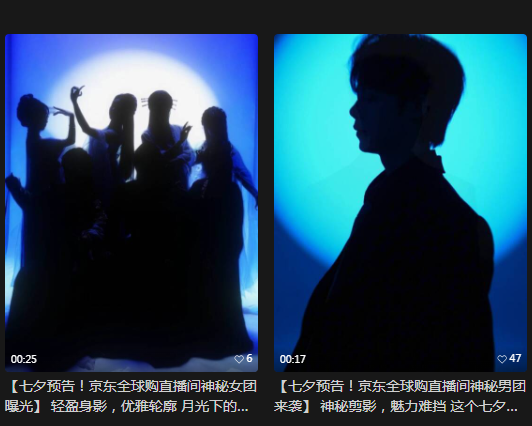
Group 1 - JD Global Purchase announced its first trial of group broadcasting during the Qixi Festival, starting on August 28 at 8 PM [1][3] - The group broadcasting format is a new trend in the live streaming industry, characterized by multi-member interaction, strong narrative scenes, and engaging content [1] - JD Global Purchase aims to enhance the cross-border shopping experience by expanding its overseas product offerings and innovating interactive formats [3] Group 2 - The initiative has sparked discussions among netizens regarding the potential to break traditional virtual gift interaction models and introduce new tipping methods [3] - There is curiosity about how the traditional Chinese style group broadcasting will integrate with imported products, whether through thematic scenes or narrative interactions [3] - The specific format of the integration between group broadcasting and sales remains to be revealed, generating anticipation among the audience [3]

京东进军团播!京东全球购七夕大促以团播形式开启
Zhong Jin Zai Xian· 2025-08-27 06:42
Core Viewpoint - JD Global Purchase is set to launch a group live streaming trial during the Qixi Festival, featuring well-known boy and girl groups in a competitive format, offering various consumer incentives such as red envelopes and discounted products [1][3]. Group Streaming Industry Insights - Group streaming has emerged as a new format in the live streaming industry, characterized by multi-member interaction and engaging content, with the market expected to reach 15 billion yuan by the end of 2025 [3]. - JD has previously explored group streaming through its youth procurement team, which has successfully engaged consumers and contributed to JD's content ecosystem [3]. JD Global Purchase Strategy - JD Global Purchase aims to enhance its content-driven live streaming approach, integrating entertainment with e-commerce, as evidenced by its dual group PK live streaming model [3][4]. - The recent activities of JD Global Purchase, including the "100 Billion Thousand Products New Growth Plan," indicate a strategic focus on expanding overseas sourcing and optimizing the cross-border supply chain [4]. - The upcoming group streaming trial during the Qixi Festival is anticipated to be a significant highlight in this year's consumer market [4].

幻想靠团播暴富的00后,深陷债务危机
虎嗅APP· 2025-08-20 00:22
Core Viewpoint - The article discusses the rise of group broadcasting (团播) as a perceived shortcut to wealth for young people, particularly those born after 2000, while highlighting the underlying exploitation and debt traps set by media companies [4]. Group 1: The Illusion of Wealth - Group broadcasting has become a popular trend among young people, who believe it offers a quick path to financial freedom [4]. - Many young individuals, regardless of their previous occupations, are drawn to the high earnings potential, often exceeding 10,000 yuan per month [4]. - The article warns that the reality is a "pyramid scheme" where the companies profit at the expense of the young workers [4]. Group 2: Recruitment Tactics - Media companies employ deceptive recruitment practices, presenting low barriers to entry while targeting inexperienced and financially vulnerable individuals [10][11]. - The selection criteria favor young candidates from less privileged backgrounds, as they are less likely to have support systems to question contracts [14]. - The article emphasizes that these companies systematically filter out experienced candidates, leaving behind naive young workers [11]. Group 3: Contractual Exploitation - Workers like Sun Qi face severe penalties for contract violations, such as an 80,000 yuan breach fee, which they often do not fully understand when signing [15]. - The article illustrates how companies create conditions that lead to forced resignations, allowing them to exploit contractual loopholes [24]. - The narrative of Sun Qi and others reveals a pattern of manipulation where companies set up young workers for failure [24]. Group 4: Pressure for Cosmetic Enhancements - Media companies often pressure their employees to undergo cosmetic procedures to enhance their on-screen appearance, with costs frequently borne by the workers themselves [19][21]. - The article describes how employees are coerced into taking loans for these procedures, further entrenching them in debt [22]. - The practice of requiring cosmetic enhancements is framed as a work necessity, leading to significant financial burdens on the employees [22]. Group 5: Industry Longevity and Risks - The average lifespan of small to medium-sized media companies is only 1.5 to 2 years, often leading to abrupt closures and financial losses for employees [24]. - The article highlights that many companies will exploit their workers for final payments before shutting down, leaving them with unpaid wages and debts [24]. - The experiences of multiple individuals illustrate a broader trend of exploitation within the industry, where the promise of quick wealth is often a facade [29].

直播重回宅舞时代
3 6 Ke· 2025-08-04 23:34
Core Insights - The rise of group broadcasting, exemplified by the "Leg Sweep Dance," has attracted significant viewership and engagement, leading to a new trend in live commerce [1][2] - Group broadcasts have become a substitute for traditional live selling methods, providing a fresh avenue for traffic generation amid declining viewer numbers for individual streamers [4][6] - Despite the initial success of group broadcasts, the sustainability of this model is questioned due to the need for diverse monetization strategies and the potential for viewer disengagement [9][11] Group Broadcasting Trends - The "Leg Sweep Dance" has garnered nearly 25 million views, with peak online participation reaching 311,000, showcasing the format's popularity [1] - The collaboration between top influencers and boy bands has resulted in significant increases in viewership and sales, with the Blue Moon-themed broadcast achieving an estimated GMV of 25-50 million, a 40.82% increase from previous events [2][4] - Group broadcasting is experiencing rapid growth, with the number of daily group broadcast rooms on Douyin increasing from 4,000 to 7,500 [4] Challenges in Live Commerce - The live commerce industry is facing a bottleneck, with top streamers experiencing a decline in sales performance and traditional traffic acquisition methods becoming less effective [2][7] - Brands are increasingly burdened by high costs associated with live commerce, including "pit fees" and "traffic taxes," leading many to establish their own live streaming channels [8][9] - The shift towards group broadcasting may alleviate some pressure on brands, but the integration of entertainment and product promotion remains a challenge [9][10] Market Dynamics - The overall e-commerce market in China is entering a stagnation phase, with negative growth rates observed in various segments, including live commerce [12][13] - The rise of near-field e-commerce is posing a competitive threat to live commerce, as it offers better pricing, efficiency, and consumer experience [14] - Brands are increasingly opting for direct-to-consumer strategies through their own live streaming, reducing reliance on influencer-driven sales [14][15]
抖音团播日均增至7500场!出台规则严格管控欺诈诱导
Bei Jing Ri Bao Ke Hu Duan· 2025-08-03 14:01
Group 1 - The core viewpoint of the article highlights the rapid growth of "group broadcasting" on Douyin, which has increased from an average of 4,000 to 7,500 live streams per day, attracting significant viewer engagement and high-value transactions [1] - Douyin has implemented new management rules to address issues of inappropriate content and emotional fraud in "group broadcasting," with penalties including indefinite suspension of live streaming privileges for violating accounts [1] - The article notes that some agencies are still infringing on the rights of hosts by imposing unreasonable streaming durations and high penalties, leading to potential sanctions against these agencies by Douyin [2] Group 2 - The recent recognition of "group broadcasting" as a quality live streaming format by the China Internet Association indicates its evolution from a nascent stage to a more mature and artistic phase [2] - Experts emphasize the need for platforms to establish regulations that promote a healthy and diverse live streaming environment, ensuring compliance and protecting the rights of hosts [2]

在直播间跳团舞、PK打赏的年轻人
经济观察报· 2025-07-23 09:49
Core Viewpoint - The rise of group broadcasting (团播) on platforms like Douyin, Xiaohongshu, and Kuaishou has been significant, with Douyin's average daily group broadcast rooms increasing from 4,000 in mid-2024 to over 7,500 currently [1][6]. Group 1: Group Broadcasting Dynamics - Group broadcasting involves multiple participants operating a live streaming account, allowing for diverse interactions among group members, hosts, and fans, which attracts a broader audience demographic [13]. - The competitive nature of group broadcasts is highlighted by events such as the intense fan battles for top positions, where contributions are measured by monetary gifts and likes, creating a dynamic environment [4][5]. - The operational model of group broadcasting has evolved from individual streaming to a more structured approach, with companies like Jinghong Culture establishing professional live streaming studios and systems to enhance performance [14][15]. Group 2: Financial Aspects and Revenue Generation - The primary revenue model for group broadcasts remains through viewer donations, with a structured competition system designed to encourage ongoing viewer engagement and financial contributions [19]. - The revenue distribution typically involves a 50% cut for the platform, with the remaining split among the agency and the streamer, indicating a competitive financial landscape [19]. - Companies are exploring diversified revenue streams, such as ticketed offline events for group broadcast hosts, indicating potential growth in the sector [20]. Group 3: Industry Trends and Future Outlook - The group broadcasting industry is transitioning towards professionalization, driven by platform regulations and talent upgrades, with a focus on content innovation and technical improvements [19][20]. - There is optimism about the future of group broadcasting, with plans to incorporate traditional entertainment formats into live streaming, potentially expanding the content offerings available to audiences [20]. - The industry is witnessing a shift in focus from individual talent to organizational capabilities, emphasizing the importance of a well-structured operational framework [15].

团播为何这么火?
Xin Lang Cai Jing· 2025-07-20 01:26
Core Viewpoint - The group broadcasting (团播) industry has experienced explosive growth since its emergence in 2022, evolving from grassroots activities to industrial-scale operations, with a projected market size exceeding 200 billion yuan by 2025 [1][2]. Group 1: Industry Growth and Dynamics - Group broadcasting has become a popular format, with over 15,000 group broadcasts occurring simultaneously on platforms like Douyin daily, indicating intense competition [1]. - The topic of group broadcasting has garnered over 450 million views on social media since late June, highlighting its widespread appeal [1]. - The industry is driven by multiple factors, including technological advancements, user demand upgrades, and strategic adjustments by short video platforms [2]. Group 2: Technological and Content Innovations - The proliferation of 5G networks and advancements in live streaming technology have made real-time interaction more accessible, attracting a larger audience to group broadcasting [2]. - The entry of MCN institutions and professional production teams has shifted group broadcasting from a grassroots phenomenon to a more professional and industrialized format [2]. - Innovative engagement methods, such as "idol cultivation" and "team PK," cater to the social participation and emotional resonance needs of Generation Z [2]. Group 3: Challenges and Issues - Despite its popularity, the group broadcasting industry faces challenges such as content homogenization, the use of misleading personas, and copyright issues [3]. - Income distribution within the industry is imbalanced, with top broadcasters capturing over 70% of revenue, while many lower-tier broadcasters earn less than 10,000 yuan per month [3]. - The industry is at a critical juncture, transitioning from a focus on "traffic dividends" to "value dividends," necessitating content innovation and regulatory collaboration for sustainable growth [3].
我在好莱坞做团播
Hu Xiu· 2025-05-26 01:04
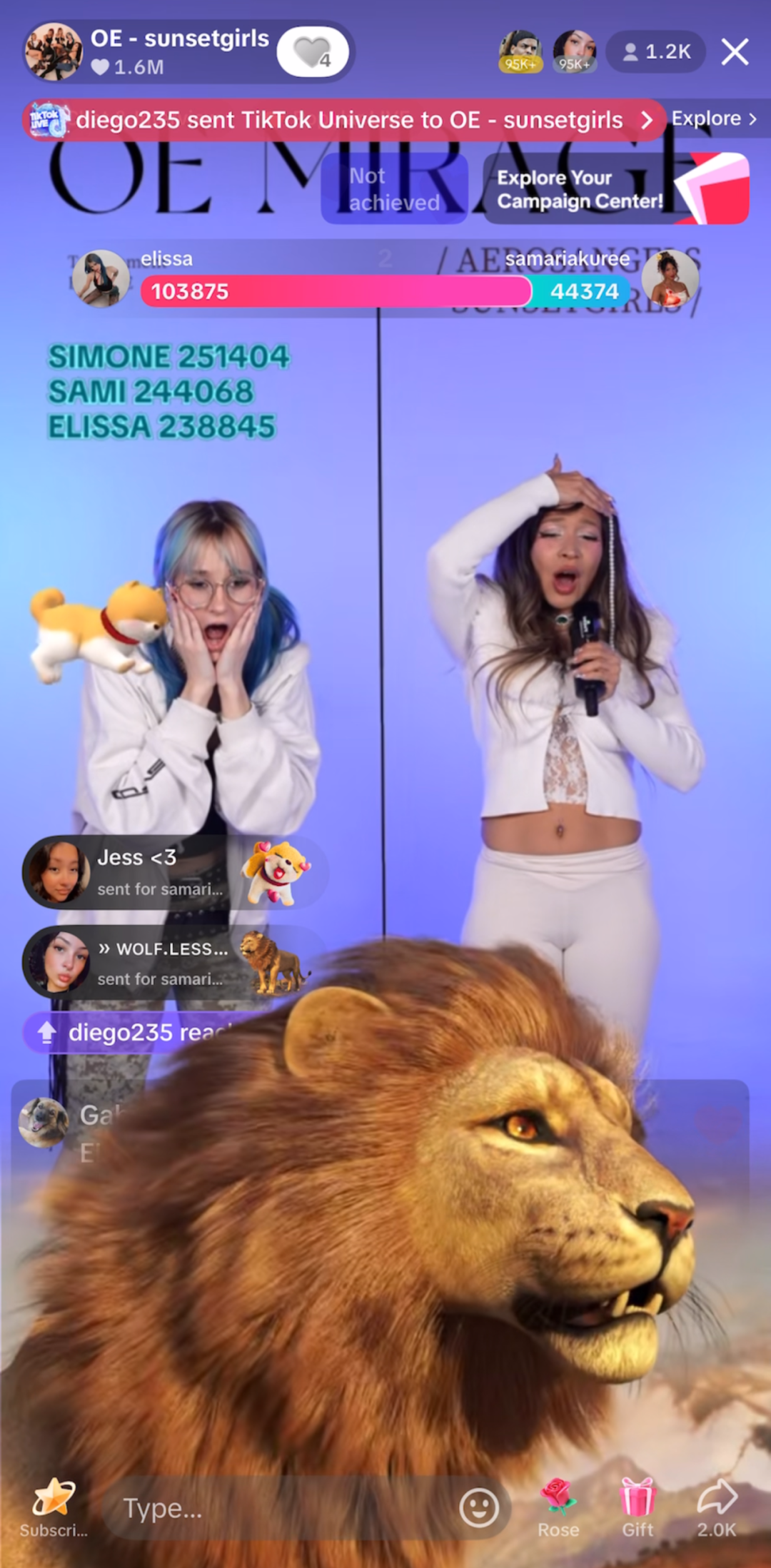
Core Insights - The article discusses the emergence of group live streaming (团播) in the U.S. through Ordient Entertainment (OE), highlighting its initial success and the challenges faced in a market that is still in its infancy compared to China [5][6][26]. Group 1: Company Overview - Ordient Entertainment (OE) was founded in 2024 in Hollywood by Charlie and two friends, focusing on developing group live streaming content [5][8]. - The company has successfully launched five groups, with the two main groups "aerosangels" and "sunsetgirls" achieving a peak online audience of over 10,000 and a maximum single live stream gift revenue of $6,000 [5][9]. - OE was awarded the title of "The Best Innovation Company in The Whole United States" by TikTok, indicating recognition for its innovative approach in the entertainment sector [6][8]. Group 2: Market Dynamics - The North American market for group live streaming is still developing, with few successful entertainment guilds, primarily due to high labor costs and complex global streaming mechanisms [5][26]. - Unlike in China, where group live streaming has rapidly proliferated, the U.S. market is characterized by a lack of established practices and support systems, making it challenging for new entrants [31][32]. - The company has noted that the audience demographic is balanced, with a gender ratio of approximately 1:1, and the majority of viewers aged between 18 and 34 [15][19]. Group 3: Operational Challenges - The operational costs for setting up a live streaming room range from $40,000 to $50,000, with individual streamer salaries significantly higher than in China, averaging $3,500 to $4,000 per month [19][21]. - The company has faced difficulties in maintaining consistent streaming schedules due to the varying commitment levels of its performers, many of whom are pursuing other career opportunities in Hollywood [19][24]. - The lack of a robust legal framework in the U.S. makes it difficult to enforce contracts with streamers, leading to challenges in managing talent effectively [32]. Group 4: Content Strategy - OE's content strategy involves regularly updating performance styles and incorporating popular trends from platforms like TikTok, while also focusing on group dance performances to enhance viewer engagement [12][29]. - The company aims to differentiate itself by emphasizing operational excellence, including live stream production quality and audience interaction, rather than solely relying on individual performer charisma [10][14]. - Future plans include expanding content distribution across various platforms such as Xiaohongshu, YouTube, and Instagram to enhance brand visibility and attract new talent [34].