
生态优化

Search documents
构筑立体教育防护体系 莫让“数字泔水”侵蚀青少年心田
Xin Lang Cai Jing· 2026-02-08 21:39
Core Viewpoint - The rise of generative artificial intelligence is reshaping the information ecosystem, leading to the proliferation of low-quality content, termed "digital sludge," which poses a significant risk to the cognitive development and value formation of minors in China [1][2]. Group 1: Impact of "Digital Sludge" - "Digital sludge" erodes deep cognitive abilities, as exposure to fragmented and low-logic information inhibits the development of critical thinking skills in adolescents [2][3]. - It distorts values and social cognition, creating a false environment that interferes with minors' ability to discern right from wrong and build healthy value systems [2][3]. - The phenomenon exacerbates the deterioration of the digital cultural ecosystem, as low-quality content crowds out quality content, leading to a vicious cycle that undermines cultural creativity and aesthetic standards [2][3]. Group 2: Factors Contributing to the Proliferation of "Digital Sludge" - The combination of technological advancements and market logic has lowered the barriers for producing low-quality content, with platforms prioritizing user engagement through algorithms that favor emotionally charged content [3]. - The traditional filtering mechanisms of professional "gatekeepers" in media have been significantly weakened in the algorithm-driven environment, allowing low-quality content to thrive [3]. Group 3: Governance Strategies - Establish a comprehensive governance system that integrates technology, legal frameworks, education, and social forces to address the challenges posed by "digital sludge" [5]. - Implement "algorithm for good" principles to ensure platforms take responsibility for content distribution, shifting from a "traffic-first" to a "value-first" approach [5][6]. - Create a collaborative regulatory framework involving multiple departments to enhance the precision and agility of governance, focusing on proactive measures rather than reactive responses [6]. Group 4: Educational Initiatives - Enhance the digital literacy and critical thinking education for minors by integrating systematic media literacy into school curricula, focusing on algorithm awareness and information verification [7]. - Empower parents through digital literacy support programs to help them guide their children effectively in navigating the digital landscape [7]. - Foster a cultural atmosphere that values deep thinking and rational dialogue through community engagement and experiential educational projects [7].
富硒平安砥砺行 奋楫扬帆起新程
Xin Lang Cai Jing· 2026-01-25 20:19
Core Viewpoint - The article highlights the significant progress and achievements of Ping'an District in Haidong City during the 14th Five-Year Plan period, focusing on high-quality development, ecological protection, and economic growth through various initiatives and reforms [5][6]. Economic Development - Ping'an District aims for high-quality development, leveraging its unique resources and focusing on people's livelihoods, reform, and practical efforts [5]. - The region's GDP increased from 8.434 billion to 9.928 billion by 2025, with an average annual growth rate of 3.47% [6]. - Per capita disposable income rose from 25,005 yuan to 31,640 yuan, reflecting an annual growth rate of 6.1% [6]. Agricultural and Industrial Growth - Over 60,000 acres of high-standard farmland have been established, with 145,200 acres certified as "natural selenium-rich land" [6]. - The district has fostered 15 large-scale industrial enterprises and established key projects like the ecological selenium-rich product processing base [6]. Service Sector and Digital Economy - The service sector has seen growth, with the establishment of the first "Ant Cloud" customer service headquarters in the province and a digital economy demonstration center [7]. - Agricultural product online sales remain the highest in the city, injecting new momentum into industrial development [7]. Ecological Initiatives - Ping'an District has created a national ecological civilization demonstration zone, with projects like the greening of northern and southern mountains and the restoration of the Huangshui River basin [7]. - The grassland vegetation coverage increased from 59.33% to 62.44%, and forest coverage reached 29.96% [7]. Infrastructure and Urban-Rural Integration - Infrastructure improvements include the completion of key transportation projects and upgrades to water and energy facilities, enhancing urban-rural integration [8][9]. - The urbanization rate of the permanent population reached 75.24%, surpassing national and provincial levels [9]. Social Welfare and Employment - The district has maintained stable employment, with 7,096 new urban jobs created and a rural labor transfer employment of 205,000 [11]. - The healthcare system has improved, with the establishment of new medical facilities and a 99.61% participation rate in urban and rural residents' medical insurance [12]. Cultural and Social Development - Cultural and sports facilities have been enhanced, with a focus on equal access to public services and the promotion of social harmony [13]. - The district has made strides in modernizing social governance, achieving a 98% resolution rate for conflicts and disputes [13]. Future Outlook - Looking ahead, Ping'an District aims to capitalize on the integration opportunities within the Xining-Haidong metropolitan area and focus on developing six major bases, emphasizing ecological livability and digital empowerment [13].


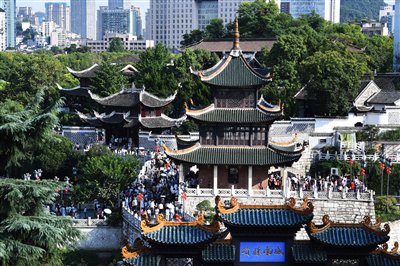
甲秀南明勇争先 筑城客厅展新姿
Xin Lang Cai Jing· 2026-01-18 18:28
Core Insights - The Nanning District is set to achieve a GDP exceeding 120 billion yuan in 2025, marking a significant step in its high-quality development journey and earning multiple national rankings in comprehensive strength, green development, and investment potential [6][8]. Economic Development - The Guizhou Nanning Economic Development Zone, covering 7.82 square kilometers, has been established to accelerate industrial growth, focusing on high-end manufacturing, specialty food, digital intelligence, and logistics [7][8]. - The district aims to enhance its industrial structure by promoting high-end, green, and intelligent transformations, with a focus on electronic information manufacturing and biotechnological industries [8][9]. Urban Renewal - In 2025, Nanning District undertook urban quality improvement projects across 50 locations, covering approximately 23,500 square meters, to enhance the living environment and urban aesthetics [9][10]. - The district is committed to revitalizing its urban landscape through comprehensive planning and management, focusing on historical and cultural preservation while improving infrastructure [10][11]. Social Welfare - The establishment of a pre-hospital emergency station in Yongle Township marks a significant improvement in rural healthcare services, enhancing the medical emergency network for local residents [12]. - Nanning District is implementing 117 projects aimed at improving public services and infrastructure, with a focus on enhancing community welfare and satisfaction [12][13]. Environmental Protection - The district is committed to ecological development, achieving 100% compliance in water quality standards and maintaining high air quality, with a focus on pollution prevention and environmental education [14][15]. - Continuous efforts are being made to address ecological issues and enhance public awareness of environmental protection, ensuring sustainable development [14][15].
21评论丨从商业航天热度看空天经济潜力
Xin Lang Cai Jing· 2026-01-16 23:10
Core Viewpoint - The aerospace economy is becoming a focal point for societal attention, driven by breakthroughs in commercial space and large-scale satellite constellation deployments, indicating its potential as a new growth engine for high-quality economic development [2][3][4]. Industry Development - The aerospace economy is breaking traditional geographical limitations of industries, opening new spaces for economic growth, particularly in low-altitude, high-altitude, and near-Earth orbit resource development, which are still in their infancy [3][4]. - The global commercial space market is rapidly expanding, with near-Earth orbit industries expected to become a core component [3][4]. Economic Dynamics - The aerospace economy is characterized by high technology, high added value, and high driving force, capable of continuously creating new demand, employment, and output [5]. - China's low-altitude economy has seen growth rates exceeding 30% in recent years, making it one of the fastest-growing sectors in the new economy [5]. Synergy Between Low-altitude Economy and Commercial Space - The low-altitude economy and commercial space are mutually reinforcing, creating an ecosystem effect where their combined impact exceeds the sum of their parts [6][7]. - The development of the low-altitude economy provides a solid industrial foundation and application scenarios for commercial space, while breakthroughs in aerospace technology address core bottlenecks for low-altitude economic growth [6][7]. Supply Chain Integration - The integration of the low-altitude economy with commercial space is deepening, with precision manufacturing and electronic components supporting the aerospace sector, while the latter drives demand for related components [8]. - By 2025, the annual order volume for electric vertical take-off and landing aircraft in China is expected to exceed 30 billion yuan, indicating a growing supply chain that supports commercial space [8]. Innovation and Policy Support - Continuous innovation and ecological optimization are essential for the sustainable development of the aerospace economy, requiring focus on core technology breakthroughs and institutional improvements [9][10]. - The establishment of the Commercial Space Administration and related action plans is facilitating the institutionalization and systematization of the industry, with ongoing policy benefits being released [10]. Collaborative Ecosystem - Building an open and collaborative industrial ecosystem is crucial for unleashing the potential of the aerospace economy, encouraging regional specialization and international cooperation [11]. - As of 2024, commercial rocket launches in China are expected to account for over 60% of total launches, demonstrating the effectiveness of collaborative efforts among diverse stakeholders [11].

持续创新制度设计,推动资本市场回稳向好
2 1 Shi Ji Jing Ji Bao Dao· 2025-08-04 22:22
Group 1 - The core viewpoint of the meeting emphasizes enhancing the attractiveness and inclusiveness of China's capital market to consolidate its recovery and positive momentum [1][3] - Improving investment expectations is crucial for increasing market attractiveness, focusing on encouraging domestic and foreign capital to enter the market and enhancing the investment value of listed companies [1][2] - The meeting highlights the importance of a multi-layered capital market system to meet the diverse financing needs of different types and sizes of enterprises, ensuring support for various industries and protecting the rights of small investors [2][4] Group 2 - The capital market has shown significant improvement since the second quarter, with the Shanghai Composite Index rising from a low of 3040 points to over 3600 points, and the ChiNext Index increasing from 1756 points to over 2400 points, indicating a recovery in investor confidence [3][4] - Measures to consolidate the positive momentum of the capital market include expanding capital market adjustment tools, creating new financial instruments, and enhancing the liquidity support for central financial institutions [4] - The overall strategy aims to build a modern financial system that efficiently allocates resources, serves various entities, and balances risk and return through institutional innovation and market openness [4]
团播为何这么火?
Xin Lang Cai Jing· 2025-07-20 01:26
Core Viewpoint - The group broadcasting (团播) industry has experienced explosive growth since its emergence in 2022, evolving from grassroots activities to industrial-scale operations, with a projected market size exceeding 200 billion yuan by 2025 [1][2]. Group 1: Industry Growth and Dynamics - Group broadcasting has become a popular format, with over 15,000 group broadcasts occurring simultaneously on platforms like Douyin daily, indicating intense competition [1]. - The topic of group broadcasting has garnered over 450 million views on social media since late June, highlighting its widespread appeal [1]. - The industry is driven by multiple factors, including technological advancements, user demand upgrades, and strategic adjustments by short video platforms [2]. Group 2: Technological and Content Innovations - The proliferation of 5G networks and advancements in live streaming technology have made real-time interaction more accessible, attracting a larger audience to group broadcasting [2]. - The entry of MCN institutions and professional production teams has shifted group broadcasting from a grassroots phenomenon to a more professional and industrialized format [2]. - Innovative engagement methods, such as "idol cultivation" and "team PK," cater to the social participation and emotional resonance needs of Generation Z [2]. Group 3: Challenges and Issues - Despite its popularity, the group broadcasting industry faces challenges such as content homogenization, the use of misleading personas, and copyright issues [3]. - Income distribution within the industry is imbalanced, with top broadcasters capturing over 70% of revenue, while many lower-tier broadcasters earn less than 10,000 yuan per month [3]. - The industry is at a critical juncture, transitioning from a focus on "traffic dividends" to "value dividends," necessitating content innovation and regulatory collaboration for sustainable growth [3].