城乡融合和区域协调发展

Search documents
国家发改委:持续推进能源产供储销体系建设,提升产业链供应链韧性
Zheng Quan Shi Bao Wang· 2025-12-13 11:14
Core Viewpoint - The National Development and Reform Commission (NDRC) emphasizes the need to adapt to demographic changes by optimizing public resource allocation and promoting high-quality population development [1] Group 1: Public Resource Allocation - The NDRC plans to enhance the forward-looking layout of educational resources in response to demographic changes [1] - There is a focus on improving the public resource allocation mechanism to better suit population changes [1] Group 2: Urban and Rural Development - The meeting highlights the importance of promoting urban-rural integration and regional coordinated development [1] - A new type of urbanization that prioritizes human needs will be advanced, with increased efforts in regional strategy implementation [1] Group 3: Rural Revitalization - The NDRC aims to promote rural revitalization in a classified, orderly, and area-specific manner [1] - Special attention will be given to the revitalization of specific types of regions [1] Group 4: Security and Risk Management - There is a commitment to better coordinate development and security, with a focus on enhancing food security capabilities [1] - The construction of a resilient energy supply chain system will be continuously promoted to mitigate risks in key areas [1]
“四个聚焦”“三个深入” 湖南“十五五”擘画城乡融合和区域协调发展路径
Zhong Guo Fa Zhan Wang· 2025-12-01 08:52
Core Viewpoint - The Hunan Provincial Committee of the Communist Party of China has approved the "Suggestions on Formulating the 15th Five-Year Plan for Economic and Social Development in Hunan Province," outlining a blueprint for the province's development over the next five years, focusing on agricultural modernization, urban-rural integration, and regional coordinated development [1][2][3] Group 1: Agricultural Modernization - Hunan will focus on enhancing comprehensive production capacity and quality efficiency in agriculture, ensuring national food security, and developing technology-driven, green, quality, and brand agriculture [1] - The province aims to implement a seed industry revitalization action plan and promote the research and application of high-end intelligent agricultural machinery [1] Group 2: Rural Development - Hunan will build "Beautiful Xiang Villages" by improving rural construction mechanisms and promoting rural revitalization in a classified and orderly manner [2] - The province plans to enhance rural living environments and create quality living spaces in the countryside [2] Group 3: Farmer Support - Hunan will improve the effectiveness of policies that benefit farmers, ensuring financial support and social participation in agricultural development [2] - The province aims to establish mechanisms to prevent large-scale poverty and ensure farmers' enthusiasm for agricultural production [2] Group 4: County Economic Development - Hunan will focus on high-quality development of county economies, promoting urban-rural integration through the development of characteristic industrial systems [2] - The province plans to enhance the economic autonomy of strong counties and improve the capacity of towns [2] Group 5: Regional Coordination - Hunan will leverage its geographical advantages to enhance support for national strategies and boost regional competitiveness [3] - The province aims to integrate into national regional strategic layouts and promote coordinated development among key urban areas [3] - Hunan will advance a people-centered new urbanization strategy, focusing on the urbanization of agricultural transfer populations [3]
中国经济微观察:从“有没有”到“好不好” 民生建设发生深刻转变
Ren Min Wang· 2025-11-05 03:00
Group 1 - The core focus of the "14th Five-Year Plan" is on improving people's livelihoods, with over one-third of the indicators dedicated to social welfare, the highest proportion in any five-year plan to date [1] - The plan emphasizes the construction of a service system for the elderly and children, aiming for a 64.6% share of nursing care beds and coverage of over 300 cities by childcare service institutions [1][2] - The government aims to transition from basic service provision to a more integrated approach that includes professional medical, rehabilitation, and nursing services for the elderly [2] Group 2 - The design of quantifiable and assessable indicators for social welfare serves as a strong policy directive, ensuring that resources are allocated to enhance public welfare [3] - The plan promotes equal access to basic public services through optimized resource allocation and new urbanization strategies, addressing disparities between urban and rural areas [3][4] - Standardization of public service quality is crucial for ensuring fairness in basic services, with clear guidelines established for nursing care facilities and other essential services [4] Group 3 - The integration of livelihood improvement into regional development strategies is a key focus, with initiatives aimed at reducing urban-rural disparities through targeted support and resource allocation [5] - The approach combines economic development with social welfare improvements, creating a sustainable cycle that benefits both sectors [5]
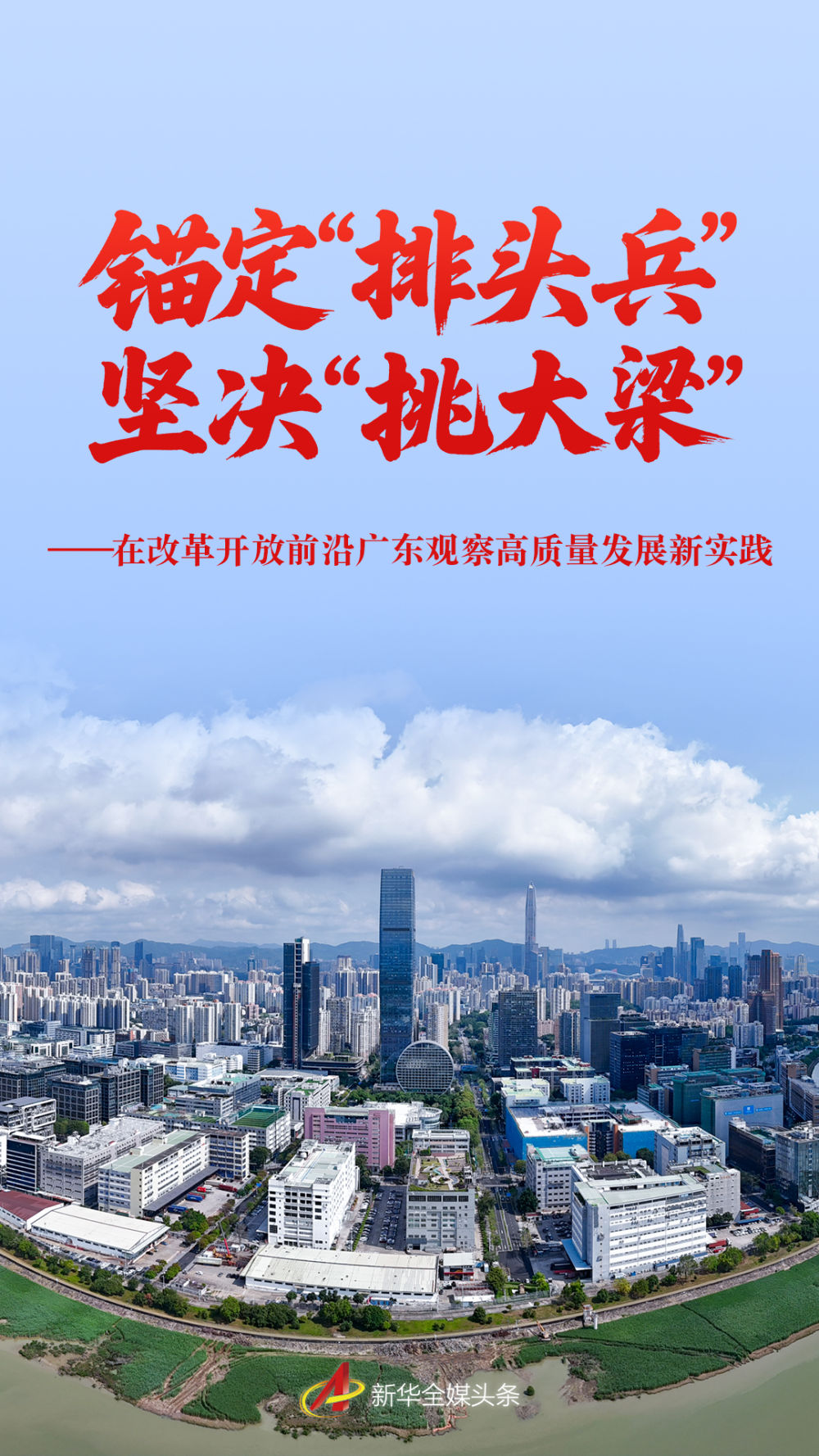
锚定“排头兵” 坚决“挑大梁”——在改革开放前沿广东观察高质量发展新实践
Xin Hua She· 2025-10-30 14:29
Core Points - The Fourth Plenary Session of the 20th Central Committee of the Communist Party of China set the guiding principles and main goals for the 14th Five-Year Plan, emphasizing the continuation of China's modernization and economic growth [4][5] - Guangdong province aims to establish a modernized economy and society, focusing on high-level technological self-reliance and innovation [8][10] Group 1: Economic Development - The 138th Canton Fair showcased a record scale with 74,600 booths and over 32,000 participating companies, reflecting the vitality and confidence of the Chinese economy [8] - Guangdong is committed to building a globally competitive modern industrial system, with a focus on technological innovation and self-reliance [8][10] - The "Shenzhen-Hong Kong-Guangzhou" cluster ranked first in the 2025 Global Innovation Index, indicating strong technological capabilities [17] Group 2: Technological Innovation - Companies like TCL are focusing on original innovation and key technology breakthroughs, with over 20,000 R&D personnel and more than 110,000 patents filed [8] - The establishment of the first government-affiliated AI and robotics agency in Shenzhen aims to support the development of the AI and robotics industry [10][11] - The low-altitude economy is a strategic focus for Guangdong, with plans to enhance infrastructure and create more application scenarios [13] Group 3: Regional Coordination and Development - Guangdong is implementing the "Hundred Counties, Thousand Towns, and Ten Thousand Villages" initiative to promote high-quality development in rural areas [18][19] - The income ratio between urban and rural residents in Guangdong is projected to decrease from 2.55:1 in 2019 to 2.31:1 by 2024, indicating progress in income equality [19] - The Guangdong-Hong Kong-Macao Greater Bay Area is being developed to enhance connectivity and economic integration among the three regions [21][22] Group 4: Social Welfare and Public Services - The government is focusing on improving public services and addressing citizens' urgent needs, as seen in initiatives like the "Bay Area Social Security Pass" [22][25] - Guangdong is enhancing healthcare access by deploying medical professionals to grassroots institutions, aiming for comprehensive healthcare coverage [29] - Urban renewal projects are transforming outdated buildings into modern facilities, improving living conditions for residents [28]

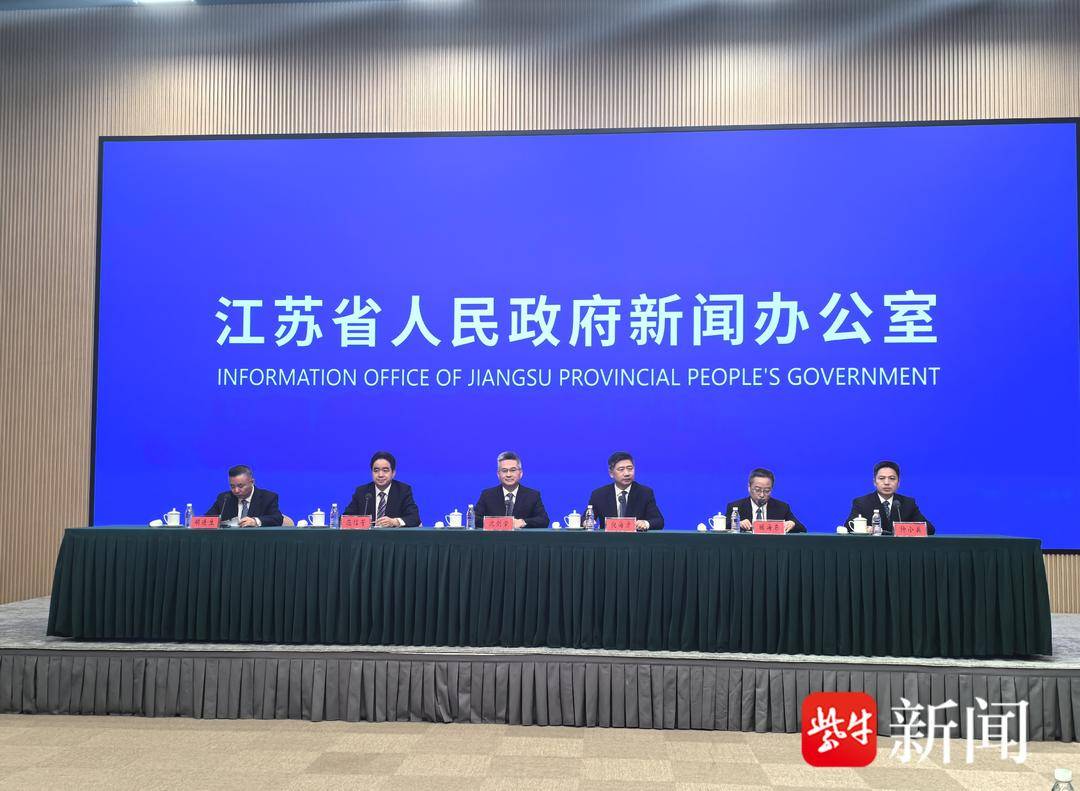
上半年GDP增长5.7%,江苏经济增量居全国首位
Yang Zi Wan Bao Wang· 2025-08-26 07:37
Core Viewpoint - Jiangsu Province is committed to taking on the responsibility of being a major economic province, achieving significant economic growth and high-level openness through deep reforms and effective investment strategies [1][3]. Economic Performance - In the first half of the year, Jiangsu's GDP reached 6.7 trillion yuan, with a year-on-year growth of 5.7%, surpassing the national average by 0.4 percentage points, maintaining the highest economic increment in the country [1][3]. - The province's total foreign trade import and export amounted to 2.81 trillion yuan, marking a year-on-year increase of 5.2%, setting a historical record for the same period [1][3]. - Actual foreign investment reached 11.54 billion USD, maintaining the top position in the country [1]. Key Development Areas - Jiangsu has focused on five key areas: building a unified national market, expanding effective investment, optimizing the business environment, promoting urban-rural integration, and enhancing high-level openness [3][4]. - The province has made progress in breaking local protectionism and promoting efficient resource circulation, including the introduction of the Jiangsu Data Regulation and the establishment of a provincial data group [3][4]. Investment and Consumption - Major project investments totaled 423.2 billion yuan in the first half of the year, with significant contributions from equipment upgrades and consumption initiatives, leading to a retail sales growth of 5% [3][4]. - The "old-for-new" consumption initiative generated over 170 billion yuan in sales [3]. Business Environment - Jiangsu has been recognized as the best province for business reputation for five consecutive years, with a total of 14.61 million business entities registered [4]. - The industrial output value of private enterprises increased by 8.7% year-on-year [4]. Urban-Rural Integration - The income ratio between urban and rural residents decreased to 1.98, lower than the national average by 0.44 percentage points [4]. High-Level Openness - Jiangsu has fully removed restrictions on foreign investment in the manufacturing sector, with 400 Fortune 500 companies already invested in the province [4]. - The province's trade with countries involved in the Belt and Road Initiative reached 1.39 trillion yuan, a year-on-year increase of 9.5%, accounting for nearly half of the province's total foreign trade [4].