
天地一体化网络

Search documents
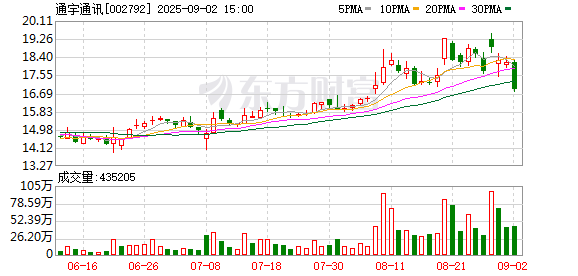
通宇通讯接受调研,卫星通信与海外布局备受机构关注
Zheng Quan Shi Bao Wang· 2025-09-02 12:09
Core Viewpoint - Tongyu Communication (002792) is actively engaging in satellite communication commercialization, overseas market expansion, and emerging business layouts, as evidenced by recent discussions with 83 institutional investors [2][3]. Group 1: Financial Performance - In the first half of the year, Tongyu Communication achieved a main business revenue of 533 million yuan, with a net profit attributable to shareholders of 21.786 million yuan [2]. - The traditional business showed steady growth, with base station antennas and RF device revenue reaching 372 million yuan, accounting for 71.14% of total revenue [2]. - The microwave antenna segment saw significant growth, with product revenue of 119 million yuan, a year-on-year increase of 84.36% [2]. Group 2: Overseas Business Growth - The company's overseas revenue reached 266 million yuan in the first half of the year, marking a significant year-on-year growth of 47.77% [3]. - The gross profit margin for overseas revenue was 28.56%, which is 8.95 percentage points higher than that of domestic revenue [3]. - Tongyu Communication attributes this success to its expansion efforts in countries involved in the Belt and Road Initiative, Southeast Asia, and the Middle East [3]. Group 3: Satellite Communication Strategy - The company is focusing on low-orbit broadband satellite internet, aligning with national strategic initiatives, and has established partnerships with major operators [3]. - Satellite communication products cover three application scenarios: "star-ground-end," and the company has made substantial progress in multiple satellite constellation projects [3]. - By the first half of 2025, the satellite communication business is expected to generate revenue of 26.08 million yuan, with ground station products already in small-scale delivery [3]. Group 4: Emerging Business Developments - Tongyu Communication is developing customized products for special scenarios, such as wall-mounted antennas for bridges and high-speed trains, and satellite terminals for deep-sea fishing vessels [4]. - The MacroWiFi product, designed to address outdoor communication challenges, features a high-gain dual-beam antenna array capable of 2 km transmission and supporting over 200 concurrent users [4]. - The company has successfully tested these products in several countries, including Indonesia, UAE, Myanmar, Kazakhstan, Cameroon, Nigeria, and Russia, and has begun small-scale orders [4]. Group 5: Institutional Investor Sentiment - Institutional investors are optimistic about Tongyu Communication based on three dimensions: the transition of satellite communication from "technical layout" to "scale commercialization," the establishment of a differentiated competitive advantage in overseas markets, and the synergy between traditional and emerging businesses [4].


三大运营商全线布局卫星互联网赛道
Zheng Quan Ri Bao· 2025-08-28 01:28
Core Viewpoint - The three major telecom operators in China are actively entering the satellite internet sector, supported by recent government guidelines aimed at optimizing the satellite communication industry by 2030 [1][2]. Group 1: Government Guidelines - The Ministry of Industry and Information Technology issued guidelines to enhance the satellite communication management system and promote the integration of satellite communication into the new development framework, aiming for over 10 million satellite communication users by 2030 [1]. - The guidelines encourage telecom operators to collaborate with satellite companies to explore the potential of high-orbit satellites like Tiantong and Beidou, promoting direct satellite connections for mobile devices [1]. Group 2: Major Telecom Operators' Initiatives - China Mobile has launched two low-orbit experimental satellites in 2023, including the world's first satellite capable of verifying 5G integrated technology [2]. - China Telecom plans to offer direct satellite connection services for mobile phones and cars, having overcome key technical challenges in satellite communication [2][3]. - China Unicom has successfully launched four low-orbit satellites and aims to integrate satellite communication with the Internet of Vehicles through strategic partnerships [3]. Group 3: Challenges in Satellite Internet Development - The development of satellite internet faces challenges such as differences in satellite-ground network architecture, high network construction costs, and performance gaps compared to terrestrial networks [4]. - China Mobile is working on a technology system to reduce the number of satellites needed for integrated networks and lower costs by 10% per satellite [5]. Group 4: Strategic Importance of Satellite Internet - The shift towards satellite internet is seen as a strategic necessity for telecom operators, marking a fundamental change from previous focuses on terrestrial mobile communication [6]. - The collaboration between telecom operators and satellite companies is expected to accelerate the commercialization of low-orbit satellite constellations, leveraging the operators' extensive user base and established sales channels [6].



工信部支持电信运营商与卫星企业共建共享 三大运营商全线布局卫星互联网赛道
Zheng Quan Ri Bao Zhi Sheng· 2025-08-27 16:09
Core Viewpoint - The Ministry of Industry and Information Technology (MIIT) of China has issued guidelines to optimize business access and promote the development of the satellite communication industry, aiming for significant advancements by 2030, including the integration of satellite communication into the new development pattern and the growth of satellite communication users to over 10 million [1] Group 1: Industry Development - By 2030, the satellite communication management system and policies will be further improved, with a continuous optimization of the industry development environment [1] - The guidelines encourage telecom operators to explore the potential of high-orbit satellite applications and promote the direct connection of mobile devices to satellites [1] - The integration of satellite communication with terrestrial mobile communication is emphasized to enhance service quality and user experience [1] Group 2: Major Telecom Operators - Major telecom operators, including China Mobile, China Telecom, and China Unicom, have all deployed satellite internet services [2] - China Mobile plans to open its mobile direct satellite connection service to the public once it obtains the necessary operational qualifications [2] - China Telecom has launched mobile direct satellite services and plans to introduce "automobile direct satellite" services in 2024 [2][3] - China Unicom has successfully launched four low-orbit satellites and is working on integrating satellite communication with vehicle networking [3] Group 3: Challenges and Solutions - The development of mobile direct satellite broadband services faces three main challenges: coordination difficulties between satellite and terrestrial network architectures, high network construction costs, and performance gaps between satellite and terrestrial networks [4] - To address these challenges, China Mobile is developing a flexible and efficient satellite-terrestrial collaborative network and has proposed an innovative technology system to reduce the number of satellites needed for network construction [5] - A digital twin system is being created to simulate satellite operations, aiming to significantly improve system performance during various stages of satellite networking [5] Group 4: Strategic Importance - The shift towards satellite internet is seen as a strategic necessity for telecom operators as they transition from focusing solely on terrestrial mobile communication to integrating satellite services [6] - The collaboration between telecom operators and satellite companies is expected to accelerate the commercialization of low-orbit satellite constellations, leveraging the operators' extensive user base and established sales channels [6]
SpaceX 组网引发连锁反应,AI 如何重塑卫星与车路云网络版图?
3 6 Ke· 2025-06-18 03:49
Core Insights - SpaceX's successful mobile direct satellite connection marks a significant advancement in global satellite internet services, posing unprecedented challenges to the traditional telecommunications industry, particularly 5G [1][7] Group 1: Satellite Internet Development - SpaceX plans to launch 42,000 satellites to create a global satellite network, aiming to cover remote areas where traditional ground-based networks struggle, such as mountains and oceans [4][5] - The cost of building a satellite network is significantly lower than that of 5G infrastructure, with SpaceX estimating a total cost of approximately $25.2 billion for 42,000 satellites, compared to China's 5G investment of 730 billion yuan [4][5] - Over 300 satellites capable of direct mobile connections are already in orbit, providing global coverage without the need for additional user equipment [5] Group 2: Market Impact and Trends - U.S. carriers like T-Mobile are already offering satellite internet services, with subscription costs ranging from $10 to $15 per month, indicating a shift in pricing dynamics as user numbers grow [6] - The emergence of satellite internet services may suppress demand for 5G base stations, particularly in countries still expanding their 5G networks [6] - SpaceX's advancements in reusable rocket technology have significantly reduced satellite launch costs, allowing for reinvestment in research and development rather than mere commercial expansion [6] Group 3: Technological Evolution - The integration of satellite internet with 5G and future 6G technologies is seen as a necessary evolution to meet the demands of new applications like autonomous driving and IoT [11][12] - The concept of "ubiquitous connectivity" in 6G aims to achieve global coverage through the deep integration of ground and non-ground networks, with satellite internet playing a crucial role [12][13] - The development of a "天地一体化" (Earth-Space Integration) network is a strategic focus for countries, with China making significant progress in its satellite internet initiatives [14][15] Group 4: Future Outlook - The automotive sector is expected to be a major battleground for satellite communication applications, with companies like Tesla already exploring direct satellite connections for their vehicles [15] - The convergence of satellite internet and AI technologies is anticipated to drive a new wave of innovation, transforming networks from mere communication tools to intelligent systems capable of real-time decision-making [20][21] - The successful integration of satellite communication with AI models could herald a new era in network technology, marking a potential third revolution in communication following the internet and mobile internet [21]
卫星“上车”,车联网如何向“天”突围?
3 6 Ke· 2025-06-17 10:41
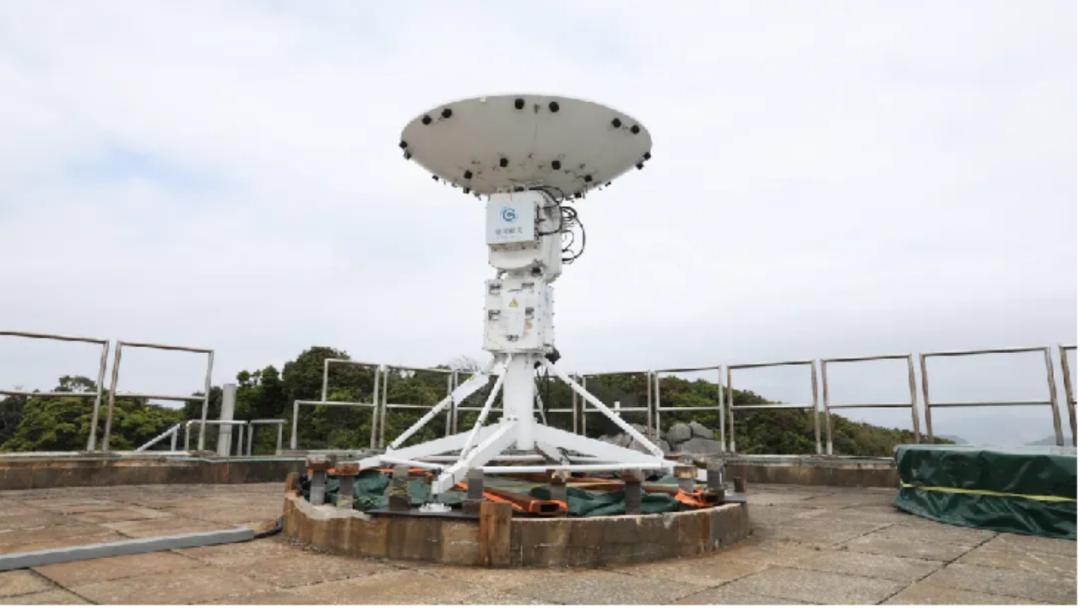
Group 1 - Approximately 2.6 billion people globally lack internet access, representing 32% of the world's population, with ground networks covering only about 10% of the Earth's surface [1] - The traditional mobile communication networks primarily refer to the public mobile networks used daily [2] Group 2 - The automotive sector requires real-time environmental information and stable data exchange with cloud services, other vehicles, and infrastructure, necessitating a new network solution to ensure continuous connectivity [3] - Current mobile networks have limited coverage in remote areas, highlighting the need for satellite communication to support the future of vehicle networking [4] Group 3 - A recent collaboration between Galaxy Space and the Hong Kong Applied Science and Technology Research Institute successfully tested low Earth orbit satellite internet for connected autonomous driving systems, demonstrating the integration of satellite communication with autonomous vehicles [5][6] - Satellite internet, particularly low Earth orbit satellite systems, can provide global coverage and solve connectivity issues in hard-to-reach areas [10][12] Group 4 - The evolution of satellite internet represents a significant shift in network development, moving towards a "Heaven and Earth" integrated network model, which is crucial for the future of communication technology [14][17] - The integration of satellite internet with existing 5G networks can enhance coverage and performance, addressing the limitations of current mobile communication technologies [15][18] Group 5 - The transition from PC5 to a hybrid network model combining 5G, satellite internet, and direct vehicle-to-vehicle communication is seen as a more effective solution for the vehicle networking ecosystem [22][26] - The cost of deploying 5G macro base stations is prohibitively high, with estimates suggesting that achieving global coverage would require over 1.6 trillion yuan in investment [25] Group 6 - The strategic importance of satellite internet in the global communication landscape is underscored by national initiatives to develop satellite networks, with significant progress in China's satellite internet projects [27][29] - Major automotive companies like Tesla, Geely, and BYD are actively pursuing satellite communication capabilities to enhance their vehicles' connectivity and positioning accuracy [30][31] Group 7 - The evolution of vehicle networking technology is fundamentally a competition between cost and scale, with satellite internet poised to break the physical limitations of ground networks and facilitate large-scale commercial deployment [32]
具备太空在轨计算能力 我国太空计算卫星星座发射看点解析
news flash· 2025-05-14 07:24
Core Insights - The launch of the "Trinity Computing Constellation" marks a significant advancement in space-based computing capabilities, enabling real-time processing of Earth observation data in orbit [1][2] - The constellation aims to overcome limitations of traditional ground-based data processing, which often results in less than 10% of effective satellite data being transmitted back to Earth [1] Group 1: Launch and Capabilities - The first launch of the "Trinity Computing Constellation" successfully deployed 12 satellites, each with a maximum computing power of 744 TOPS, contributing to an overall in-orbit computing capability of 5 POPS and 30 TB of storage [1][2] - The constellation is designed to achieve a total computing power of 1000 POPS upon completion, representing a substantial leap in space computing infrastructure [1] Group 2: Technological Innovations - Each satellite is equipped with onboard intelligent computing systems and inter-satellite communication systems, facilitating a fully interconnected space network [2] - The satellites carry a space-based model with 8 billion parameters, enabling in-orbit processing of satellite data across various levels [2] Group 3: Strategic Importance - The establishment of the "Trinity Computing Constellation" is viewed as a complex system engineering project that requires organized research and innovation for effective results [2] - The project is expected to significantly expand the boundaries of space applications and has profound implications for the aerospace industry [2]