
学科专业设置调整优化

Search documents
到2027年超85%新增专业瞄准“急需”
Xin Hua Ri Bao· 2025-09-10 22:57
Core Points - The Jiangsu Provincial Education Department has launched an implementation plan for optimizing the adjustment of academic disciplines and majors in higher education institutions, aiming to align with national and regional economic needs by 2027 [1][2] - The plan includes a target that over 85% of newly added academic programs will be in urgent need fields, with more than 60% in science, engineering, agriculture, and medicine [1][2] - By 2030, the academic discipline layout is expected to be fully optimized to cover 100% of the disciplines required by Jiangsu's "1650" industrial system, supporting the development of a strong economy, education, and talent [1][2] Action Plans - Four key actions will be implemented: 1. Rapid layout of urgently needed academic disciplines, including the publication of a list of urgent disciplines and mechanisms for their establishment [2] 2. Excellence enhancement in discipline classification development, launching various plans for top disciplines, foundational disciplines, emerging disciplines, and cultural heritage disciplines [2] 3. Updating talent cultivation models for academic disciplines, establishing specialized colleges focused on future technology and industry needs [2] 4. Deepening reform mechanisms for academic discipline development, including innovative talent cultivation systems and multi-dimensional evaluation mechanisms [2] Institutional Responses - Nanjing University is focusing on adding new degree programs in emerging interdisciplinary fields and establishing research institutes to enhance its academic offerings [3] - Suzhou University has introduced six urgent programs in artificial intelligence over the past five years and is implementing a plan to create interdisciplinary innovation centers [3] - The plan also addresses vocational colleges, emphasizing the need for a coordinated development mechanism across different educational levels and the establishment of urgently needed programs [4]
江苏省启动高校学科专业设置调整优化改革 服务国家战略与区域发展
Zhong Guo Fa Zhan Wang· 2025-09-05 08:33
Core Viewpoint - Jiangsu Province is implementing a comprehensive reform of higher education discipline and major structures to align with national and regional development strategies, aiming to enhance the quality of talent cultivation [3][4]. Group 1: Reform Background - The adjustment and optimization of disciplines and majors are essential to serve national strategies, respond to industrial innovation, and promote high-quality development in higher education [4]. - Jiangsu has rich educational resources and a strong industrial foundation, but faces issues such as misalignment between professional settings and industrial needs, prominent homogenization, and lagging interdisciplinary construction [4]. Group 2: Main Goals and Key Actions - By 2027, over 85% of newly added majors in Jiangsu's universities will belong to urgently needed fields, with a target of 60% for degrees in science, engineering, agriculture, and medicine [5]. - By 2030, the goal is to achieve full coverage of disciplines related to Jiangsu's "1650" modern industrial system, establishing a robust academic framework to support a strong educational, technological, and talent province [5]. - Four key actions will be prioritized: 1. Urgent discipline layout action, establishing a dual empowerment mechanism between industry demand and academic supply [5]. 2. Excellence enhancement action for discipline classification, focusing on top disciplines, foundational disciplines, emerging interdisciplinary fields, and cultural heritage disciplines [6]. 3. Talent cultivation model update action, promoting the establishment of specialized colleges and an honors education system [6]. 4. Deepening reform of discipline and major development mechanisms, innovating collaborative and project-based training models [6]. Group 3: Support Measures and Next Steps - Jiangsu will strengthen the leadership of the Provincial Education Work Leading Group, enhance departmental collaboration, and ensure policy support while holding universities accountable [7]. - The next steps include phased implementation of reform pilots, strengthening process management, and ensuring smooth execution of reforms [7].

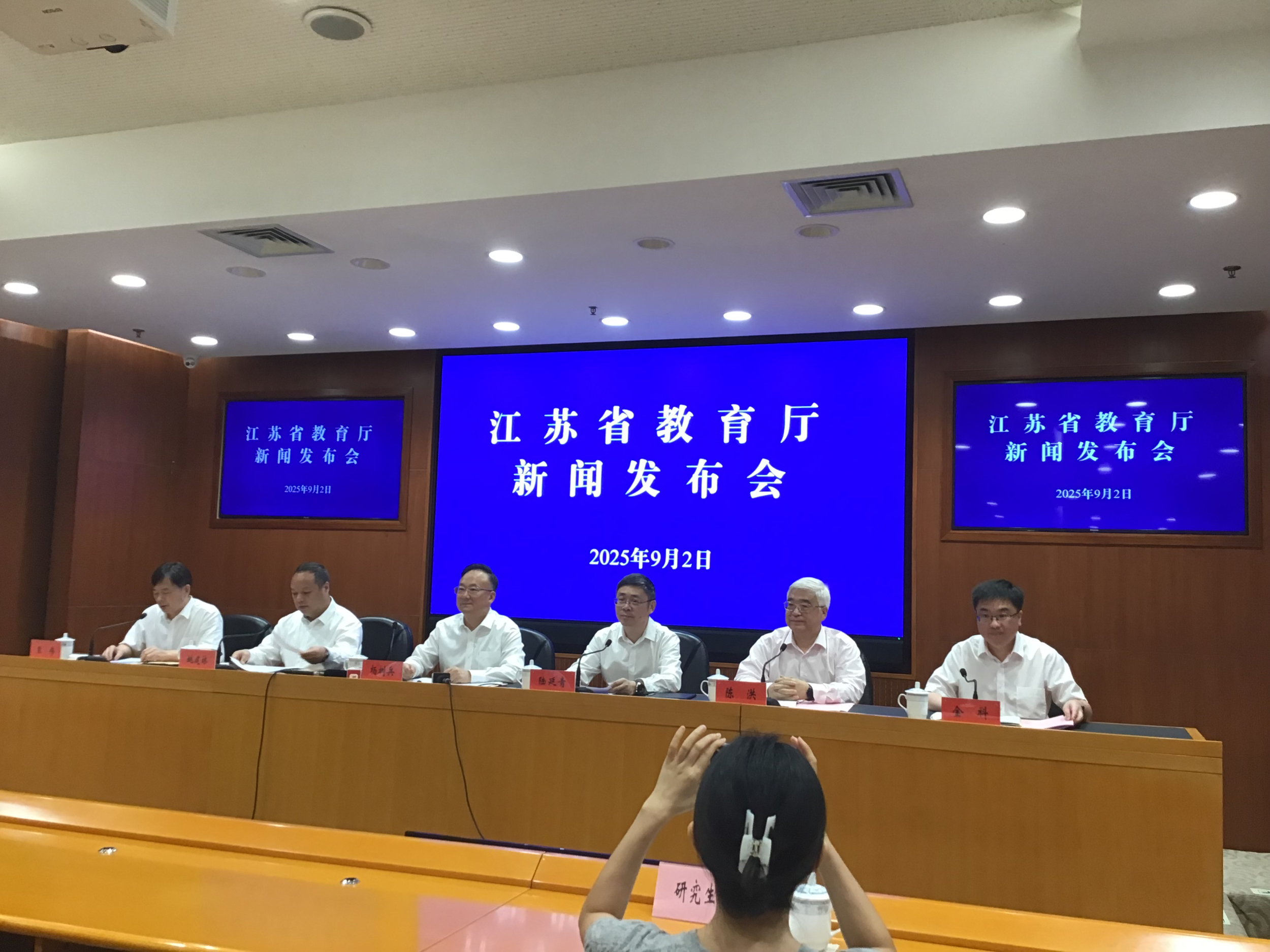
学科专业优化三年行动方案出炉,低空学科超常布局
2 1 Shi Ji Jing Ji Bao Dao· 2025-08-29 13:10
Core Viewpoint - A new round of adjustments and optimizations in higher education discipline and major settings has been initiated, aiming to align with technological advancements and national strategic needs [1][5]. Group 1: Recent Developments - The Ministry of Education has reported that in the past two years, 3,715 new undergraduate programs were established, while 6,638 were canceled or suspended [2][5]. - The plan includes optimizing about 20% of higher education disciplines by 2025, with a focus on new technologies and industries [1][2]. Group 2: Specific Actions and Mechanisms - The action plan outlines six major mechanisms, including coordination, supply-demand matching, and evaluation systems, alongside six major actions such as urgent discipline layout and foundational discipline enhancement [5][6]. - The urgent discipline layout action has gained attention, with several top universities applying to establish new programs in low-altitude technology and engineering [6][7]. Group 3: Regional Progress - Hunan Province plans to cancel 349 undergraduate programs and add 86, achieving an adjustment ratio of 20.6%, exceeding national requirements [3][4]. - By 2027, Hunan aims to adjust approximately 50% of its discipline settings [4]. Group 4: Innovative Educational Models - Fudan University is developing a new talent cultivation model that emphasizes project-based learning and interdisciplinary integration, moving away from traditional discipline-based education [8][9]. - The university has initiated various dual-degree programs to foster high-level interdisciplinary talents [9].
以专业调整优化为契机,实现高校差异化办学
Nan Fang Du Shi Bao· 2025-08-28 23:07
Core Viewpoint - The "Action Plan for the Adjustment and Optimization of Higher Education Disciplines and Majors (2025-2027)" emphasizes the need for a systematic approach to optimize academic disciplines and majors in higher education, aligning them with national strategic needs and technological development [1][2]. Group 1: Optimization of Academic Disciplines - The recent "Action Plan" continues to enhance the optimization of academic disciplines in ordinary higher education, expanding this optimization to vocational higher education [2]. - It proposes an innovative directory management mechanism to shorten adjustment cycles and strengthen the coordination among graduate, undergraduate, and vocational disciplines [2][3]. Group 2: Support for Fundamental Disciplines - The plan calls for increased support for fundamental disciplines, particularly through the "Strong Foundation Program," which aims to expand enrollment and explore new talent cultivation models [3]. - There is a need to change the perception of fundamental disciplines as "less popular" and to enhance employment opportunities for graduates in these fields [3]. Group 3: Differentiated Development Mechanism - The plan suggests a differentiated development mechanism to promote the construction of fundamental, applied, and strategic disciplines, allowing institutions to optimize their academic offerings based on their specific educational positioning [3]. - It emphasizes the importance of maintaining institutional autonomy and reforming educational evaluations to support differentiated and characteristic education [3].
实施急需学科专业超常布局行动
Ren Min Ri Bao· 2025-08-28 22:38
Group 1 - The core viewpoint of the article is the implementation of the "Higher Education Discipline and Major Adjustment and Optimization Action Plan (2025-2027)" by the Central Education Work Leading Group, aimed at optimizing the discipline and major settings in higher education to meet national strategic needs and technological development [1][2] Group 2 - The plan includes actions such as the rapid layout of urgently needed disciplines targeting strategic emerging industries and future industries, and enhancing support for basic disciplines in the cultivation of first-class disciplines [1] - New emerging disciplines such as artificial intelligence, integrated circuits, digital economy, financial technology, biological breeding, aviation engine manufacturing technology, and intelligent operation and maintenance of rail vehicles have been established [2] - The plan emphasizes the establishment of a national talent supply and demand data platform to integrate and share data resources from various departments and human resources service agencies, with functionalities including dynamic supply-demand data analysis and talent demand forecasting [2]
实施急需学科专业超常布局行动 国家人才供需对接大数据平台试运行
Ren Min Ri Bao· 2025-08-28 21:50
Group 1 - The core viewpoint of the news is the implementation of the "Action Plan for the Adjustment and Optimization of Higher Education Disciplines and Majors (2025-2027)" by the Central Education Work Leading Group, aimed at systematically advancing the adjustment and optimization of academic disciplines and majors [1] - The plan includes actions such as the rapid layout of urgently needed disciplines targeting strategic emerging industries and future industries, and enhancing support for basic disciplines in the cultivation of first-class disciplines [1] - New emerging disciplines such as artificial intelligence, integrated circuits, digital economy, financial technology, and others have been established in response to national strategic needs and technological development [1] Group 2 - A national talent supply and demand matching big data platform is being built to integrate and share data resources from various departments and human resources service agencies, focusing on dynamic supply and demand analysis and supporting graduate employment and entrepreneurship [2] - The platform has completed its basic construction and data integration work and is currently in the trial operation phase [2]