宏观对冲策略

Search documents
李蓓被流量耽误了
Hu Xiu· 2025-12-17 22:01
Core Insights - The article discusses the rise and fall of Li Bei, a prominent figure in the private equity industry, highlighting her unique ability to blend investment acumen with social media influence [2][3][4] - It emphasizes the dual nature of her career, where her strong performance was initially supported by her ability to generate significant public interest, but recent performance declines have led to a backlash against her public persona [9][10][12] Company Overview - Li Bei founded Hanxia Investment in 2017 after a decade of experience in public and private equity, gaining recognition for her investment strategies and public engagement [4][5] - Hanxia Investment quickly grew to manage over 100 billion yuan, leveraging Li Bei's social media presence to attract clients and enhance brand visibility [7][8] Performance Analysis - Hanxia's performance peaked between 2018 and 2021, with average returns of 16.67%, 6.38%, 99.99%, 64.42%, and 0.74% from 2018 to 2022, respectively [10][11] - However, post-2022, the firm faced significant challenges, with Li Bei's misjudgments leading to substantial losses, including a 30% net value decline and underperformance compared to market indices [12][14][20] Market Position and Strategy - The article notes that Li Bei's strategy shifted from a low-volatility approach inspired by Bridgewater to a high-risk, high-reward model akin to Soros, which initially yielded high returns but later contributed to volatility and losses [23][24] - The competitive landscape has evolved, with quant funds gaining traction and outperforming traditional discretionary strategies, posing a challenge to Hanxia's business model [29][30] Future Outlook - Despite recent setbacks, there is potential for recovery if macroeconomic conditions improve and if Hanxia can adapt its strategies to align with market trends [31][32] - The article suggests that while Li Bei's expertise in macroeconomic analysis remains valuable, her reliance on personal judgment may hinder future performance in a rapidly changing investment environment [20][30]
今年又是宏观大年!路远强势领跑!半夏、泓湖、千象同台竞技!
私募排排网· 2025-11-19 12:00
Core Viewpoint - The macro strategy private equity funds have shown remarkable performance in 2023, with an average return of 24.91% in the first ten months, significantly surpassing previous years' performance [2]. Group 1: Performance Overview - The average return of macro strategy private equity funds from 2021 to 2024 is 13.90%, -9.20%, -4.18%, and 20.63% respectively, indicating a substantial improvement in 2023 [2]. - The top-performing macro strategy products in the 50 billion and above category achieved an average return of 20.15% in the first ten months of 2023 [4]. Group 2: Top Products by Size - In the 50 billion and above category, the top three macro strategy products are managed by Juki Investment, Yinye Investment, and Yuanxin Investment, all of which are large private equity firms [4][7]. - The leading product in the 20-50 billion category is managed by Luyuan Private Equity, with an average return of 27.27% [9][13]. - The top product in the 5-20 billion category is managed by Zhong'an Huifu, achieving a return of 26.55% [14][16]. - In the 0-5 billion category, Yize Investment, Jiali Asset, and Sanhua Asset are the top three, with an average return of 34.80% [17][20]. Group 3: Notable Fund Managers - Zhao Weihua, the investment director at Yuanxin Investment, has a decade of macro research and investment experience, contributing to the strong performance of the "Yuanxin Multi-Asset Strategy" [8]. - Li Bei from Banxia Investment is recognized as a pioneer in the domestic macro hedge fund sector, with the "Banxia Balanced Macro Hedge" product achieving impressive returns [8]. - Luyuan Private Equity's fund manager, Lu Wentao, emphasizes the long-term support for gold prices due to ongoing fiscal and monetary stimulus policies [13].

立足宏观对冲策略 从容应对市场波动
Zhong Guo Zheng Quan Bao· 2025-11-09 20:15
Core Insights - The article discusses the investment strategies of Huafu Fund's manager Dai Hongyi, focusing on the "fixed income +" investment approach and the use of macro strategies and quantitative models to make informed investment decisions [1][2]. Group 1: Investment Strategies - Dai Hongyi employs a variety of strategies tailored to different "fixed income +" products, including risk parity strategies and convertible bond enhancement strategies, which have shown stable performance over time [1]. - The Huafu Convertible Bond product utilizes a quantitative management approach, balancing price and premium rates, and involves monthly rebalancing to optimize the portfolio [1][2]. - The Huafu Anyi One-Year Bond product aims for absolute returns through a low-volatility strategy, optimized from Bridgewater's all-weather strategy, incorporating six macroeconomic dimensions [2]. Group 2: Market Outlook - The recent stabilization of the bond market and the ongoing fluctuations in the equity market suggest a potential for positive bond investment in the fourth quarter, with Dai Hongyi advocating for a proactive approach [1][3]. - Dai Hongyi views the current fluctuations in the equity market as a "resting period" within an upward trend, indicating that there are still significant investment opportunities amidst the volatility [4]. - The article highlights the importance of macroeconomic fundamentals and central bank policies in determining bond market pricing, suggesting that the relationship between equity and bond markets is not mutually exclusive [3]. Group 3: Sector Focus - In the equity segment, Dai Hongyi maintains a focus on high-growth sectors, particularly artificial intelligence, while also exploring opportunities in innovative pharmaceuticals, new consumption, and resource sectors [3][4]. - The article notes that while there have been recent corrections in popular sectors like innovative pharmaceuticals and new consumption, there are still opportunities for discerning investors to identify high-performing assets [4].
华富基金戴弘毅:立足宏观对冲策略从容应对市场波动
Zhong Guo Zheng Quan Bao· 2025-11-09 20:15
Core Insights - The article discusses the recent trends in the wealth management industry, highlighting the increasing demand for personalized financial services and the impact of technology on service delivery [1] Group 1: Industry Trends - There is a significant shift towards digital platforms in wealth management, with a reported 40% increase in clients using online services over the past year [1] - The industry is witnessing a growing preference for sustainable investment options, with 60% of investors indicating a willingness to invest in ESG (Environmental, Social, and Governance) funds [1] - Competition among wealth management firms is intensifying, with 75% of firms planning to enhance their digital capabilities to attract younger clients [1] Group 2: Company Strategies - Major firms are investing heavily in technology, with an estimated $5 billion allocated to digital transformation initiatives in the next two years [1] - Companies are focusing on personalized client experiences, with 80% of firms implementing AI-driven tools to tailor investment strategies [1] - There is a trend towards strategic partnerships, with 50% of firms collaborating with fintech companies to enhance service offerings [1]
华富基金戴弘毅: 立足宏观对冲策略 从容应对市场波动
Zhong Guo Zheng Quan Bao· 2025-11-09 20:08
Core Insights - The article highlights the investment strategies of Dai Hongyi, a fund manager at Huafu Fund, focusing on "fixed income +" investment approaches that leverage macro strategies and quantitative models to make timely investment decisions [1][5]. Group 1: Investment Strategies - Dai Hongyi employs various "fixed income +" strategies, including an all-weather risk parity strategy and a dual-low enhancement strategy for convertible bonds, which have shown stable performance over time [1][2]. - The Huafu Convertible Bond product utilizes a quantitative management approach, selecting the top 30% of convertible bonds based on price and premium rate, and then applying scoring on factors like turnover rate and implied volatility for equal-weight allocation [2][3]. - The Huafu Anyi One-Year Bond product aims for absolute returns with a low-volatility strategy, optimized from Bridgewater's all-weather strategy, incorporating six macroeconomic dimensions to minimize portfolio volatility [3]. Group 2: Market Outlook - The recent stabilization of the bond market and the ongoing fluctuations in the equity market are seen as opportunities for investment, with Dai Hongyi suggesting a relatively positive outlook for bond investments in Q4 [5][6]. - The article notes that the fluctuations in the equity market are viewed as a "resting period" within an upward trend, with ongoing opportunities for investment in high-growth sectors like artificial intelligence and innovative pharmaceuticals [6]. - Dai Hongyi emphasizes the importance of macroeconomic fundamentals and central bank policies in determining bond market pricing, suggesting that the current market dynamics are influenced by multiple factors [5].
好的宏观对冲策略,为什么那么少
雪球· 2025-11-06 07:55
Core Viewpoint - The article discusses the concept of macro hedging strategies in investment, emphasizing their importance in navigating different economic environments and asset classes [6][14]. Group 1: Economic Environment and Asset Classes - Inflation is highlighted as a significant factor affecting purchasing power, with examples illustrating how prices have increased dramatically [3][4]. - Different asset classes, including commodities like gold, stocks, and bonds, are influenced by macroeconomic factors, leading to varying performance in different economic conditions [8][9][10]. - The article suggests that during economic recovery phases, investors should favor stocks over bonds and consider commodities [11]. Group 2: Macro Hedging Strategies - Macro hedging strategies are defined as approaches that involve analyzing macroeconomic conditions to allocate various asset classes globally [12][14]. - The article categorizes macro hedging strategies into three main types: subjective macro, quantitative macro, and all-weather strategies [23][30][42]. - Subjective macro strategies rely heavily on the fund manager's judgment and understanding of global supply and demand dynamics [24][28]. - Quantitative macro strategies utilize advanced technology and data analysis to make investment decisions, allowing for efficient trading [30][39]. - All-weather strategies focus on risk parity, ensuring that different assets contribute equally to the overall risk of the portfolio, regardless of economic conditions [45][49]. Group 3: Investment Opportunities and Considerations - The article emphasizes that successful macro hedging relies on a deep understanding of macroeconomic trends and effective asset allocation [50]. - It notes that high-quality products in this space are scarce, and investors should consider their risk tolerance and investment goals when choosing between all-weather, subjective, or quantitative macro strategies [51].

桥水全天候限额配售一号难求,我们有其他平替选择吗?
Sou Hu Cai Jing· 2025-09-15 12:18
Core Viewpoint - The article highlights the strong demand for Bridgewater's All Weather strategy products, which have shown impressive performance and have become increasingly popular among investors [2][4]. Group 1: Market Performance - The Shanghai Composite Index approached the 3900-point mark, indicating a bullish sentiment in the A-share market [1]. - Bridgewater's All Weather strategy products were sold out shortly after their launch in August due to overwhelming demand [3]. Group 2: Strategy Performance - The All Weather strategy has consistently delivered strong returns, with the worst-performing product line achieving annual returns between 10% and 14%, and an average return of approximately 16% [4]. - The strategy's success is attributed to its risk parity model, which diversifies investments across various asset classes to balance risk and return [6]. Group 3: Strategy Components - The strategy consists of a beta component (70%) based on a risk parity model and an alpha component (30%) that captures short-term opportunities through various sub-strategies [6][9]. - The beta portion aims to construct a macro risk-balanced portfolio by adjusting asset allocations based on economic growth and inflation [7]. - The alpha portion utilizes a unique factor library and quantitative models to enhance returns without increasing overall portfolio risk [8]. Group 4: Enhanced Macro Hedging Strategies - An enhanced macro hedging strategy combines quantitative models for asset allocation with subjective analysis to capture excess returns in specific asset classes [12][13]. - This strategy aims to achieve long-term returns while also seizing short-term investment opportunities based on economic cycles [14]. Group 5: Quantitative Macro Hedging - A fully quantitative macro hedging strategy employs various models to capture price signals across different time frames, covering a wide range of asset classes [15][16]. - The strategy maintains a balanced risk profile, with equity and debt each comprising 30% of the portfolio, gold at 15%, and other commodities at 25% [16]. - The overall strategy aims to optimize risk-return profiles while ensuring that volatility remains controlled within 8% [17].

中安汇富:产业贝塔的追随者 | 一图看懂私募
私募排排网· 2025-09-03 00:00
Group 1 - The core viewpoint of the article emphasizes the investment philosophy and performance of Shenzhen Zhong'an Huifu Private Securities Fund Management Co., Ltd, highlighting its macro perspective and focus on beta opportunities driven by asset fundamentals [3][10][11] - Zhong'an Huifu was established in October 2015 and has been operational for nearly 8 years, with its first public product, Lianhua Mountain Macro Hedge No. 3, launched in April 2018, achieving an annualized return of approximately ***% [3][9] - The company aims to optimize resource allocation by ensuring that suitable assets are priced appropriately, which is central to its investment strategy [3][10] Group 2 - The core team consists of 7 members, primarily self-trained post-90s individuals, with Dai Chunping as the key figure, who has 25 years of investment management experience [9][10] - The investment research methodology is characterized by a stable core that continuously iterates, focusing on economic and industrial trends, and ensuring that asset selection aligns with different fundamental conditions [11][12] - The company has received several awards, including the Best Private Fund Product Award and the Most Trusted Private Fund Manager Award, reflecting its recognition in the industry [16][17] Group 3 - The main product, Lianhua Mountain Macro Hedge No. 3, has shown a relatively controlled drawdown while pursuing sharp net value curves, with its performance metrics indicating significant returns since inception [10][13] - The company’s investment strategy is designed to be adaptable to various market conditions, with a focus on minimizing reliance on single market trends [10][11] - The firm emphasizes a strong correlation with diverse asset classes, which contributes to its ability to manage risks effectively [10][11]
新锐私募观理基金:宏观对冲×趋势跟踪,穿越波动,制胜周期轮动 | 一图看懂私募
私募排排网· 2025-07-19 09:42
Core Viewpoint - Guanshi Fund, established in 2022, focuses on macro hedging strategies and aims to create long-term sustainable wealth for clients through in-depth analysis of global political and economic trends [1][5]. Company Overview - Guanshi Fund has achieved significant performance, with its "Guanshi Zhaojin Growth No. 1 A-Class Share" yielding ***% in the first half of 2025 and ranking first in net value innovation among futures and derivatives strategies [2]. - As of May 31, 2025, Guanshi Fund's products have an average return of ***% over the past three years, placing it at the top of the private equity rankings [2]. Investment Strategy - The fund employs a flexible approach using stocks, commodities, and bonds, dynamically adjusting its strategies across assets and cycles to enhance adaptability [5]. - The strategy focuses on capturing macroeconomic trends and absolute returns through a combination of macro β and α [5]. Development History - Guanshi Fund was established in January 2022 and completed its registration with the China Securities Investment Fund Industry Association in March 2022 [6]. - By June 2025, the fund's management scale surpassed 1 billion RMB [6]. Core Team - The core team consists of experienced professionals from state-owned banks, possessing extensive backgrounds in investment research and risk management [7][9]. - The founder, He Guojian, has over 20 years of financial experience and has consistently achieved positive returns in macro hedging strategies for five consecutive years [9]. Competitive Advantages - The fund has a mature strategy system based on solid macroeconomic analysis, allowing for a balanced strategic framework [13]. - The team has demonstrated strong market adaptability, successfully navigating multiple market cycles and achieving profits during adverse conditions [15]. - A rigorous risk management framework is in place, ensuring asset safety through comprehensive risk control measures [16]. Product Lines - The macro hedging strategy aims to identify price imbalances in financial assets across multiple markets and industries, capturing global economic discrepancies [17]. - The fund offers various products, including "Guanshi Family No. 2" and "Guanshi Zhaojin Growth No. 1," which focus on different market conditions and investment opportunities [18][20].
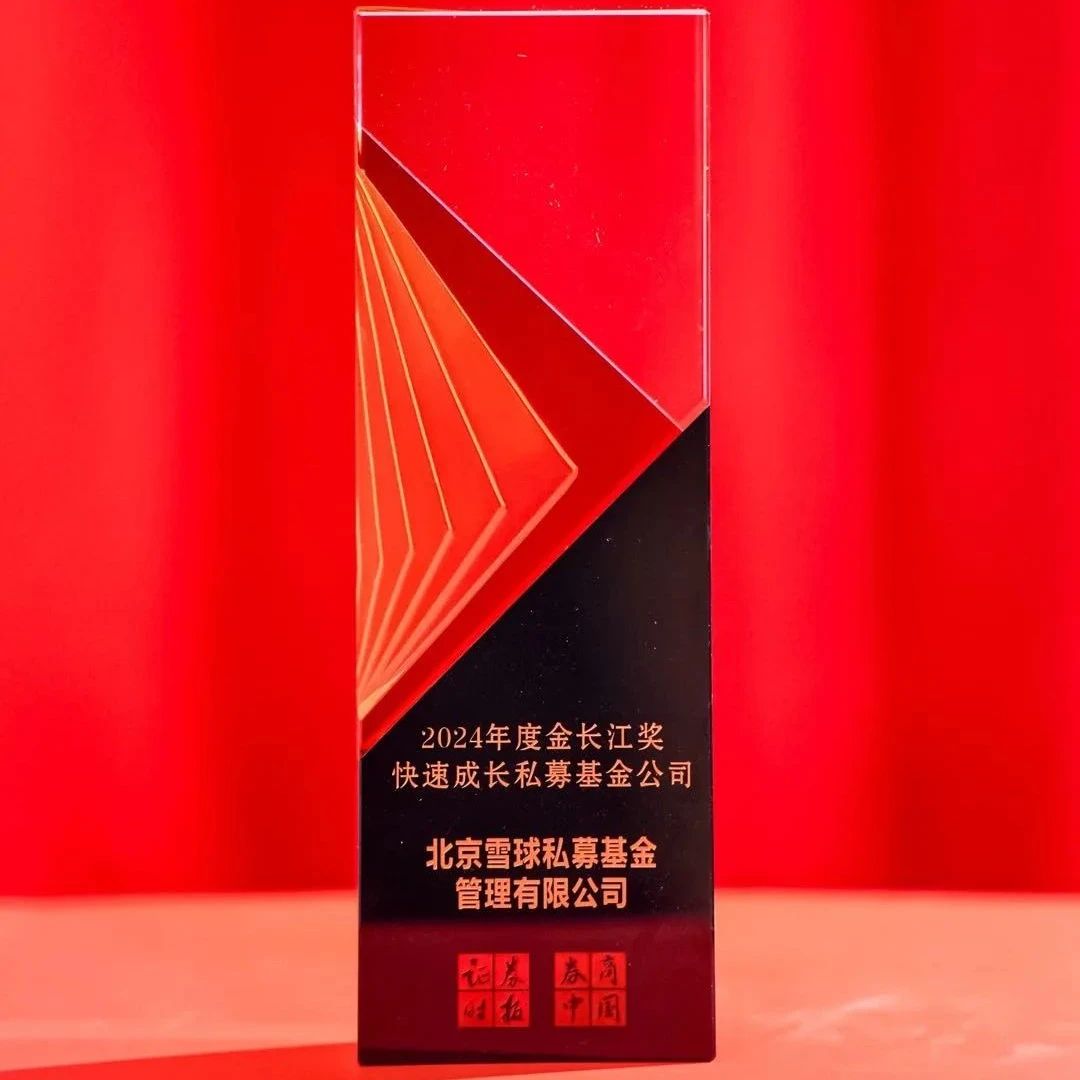
雪球资管荣获中国私募基金金长江奖三项大奖
雪球· 2025-06-27 04:32
Core Viewpoint - The article highlights the recognition of Xueqiu Asset Management at the 2024 Jin Changjiang Awards, showcasing its strong asset allocation capabilities and outstanding product performance, which led to multiple awards in the private equity sector [1][2][4]. Group 1: Company Achievements - Xueqiu Asset Management won three awards at the 2024 Jin Changjiang Awards, including the "Fast-Growing Private Fund Company" and two "Annual Rising Star Private Fund Manager" awards for its managers [1][2][3]. - The company has managed to exceed a total management scale of 10 billion since its inception in 2015, positioning its core strategies among the top in the industry [4][8]. Group 2: Investment Strategies - The macro-hedging strategy led by manager Yang Xinbin focuses on global asset risk-balanced allocation, aiming for long-term stable absolute returns while controlling risk and volatility [5]. - The stock long/short strategy managed by Chen Juntao emphasizes value investment, utilizing a contrarian approach with a focus on high certainty and low valuation, while diversifying investments across different markets to mitigate risks [6][7]. Group 3: Industry Context - The private equity industry is entering a new phase that emphasizes higher quality and sustainable development, with strategy innovation and refinement being key drivers for growth [7][8]. - Strengthening risk control, deepening long-term rational investment philosophies, and enhancing client experience are essential for firms to stand out in the evolving industry landscape [8].