
股票多头策略

Search documents
沪深300ETF再现集中买入,释放了哪些策略信号?
私募排排网· 2026-03-27 12:00
Core Viewpoint - The continuous net inflow into the CSI 300 ETF over the past seven trading days serves as a stabilizing signal amidst a declining A-share market, indicating institutional confidence in current valuations [2][3]. Group 1: Market Performance and ETF Inflows - Since March 16, 2026, the CSI 300 ETF has seen a net inflow of approximately 12.9 billion yuan over seven consecutive trading days, marking the first significant inflow this year after a period of net selling since January [2]. - The Shanghai Composite Index experienced a decline of over 4% on March 23, 2026, but the CSI 300 ETF and other major ETFs like the SSE 50 ETF and CSI 500 ETF attracted net purchases of around 4.2 billion yuan and 4.2 billion yuan, respectively [2]. - Historical data shows that during periods of significant net buying in the CSI 300 ETF, the market tends to respond positively, with an average return of 1.28% for the CSI All Share Index during these inflow periods [7]. Group 2: Regulatory Support and Institutional Behavior - The People's Bank of China emphasized the importance of maintaining stability in financial markets, prioritizing stocks, bonds, and foreign exchange, which reflects a strong commitment to market stability [3]. - The behavior of institutional investors, particularly the "national team" such as Central Huijin and the central bank, often correlates with net buying in broad-based ETFs during market downturns, indicating a strategic approach to stabilize the market [3]. Group 3: Historical Analysis of ETF Buying Patterns - An analysis of the CSI 300 ETF's inflow patterns from 2024 onwards identified nine distinct periods of continuous net buying lasting seven days or more, with an average net purchase of approximately 73.2 billion yuan per period [5]. - The longest recorded net buying period was from July 15 to August 9, 2024, lasting 19 days with a total net inflow of about 127 billion yuan [5]. - Following the end of net buying periods, historical data indicates a high probability of market recovery, with average returns of 5.77% after 20 trading days and 7.80% after 40 trading days [10]. Group 4: Investment Strategy Recommendations - Investors are advised to monitor the net inflow trends of major ETFs like the CSI 300 ETF as a key timing signal for entering the market, particularly during significant net buying periods [15]. - For clients holding long positions in subjective or quantitative strategies, maintaining patience is recommended, as historical data suggests favorable returns in the months following periods of substantial ETF inflows [15].


春节假期临近,持股or持币过节?
私募排排网· 2026-02-12 12:00
Group 1 - The recent volatility in precious metal futures prices has captured the attention of investors, while the stock market is cooling down after a previous bull run, suggesting a potential left-side allocation opportunity for stock bulls [2] - The net selling of broad-based ETFs may be nearing its end, with significant net outflows recorded for major ETFs, indicating a historical first in terms of absolute values [4][8] - Following a peak trading volume of 3.94 trillion yuan on January 14, the market has seen a notable decline in trading volume, dropping below 2 trillion yuan for the first time in 2026 [4][5] Group 2 - The decline in trading volume suggests a shift from an influx of new capital to a phase of stockholder competition, which may not signal the end of the bull market but rather a more reasonable investment value compared to previous highs [9] - Investors are encouraged to consider increasing their allocation to stock long strategies, especially if new growth points emerge in the capital market during the holiday period [9]

【全球资本“迁徙”进行时:对中国资产态度转为“计划布局”】2026年开年,亚洲科技股显著跑赢美股科技板块,折射出资金流向的深层逻辑:随着美联储进入降息通道、美元资产吸引力减弱,国际资本正在重新评估全球资产配置的风险与回报关系。过去十余年“资金单向流向美国”的格局正在出现松动,非美资产尤其是...
Sou Hu Cai Jing· 2026-01-19 22:45
Core Viewpoint - The article highlights a shift in international capital flows, with a growing interest in Asian markets, particularly Chinese assets, as global investors reassess risk and return dynamics amid changing monetary policies [1] Group 1: Capital Flow Trends - Asian technology stocks have significantly outperformed U.S. tech stocks at the beginning of 2026, indicating a deeper logic behind capital movement [1] - The long-standing trend of capital flowing predominantly to the U.S. is showing signs of loosening, with non-U.S. assets, especially in Asia, becoming the next focus for foreign investment [1] Group 2: Foreign Investment Strategies - Foreign investors are shifting their approach to Chinese assets from a wait-and-see attitude to a more proactive "planned layout" strategy [1] - There is a notable change in the strategies employed by foreign institutions, moving beyond just "long-short" strategies to include "long only" strategies, indicating a more bullish outlook on the market [1]
李蓓被流量耽误了
虎嗅APP· 2025-12-18 00:09
Core Viewpoint - The article discusses the rise and fall of Li Bei, a prominent figure in the private equity industry, highlighting her unique ability to blend investment acumen with public engagement, but also detailing the challenges she faces due to recent performance declines and market misjudgments [4][6][12]. Group 1: Li Bei's Rise and Influence - Li Bei, founder of Hanxia Investment, gained significant attention in the private equity sector through her unconventional methods, including public engagement and bold investment predictions, which have garnered her a large following [5][10]. - Her investment strategies, particularly in macro-hedging, initially led to impressive performance, with average returns of 99.99% in 2021 and 258% in 2020, positioning her firm among the top private equity players [15][12]. - The combination of strong performance and effective public relations allowed Hanxia Investment to rapidly grow its assets under management to over 100 billion [12][31]. Group 2: Performance Decline and Challenges - After 2022, Li Bei's performance began to decline, with significant misjudgments in market timing, particularly regarding real estate and macroeconomic trends, leading to substantial losses [16][18]. - The average returns of Hanxia Investment's products dropped to around 0.74% in 2022, and by 2023, the firm was among the bottom performers in the private equity sector [16][18]. - Li Bei's reliance on personal branding and public engagement has started to backfire, as investor sentiment shifts towards a demand for more substantial investment insights rather than personal narratives [17][18]. Group 3: Macro Hedge Strategy Difficulties - The article emphasizes the inherent difficulties of macro-hedging strategies, which require a high level of expertise and adaptability to changing market conditions, a challenge that Li Bei has struggled with in recent years [19][23]. - Li Bei's past successes were attributed to favorable market conditions, but the current economic environment has made it increasingly difficult to achieve similar results, highlighting the risks associated with macro-hedging [21][22]. - The article notes that Li Bei's focus on macro strategies has led to missed opportunities in high-growth sectors like technology and consumer goods, which are critical for effective macroeconomic analysis [24][25]. Group 4: Competitive Landscape and Future Outlook - The competitive landscape for private equity firms has intensified, with other firms adopting quantitative strategies that have outperformed traditional macro-hedging approaches, posing a significant challenge to Hanxia Investment [33][34]. - Li Bei's firm faces pressure not only from established players but also from emerging quantitative funds that leverage technology for better performance, indicating a shift in investor preferences [35][36]. - The article concludes that while Li Bei has the potential to adapt and regain her footing, the challenges posed by market dynamics and competition will require significant strategic adjustments [36][39].

李蓓被流量耽误了
Hu Xiu· 2025-12-17 22:01
Core Insights - The article discusses the rise and fall of Li Bei, a prominent figure in the private equity industry, highlighting her unique ability to blend investment acumen with social media influence [2][3][4] - It emphasizes the dual nature of her career, where her strong performance was initially supported by her ability to generate significant public interest, but recent performance declines have led to a backlash against her public persona [9][10][12] Company Overview - Li Bei founded Hanxia Investment in 2017 after a decade of experience in public and private equity, gaining recognition for her investment strategies and public engagement [4][5] - Hanxia Investment quickly grew to manage over 100 billion yuan, leveraging Li Bei's social media presence to attract clients and enhance brand visibility [7][8] Performance Analysis - Hanxia's performance peaked between 2018 and 2021, with average returns of 16.67%, 6.38%, 99.99%, 64.42%, and 0.74% from 2018 to 2022, respectively [10][11] - However, post-2022, the firm faced significant challenges, with Li Bei's misjudgments leading to substantial losses, including a 30% net value decline and underperformance compared to market indices [12][14][20] Market Position and Strategy - The article notes that Li Bei's strategy shifted from a low-volatility approach inspired by Bridgewater to a high-risk, high-reward model akin to Soros, which initially yielded high returns but later contributed to volatility and losses [23][24] - The competitive landscape has evolved, with quant funds gaining traction and outperforming traditional discretionary strategies, posing a challenge to Hanxia's business model [29][30] Future Outlook - Despite recent setbacks, there is potential for recovery if macroeconomic conditions improve and if Hanxia can adapt its strategies to align with market trends [31][32] - The article suggests that while Li Bei's expertise in macroeconomic analysis remains valuable, her reliance on personal judgment may hinder future performance in a rapidly changing investment environment [20][30]
2025年私募证券投资机构推荐
头豹· 2025-09-16 12:55
Report Industry Investment Rating - Not provided in the content Core Viewpoints of the Report - In 2025, quantitative strategies are recommended over subjective ones in private securities investment institutions [1] - The private securities investment fund industry in China is characterized by increasing industry concentration with significant advantages for leading institutions, and an enhanced trend of diversified and international investment strategies [23][24] Summary by Relevant Catalogs Market Background - Affected by geopolitical conflicts and US tariff policies, the global stock market rose in the first half of 2025. A-shares showed an "N-shaped" trend, Hong Kong stocks performed better, and US stocks achieved a "V-shaped reversal". By the end of June 2025, the number of A-share listed companies reached 5,420, an increase of 37 from the end of 2024, and the total market value exceeded 100.02 trillion yuan, hitting a record high. The Beizheng 50 Index soared 39.45% in the first half of the year, leading the world in terms of gains. Industries such as non-ferrous metals (17.93%) and enterprise services (16.85%) led the rise, while industries such as coal (-10.02%) and real estate (-6.52%) faced pressure [4] - Chinese private securities investment funds are privately raised from qualified investors and mainly invest in publicly traded financial assets. They have more flexible investment strategies compared to public funds, lower liquidity, and can achieve differentiated returns through personalized strategies. Their operation must meet strict standards for qualified investors and emphasize the principle of self-risk assumption [5] - The development of Chinese private securities investment funds has evolved from disorderly exploration to standardization and specialization. Since 2025, driven by structural opportunities in the A-share market and excess returns from quantitative strategies, the issuance of private securities funds has recovered. In the first half of the year, over 5,400 new products were filed, with the filing scale increasing by 75% year-on-year [6] Market Status - As of the end of August 2025, the outstanding scale of Chinese private securities investment funds reached 5.56 trillion yuan, accounting for 27.4% of the total scale of private funds, a 6.5% increase from 5.24 trillion yuan at the beginning of 2025. Stock strategies dominate, and diversified strategies such as quantitative hedging and macro strategies are also developing rapidly. In July 2025, 1,313 new private securities funds were filed, with a scale of 79.281 billion yuan, a record high for the year. In the first half of the year, a total of 5,461 new filings were made, a 53.6% increase year-on-year, reflecting a significant trend of funds "entering the market through funds" [7][8] - As of the end of August 2025, there were 7,722 private securities fund managers, 385 fewer than at the end of 2024, mainly due to regulatory cleanup of "fake private funds". Geographically, Shanghai, Beijing, and Shenzhen account for over 50% of the total number of managers, and their management scales account for 25.2%, 23.2%, and 9.7% respectively [9] - The market demand for private securities funds shows a trend of diversification and stratification. The number of qualified investors has continued to expand, covering high-net-worth individuals, insurance funds, pensions, and foreign institutions. Insurance funds are accelerating the allocation of equity assets through pilot programs, and foreign institutions are also increasing their layout in the A-share market. Investor demand is significantly differentiated, with conservative funds preferring low-volatility products such as quantitative hedging and macro strategies, and aggressive funds focusing on stock long strategies. Market structural opportunities and policy guidance also affect the flow of funds and drive the continuous iteration of private securities fund strategies [10] Market Competition - The selection of the top ten private securities investment institutions follows a multi-dimensional quantitative evaluation model, with core indicators including management scale and stability, historical performance, and excess return ability [11] - The current industry competition shows a pattern of "siphoning by leading players" and "strategy differentiation". Leading quantitative private funds dominate with technical barriers and excess return ability. In 2025, the number of 10-billion-yuan quantitative private funds reached 41, exceeding that of 10-billion-yuan subjective private funds (40) for the first time. In the first half of the year, the average yield of quantitative private funds was 13.54%, significantly higher than that of subjective private funds (5.51%). Quantitative strategies perform well in volatile markets, while subjective strategies face challenges [12] - Ten institutions, including Gao Yi Asset, Orient Harbor, and Ningbo Magic Square Quantitative, are introduced, each with its own characteristics in terms of management scale, investment strategy, and core team [13][14][15] Development Trends - The Chinese private securities investment fund industry shows a significant "Matthew effect", with leading institutions having significant advantages in terms of funds, talent, technology, data, and trading systems. The number of 10-billion-yuan private fund managers has exceeded 100, and their share of the total industry management scale continues to rise. Small and medium-sized private funds face survival pressure, and foreign private funds are accelerating their localization layout, intensifying industry competition and promoting the concentration of resources to leading institutions [23] - With the deepening of China's capital market reform and the enrichment of financial derivative tools, private securities investment strategies are developing in a diversified direction from traditional stock long to quantitative hedging, macro strategies, event-driven, and cross-border investment. Regulatory authorities encourage private funds to serve the real economy and introduce long-term funds, and the cooperation between private funds and financial institutions such as securities firms and banks is deepening. In the future, strategy innovation and international layout will become core competitiveness [24]
百亿私募二季度重仓股曝光,海康威视等多只个股遭减持
Di Yi Cai Jing· 2025-08-19 08:10
Group 1 - As of August 18, 15 billion private equity firms appeared among the top ten circulating shareholders of 28 listed companies, with a total holding value exceeding 29 billion yuan [1] - Nearly 130 listed companies have disclosed their mid-year reports, with over 660 companies reporting, indicating a significant presence of private equity in the market [1] - The top holdings of private equity firms include companies in various sectors, primarily in industrial and information technology [4] Group 2 - In the second quarter, 14 stocks were increased in holdings by billion private equity firms, while 6 stocks were reduced, indicating a mixed sentiment towards certain investments [2][3] - High Yi Asset's top holdings reached approximately 12.3 billion yuan, with significant reductions in holdings for three stocks, including Guoci Materials and Dongcheng Pharmaceutical [2] - The average stock price increase for nearly 130 private equity heavy stocks has reached 41% year-to-date, with over 80% of these stocks experiencing price increases [5] Group 3 - The industry distribution of private equity heavy stocks shows a concentration in industrial, information technology, materials, consumer discretionary, and healthcare sectors [4] - The majority of private equity firms' heavy stocks are focused on small to mid-cap companies, with over 70% of total market value below 10 billion yuan [5] - The performance of private equity firms has been strong, with over 80% of firms reporting positive returns this year, averaging a return rate of 20% [5]

【私募调研记录】磐耀资产调研优宁维
Zheng Quan Zhi Xing· 2025-07-30 00:11
Group 1 - The core viewpoint of the news is that the private equity firm Panyao Asset has conducted research on a listed company, Youningwei, which operates as a one-stop service provider in the life sciences sector, offering reagents, consumables, instruments, and laboratory services [1] - Youningwei's R&D investment for 2024 is projected to be 62.77 million yuan, representing a year-on-year increase of 7.10% [1] - The company is focusing on expanding its proprietary brand product matrix, which currently has an overall gross margin of approximately 50% [1] - Youningwei anticipates a nearly 30% year-on-year revenue growth for 2024, although its revenue share remains relatively low [1] - The company has utilized 25.99 million yuan to repurchase 927,600 shares and has launched a new share repurchase plan [1] - Youningwei's business is primarily concentrated in the domestic market, but it has established a company in Singapore in 2024 to accelerate the international expansion of its proprietary brand products [1] - The company is pursuing investments and collaborations with potential upstream and downstream targets that have synergistic effects with its existing business, guided by its "two extremes strategy" [1] Group 2 - Panyao Asset Management Co., Ltd. was established on December 4, 2014, with a registered capital of 10 million yuan and holds a private equity license [2] - The firm is headquartered in Shanghai, China, and primarily employs a long-only equity strategy, having launched over 100 products with a cumulative scale exceeding 5 billion yuan [2] - Panyao Asset emphasizes research-driven investment and rigorous scientific processes, aiming for sustainable asset growth and effective risk control [2] - The firm has received multiple awards for its investment strategies and performance, including the 2015 China Sunshine Private Equity Golden Yangtze Award and the 2019 Best Private Equity Fund Company Award [2]
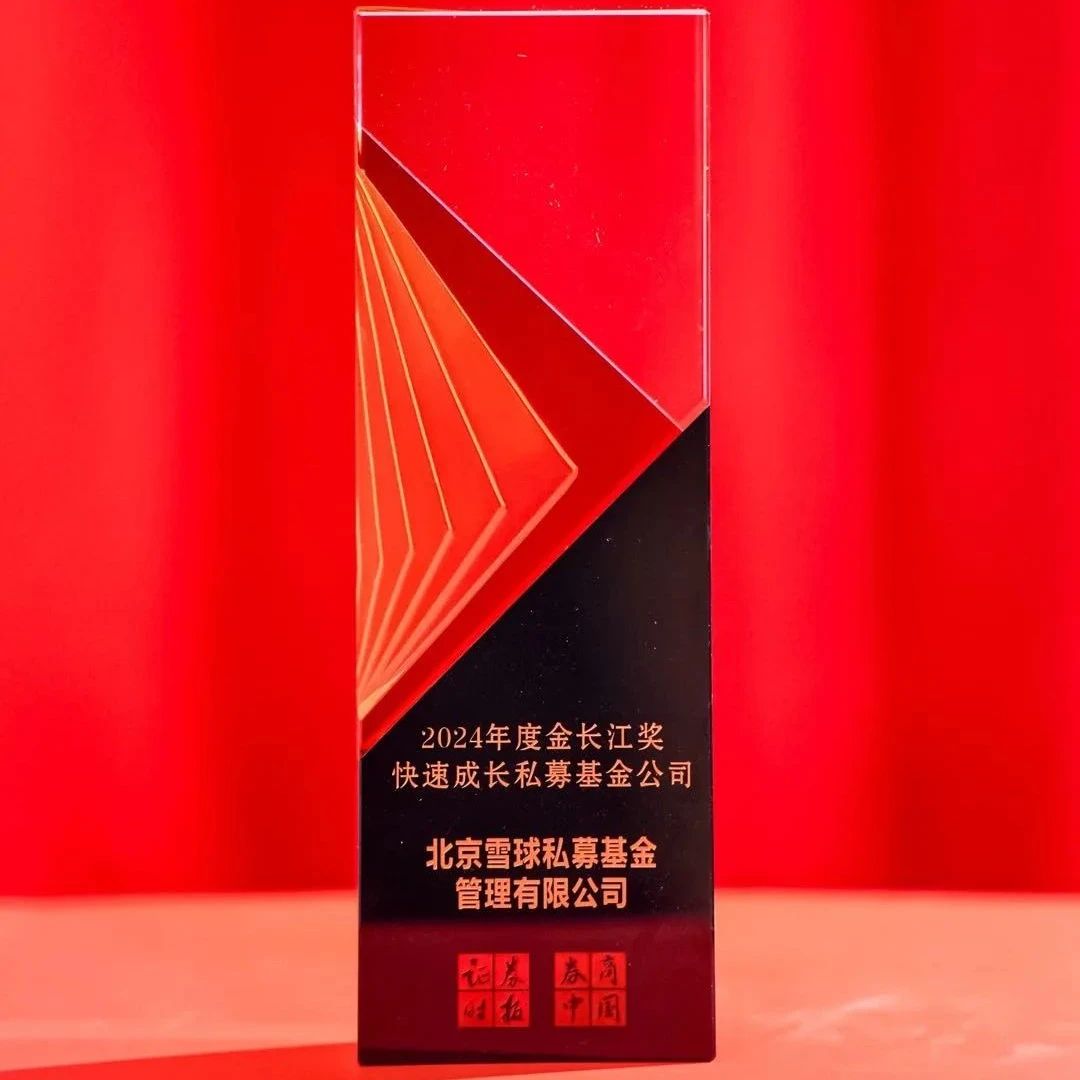
雪球资管荣获中国私募基金金长江奖三项大奖
雪球· 2025-06-27 04:32
Core Viewpoint - The article highlights the recognition of Xueqiu Asset Management at the 2024 Jin Changjiang Awards, showcasing its strong asset allocation capabilities and outstanding product performance, which led to multiple awards in the private equity sector [1][2][4]. Group 1: Company Achievements - Xueqiu Asset Management won three awards at the 2024 Jin Changjiang Awards, including the "Fast-Growing Private Fund Company" and two "Annual Rising Star Private Fund Manager" awards for its managers [1][2][3]. - The company has managed to exceed a total management scale of 10 billion since its inception in 2015, positioning its core strategies among the top in the industry [4][8]. Group 2: Investment Strategies - The macro-hedging strategy led by manager Yang Xinbin focuses on global asset risk-balanced allocation, aiming for long-term stable absolute returns while controlling risk and volatility [5]. - The stock long/short strategy managed by Chen Juntao emphasizes value investment, utilizing a contrarian approach with a focus on high certainty and low valuation, while diversifying investments across different markets to mitigate risks [6][7]. Group 3: Industry Context - The private equity industry is entering a new phase that emphasizes higher quality and sustainable development, with strategy innovation and refinement being key drivers for growth [7][8]. - Strengthening risk control, deepening long-term rational investment philosophies, and enhancing client experience are essential for firms to stand out in the evolving industry landscape [8].
【私募调研记录】磐耀资产调研德尔股份
Zheng Quan Zhi Xing· 2025-06-09 00:07
Group 1: Company Overview - Delong Holdings has made significant progress in solid-state battery research, with samples passing third-party safety tests in 2023 and a national invention patent expected in 2024 [1] - A cooperation agreement with Jiangling Group is set to be signed in August 2024, with a pilot production line expected to be completed by January 2025 [1] - The company plans to invest 300 million yuan in a solid-state battery pilot and industrialization project, as well as an intelligent motor industrialization project, with the investment agreement signed with the local government in Huzhou on May 30, 2025 [1] Group 2: Market Position and Performance - Kaku Si, a subsidiary, focuses on producing and selling thermal insulation, noise reduction, and lightweight products, serving clients such as Mercedes-Benz, BMW, Audi, and Volkswagen [1] - The operational performance of Kaku Si is expected to improve in 2024 and the first quarter of 2025, driven by enhanced operational efficiency and revenue growth in the new energy vehicle sector [1] - Kaku Si has a global production capacity layout, standardized production processes, and a quality control system, along with a world-class R&D center providing one-stop product development services [1] Group 3: Future Developments - Kaku Si aims to optimize its product structure, focusing on the development of new energy vehicle customer needs and aligning with domestic automakers' overseas supply requirements [1] - The company successfully developed a hydraulic retarder in 2023, which gained market recognition in 2024, leading to an increase in mass production and delivery scale [1]
