居民收入增长

Search documents
国家统计局住户调查司司长:居民收入与经济增长同步 消费支出保持平稳增长
Guo Jia Tong Ji Ju· 2026-01-19 07:58
Group 1 - The overall economic operation is stable, with employment and livelihood guarantees being solid, and residents' income growing in sync with economic growth in 2025 [1] Group 2 - In 2025, the national per capita disposable income reached 43,377 yuan, a nominal increase of 5.0%, with a real growth of 5.0% after adjusting for price factors [2] - Urban residents' per capita disposable income was 56,502 yuan, nominally increasing by 4.3%, while rural residents' per capita disposable income was 24,456 yuan, with a nominal increase of 5.8% [2] - The income gap between urban and rural residents narrowed, with the ratio decreasing from 2.34 to 2.31 [2] Group 3 - Wage income, operating net income, and transfer net income were the main supporting factors for income growth, with per capita wage income at 24,555 yuan, a nominal increase of 5.3% [3] - Per capita operating net income was 7,252 yuan, with a nominal growth of 5.0%, and per capita transfer net income reached 8,080 yuan, increasing by 5.7% [3] - The growth in third industry operating net income was significant, with a 7.0% increase, and rural residents' income from third industry activities grew by 9.8% [3] Group 4 - In 2025, the national per capita consumption expenditure was 29,476 yuan, with a nominal increase of 4.4% and a real growth of 4.4% [4] - Urban residents' per capita consumption expenditure was 35,869 yuan, increasing by 3.8%, while rural residents' per capita consumption expenditure was 20,259 yuan, with a nominal increase of 5.1% [4] Group 5 - Expenditures on living goods and services, transportation and communication, education, culture, and entertainment saw rapid growth, with significant increases in household appliances and transportation tools [5] - Per capita spending on education and cultural entertainment grew by 9.4%, while spending on other goods and services increased by 11.2% [5] - Despite overall stable growth in income and consumption, there are pressures on income growth and a slowdown in consumption expenditure growth [5]
张毅:居民收入与经济增长同步 消费支出保持平稳增长
Guo Jia Tong Ji Ju· 2026-01-19 03:35
2025年,各地区各部门认真贯彻落实党中央、国务院决策部署,经济运行总体平稳,就业形势总体稳 定,民生保障扎实有力,居民收入实现与经济增长同步。 一、居民收入稳定增长,城乡居民收入相对差距缩小 2025年,全国居民人均可支配收入43377元,比上年名义增长5.0%;扣除价格因素,实际增长5.0%。分 城乡看,城镇居民人均可支配收入56502元,比上年名义增长4.3%,扣除价格因素,实际增长4.2%;农 村居民人均可支配收入24456元,比上年名义增长5.8%,扣除价格因素,实际增长6.0%。农村居民收入 名义和实际增速比城镇居民分别快1.5个和1.8个百分点,2025年城乡居民收入比由上年的2.34降至2.31, 城乡居民收入相对差距缩小。 二、工资性收入、经营净收入和转移净收入稳定增长,是居民收入增长的主要支撑因素 2025年,稳就业政策持续发力,全国就业形势总体稳定,居民人均工资性收入24555元,比上年增长 (以下如无特别说明,均为名义增长)5.3%,快于全国居民收入增速0.3个百分点。分城乡看,城镇居 民和农村居民人均工资性收入分别增长4.5%和6.1%。 受服务业生产经营形势良好带动,全国居民人均经 ...
国内高频 | 假期提振下人流出行走强(申万宏观·赵伟团队)
Xin Lang Cai Jing· 2026-01-06 16:25
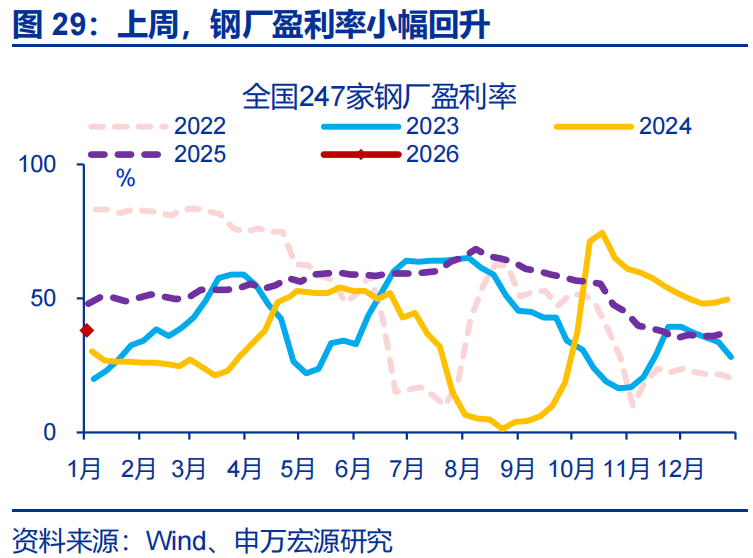
Group 1: Industrial Production Trends - The industrial production shows a mixed trend, with a marginal decline in construction activity [1] - The blast furnace operating rate increased by 0.7% week-on-week and rose by 1.3 percentage points year-on-year to 90% [1][4] - Apparent steel consumption rose by 0.9% week-on-week and increased by 4.4 percentage points year-on-year to 2.2% [1] Group 2: Chemical and Consumption Chains - The chemical chain shows overall weak performance, with soda ash operating rate declining by 1.7% week-on-week and down 4.3 percentage points year-on-year to -2.4% [9] - PTA operating rate increased by 0.2% week-on-week but fell by 1.8 percentage points year-on-year to -8.4% [9] - In the downstream consumption chain, polyester filament operating rate increased by 0.3% week-on-week and rose by 0.8 percentage points year-on-year to 1.8% [9] Group 3: Construction Industry Insights - Cement demand shows marginal improvement, with grinding operating rate declining by 3.8% week-on-week and down 3.9 percentage points year-on-year to 4.7% [17] - Cement shipment rate decreased by 1.1% week-on-week but increased by 0.4 percentage points year-on-year to -1.4% [17] - Cement inventory ratio continued to decline, down 1.7% week-on-week and up 0.1 percentage points year-on-year to 0.5% [17] Group 4: Demand Tracking - The average daily transaction area of commercial housing in 30 major cities decreased by 26.1% week-on-week and fell by 0.5 percentage points year-on-year to -26% [34] - First-tier and second-tier cities showed improvement in transactions, with year-on-year increases of 1% and 7.6% respectively [34] - Port cargo throughput increased, with container throughput rising by 2.4% year-on-year to 9% [44] Group 5: Price Trends - Agricultural product prices showed divergence, with egg and vegetable prices declining by 0.8% and 2.8% respectively, while fruit prices increased by 0.8% [79] - The South China industrial product price index rose by 0.6% week-on-week, with the metal price index increasing by 1.9% [90]

宏观市场 | 修复居民资产负债表的四种路径与政策镜鉴
Sou Hu Cai Jing· 2025-12-12 00:33
Group 1 - Since the first quarter of 2024, the leverage ratio of the household sector in China has begun to decline slowly, indicating a gradual repair of the household balance sheet [1][4] - The decline in household leverage can be achieved through four main paths: debt write-downs, stock market increases, real estate appreciation, and income growth [1][2] - Historical experiences from the US and Japan show that the repair of household balance sheets is often linked to the real estate market entering a downward cycle [4][5] Group 2 - The US and Japan's experiences highlight the importance of bad debt disposal in the initial phase of deleveraging, with the US government quickly implementing measures during the subprime crisis [2][23] - The wealth effect from rising stock assets significantly contributes to the decline in household leverage, particularly in the US, where stock assets account for a high proportion of total household assets [24][27] - Real estate recovery typically occurs later in the deleveraging process, often as a result of debt clearance and improvements in household income [24][26] Group 3 - Recommendations for China include increasing efforts to address bad debts in the real estate sector, such as establishing a "National Housing Bank" to facilitate debt clearance [3][26] - Enhancing the role of stock assets in repairing household balance sheets by allowing investment in stocks through pension accounts could improve the proportion of stock investments in household assets [27] - Improving mechanisms for household income growth is essential, with suggestions to encourage leading companies to raise wages and develop knowledge-intensive service exports to create more job opportunities [28]
苏州居民收入平稳增长
Su Zhou Ri Bao· 2025-11-05 00:10
Core Insights - Suzhou's residents experienced stable income growth in the first three quarters of the year, with a notable reduction in the income gap between urban and rural residents [1][2] Group 1: Income Growth - The per capita disposable income for all residents in Suzhou reached 61,616 yuan, an increase of 2,505 yuan compared to the same period last year, representing a year-on-year growth of 4.2% [1] - Urban residents had a per capita disposable income of 68,961 yuan, up by 2,670 yuan year-on-year, reflecting a growth rate of 4.0% [1] - Rural residents saw a per capita disposable income of 38,591 yuan, which is an increase of 1,786 yuan year-on-year, translating to a growth rate of 4.9% [1] Group 2: Income Disparity - The income growth rate for rural residents outpaced that of urban residents by 0.9 percentage points, with a slight increase of 0.1 percentage points compared to the first half of the year [1] - The urban-rural income ratio in Suzhou is 1.79, which has decreased by 0.01 compared to the previous year, indicating a narrowing income gap [1] Group 3: Income Sources - The average wage income per resident was 39,335 yuan, showing a growth of 4.8% year-on-year, which contributed 3.0 percentage points to the overall disposable income growth [2] - The average net operating income per resident was 5,866 yuan, with a year-on-year increase of 2.2%, contributing 0.2 percentage points to income growth [2] - The average net property income per resident was 7,589 yuan, also growing by 2.2% year-on-year, contributing 0.3 percentage points to the overall income growth [2] - The average net transfer income per resident reached 8,826 yuan, marking a 5.1% increase year-on-year, contributing 0.7 percentage points to the income growth [2]
国内高频 | 港口货运量大幅上行(申万宏观·赵伟团队)
赵伟宏观探索· 2025-11-04 16:21
Core Viewpoint - The article discusses the current state of industrial production, construction, and demand trends in China, highlighting a mixed performance across various sectors, with some showing signs of recovery while others remain weak. Industrial Production Tracking - The operating rate of blast furnaces has significantly declined, with a week-on-week decrease of 3% to 81.7%, and a year-on-year drop of 3.3 percentage points to -0.7% [2][6] - Steel apparent consumption has increased by 2.7% week-on-week and returned to positive territory year-on-year, rising by 2.9 percentage points to 2.8% [2][8] - Social inventory continues to decline, down 2.1% week-on-week [2] Construction Industry Insights - Cement production and demand have shown some recovery but remain weaker than the same period last year, with a grinding operating rate up 1% to 46.3% week-on-week and a year-on-year increase of 2.8 percentage points to -2% [24][25] - Cement shipment rates have improved slightly, increasing by 0.8% week-on-week to 45.6%, but down 8.8% year-on-year [24][28] - The cement inventory ratio continues to rise, up 2.3% week-on-week and 1.3 percentage points year-on-year to 1.9% [24][31] Demand Tracking - The average daily transaction area of commercial housing in 30 major cities has decreased by 11.3% week-on-week and 4.3 percentage points year-on-year to -25% [47][48] - The transaction volume in first-tier cities has dropped significantly, with year-on-year declines of 20.1 percentage points to -49.6% [47][51] - Port cargo throughput has rebounded significantly, with a year-on-year increase of 16.5% to 13% [57][64] Price Trends - Agricultural product prices are showing a mixed performance, with vegetable prices rising by 8.1% week-on-week, while pork and egg prices have decreased by 0.8% and 0.5%, respectively [99][100][106] - The overall industrial product prices are on the rise, with the Nanhua Industrial Price Index increasing by 1.8% week-on-week [111][112]

农村居民收入增速领跑城镇
Nan Fang Du Shi Bao· 2025-10-21 23:15
Income Sources - The per capita wage income is 28,909 yuan, an increase of 4.6% year-on-year [2] - The per capita operating net income is 5,629 yuan, an increase of 5.1% year-on-year [2] - The per capita property net income is 5,375 yuan, an increase of 2.8% year-on-year [2] - The per capita transfer net income is 2,929 yuan, an increase of 3.7% year-on-year [2] Urban and Rural Residents - The per capita disposable income of urban residents is 51,187 yuan, an increase of 3.9% year-on-year [2] - The per capita disposable income of rural residents is 22,308 yuan, an increase of 5.5% year-on-year [2]

前三季度,我国居民收入和消费支出稳定增长
Xin Jing Bao· 2025-10-20 06:43
Group 1: Income Growth - In the first three quarters, the national per capita disposable income reached 32,509 yuan, representing a nominal increase of 5.1% compared to the same period last year, and a real increase of 5.2% after adjusting for price factors [1] - The main contributors to income growth include stable increases in wage income, operating net income, and transfer net income [1] - Per capita wage income was 18,659 yuan, up 5.4% year-on-year, while per capita operating net income was 5,199 yuan, increasing by 5.3% due to expanded domestic consumption and increased holiday travel spending [1] Group 2: Consumption Expenditure - In the first three quarters, the national per capita consumption expenditure was 21,575 yuan, showing a nominal increase of 4.6% year-on-year, with a real increase of 4.7% after accounting for price factors [2] - The structure of consumption expenditure indicates rapid growth in spending on daily necessities and services, transportation and communication, education, culture and entertainment, and other goods and services [2] - Per capita service consumption expenditure was 10,096 yuan, growing by 4.1%, and accounted for 46.8% of total consumption expenditure [2]
国家统计局住户调查司司长:前三季度居民收入和消费支出稳定增长
Guo Jia Tong Ji Ju· 2025-10-20 02:44
Core Insights - The national economy is operating smoothly with stable employment, effective livelihood guarantees, and steady growth in residents' income and consumption expenditure [1] Group 1: Residents' Income Growth - The per capita disposable income of residents reached 32,509 yuan in the first three quarters, representing a nominal increase of 5.1% year-on-year, and a real increase of 5.2% after adjusting for price factors [2] - Urban residents' per capita disposable income was 42,991 yuan, with a nominal increase of 4.4% and a real increase of 4.5%, while rural residents' per capita disposable income was 17,686 yuan, with a nominal increase of 5.7% and a real increase of 6.0% [2] - The growth rates of nominal and real income for rural residents outpaced those of urban residents by 1.3 and 1.5 percentage points, respectively [2] Group 2: Income Composition - Wage income, operating net income, and transfer net income are the main factors supporting the growth of residents' income [3] - The average wage income per capita was 18,659 yuan, with a nominal growth of 5.4%, surpassing the national income growth rate by 0.3 percentage points [3] - The per capita operating net income was 5,199 yuan, growing by 5.3%, while the per capita transfer net income was 6,023 yuan, also increasing by 5.3% [3] Group 3: Residents' Consumption Expenditure - The per capita consumption expenditure of residents was 21,575 yuan, with a nominal increase of 4.6% and a real increase of 4.7% [4] - Urban residents' per capita consumption expenditure was 26,510 yuan, with a nominal increase of 3.8%, while rural residents' per capita consumption expenditure was 14,597 yuan, with a nominal increase of 5.5% [4] - Significant growth was observed in spending on daily necessities and services, transportation and communication, education and cultural entertainment, and other goods and services [4] Group 4: Service Consumption - The per capita service consumption expenditure was 10,096 yuan, reflecting a growth of 4.1% [5] - Service consumption accounted for 46.8% of total residents' consumption expenditure [5]
“十四五”社会民生“成绩单”出炉 “数”看经济社会高质量发展基础性支撑更稳
Yang Shi Wang· 2025-09-29 06:30
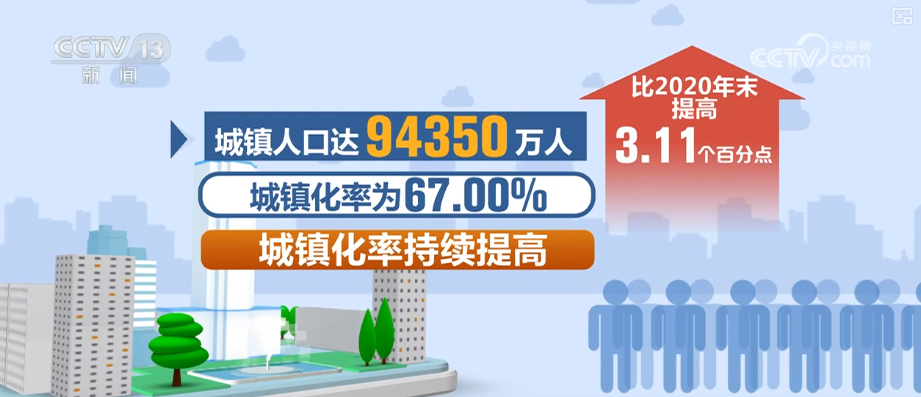
Group 1 - The core viewpoint of the report indicates that since the beginning of the 14th Five-Year Plan, China's population has remained stable, with improvements in population quality, stable employment, and steady growth in residents' income, providing foundational support for high-quality economic and social development [1] Group 2 - As of the end of 2024, the total population of China is projected to be 1,408.28 million, ranking among the highest in the world. The urban population is expected to reach 943.50 million, with an urbanization rate of 67.00%, an increase of 3.11 percentage points since the end of 2020 [3] Group 3 - The employment situation is generally stable, with continued growth in urban employment. The average urban survey unemployment rate is expected to be 5.1% by the end of 2024, a decrease of 0.5 percentage points from 2020. The third industry has shown enhanced employment absorption capacity, with an increase of 600,000 jobs since 2020, raising its share of total employment by 1.1 percentage points [6] Group 4 - Residents' income has shown stable growth, with the per capita disposable income expected to reach 41,314 yuan in 2024, an increase of 9,125 yuan since 2020. After adjusting for price factors, the average annual real growth rate from 2021 to 2024 is projected to be 5.5%, in line with GDP growth [9] Group 5 - In terms of expenditure, development-oriented consumption in education, culture, entertainment, transportation, communication, and healthcare is expected to grow rapidly, with an average annual growth rate of 10.0% from 2021 to 2024. Service consumption expenditure is projected to grow at an average annual rate of 9.5%, outpacing goods consumption expenditure by 3.8 percentage points [11]