
战略聚焦

Search documents
专题 | 行业筑底之时,民营房企突围之道
克而瑞地产研究· 2025-12-12 09:37
Group 1 - The number of private real estate companies is gradually decreasing, with only 45 remaining as of January-November 2025, down from around 70 before 2021 [3][5] - Among the top ten real estate companies, only one is a private firm, indicating a shift in capital preference towards state-owned enterprises and larger firms [5][6] - Despite the overall decline, 28 private firms have maintained stable operations, with six companies showing significant sales growth of over 50% in 2025 [6][7] Group 2 - Established private firms like Binjiang Group and Longfor Group are focusing on core cities, with Binjiang Group being the only private company expected to maintain a sales scale of around 100 billion yuan [14][16] - Binjiang Group has acquired 21 projects with a total land value of 377.2 billion yuan, primarily in Hangzhou, which contributes significantly to its sales [14][15] - The strategy of focusing on first and second-tier cities is becoming a consensus among large real estate companies to ensure inventory turnover and reduce operational risks [17] Group 3 - Emerging private companies such as Bangtai Group and Jiari Construction are achieving growth through regional focus and product innovation [21][24] - The number of private firms with high new land value has doubled in 2025 compared to 2024, indicating a potential for more companies to emerge successfully [21][22] - Local small and medium-sized enterprises are leveraging regional advantages to thrive in niche markets, such as Haicheng Group's expansion into central Chongqing [24][25] Group 4 - The real estate industry is still facing multiple challenges, with many firms adopting price-for-volume strategies leading to declining profit margins [25][26] - Companies are encouraged to focus on long-term strategies, emphasizing product quality and operational efficiency to navigate the new market cycle [26][34] - The trend towards government-supported construction of safe, comfortable, and green housing is expected to enhance product quality in the industry [26]



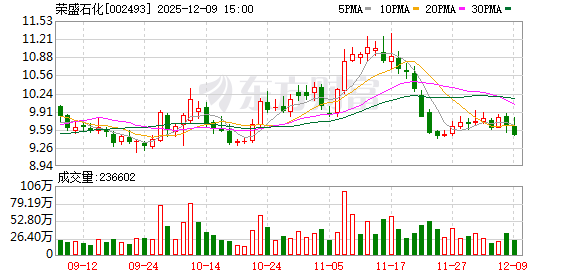
荣盛石化拟5.08亿元向控股股东转让亏损子公司
Zhong Guo Jing Ying Bao· 2025-12-09 12:14
Core Viewpoint - Rongsheng Petrochemical announced the transfer of 100% equity in Rongsheng Energy (Zhoushan) to its controlling shareholder for 508 million yuan, which constitutes a related party transaction [2] Group 1: Transaction Details - Rongsheng Energy (Zhoushan) was established in November 2023 and is involved in power generation, transmission, and distribution, currently in the construction phase and not yet fully operational [2] - The financial data indicates a projected net loss of 887,600 yuan for 2024 and a continued loss of 1,063,600 yuan for the first nine months of 2025 [2] - The assessment of Rongsheng Energy (Zhoushan) shows a total equity value of 508 million yuan, reflecting a 2.08% increase over its book value [2] Group 2: Strategic Implications - The company stated that the transfer will aid in strategic focus and sustainable development [2] - Following the transaction, Rongsheng Energy (Zhoushan) will no longer be included in the consolidated financial statements, and it is not expected to significantly impact the company's financial status or operating results [2] - The company emphasized that the transaction does not harm the interests of the company or its shareholders [2] Group 3: Financial Performance - Rongsheng Petrochemical reported a revenue of 227.815 billion yuan for the first three quarters of 2025, a year-on-year decrease of 7.09% [2] - The net profit attributable to shareholders for the same period was 888 million yuan, reflecting a year-on-year increase of 1.34% [2]

防水龙头东方雨虹的主动求变:盘活资产投核心,构建增长新引擎
Jing Ji Guan Cha Wang· 2025-12-09 04:53
Core Viewpoint - The company, Beijing Oriental Yuhong Waterproof Technology Co., Ltd., is optimizing its asset structure by selling non-production real estate assets, which is seen as a strategic move to focus on its core business and enhance its competitive position in the market [1] Group 1: Asset Optimization - The company plans to sell non-production real estate assets held by its subsidiaries, which is interpreted as a proactive choice for strategic focus rather than a loss [1] - Continuous asset disposals are aimed at concentrating resources on the main business, thereby strengthening its core operations [1] Group 2: Global Expansion - The company is accelerating its global strategy through a combination of trade, investment, and acquisitions, with significant actions taken since November [2] - It intends to acquire 60% of Brazilian Novakem for approximately 144 million yuan and is constructing a production and R&D base in Mexico, expected to be operational by 2026 with an annual capacity of 100,000 tons of sand powder and 20,000 tons of water-based coatings [2] - The company completed the acquisition of Chilean construction retail leader Construmart S.A. for about 123 million USD, establishing a dual support layout in the Latin American market [2] - International production capacity has been established in key regions including Houston, USA, Saudi Arabia, and Malaysia, with the Malaysian factory expected to begin trial production in the first half of 2025 [2] - Overseas revenue has increased from 246.7 million yuan in 2020 to 877 million yuan in 2024, representing a growth of 255%, with further growth expected in 2025 [2] Group 3: Sand Powder Business Development - The sand powder business has achieved significant scale, with production capacity increasing from 1.8 million tons in 2021 to a target of 10 million tons by 2025, supported by 68 production and logistics bases nationwide [3] - The company is extending its operations upstream by investing in a new materials industrial park in Jiangxi and acquiring marble mining rights, which will lower production costs and allow entry into high-margin sectors [3] - The establishment of a silica sand production base in Guangdong is expected to generate an annual output value of 135 million yuan, positioning the company among the leading glass sand processing enterprises in the country [3] Group 4: Market Recognition and Future Strategy - The company's strategic adjustments have been recognized by the capital market, with over 50 domestic and foreign institutions acknowledging the long-term growth logic in its overseas expansion and sand powder business [4] - The company plans to continue investing in overseas capacity construction and the sand powder industry chain, aiming to become a global leader in building materials system services through a dual-driven development model [4] - This proactive strategic focus is expected to open up broader growth opportunities during a critical period of industry transformation [4]

荣盛石化股份有限公司关于召开2025年第四次临时股东会的通知
Shang Hai Zheng Quan Bao· 2025-12-08 18:06
Group 1 - The company will hold its fourth extraordinary general meeting of shareholders on December 31, 2025, at 14:30 [2][3] - The meeting will be conducted both in-person and via online voting, with specific time slots for each voting method [4][3] - Shareholders must register by December 23, 2025, to be eligible to attend the meeting [5] Group 2 - The board of directors approved a proposal for the transfer of 100% equity of Rongsheng Energy (Zhoushan) Co., Ltd. from its wholly-owned subsidiary, Rongsheng New Materials (Zhoushan) Co., Ltd., to Zhejiang Rongsheng Holding Group Co., Ltd. [25][26] - The transaction is classified as a related party transaction, as Zhejiang Rongsheng Holding Group Co., Ltd. holds 55.05% of the company's shares [25][26] - The transaction price is set at 508.241 million yuan, based on the net asset value of Rongsheng Energy (Zhoushan) [32][33] Group 3 - The company plans to set a mutual guarantee limit for 2026 at 113.796 million yuan, which exceeds 259.46% of the latest audited net assets [46] - The mutual guarantee will facilitate the sharing of credit resources among subsidiaries and support stable operational development [46][56] - The board believes that the mutual guarantees will not adversely affect the company's operational capabilities or financial stability [56]
荣盛石化子公司拟转让荣盛能源(舟山)100%股权
Zhi Tong Cai Jing· 2025-12-08 13:20
Core Viewpoint - Rongsheng Petrochemical (002493.SZ) announced the strategic decision to divest its wholly-owned subsidiary Rongsheng New Materials (Zhoushan), transferring 100% of its stake in Rongsheng Energy (Zhoushan) to Zhejiang Rongsheng Holding Group for a negotiated price of 508 million yuan [1] Group 1 - The divestment is part of the company's strategy to focus on core operations [1] - After the transaction, Rongsheng New Materials (Zhoushan) will no longer hold any equity in Rongsheng Energy (Zhoushan) [1] - Rongsheng Energy (Zhoushan) will be excluded from the company's consolidated financial statements following the completion of the transaction [1]
万科股东会,新任董事长亮相
券商中国· 2025-11-20 23:45
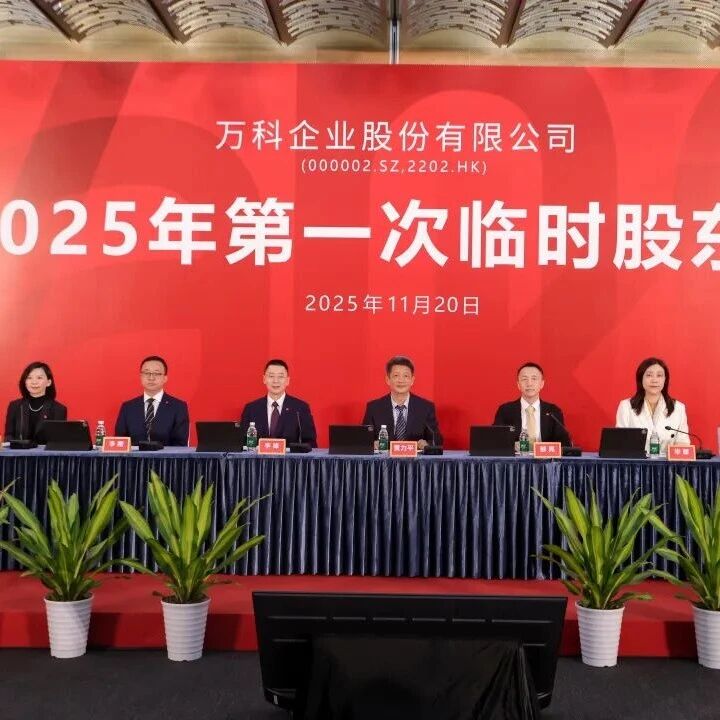
Core Viewpoint - Vanke A (000002.SZ) held its first extraordinary general meeting of shareholders for 2025, where it approved a proposal to authorize the board to provide guarantees for a total of 22 billion yuan in shareholder loans from Shenzhen Metro Group, which has already provided 21.376 billion yuan in unsecured loans to Vanke [1][2]. Group 1: Leadership and Support - Huang Liping, the new chairman of Vanke and general manager of Shenzhen Metro Group, emphasized the group's commitment to supporting Vanke's healthy development in a market-oriented and legal manner [2][3]. - Huang reiterated the importance of risk resolution and the need for Vanke to provide additional guarantees for loans, reflecting standard practices in the market [3]. Group 2: Strategic Development - Huang proposed a development strategy based on three principles: strategic focus, standardized operations, and technological empowerment [4]. - Vanke aims to stabilize its residential development while optimizing its business layout and structure, focusing on urban concentration, business combinations, development models, product positioning, and technological empowerment [4]. - The company plans to leverage new information technologies, green low-carbon technologies, and new construction techniques to enhance its product and service competitiveness [4]. Group 3: Financial Health and Challenges - As of the end of Q3, Vanke has repaid 28.89 billion yuan in public debt, with significant contributions from loans provided by Shenzhen Metro Group [5]. - Vanke faces upcoming domestic debt repayments totaling 7.3 billion yuan in the last two months of 2025 and 1.1 billion yuan in Q1 2026, highlighting the need for self-sustaining cash flow through sales and asset revitalization [6]. - The company is currently experiencing challenges such as a lack of high-margin projects and slow sales in suburban developments, with many listed real estate companies facing losses this year [6]. Group 4: Asset Management and Capital Operations - Vanke has completed large transactions for 19 projects, achieving a total signed amount of 6.86 billion yuan in Q3 [7]. - The company is actively pursuing capital operations to divest non-core businesses and assets to improve cash flow and debt structure [7].

万科股东会,新任董事长亮相
Zheng Quan Shi Bao· 2025-11-20 14:35
Core Viewpoint - Vanke A (000002.SZ) held its first extraordinary shareholders' meeting for 2025 on November 20, where it approved a proposal to authorize the board to provide guarantees for a total of 22 billion yuan in shareholder loans from Shenzhen Metro Group, which has already provided 21.376 billion yuan in unsecured loans to Vanke [1][3]. Group 1: Leadership and Support - Huang Liping, the new chairman of Vanke, emphasized Shenzhen Metro Group's commitment to supporting Vanke's healthy development in accordance with market-oriented and legal principles [1][3]. - Huang Liping outlined a development strategy for Vanke focusing on three principles: strategic focus, standardized operations, and technology empowerment [3][4]. Group 2: Financial Situation - As of the end of Q3, Vanke has repaid 28.89 billion yuan in public debt, with significant support from loans provided by Shenzhen Metro Group, which has lent over 30 billion yuan since the beginning of 2025 [6]. - Vanke faces challenges such as a lack of high-margin projects and slow sales in suburban developments, with nearly half of listed real estate companies reporting losses in the first three quarters of the year [6][7]. Group 3: Operational Strategies - Vanke is focusing on revitalizing its existing resources through various strategies, including optimizing indicators and resource exchanges, with 22.8 billion yuan in new saleable value added in the first ten months [7]. - The company has completed large transactions for 19 projects, achieving a total signed amount of 6.86 billion yuan in the first three quarters, and is working on divesting non-core assets to improve cash flow and debt structure [7].
A股近三百家公司出售资产
2 1 Shi Ji Jing Ji Bao Dao· 2025-11-20 14:24
Core Viewpoint - The A-share market is experiencing a surge in asset sales by listed companies as year-end approaches, with nearly 300 companies announcing asset disposals since October, significantly higher than in previous quarters [2][4]. Group 1: Reasons for Asset Sales - Companies are selling assets primarily to recover cash and enhance profits, with examples including *ST Baoying and Dongfang Yuhong, which are selling properties to improve financial conditions [4][5]. - Some companies are also divesting non-core or underperforming assets to focus on their main business, as seen with Zhuhai Free Trade Group's strategic shift towards core businesses [5][6]. Group 2: Low-Value Asset Transfers - There are notable instances of companies selling assets for as little as 1 yuan or even 0 yuan, raising concerns about the quality of these assets and potential hidden liabilities [8][9]. - Examples include Jinbei Automobile and ST Quanwei, which are transferring stakes in loss-making subsidiaries at minimal prices, indicating a trend of "dumping" underperforming assets [9][10]. Group 3: Market Reactions and Regulatory Concerns - The trend of low-value asset transfers has sparked market scrutiny and regulatory inquiries, as these transactions may signal deteriorating company fundamentals and raise questions about potential insider benefits [10][11]. - Industry experts express concerns that such transactions could be misinterpreted as signs of financial distress, potentially undermining investor confidence [10][11].

万科股东会,新任董事长亮相
证券时报· 2025-11-20 13:57
Core Viewpoint - The new chairman of Vanke, Huang Liping, emphasizes the support from the major shareholder, Shenzhen Metro Group, and outlines a strategic plan for the company's future development focusing on risk management and operational efficiency [2][5][6]. Group 1: Leadership Changes - Huang Liping, who has been with Shenzhen Metro Group since 2014 and has served as Vanke's director since 2021, has taken over as the third chairman in a year [5]. - At the recent shareholders' meeting, Huang reiterated the commitment of Shenzhen Metro Group to support Vanke's healthy development under market-oriented and legal principles [2][5]. Group 2: Financial Support and Debt Management - As of the end of Q3, Vanke has repaid 28.89 billion yuan in public debt, with significant assistance from loans provided by Shenzhen Metro Group, totaling over 30 billion yuan since the beginning of 2025 [8]. - Vanke faces upcoming debt repayments totaling 7.3 billion yuan in the last two months of 2025 and an additional 1.1 billion yuan in Q1 2026, highlighting the need for self-sustaining cash flow through sales and asset management [8]. Group 3: Strategic Development Plan - Huang proposed a development strategy based on three pillars: strategic focus, standardized operations, and technological empowerment [6]. - The company aims to stabilize its residential development while optimizing its business layout and structure, focusing on urban concentration, business combinations, development models, product positioning, and technology integration [6]. - Emphasis on technological empowerment includes leveraging new information technologies and green construction methods to enhance product competitiveness and operational capabilities [6]. Group 4: Operational Challenges and Asset Management - Vanke is currently facing challenges such as a lack of high-margin projects and slow sales in suburban developments, with many companies in the industry experiencing losses [8][9]. - The company is actively working on resource optimization through various strategies, including asset transactions, with 19 projects generating 6.86 billion yuan in signed amounts in the first three quarters [9]. - Future plans include divesting non-core assets to improve cash flow and debt structure [9].
万科管理层:未来将坚持战略聚焦 推动业务布局优化、结构调整
Xin Lang Cai Jing· 2025-11-20 08:33
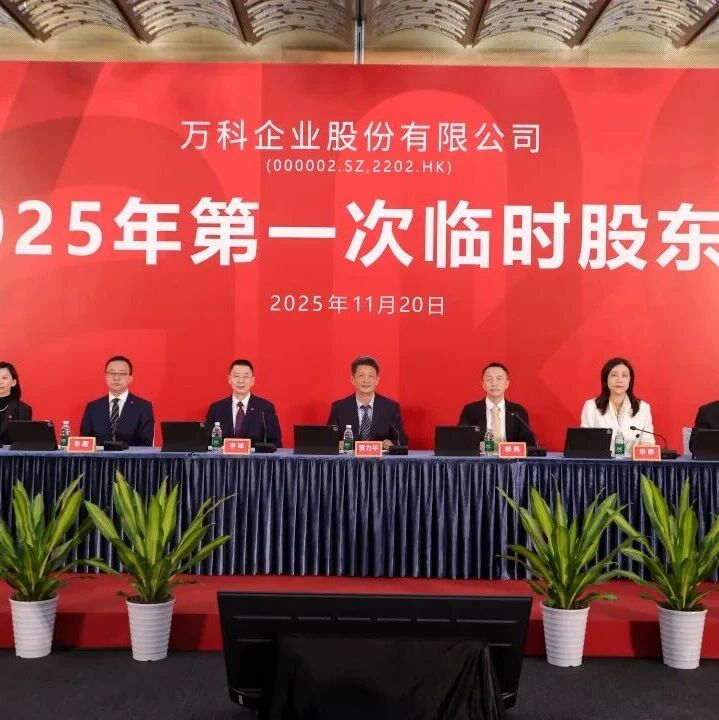
Core Viewpoint - Vanke's management emphasizes a commitment to strategic focus, aiming to optimize business layout and structural adjustments in the future [1] Group 1: Strategic Focus - Vanke will maintain a strategic focus on stabilizing its residential development business while promoting optimization and structural adjustments across five areas: urban focus, business portfolio, development model, product positioning, and technology empowerment [1] Group 2: Governance and Management - The company will adhere to standardized operations by enhancing governance mechanisms that are effective, transparent, and well-regulated [1] - Vanke plans to integrate "strengthening control" with "maintaining vitality" through organizational optimization, reducing management levels, shortening management chains, and consolidating resources across business units [1]