
产品为王

Search documents
让设计师成为“超级个体”,「iMuse.AI」想用虚拟研发破局服装行业的同质化困境 | 早期项目
3 6 Ke· 2026-01-20 02:57
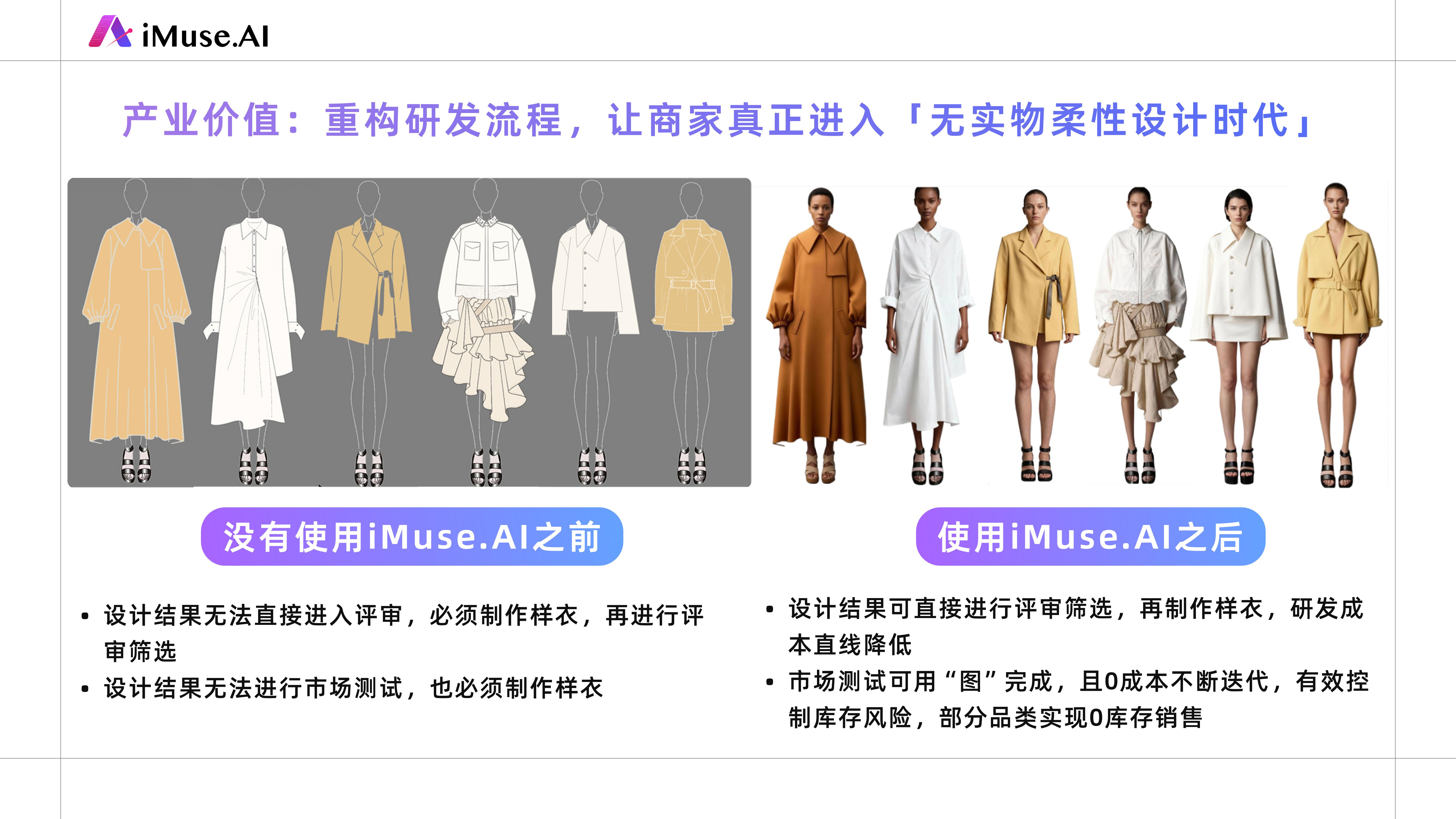
Core Insights - The AI industry is expected to reach a turning point in 2026, transitioning from a concept-driven phase to one focused on practical applications that undergo market validation [1] - The competition in AI paradigms has shifted towards practical implementation, particularly in the ToB (business-to-business) sector, where users are more willing to pay a premium for AI tools that enhance operational efficiency [1] - Despite the potential, the domestic ToB software market in China has been viewed with caution, as many companies have not met growth expectations [1] Group 1: Market Dynamics - Domestic enterprises have a historically weak willingness to pay for software, often opting for free tools or cheaper alternatives when free options are unavailable [2] - The complexity of the procurement decision-making process in enterprise software means that success often hinges on business relationships and networks rather than just product quality [2] - The emergence of AI is challenging the traditional market dynamics, suggesting a return to a "product-first" approach that emphasizes continuous R&D investment to create genuine value for customers [2] Group 2: iMuse.AI's Innovations - iMuse.AI, as China's first intelligent platform focused on fashion design, aims to address structural issues in the apparel industry, such as severe creative homogenization and intense price competition [3] - The platform allows for extensive design experimentation without physical production, enabling companies to gather market feedback early in the development process, thus reducing risks and fostering innovative differentiation [4] - iMuse.AI's features enable designers to complete all design work on the platform without needing additional tools, significantly enhancing design efficiency [5] Group 3: Efficiency and Cost Reduction - Virtual development through iMuse.AI can reduce sample waste by over 60%, as traditional sample rejection rates are typically between 1:2 and 1:3 [6] - The platform allows for real-time modifications, shortening market feedback cycles and enabling brands to test numerous virtual designs before committing to physical production [6] - The potential for "no-physical pre-sales" could become standard, allowing brands to test market responses to virtual designs before mass production [6] Group 4: Impact on Designers - AI is reshaping the skill set of designers, allowing them to switch between different design fields quickly, compressing years of training into tool proficiency [9] - The integration of AI tools has enabled less experienced designers to achieve a level of versatility that previously required decades of experience [9] - While AI promotes skill equality, it does not equalize higher-level capabilities such as aesthetic judgment and cultural understanding, which remain critical for differentiation in the industry [10] Group 5: Future Directions - iMuse.AI aims to help companies accumulate digital assets by systematically documenting the design process, transforming the traditionally unstructured apparel development into a measurable and sustainable system [11] - The company is also developing a no-physical content platform, iChuanyi, to integrate design, content display, and e-commerce pre-sales within a virtual framework [11] - The potential for ToB opportunities in China remains positive, as companies are willing to pay for products that demonstrate clear value, supporting a cycle of high pricing and ongoing R&D investment [11]

专题 | 行业筑底之时,民营房企突围之道
克而瑞地产研究· 2025-12-12 09:37
Group 1 - The number of private real estate companies is gradually decreasing, with only 45 remaining as of January-November 2025, down from around 70 before 2021 [3][5] - Among the top ten real estate companies, only one is a private firm, indicating a shift in capital preference towards state-owned enterprises and larger firms [5][6] - Despite the overall decline, 28 private firms have maintained stable operations, with six companies showing significant sales growth of over 50% in 2025 [6][7] Group 2 - Established private firms like Binjiang Group and Longfor Group are focusing on core cities, with Binjiang Group being the only private company expected to maintain a sales scale of around 100 billion yuan [14][16] - Binjiang Group has acquired 21 projects with a total land value of 377.2 billion yuan, primarily in Hangzhou, which contributes significantly to its sales [14][15] - The strategy of focusing on first and second-tier cities is becoming a consensus among large real estate companies to ensure inventory turnover and reduce operational risks [17] Group 3 - Emerging private companies such as Bangtai Group and Jiari Construction are achieving growth through regional focus and product innovation [21][24] - The number of private firms with high new land value has doubled in 2025 compared to 2024, indicating a potential for more companies to emerge successfully [21][22] - Local small and medium-sized enterprises are leveraging regional advantages to thrive in niche markets, such as Haicheng Group's expansion into central Chongqing [24][25] Group 4 - The real estate industry is still facing multiple challenges, with many firms adopting price-for-volume strategies leading to declining profit margins [25][26] - Companies are encouraged to focus on long-term strategies, emphasizing product quality and operational efficiency to navigate the new market cycle [26][34] - The trend towards government-supported construction of safe, comfortable, and green housing is expected to enhance product quality in the industry [26]


中国最好的一批消费品牌是怎么诞生的?
36氪· 2025-11-26 09:27
Core Viewpoint - Luckin Coffee has demonstrated a remarkable turnaround, with its store count reaching 2,921, six times the number at the time of its delisting in 2020, and achieving a stable profit of 1.2 yuan per cup, contrasting with a loss of 5.6 yuan per cup five years ago [5][6]. Group 1: Company Recovery and Market Dynamics - The case of Luckin Coffee represents one of the most significant "turnaround" stories in Chinese business history, challenging the notion that delisting equates to failure and showcasing the resilience of the Chinese consumer market [8][9]. - Institutional investors, such as Snow Lake Capital and IDG Capital, have played a crucial role in supporting Luckin Coffee post-delisting, with significant investments and strategic changes that revitalized the brand [9][11]. - The market's response to Luckin's delisting was calm, indicating a strong underlying demand for its products, which remained unaffected by the delisting crisis [13][19]. Group 2: Shift in Consumer Investment Paradigms - The narrative surrounding Luckin Coffee reflects a broader shift in the Chinese consumer landscape, moving away from a model focused on aggressive spending and rapid growth towards one emphasizing product quality and sustainable profitability [16][19]. - The success of Luckin Coffee and other brands illustrates the emergence of a new generation of consumer entrepreneurs who prioritize product excellence and consumer insights over mere market share [25][26]. - The investment landscape is evolving, with a focus on long-term value creation and the importance of identifying companies with strong product capabilities and brand strength [30][31]. Group 3: Market Potential and Global Influence - China's consumer market is increasingly recognized as a significant source of global innovation, with a vast population allowing for extensive validation and iteration of niche products [34][44]. - The competitive environment in China is characterized by both high risks and high rewards, necessitating that local companies and their investors adapt to rapidly changing market conditions [35][39]. - Investment institutions are now more involved in the global expansion of Chinese brands, reflecting a shift from merely bringing foreign brands to China to actively participating in the global market [41][43].

中国最好的一批消费品牌是怎么诞生的?
3 6 Ke· 2025-11-24 01:18
Group 1 - The core narrative of Luckin Coffee's resurgence is highlighted by its store count reaching 29,214, which is six times the number at the time of its delisting in 2020, and a shift from losing 5.6 yuan per cup to a stable profit of 1.2 yuan per cup [1][3] - The case of Luckin Coffee represents a significant "turnaround" in Chinese business history, challenging the stereotype that Chinese concept stocks cannot survive delisting, and demonstrating the resilience of the Chinese consumer market [3][4] - Institutional investors, such as Dazhong Capital and IDG Capital, have played a crucial role in Luckin's recovery by injecting capital and implementing significant business model reforms, focusing on product innovation and data-driven strategies [6][4] Group 2 - The market for ready-to-drink beverages in China remains vast, with IDG Capital's early investment in brands like Heytea providing insights into consumer behavior and product demand, which persisted despite Luckin's delisting [7][6] - The shift in the consumer landscape has moved away from a model of "extreme price wars and heavy spending" towards a focus on "good products, high repurchase rates, and stable profits," marking a new era in consumer growth [9][10] - The success stories of companies like YingShi and Pop Mart illustrate the importance of product quality and innovation in driving brand growth, emphasizing that the pursuit of exceptional products can lead to global influence [11][12] Group 3 - The investment landscape is evolving, with a focus on long-term strategies and the ability to support entrepreneurs through challenges, as seen in the backing of brands like Ecovacs and Anker Innovations [17][19] - Chinese consumer brands are increasingly becoming significant players in the global market, with investment institutions playing a vital role in expanding their reach and influence [21][22] - The narrative of the Chinese consumption industry reflects the immense potential of the market, characterized by rapid feedback and iteration, which fosters continuous product innovation [26]

中国最好的一批消费品牌是怎么诞生的?
远川研究所· 2025-11-23 12:38
Core Viewpoint - Luckin Coffee's remarkable recovery illustrates the resilience of the Chinese consumer market, challenging the stereotype that Chinese concept stocks must fail after delisting, and highlighting the importance of product quality in driving business success [5][8]. Group 1: Company Performance - In the past quarter, Luckin Coffee's total number of stores reached 2,914, which is six times the number at the time of its delisting in 2020 [2]. - The company transitioned from losing 5.6 yuan per cup to a stable profit of 1.2 yuan per cup [2]. - Luckin's stock price rebounded from below 1 USD to approach its pre-delisting market cap of 12.9 billion USD [2]. Group 2: Investment and Market Dynamics - The delisting was initially seen as a fatal blow, but institutional investors remained focused on Luckin, with Snow Lake Capital raising its target price and major investments from firms like Dazhong Capital and IDG Capital totaling over 400 million USD [6][8]. - The shift in management and business model, driven by new investors, emphasized product innovation and data-driven strategies, leading to the successful launch of products like the coconut latte, which sold over 20 million cups in a month [8][9]. Group 3: Industry Trends - The current market environment has shifted from a focus on aggressive pricing and heavy spending to a model prioritizing product quality, high repurchase rates, and stable profits [11][13]. - The Chinese consumer market is characterized by its vast size and rapid feedback mechanisms, allowing even niche demands to be validated and turned into significant business opportunities [21][26]. - The investment landscape is evolving, with a focus on long-term value creation and the importance of identifying companies with strong product and brand capabilities [22][23]. Group 4: Case Studies of Success - Companies like Ying Shi and Pop Mart exemplify the new generation of consumer brands that have thrived by focusing on product excellence and innovation, leading to significant market impact [14][16]. - The success of these brands demonstrates that a deep understanding of consumer needs and a commitment to quality can lead to global recognition and market leadership [17][18]. Group 5: Future Outlook - The narrative of Chinese consumer entrepreneurship is shifting towards a focus on sustainable growth and the development of high-quality products that can compete globally [22][27]. - Investment institutions are increasingly playing a crucial role in supporting these brands, helping them navigate the complexities of both domestic and international markets [23][26].

【重磅深度】AI智能车时代是【产品为王】
东吴汽车黄细里团队· 2025-09-21 15:16
Core Viewpoints - The AI era emphasizes "product supremacy" rather than "traffic supremacy," marking a shift from the PC and mobile internet eras where user scale and network effects were paramount [4][14][25] - AI agents are expected to emerge across various subfields, focusing on task complexity and revenue generation rather than user numbers [4][25] Investment Opportunities in AI Smart Vehicles - AI smart vehicles represent a significant investment opportunity, potentially greater than that seen during the internet era, with China expected to innovate at the foundational level, leading to globally competitive companies [6][17] - The Robotaxi industry chain is identified as the best investment theme for the next five years, with various categories of companies involved, including integrated models, technology providers, and traditional ride-hailing services transitioning to smart vehicles [8][19][20] Valuation Methods for AI Smart Vehicles - The valuation approach for AI smart vehicles may differ from previous eras, with a focus on "smart agent revenue valuation," where the revenue potential is determined by the number of smart agents and their capability levels [7][20] Key Investment Targets in the AI Smart Vehicle Industry Chain - The investment landscape includes various categories such as integrated models (e.g., Tesla, Xiaopeng), technology providers (e.g., Horizon Robotics, Baidu), traditional ride-hailing companies (e.g., Didi), vehicle manufacturers (e.g., BAIC BluePark), and core hardware suppliers (e.g., chip manufacturers) [8][19][21][10] - The Robovan industry chain is also highlighted as a significant opportunity, with lower technical barriers and faster commercialization potential compared to Robotaxi [9][21] Consumer Market for L4 Smart Vehicles - The consumer market for L4 smart vehicles is expected to emerge later than the B2B market but could present substantial investment opportunities once it gains traction [10][21]



从营销主导到产品为王,商业逻辑正在发生转变
Sou Hu Cai Jing· 2025-08-12 03:19
Core Insights - The era of relying solely on marketing to drive business success is ending, with product competitiveness becoming the core factor for company success [1] - Major tech companies like Google and Baidu have faced failures in product launches due to a lack of sustainable user value and core competitiveness [2][1] - The development of quality products has become easier and more cost-effective, especially in high-tech sectors, allowing small teams to innovate [2][4] Industry Trends - The failure of products from major companies is attributed to insufficient alignment with market demands, despite significant marketing investments [2] - Technological advancements such as digital modeling and 3D printing have lowered the barriers for product development, enabling rapid prototyping and user feedback collection [4] - Traditional management structures hinder innovation efficiency, as centralized decision-making slows down response times to market changes [4][5] Competitive Dynamics - The "Tenfold Evolution Law" is emerging as a key principle in business, focusing on targeted innovation to achieve significant efficiency or cost reductions [5] - The shift from marketing-driven strategies to a product-centric approach is reshaping the underlying logic of business competition [5] - Companies must focus on core product value and establish rapid iteration mechanisms to adapt to the new competitive landscape [5]

誉衡药业:坚定“产品为王”战略,2024年度扣非净利润增长超200%
Zheng Quan Shi Bao Wang· 2025-04-29 03:01
Core Viewpoint - Yuheng Pharmaceutical has demonstrated outstanding performance in a relatively sluggish pharmaceutical industry, achieving significant growth in core products and cost reduction efforts, with a notable increase in net profit and cash flow in 2024 and Q1 2025 [1][2][7] Financial Performance - In 2024, the company's net profit attributable to shareholders increased by 93.43% year-on-year, reaching 233 million yuan, while the net profit excluding non-recurring items surged by 243.42% to 183 million yuan [1] - For Q1 2025, the net profit attributable to shareholders and net profit excluding non-recurring items grew by 15.24% and 54.74% year-on-year, amounting to approximately 60.25 million yuan and 49.73 million yuan, respectively [1] - The operating cash flow increased by 49.88% year-on-year to 411 million yuan, and the weighted average return on equity rose to 12.89%, up 5.63 percentage points [2] - The basic earnings per share increased by 93.60% to 0.1059 yuan/share in 2024, with a further 16.60% growth in Q1 2025, reaching 0.0274 yuan/share [2] Asset Quality Improvement - By the end of 2024, the net assets attributable to shareholders grew by 17.39% year-on-year to approximately 1.951 billion yuan, while the debt-to-asset ratio decreased by 15.58 percentage points to 30.17%, the lowest level in a decade [2] - The company’s operational efficiency improved, with current asset turnover increasing from 1.77 times to 2.40 times, and total asset turnover rising from 0.73 times to 0.82 times [3] Sales Efficiency and Cost Management - In 2024, the company enhanced sales efficiency through organizational adjustments and process management, resulting in a 25.82% decrease in sales expenses, with the sales expense ratio falling to 32.48% [3] - Management expenses and financial costs also saw significant reductions, with management expenses down 18.29% and financial expenses down 103.41% in 2024 [3] Product Development and Innovation - The company has maintained a "Product First" strategy, expanding its product line from orthopedics to major therapeutic areas such as cardiovascular and cerebrovascular diseases, with several core products experiencing rapid sales growth [4] - In 2024, sales of the exclusive traditional Chinese medicine product An Nao Wan/Pian grew over 90%, while the injection of multiple vitamins maintained an 80% market share with a 40% sales increase [4] - The company has a robust pipeline of over 20 projects, with several products receiving drug approval numbers and others undergoing consistency evaluations [6] Strategic Partnerships - Yuheng Pharmaceutical has strengthened its collaboration with the global pharmaceutical company Daiichi Sankyo, signing promotional agreements for new products, which are expected to contribute positively to the company's performance [5][6] Market Confidence and Shareholder Engagement - The company launched an equity incentive plan covering over 100 key personnel and implemented a share repurchase plan, reflecting confidence in its future development [6] - Major shareholders have collectively increased their holdings by nearly 30 million shares, indicating strong market confidence in the company's long-term value proposition [6][7]
